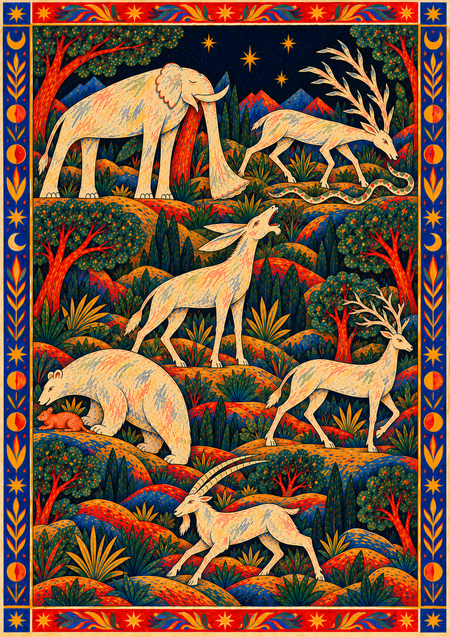

Bestiarium — a medieval book about animals. The creatures in it are real: lions, elephants, bears. But they are not described as they appear in reality. I illustrated these descriptions: not the animals themselves, but how people imagined them.

During the day, one can observe the beast; at night, only the silhouette remains, and the imagination completes the rest. This is how the plots of bestiaries were born: where observation was lacking, the narrative and belief filled the gaps. The authors of bestiaries often did not see the creatures they wrote about; the beast existed for them as a description, without real color, which is why all the animals are white.
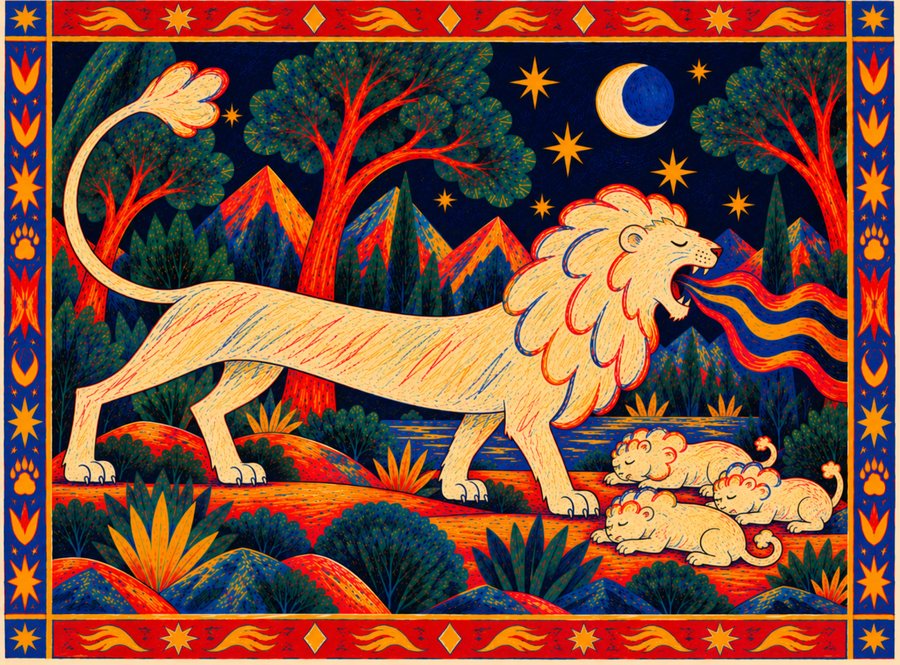
The cubs are born dead, and on the third day, the father revives them with his roar.
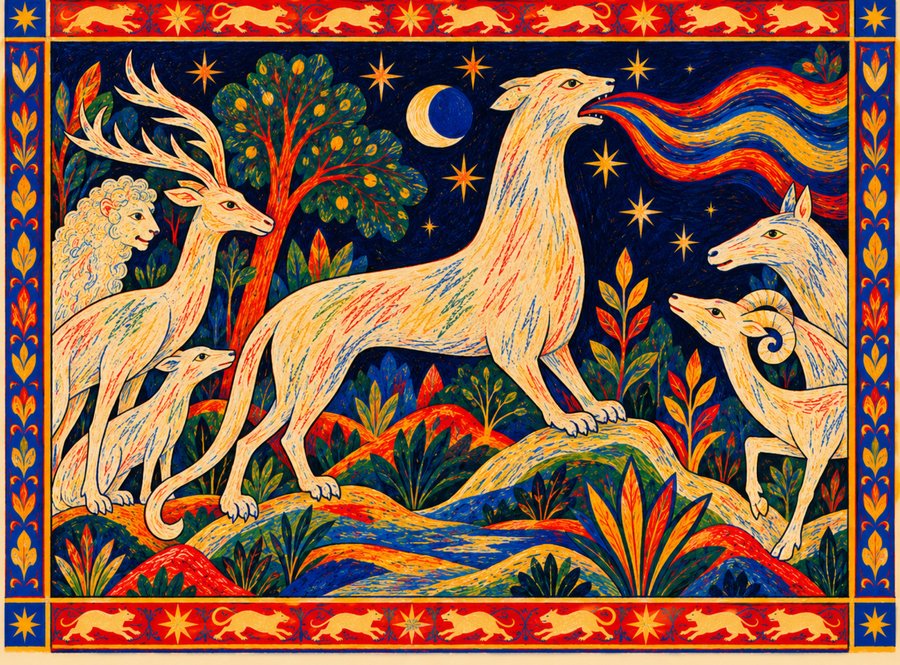
Her breath is so sweet that all the animals follow it, and only the dragon hides in a burrow.
An elephant has no joints in its legs: it sleeps leaning against a tree, and once it falls, it cannot get up.
Teddy Bear is born as an amorphous lump, and its mother licks its body.
The wolf has a short and very stiff neck; it cannot turn it.
Fox pretends to be dead, and when birds land on her, she snatches them.
The hyena roams the graves at night and digs them up.
Antlers grow into the tree
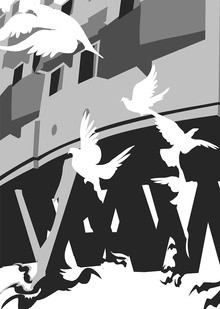
Starlings care for their aging parents: they pluck out their old feathers and warm them.
On the night of the vernal equinox, it cries twelve times—once every hour.
The goat leaps from the cliffs and lands on its horns without breaking.
The pack sleeps, and the guard holds a stone in his paw: if he dozes off—the stone will fall and wake him.
The reindeer lures the snake from its burrow with its breath and defeats it.