ЧЕЛОВЕК НА ПОЛЯХ САКРАЛЬНОГО ТЕКСТА
Повседневность и гротеск как лаборатория фламандского реализма
INDEX
Chapter I. Marginalia as a Mode of Vision: The Body Outside the Scheme. An Analysis of Specific Visual Devices in W.88 and W.35 (line, scale, posture, degree of deformation). Here the «grammar» of the marginal body is established.Chapter II. Transferring the Grammar: From Parchment to Panel. A Comparative Analysis: How the same devices (observed gesture, grotesque form, everyday detail) function in the paintings of Van Eyck. This is the core of the deepening analysis.Chapter III. The Limit of Transfer: The Grotesque on a Grand Scale. Bosch as the logical culmination of the line: what was a «marginal joke» in the manuscript becomes an independent pictorial statement.
CONCEPT
Marginalia and calendar vignettes were not merely «decorative additions» to the sacred text. They functioned as a visual laboratory where the artist could observe and depict the body outside of iconographic schematics—in motion, effort, play, and deformation. This «marginal» way of viewing humanity was inherited by easel painting: in Van Eyck, it transforms into unprecedented physical realism (the bodies of Adam and Eve, details of daily life), and in Bosch, it evolves into an elaborate grotesque, transplanted from manuscript margins to large-scale formats.
The goal of my visual research is to trace how visual devices developed in the marginalia and calendrical cycles of 13th–14th-century Southern Netherlandish manuscripts (observation of the body, grotesque deformation, everyday action) were transferred to panel painting in the 15th century and became the foundation for the new representation of the human figure in Jan van Eyck and Hieronymus Bosch.
Force Mechanics: Analysis of Guiding Diagonals
In South Netherlandish miniature painting before 1400, the human figure is depicted in two irreducible visual modes. In the main text (initials, miniatures), the body is subjected to an iconographic scheme, a hierarchy of scale, and restrained gesture. In the marginalia and calendar cycles, the same body is given through effort, movement, and deformation: it bends, stretches, falls, prepares, plays, and dances. This duality does not «diminish» the sacred; rather, it constructs the viewer as a being that is simultaneously devotional and corporeal.
The Psalter was created in Flanders around 1270–1280; its illumination consists of «vignettes depicting the labors of the months in the calendar, and historicized initials within the Psalms.» These vignettes are not yet marginalia in the strict sense: they occupy the lower portion of the calendar page and adhere to the annual cycle. But it is here that, for the first time in the Dutch tradition, daily activity—sowing, pruning, harvesting—becomes an independent form of human representation.
Unknown artist, «Psalter with Funeral Service and Litany,» 1270–1280
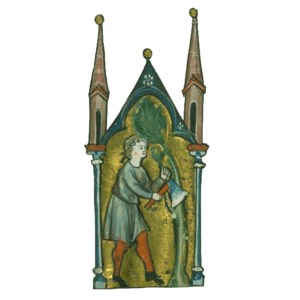
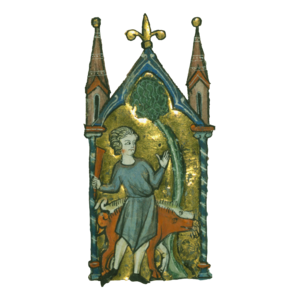
«The Person Pruning a Tree.» The body is shown in profile, leaning, exerting effort; the line of the tool and the line of the arm form a single diagonal. The figure is small, but it is not dissolved into the decor—the gesture is immediately legible. This is a working body, subservient to the season rather than to an iconographic schema.
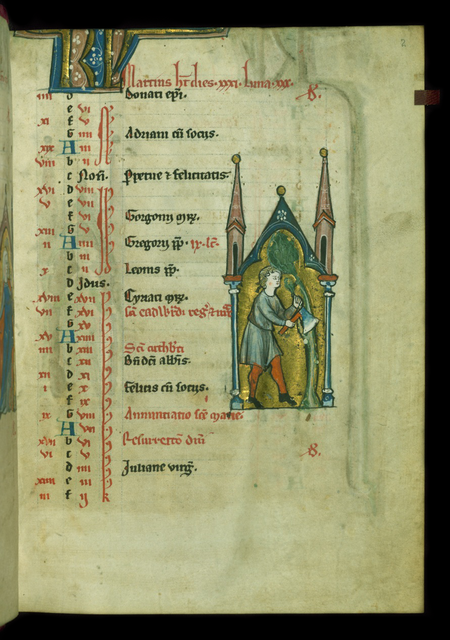
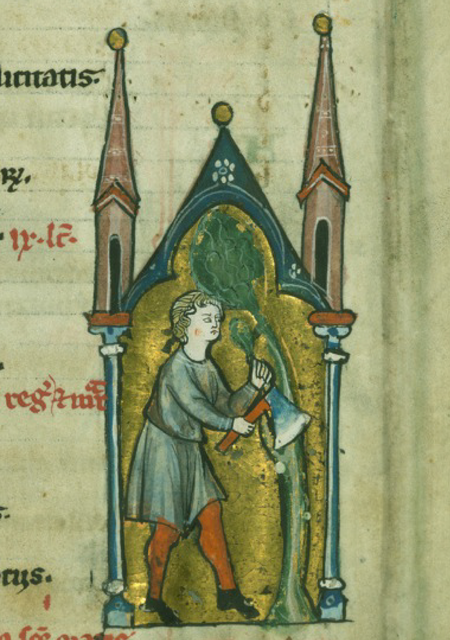
Flemish Artist, Leaf from the Psalter: March Calendar, Man Pruning a Tree, 1270–1280.
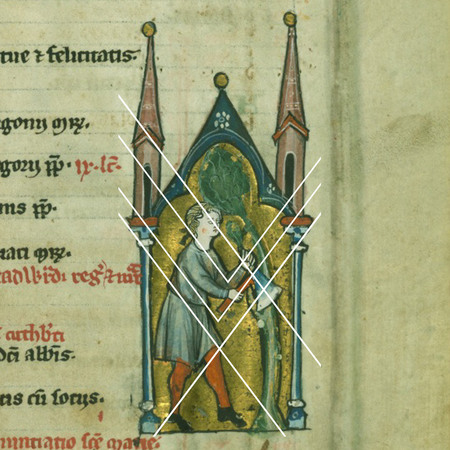
The Gothic frame (pinnacles, arches) is strictly vertical and symmetrical. Within this rigid, «sacred» architecture is contained a body that is entirely subordinate to the diagonal. It disrupts the frame’s harmony through its asymmetry and movement. The left leg is thrust forward and bent, while the right is placed back to create a support. The torso is leaned forward, following the hand. The artist structures the body according to the laws of physics—this is not a floating saint, but a worker using their own body weight to strike. The line here does not model volume; it denotes a gesture. The folds of the tunic (blue lines) only emphasize the direction of the arm’s movement. This is that very «quick sketch»: the line describes the function, not the surface.
«The Man Sowing Seeds.» The arm is drawn back, the torso is open, and the sowing motion is conveyed through a broad swing. The body here is a tool of the cycle, which is why it is depicted not frontally, like a saint in an initial, but in action—often in profile or three-quarter view.
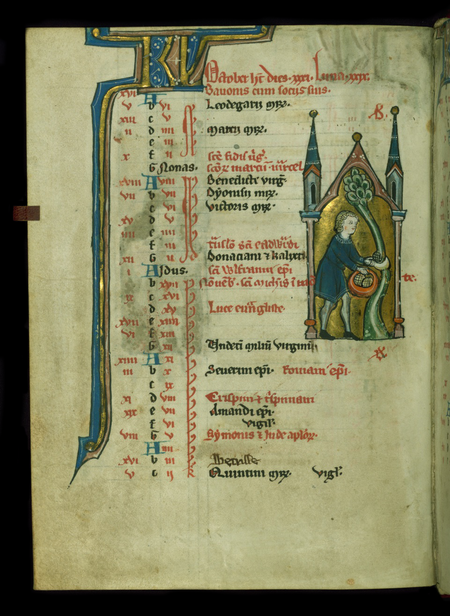
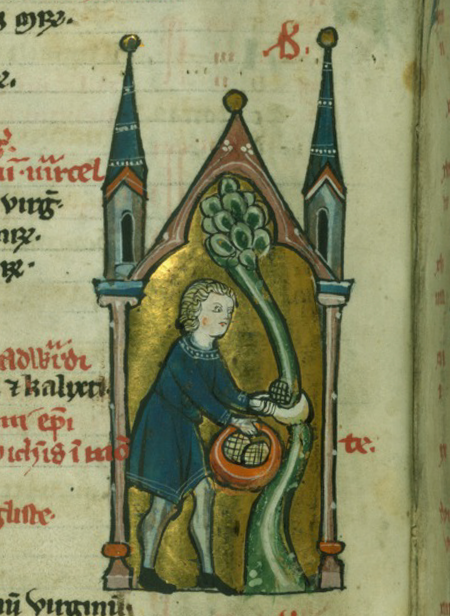
Flemish artist, Leaf from the Psalter: September Calendar, Man Sowing Seeds, 1270–1280.
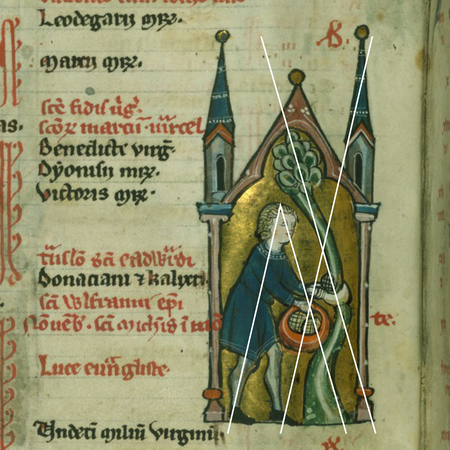
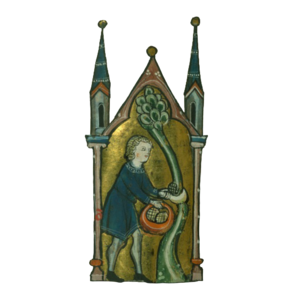
In the scene of grape harvesting, the youth’s body conforms to a diagonal tilt that compensates for the weight of the harvest. The left leg functions as an axis, while the right acts as a brace. The Gothic frame remains static, but the interior space is permeated by a vector of force. The artist is not modeling musculature; rather, they use line as a quick note, fixing the mechanics of movement and balance. It is this focus on empirical observation of the body—its weight, its tilt, and its interaction with the object—that will become the foundation upon which 15th-century panel painting translates into a language of volume and texture.
«A person shaking acorns from a tree to feed pigs.» A pose with raised arms and a tilted head; the body stretches upward toward a branch. This is one of the most dynamic calendar sheets—effort becomes the main subject of the image.
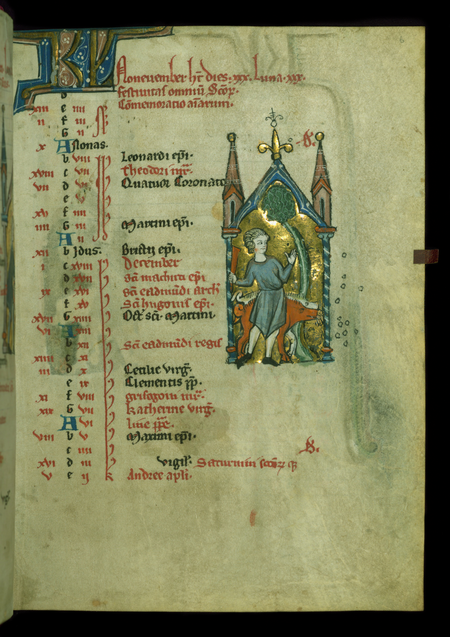
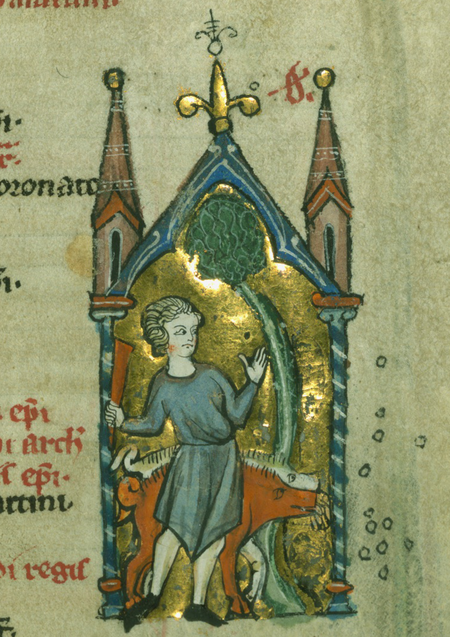
Flemish Artist, Psalter Leaf: November Calendar, a man gathering acorns from a tree to feed pigs, 1270–1280.
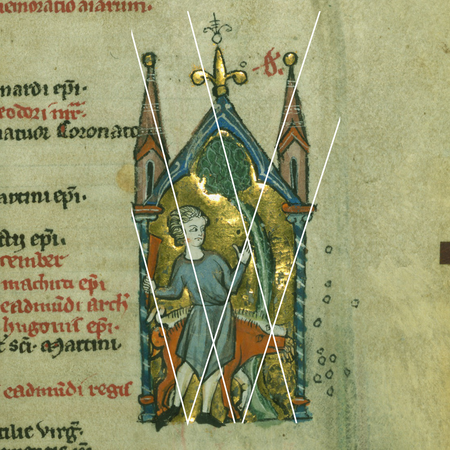
The calendar scene «November» demonstrates the highest degree of dynamism achievable in a miniature. The human body is twisted: the right arm, holding a tool, establishes a vector upward, the left arm balances, and the legs anchor the center of gravity. Unlike sacred figures, the body here is subject to mechanics. Furthermore, a grotesque animal element is introduced into the scene: the pigs are depicted with distorted proportions and aggressive features. The marginalia creates a space where the human exists not in prayer, but in physical contact with the «lowly» world of labor and animals.
наклон
взмах
тянется вверх
Embodiment Liberation: Grotesque and Play
A hour-glass, created for the Cambre Diocese around 1300–1310, is described in the museum catalog as a manuscript, «particularly interesting for its abundance of humorous doodles»: «people, animals, and hybrids are present on the margins of every page, ” and „small scenes capture the diversity of activities such as cooking, playing, climbing, fishing, music, and dancing.“ According to the same description, these doodles „entertained the faithful during prayer while simultaneously depicting scenes that function as metaphors for the soul struggling against vices.“ The museum also notes that Heiner Gillmeister asserts that two scenes in this manuscript depict the earliest known representations of the game of tennis.
Flemish artist, Chaslosov, 1st quarter of the 14th century (Gothic)
If the calendar subjects the body to the cycle of time, the marginalia of the Horologium (Cambre, c. 1300–1310) liberate it from any necessity. The museum description here notes an abundance of «humorous doodles, ” where „small scenes depict a variety of activities, such as cooking, playing, climbing, fishing, music, and dancing.“
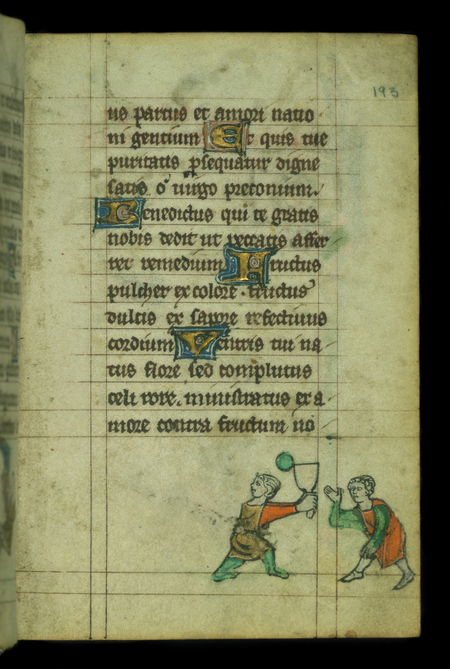
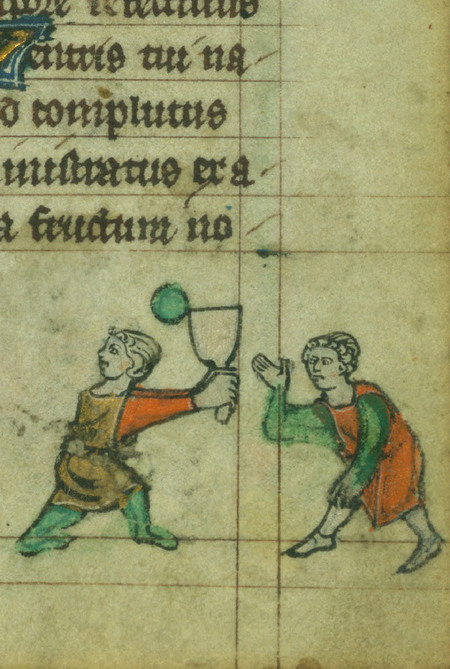
Flemish painter, «Leaf from the Calendar: Men Playing Tennis, ” 1st Quarter of the 14th Century
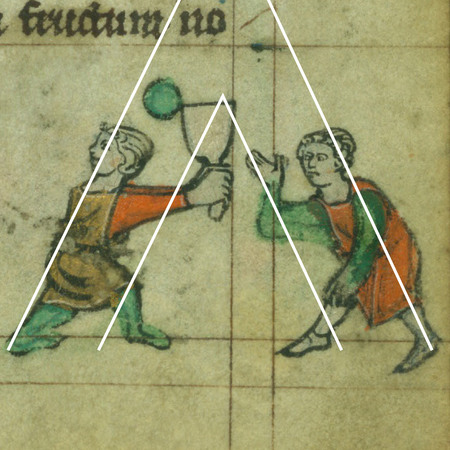
One of the most vivid examples of the body’s liberation in the marginalia is the scene of a tennis game. The figures of the players form two mirrored diagonals: the left player executes a lunge (attack), while the right player is held in anticipation (defense). The artist captures the mechanics of weight transfer and hand tension using a swift, schematic line. The game scene unfolds directly beneath the sacred text, and the vertical ruling line of the manuscript is used as a natural boundary between the players. This marginal scene is not merely a jest, but an empirical laboratory for studying the dynamics of the human body, laying the groundwork for the realism of the 15th century.
Unlike calendar vignettes, where movement is subordinate to necessity of labor, here the body is subordinate to pure kinetics.
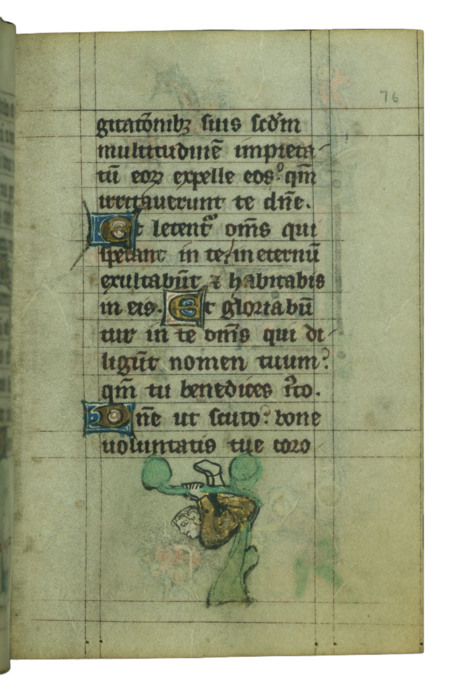
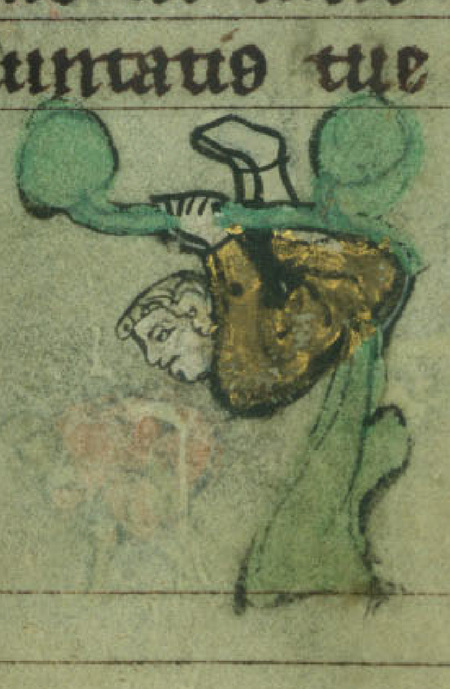
French artist, «Youth Hanging from a Tree, ” 1st quarter of the 14th century
Another rare and illustrative example of liberating the body from a sacred narrative—a marginalia depicting a youth swinging from a tree (Chasoklov, c. 1300–1310). The accompanying text on this folio (Psalm 5, reading for the departed) speaks of death and salvation, yet the image completely disregards this theme. The boy is suspended from a tiny, weight-defying tree. The artist captures the physics of a pendulum here: the body is subject to gravity, the hands bear the weight, and the legs dangle downwards. The deliberate violation of proportions (the small tree and the large boy) creates a grotesque, comic effect. This scene is not merely a jest; it is an empirical observation of how the human body behaves while suspended. It was these marginal «studies» on manuscript margins that trained the artist’s eye, preparing him to render complex anatomical perspectives in future easel painting.