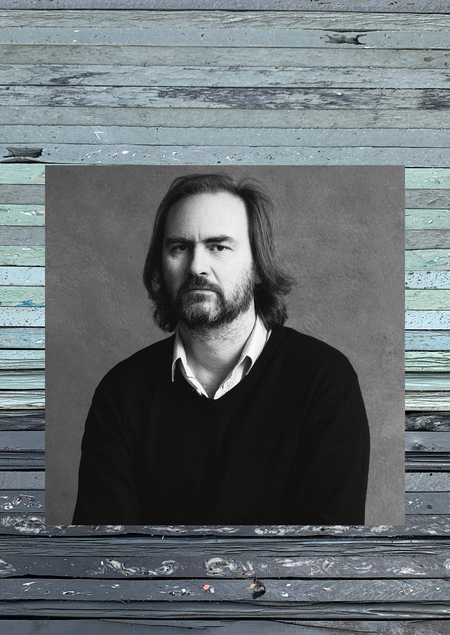
Dieter Roelstraete (b. 1972)
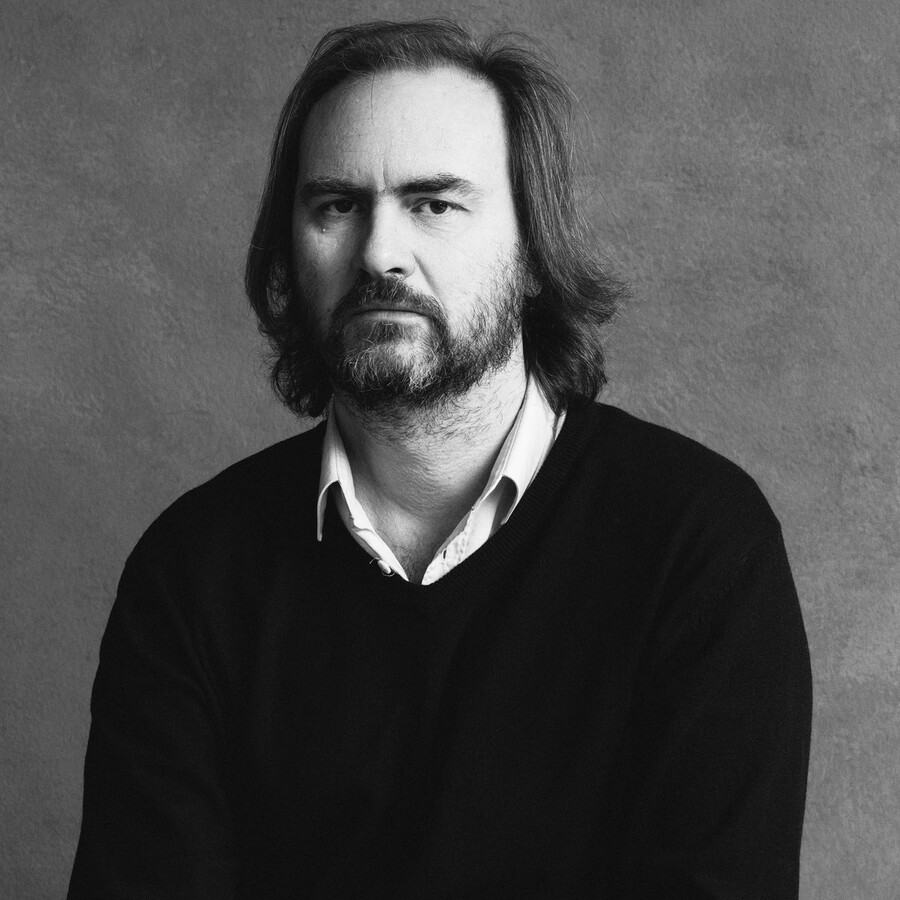
Dieter Rulstrate — a Belgian curator. He received a philosophy education at Ghent University (Neubauer Collegium). His philosophical approach is evident in everything he does: his exhibitions are built around ideas and texts, rather than around names or media. Over 23 years, Rulstrate has progressed from being a curator at a contemporary art museum in Antwerp to becoming a curator at a university gallery and a member of a foundation’s advisory board.
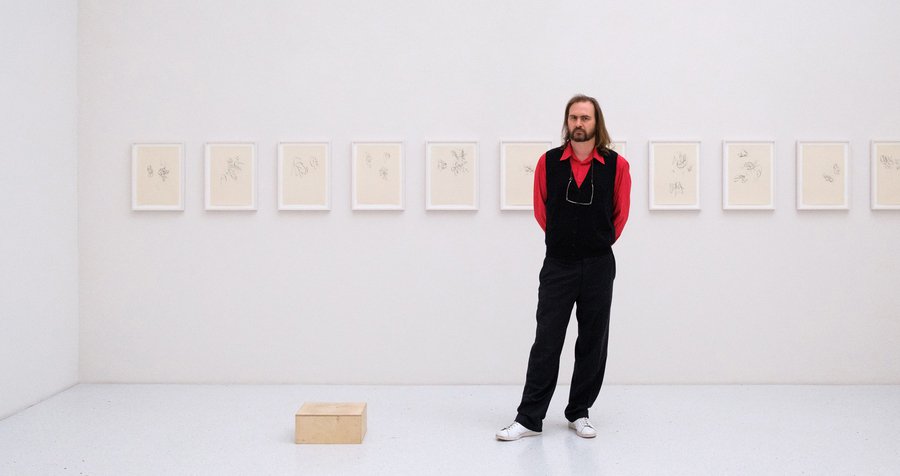
In addition to his curatorial work, Rulstrate writes extensively about art and philosophy: he served as an editor for the journal Afterall and a contributing editor for A Prior (Flash Art), and has published in Artforum, e-flux journal, frieze, and Texte zur Kunst (Ox-Bow). His primary theoretical concept is the «archaeological imaginary»: following September 11, art has widely turned toward archives, excavations, and historical investigation. This idea is detailed in his book The Way of the Shovel (University of Chicago Press, 2013, 328 pp.; MCA). He also specifically discussed «realist curating, ” drawing on an essay published in Texte zur Kunst in 2012 concerning the relationship between the artist and the curator, amateur culture, and the professionalization of curatorial practice.
Curator Internship
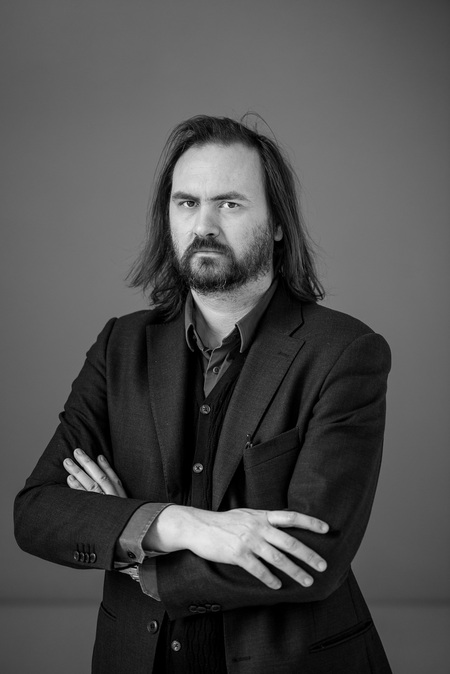
Rulstraete functions as a curator-researcher. For him, an exhibition is a way to test an idea, not simply showcase a collection: The Order of Things, The Thing, Machines à penser, Everybody Talks About the Weather—these are thematic projects where the title poses a question, and the artworks serve as arguments. He has a distinct «literary» sensibility: almost every exhibition is accompanied by a substantial catalog featuring his own essay (including those for Machines à penser, Weather, The Way of the Shovel, and A Syntax of Dependency).
His approach is an intellectual, interdisciplinary practice at the intersection of art, philosophy, history, and (in recent projects) science. Rulstrate creates both large-scale group projects and monographs, often providing the first major exposure of an artist in the U.S. (e.g., Matsuga, Starling). Principles and Values. The projects reveal the following consistent principles: — The idea is primary. Exhibitions grow out of a question, not a market demand. — Dialogue instead of hierarchy. In the project with Gillick and Wainer, he valued «horizontality of dialogue over the verticality of hierarchy» (e-flux). — Context of place. The exhibitions consider the location: Venice and sea level in Weather; Chicago and its history in The Way of the Shovel; Berlin and the Humboldt Forum in the Pope.L project. — A complex stance toward «heroes.» In Machines à penser, he illustrates that different thinkers have different histories: Heidegger was a proponent of Nazism, while Wittgenstein and Adorno came from cosmopolitan Jewish families.
Intertidal: Vancouver Art & Artists
MuHKA, Antwerp, December 17, 2005 — February 26, 2006
Curators: Rustrate and Scott Watson, Director of the Belkin Art Gallery at the University of British Columbia
Concept This is an overview exhibition of contemporary art from Vancouver. The organizers call it the first such ambitious showcase of Vancouver art in Europe and the largest exhibition of Canadian art abroad (grunt gallery archives). The core idea is that the city, removed from the centers of the art world, has transformed into one of its vital nodes, and that the local scene operates unexpectedly within the global art economy.
The exhibition opened with an «archival» section, the Intertidal Archive, featuring documents and works by Jeff Wall, Robert Smithson, N.E. Thing Company, the Morris/Trasov archive, and others. This provided the viewer with historical context, while the main body of the show was dedicated to the art of the last decade. The archive even included rare pop artifacts, such as a record by a Vancouver no wave group featuring Rodney Graham, Jeff Wall, and Iain Wallace. The exhibition was divided into thematic sections (including Staging «Landscape, ” The Daily Sublime, and Homages). Brochures were available in three languages, and the catalog was co-published by MuHKA and Belkin Gallery.
The exhibition’s strength lies in its dual framework: «local/global.» Rulstrate invited Scott Watson, Director of Belkin Gallery in Vancouver, as a co-creator, and the catalog was released in collaboration with MuHKA and Belkin (e-flux). The Antwerp museum received not an external perspective, but a co-created overview. Another weakness is that established names from the Vancouver school (Wallace, Wall, Lam, Graham, Douglas) were central to the show—artists the organizers themselves cited as the most famous in the city (M HKA). Therefore, the exhibition tended to reinforce the canon rather than challenge it. Nevertheless, the curator’s future signature is visible here: he was around 33 years old and began the exhibition with an archival section that provided the viewer with historical context.
Thinking Machines
Fondazione Prada, Venice, May 26 — November 25, 2018
Concept The exhibition explores the connection between exile, flight, solitude, and places conducive to thought. Three figures—Theodor Adorno, Martin Heidegger, and Ludwig Wittgenstein. Heidegger lived for long periods in a cabin in Todtnauenberg (Black Forest); Wittgenstein retreated to a small house overlooking a fjord in Solden (Norway); and Adorno was forced to emigrate from Nazi Germany, first to Oxford, then to Los Angeles. Rulstrate states that these were «the places where our protagonists hatched out their deepest thoughts» (Meer). The cabin here is not a mundane detail, but an architectural archetype: for Heidegger, it was, according to the curator, «a rhetoric device as well as a performance.»
In the palace halls, reconstructions of Heidegger’s and Wittgenstein’s huts were erected, and for Adorno, the centerpiece was Ian Hamilton Finlay’s installation, Adorno’s Hut (1987). The historical section was dedicated to St. Jerome and featured a Renaissance studio with early editions of Heidegger and Wittgenstein; its walls were covered by a new work by Alec Finlay, Hutopia (e-flux). The exhibition was accompanied by a substantial catalog (over 500 pages) featuring essays by the curator, texts by Simon Fraser and Mark Riley, a poem by Alec Finlay, and interviews with the artists.
The essay title in the catalog, «Trois machines à penser, ” references Le Corbusier; the philosopher huts at Ruulstrate are called „machines for rethinking philosophy’s very own edifice complex”—that is, machines that compel a reconsideration of philosophy’s own „structure“ (catalog). The selection of subjects is crucial. Heidegger was a proponent of Nazism, while Wittgenstein and Adorno came from cosmopolitan Jewish families, and Domus emphasizes that their positions differed significantly: the exhibition does not equate their fates. The curator analyzes Heidegger’s hut as a rhetorical device—examining the myth critically rather than simply admiring the seclusion. The reconstruction of the hut was made at 88% scale (Meer). Adorno had no hut, and the centerpiece was Finley’s 1987 installation: art substitutes for the absent architecture. The project’s risk lies in its density; Domus writes that the exhibition demands preparation and rewards those who decipher the layers of subtext. The foundation responded with the symposium Inside the Machines on October 4, 2018.
Everybody Talks About the Weather
Fondazione Prada, Venice, May 20 — November 26, 2023
Concept. The exhibition explores how weather manifests in visual art, using meteorology as a way to discuss the climate crisis. The title references the German advertising slogan «Alle reden vom Wetter. Wir nicht, ” with the addition of „Wir auch“ (Veneziaunica). Muchia Prada described the premise as an attempt to take „weather as a starting point to highlight the urgency of climate change.“
Art and science operate on two levels within the building: the artworks are augmented with «scientific inserts, ” developed in collaboration with the NICHE center (University of Ca' Foscari), according to the foundation. The experience begins with a large LED wall displaying worldwide weather forecasts, and the exhibition itself features over fifty works, ranging from historical painting to multimedia and activism. In October 2023, a public symposium program (CMCC) took place; a 448-page book includes a Rustrate interview with writer Amitabh Ghosh (Art Data). The choice of Venice was not random: the city is rapidly submerging due to rising sea levels.