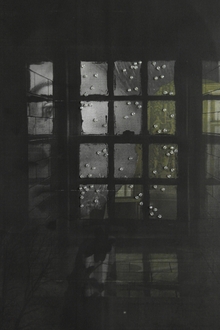
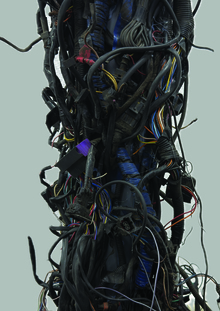
The photo project is dedicated to the Bolshevik labor commune—a Soviet social experiment aimed at re-educating street children. Through ruined architecture, archival images, and documents, the project explores how utopia gradually fades from the memory of people and the city.
The title references a book by Matvey Pogrebinsky, one of the commune’s organizers.

The Bolshevskaya Labor Commune began in 1924 with a small group of teens transferred from the Moscow Rose Luxembourg Commune to the former Kostino estate (now the city of Korolev). Against the backdrop of post-revolutionary vagrancy, the OGPU launched a social experiment here: instead of isolating former vagrants and juvenile delinquents behind bars, they attempted to «reforge» them through trust, labor, education, and self-governance.
From the initial eighteen residents, an entire commune-city grew, complete with workshops, factories, a school, a club, a hospital, a library, a stadium, and its own way of life. The core principle of this system was voluntariness: without guards, without coercion, without bars. Labor here was intended to replace punishment and become a means of achieving a different future.
Over time, small workshops evolved into shoe and knitwear factories, a sleigh factory, and production workshops. The commune produced a significant portion of the Soviet sports equipment.


But the utopia of the Bolshevik commune ended within the same system that created it. The commune project was destroyed by repression. After the arrest of Heinrich Yagoda in 1937, the arrests of leaders, staff, and communal residents began. In 1939, the commune was liquidated and classified, and its workshops were converted into a production plant.
The architecture of the commune still exists today, but it is almost entirely restricted. One of the few visible remnants is the semi-derelict building of the former «Chicago» dormitory. Communards once lived here, later a technical college was housed there, and now this space exists as a ruin—both a physical trace of utopia and a place from which the memory of the people has almost been erased.
Working with the archive becomes a crucial part of the project. The archival images, documents, and testimonies not only restore the history of the commune; they restore the faces and lives of the communards to this space.