In medieval manuscripts, illustrations extended beyond the main text. Unusual characters, fantastic beasts, and grotesque figures appeared in the margins. These elements could integrate with ornamental patterns, depict scenes from daily life, or have no direct connection to the content. These marginal illustrations became especially diverse in Gothic manuscripts of the 13th–14th centuries. Studying marginalia allows us to examine the fantastic imagery created by artists and how they utilized the space of the manuscript margins.
The visual culture of the Middle Ages is characterized by a diversity of fantastical imagery, weaving together human, animal, and mythical traits.
The topic selection is motivated by the fact that marginalia grant access to aspects of medieval book culture that fall outside the main narrative. Their diversity makes it difficult to definitively determine the purpose of these images. This study examines their potential significance, their relationship to the main text, and the reasons for the emergence of such themes. Particular interest is drawn to the combination of daily activities, fantastic characters, and interactions between people and animals within a single visual space.
Key research question: What role did fantastic imagery play in the marginalia of 13th–14th-century medieval manuscripts, and how did it relate to the main content of the manuscripts?
The subject of the study was illustrated medieval manuscripts from the 13th–14th centuries. Primary focus is placed on Gothic manuscripts from Western Europe, which feature hybrid creatures, fantastic animals, and grotesque scenes. When selecting material, attention was given to images that allow for the tracing of recurring motifs and the differences in their interpretation across various manuscripts.
Research Hypothesis: Some fantastic images found in the marginalia of medieval manuscripts constituted an independent element of the book’s design—one that not only supplemented the main text but could also serve various functions, ranging from decorative and entertaining to satirical and symbolic.
The principle of the study’s categorization is based on examining fantastic imagery in marginalia from the perspectives of its visual characteristics, narrative content, and functions. Initially, the methods of depicting creatures, the specifics of their anatomy, and the combination of various traits are studied. Next, narratives featuring these creatures are examined, including comedic and grotesque scenes, as well as situations where the customary relationship between human and animal is disrupted. The placement of the illustrations on the page and their interaction with the text and miniatures hold a significant place. Subsequently, the potential functions of the fantastic imagery and their role in the decoration of medieval manuscripts are explored. The study concludes with a comparison of several manuscripts, allowing for the identification of common motifs and differences in the use of fantastic imagery. This process enables tracking which features are repeated and which relate to the individual design of a specific book.
Navigator
- Concept
- Anatomy of Fantastic Creatures
- The Inverted World: Unconventional Narratives
- Grotesque and Expressiveness in Fantastic Imagery
- Fantastic Imagery and Manuscript Space
- Comparison of Fantastic Motifs in Medieval Manuscripts
- Conclusion
- Bibliography
Anatomy of Fantastic Creatures
Creatures in marginalia are constructed through methods of transforming the human and animal body. Artists combine parts from different organisms and alter the placement or quantity of individual elements. This results in figures that retain recognizable anatomical features but do not correspond to the structure of a living organism.
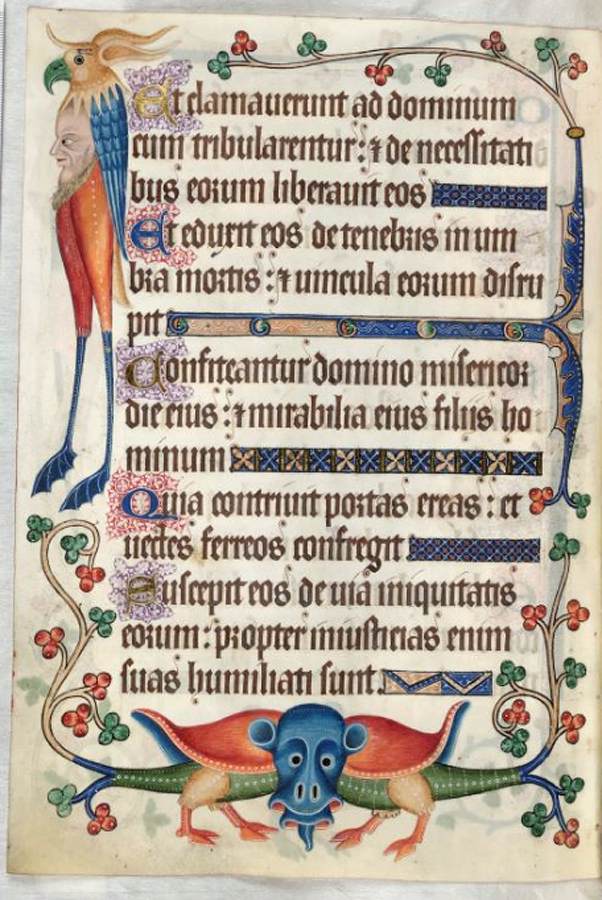
Luttrell Psalter. England, 14th century (c. 1325–1340). Author unknown. Leaf 191r. Facsimile reproduction of the manuscript.
In the Psalter of Lattrell, figures with two heads emerging from a single body appear, as well as images where two bodies share a single head. Such depictions disrupt the conventional understanding of the relationship between head, torso, and limbs—one part of the body can belong to multiple figures simultaneously.
American art historian Lucy Freeman Sandler, in the article «Reflections on the Construction of Hybrids in English Gothic Marginal Illustration, ” proposes a classification of such images.
Six ways to construct hybrid organisms:
1. Sequential Connection
2. Body Bifurcation
3. Body with Two Heads (Pushmipullyu)
4. Dual Orientation
5. Misplacement of Body Parts
6. Absence or Excess of Body Parts
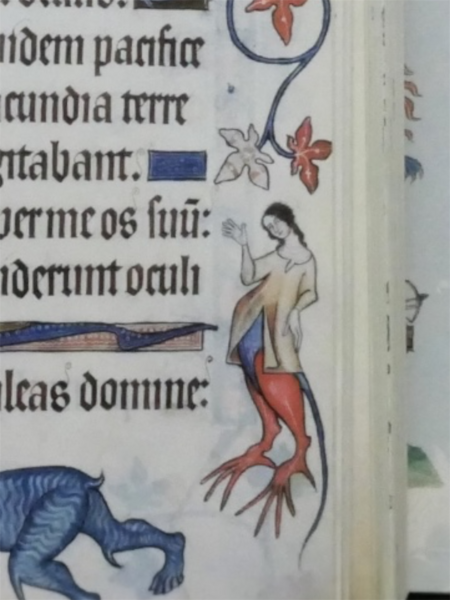
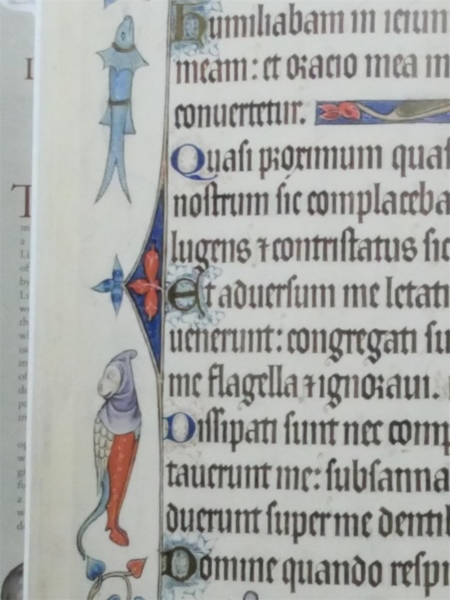
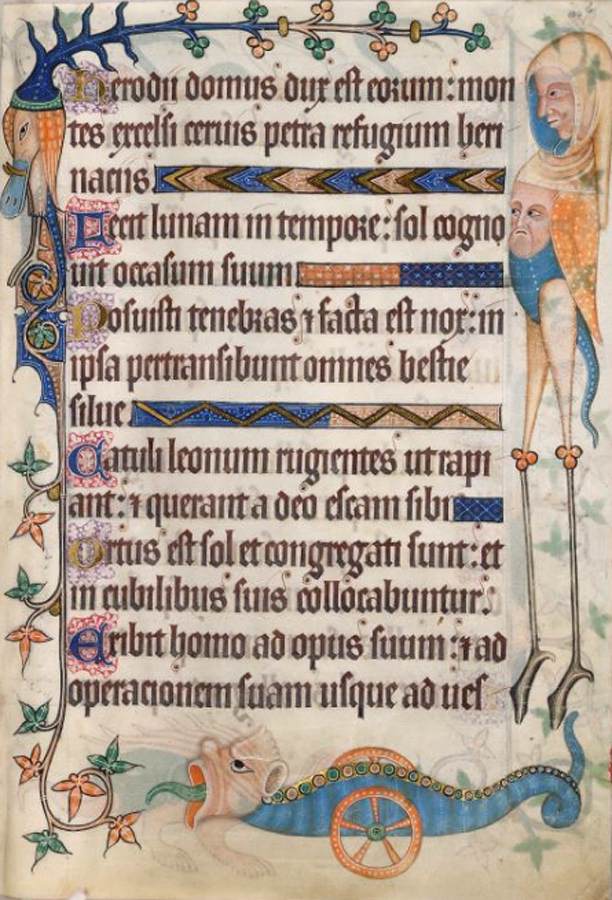
Luttrell Psalter. England, 14th century (c. 1325–1340). Author unknown. Leaves 66v–67r. Facsimile reproduction of the manuscript.
On the margins of the Psalter of Lattrell, creatures appear where the human form merges with features of other living beings. For instance, folio 66v–67r depicts a woman with amphibian feet. Her image combines the human body with non-human characteristics. Often, the precise points where limbs connect are concealed by drapery, but they may be indicated through differences in shape, color, and texture. Such hybrids demonstrate how artists leveraged familiar anatomical forms to create fantastic characters.
Luttrell Psalter. England, 14th century (c. 1325–1340). Unknown author. Folio 194v. Detail of a marginal illustration. British Library, Add MS 42130.
Furthermore, violations of anatomical norms occur through the merging of two bodies into a single figure. The unified head becomes the point of connection from which two independent bodily forms emanate.
Queen Mary Psalter. England, 14th century (c. 1310–1320). Author unknown. Leaf 193v. Facsimile reproduction of the manuscript.
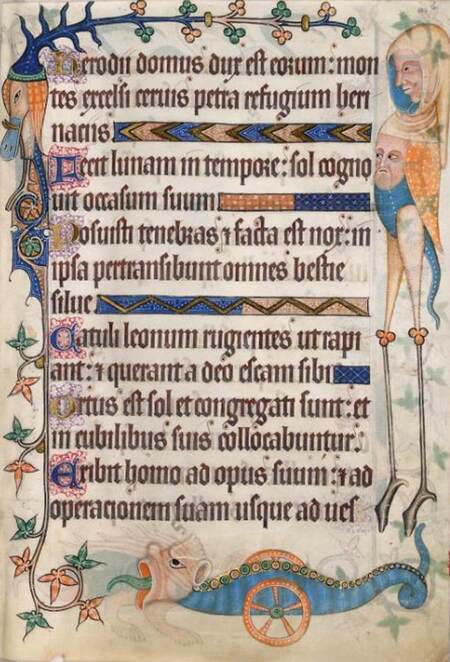
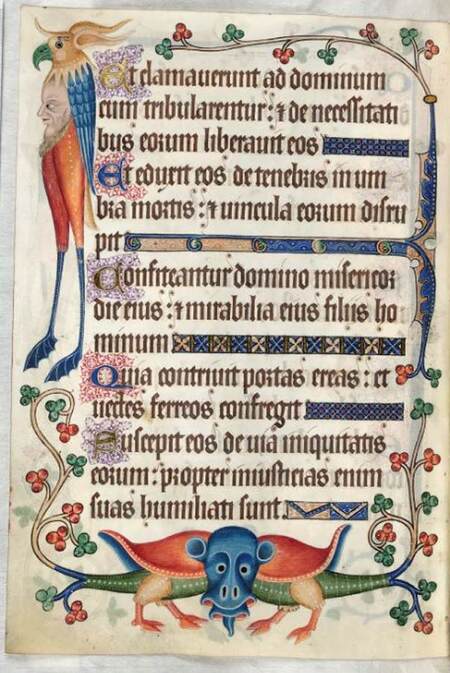
Luttrell Psalter. England, 14th century (c. 1325–1340). Author unknown. Folios 184r and 195v. Facsimile reproduction of the manuscript.
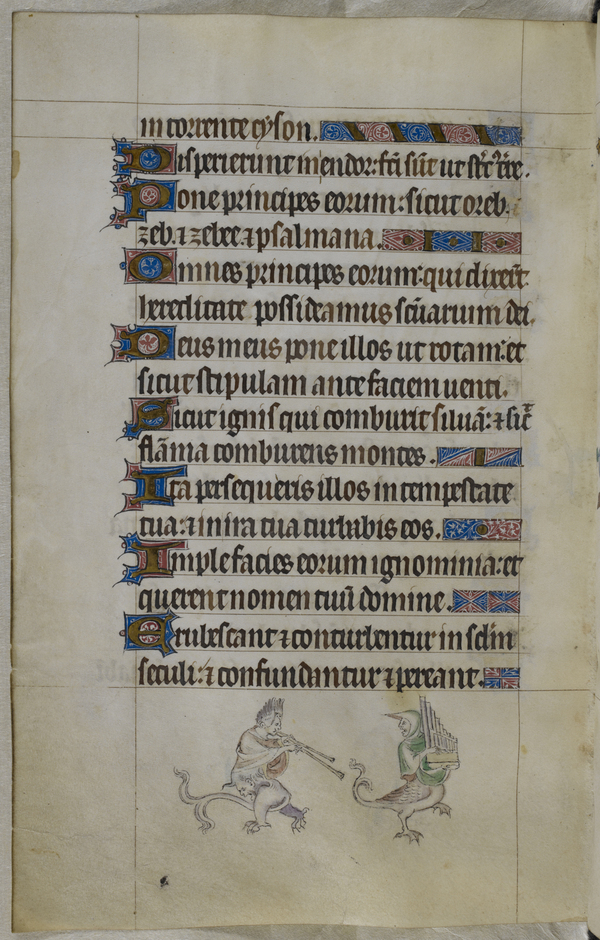
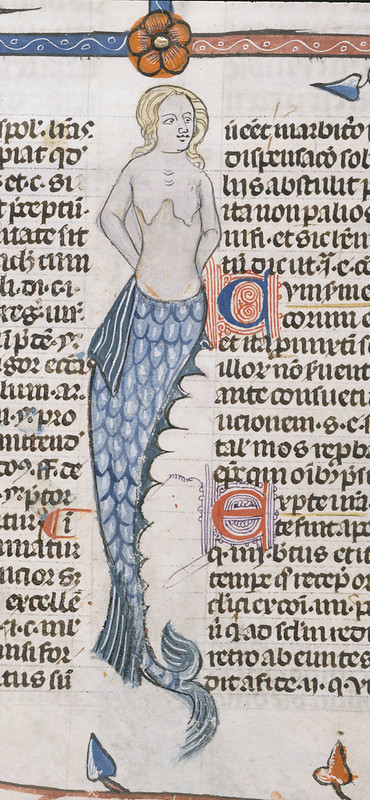
Queen Mary Psalter. England, 14th century (c. 1310–1320). Unknown author. Leaf 193v. Facsimile reproduction of a manuscript. Smithfield Decretals. England, 14th century (c. 1300–1340). Unknown author. Leaf 47. Facsimile reproduction of a manuscript.
Inverted World: Unconventional Themes
The consciousness of a person who could intentionally set the goal of decorating a book with such themes is hardly normal.
Grotesque and the Expressiveness of Fantastic Imagery
Fantastic imagery and manuscript space
Luttrell Psalter. England, 14th century (c. 1325–1340). Author unknown. Folios 66v–67r. Facsimile reproduction of a manuscript.