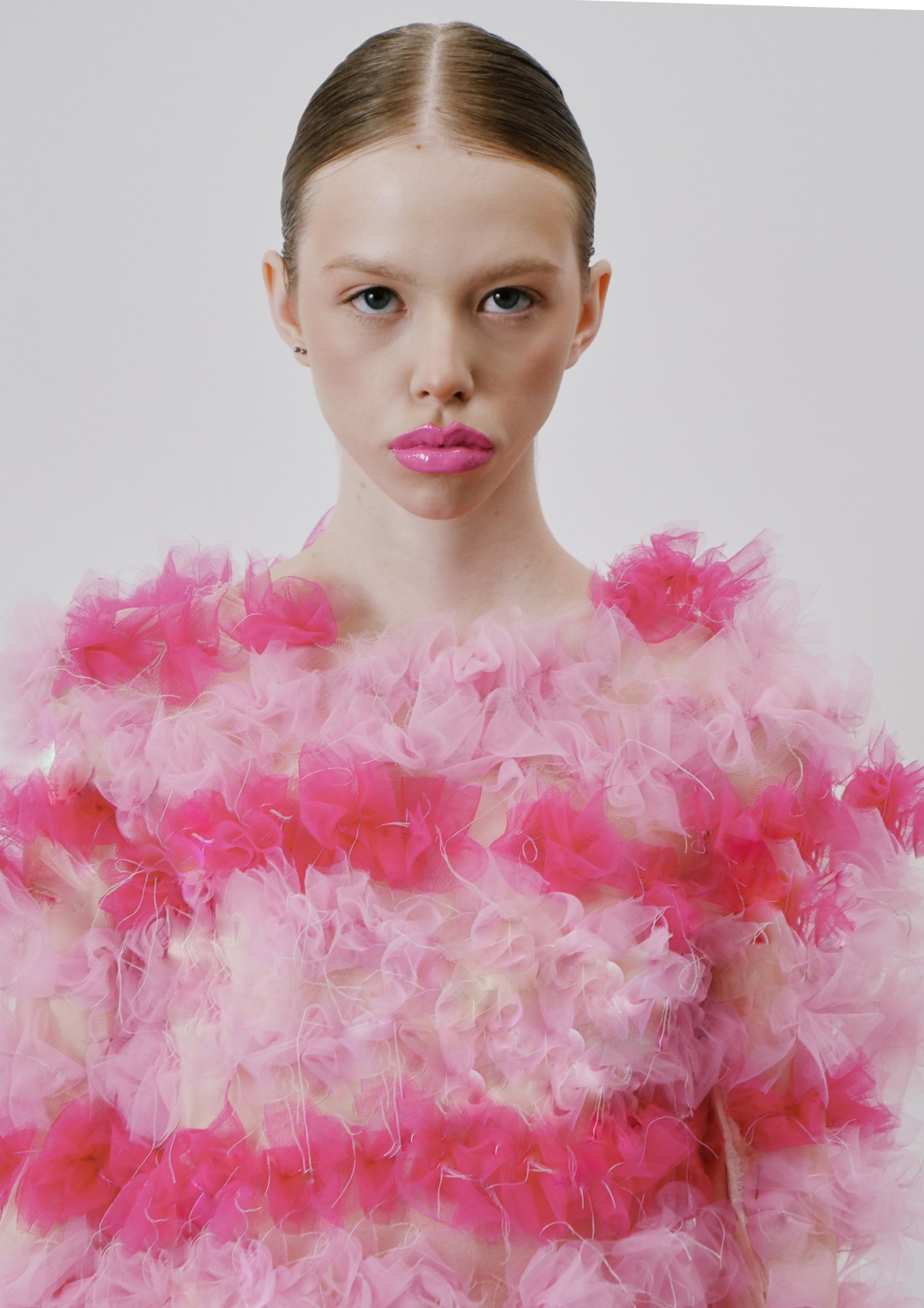
concept
Warm-up is the state in which the ballerina’s body exists before stepping onto the stage—the state before transforming into the ideal image. Warm-up attire marks the threshold between the mundane and the artistic, between one’s own body and the «other’s» script. Investigating this visual layer allows for a fresh perspective on the ballerina’s image—not solely through the tutus and pointe shoes, but through the gaiters, sweaters, and striped trousers. In my project, I pay special attention to the semiotics of stripes—the tradition of ballet gaiters and sweaters that function as a signifier of insiders and a form of camouflage. In my project, I pay special attention to the semiotics of stripes—the tradition of ballet gaiters and sweaters that function as a signifier of insiders and a form of camouflage.
Relevance
The relevance of this topic is driven by the rise of balletcore aesthetics since 2022. Warm-up and training attire—such as leg warmers, cozy pants, and wrapping cardigans—has moved beyond mere functionality to become a fashionable cultural code. Commercial data confirms this interest: sales of ballet apparel and warmers have sharply increased, particularly among young adults aged 20–30. Ballet is evolving into a lifestyle, and warm-up gear has become its visual marker.
Visualization
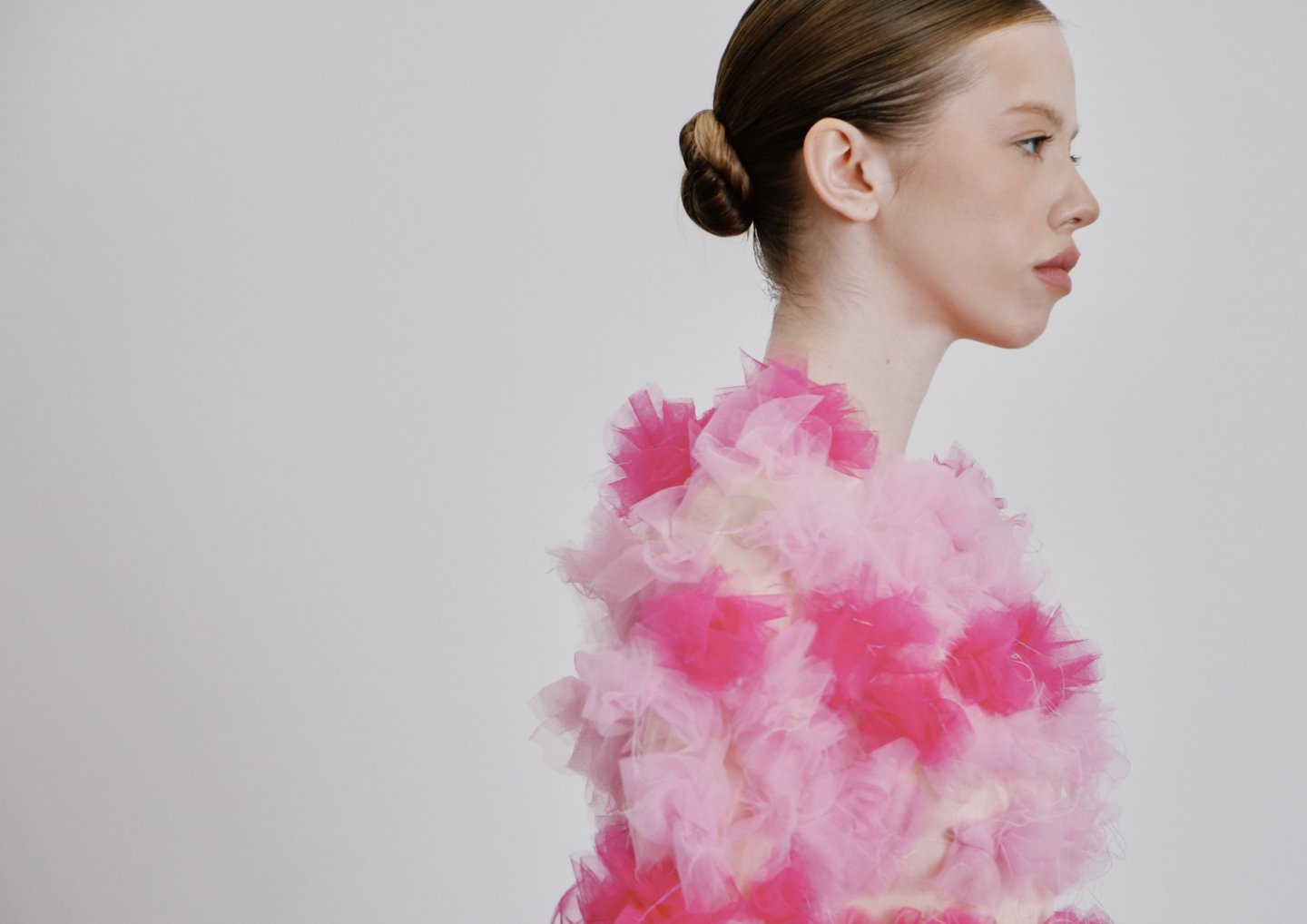
The jumpsuit was created as part of a project exploring ballet training wear. It captures the moment the body transitions from routine to perfect. The design is based on a classic slim silhouette, complemented by a striking accent of satin stripes that evoke the tutus worn by dancers.
Implementation
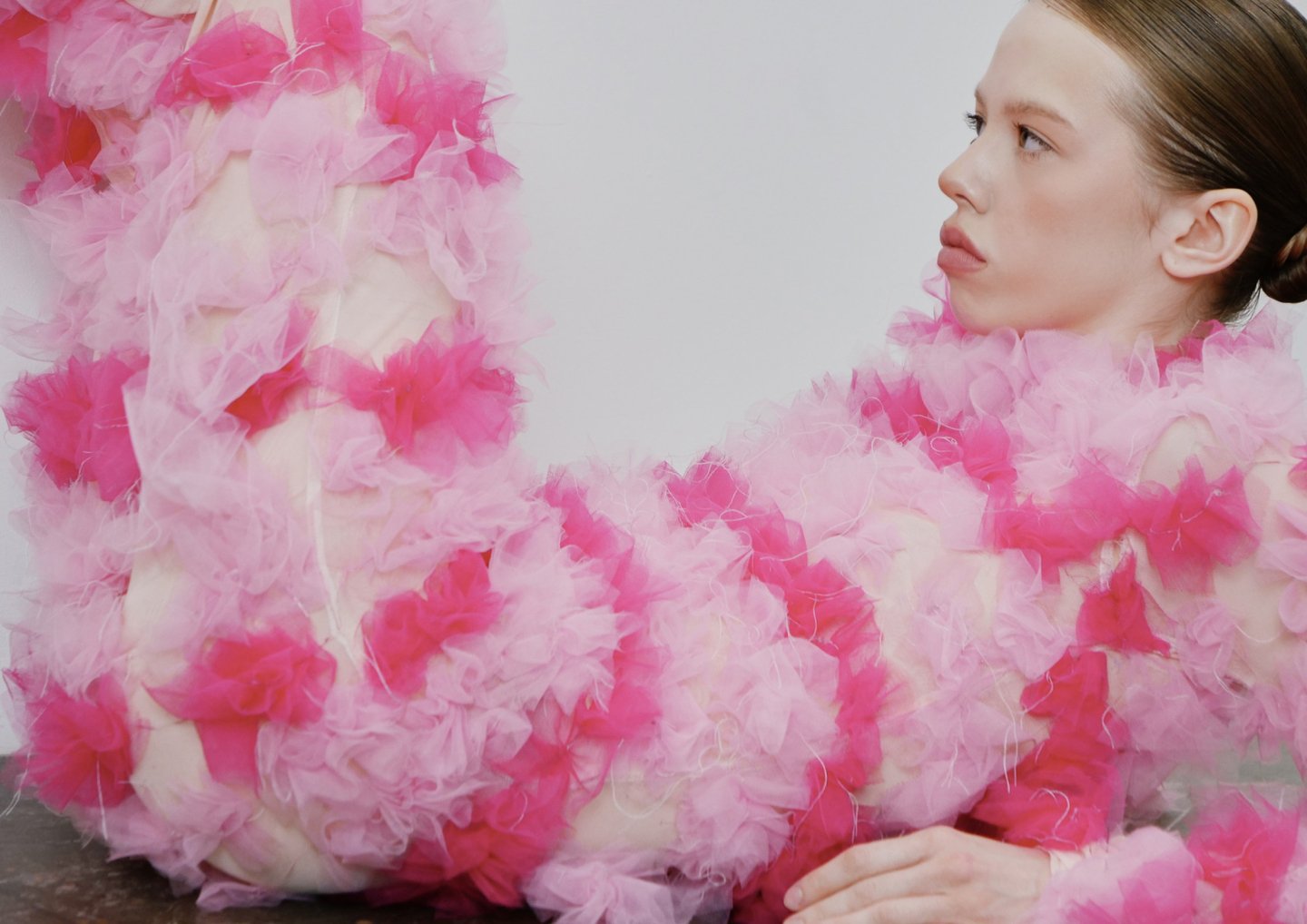
Designer jumpsuit — a full jumpsuit made of elastic mesh with decorative trim of multi-layered ruffles made from satin ribbon. The designed size is 42. The main garment parameters are calculated for size 42 with a conditional height of 170 cm. The silhouette is fitted, with long sleeves and trousers. The surface of the garment is decorated with horizontal bands of ruffles that alternate in color, creating a distinct, volumetric texture. Material — elastic mesh, ensuring comfortable fit and freedom of movement. The decorative trim is made from light satin ribbon gathered into multi-layered ruffles. Color — a combination of soft pink and vibrant bright pink. Decoration method — attaching multi-layered satin ruffles onto the mesh base, forming alternating horizontal bands along the entire length of the jumpsuit.
Materials and Cost Estimation for Production
Cost to produce one sample jumpsuit — ₽17,600. Cost to produce the main batch of 10 units — ₽176,000. Total budget for producing the sample and the main batch of 10 jumpsuits — ₽193,600. Estimated retail price per jumpsuit — ₽25,000.
Production stages
Sketch and Technical Description Development Defining the silhouette, sleeve and pant length, neck opening shape, degree of fit, and placement of ruffles. Preparing technical drawings of the garment from the front and back. 2. Construction Development and Pattern Making Creating basic patterns for the front, back, and sleeves, taking into account the elasticity of the mesh. Refining allowances for fit, garment length, and seam allowances. 3. Material Selection and Preparation Selecting elastic mesh fabric for the main body and chiffon for the decorative ruffles. Preparing thread, elastic trim, and necessary sewing supplies. Checking the stretch and transparency of the materials. 4. Garment Piece Cutting Laying out the patterns on the mesh fabric, observing the direction of stretch. Cutting the pieces for the front, back, and sleeves. Separately cutting the chiffon into strips to achieve the required width and length for the ruffles. 5. Assembling Main Components Joining the front and back pieces along the shoulder and side seams. Setting in the sleeves and finishing the crotch and inseam of the pants. Installing the fastener and finishing the neck opening with elastic trim, if necessary. 6. Creating Decorative Ruffles from Chiffon Cutting the chiffon strips, sewing them together, and forming voluminous folds. Preparing ruffles of uniform length and density, and sorting elements by width and fullness. 7. Attaching Ruffles to the Jumpsuit Marking the lines for the placement of decorative elements on the front and back panels, sleeves, and pants. Sequentially attaching the ruffles in rows, ensuring even distribution of volume and maintaining symmetry. 8. Edge Finishing and Final Assembly Finishing the bottom hems of the sleeves and pants, the neck opening, and other open edges. Securing the thread ends, removing excess threads, and checking the security of the ruffle attachment. Finishing is performed while accounting for the elasticity of the mesh. 9. Fitting and Sample Adjustment Checking the fit on the figure, range of motion, garment and sleeve length. Assessing the mesh transparency, wear comfort, and even distribution of the ruffles. Making necessary adjustments to the patterns and construction. 10. Final Finishing and Quality Control Performing gentle heat and moisture treatment suitable for mesh and chiffon. Final inspection of seams, verifying the symmetry of decorative elements, removing defects, and preparing the finished garment for packaging.