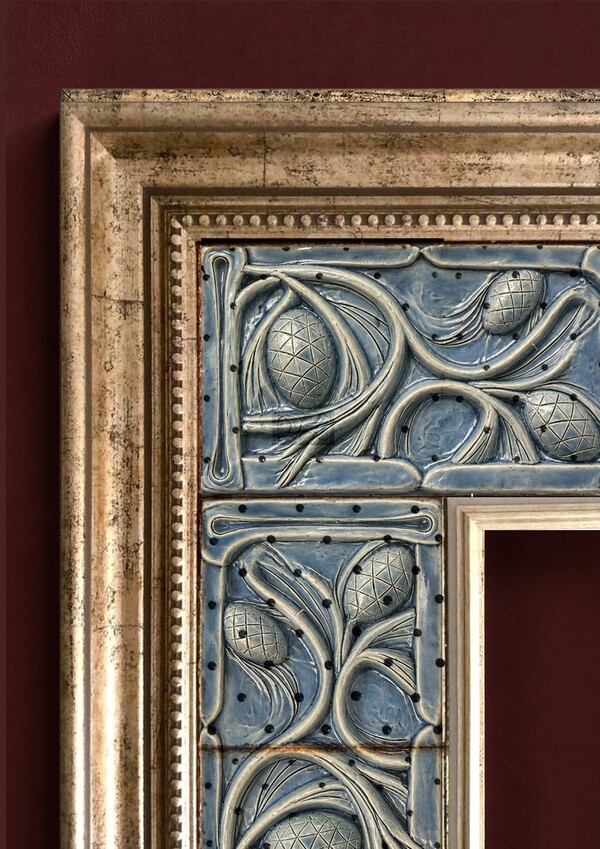
The tile concept is based on the natural motifs of Finnish National Romanticism and the decorative elements of Victor Gowing’s House in Vyborg. The composition integrates tree trunks, curved pine branches, and pinecones, evoking the character of the northern forest. The smooth lines and expressive relief reinterpret the historical ornament in an original ceramic piece.
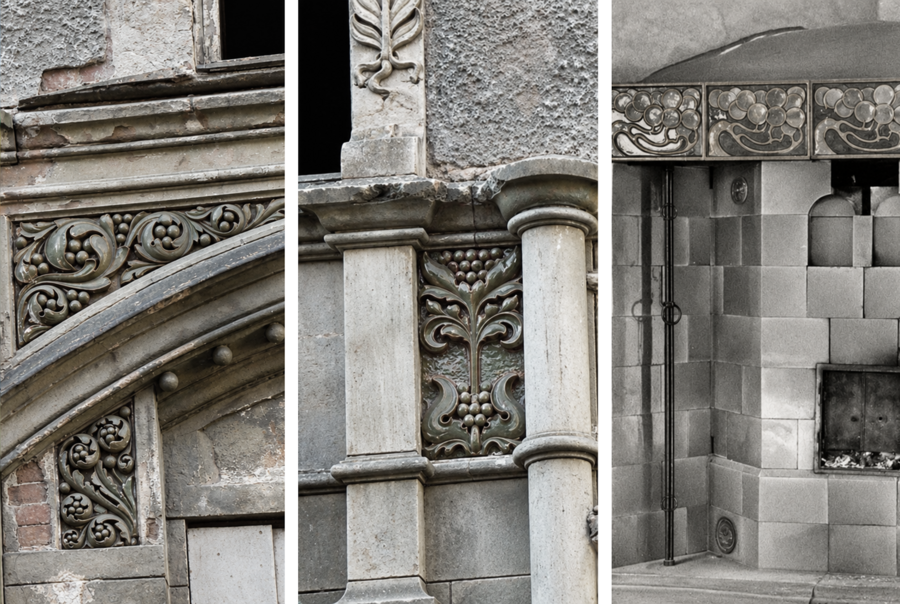
Facade and Stove Ornamentation of Victor Gowing’s House
Stages of Work
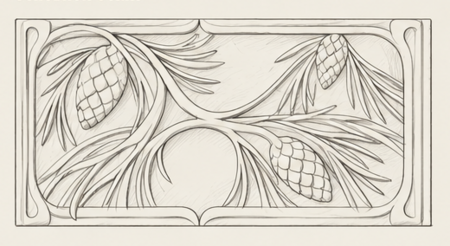
[01] Prototype Creation and Sketching Tiles are molded from sculptural clay, developing the composition and depth of the ornament.
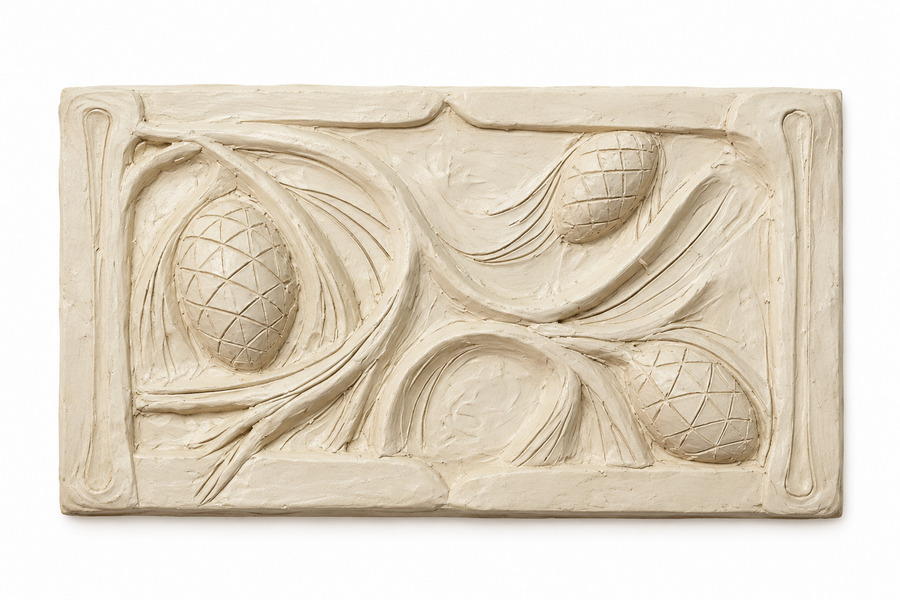
[02] Mold Fabrication A styrofoam mold is assembled for casting the plaster form. The clay prototype is glued inside the mold.
[03] Creating the Plaster Cast The model is cast in plaster. After it hardens, the plasticine is removed, creating a negative impression of the relief.
[04] Molding and Drying The plaster mold is filled with liquid ceramic mass. The piece is removed and allowed to dry.[05] Bisque Firing The dried tile is fired to achieve strength before glazing.[06] Glazing Glaze of the chosen color and sheen is applied to the surface.[07] Final Firing The second firing sets the glaze and forms the final appearance of the ceramic tile.
Final Version
Examples of how the tile could look on the original stoves in the Gowin house
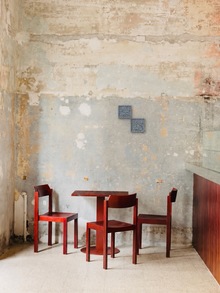
Visualization in Contemporary Interior Design