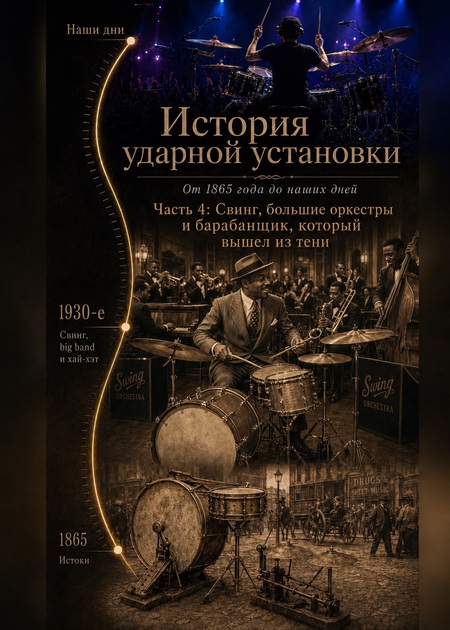
Chapter 4. Swing, Big Orchestras, and the Drummer Who Stepped Out of the Shadows
The 1920s–1930s: From Sound Factory to Big Orchestra Engine
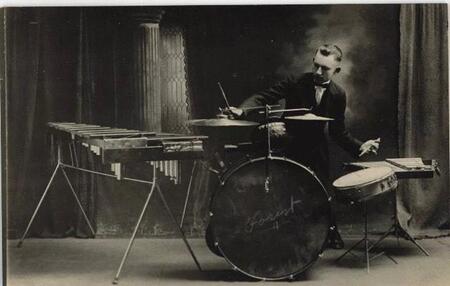
By the end of the 1920s, the drum kit had traveled an immense distance. It ceased being a collection of theatrical effects—a peculiar assortment of woodblocks, cowbells, whistles, cymbals, and contraptions seemingly cobbled together from vaudeville props and the ingenuity of a person with no days off. The kit became a musical language. During the 1910s and 1920s, the drummer learned not just how to play, but how to converse with the ensemble. He listened, responded, spurred on, restrained, commented, and created momentum. This is how the previous chapter concluded: in early jazz, the drummer moved beyond simply «serving the rhythm» to becoming a full participant in the group’s dialogue. But before the kit fully enters the era of big orchestras and swing, there is another short but crucial transitional period—around 1927–1930. It is easy to gloss over because everyone loves the major milestones: New Orleans, Chicago, Gene Krupa, big bands, the hi-hat, swing, and then rock and roll—and humanity traveled down the familiar road. However, during these specific years, the drum kit still carried a distinct function: it remained not only the rhythmic center but also a true sound factory.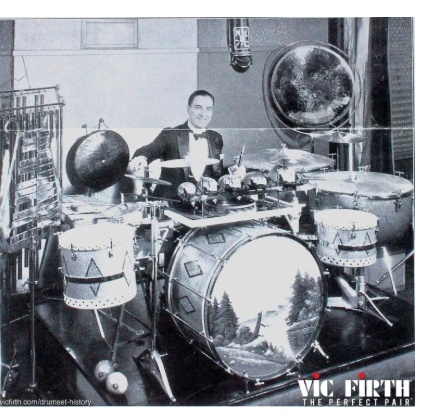
1927–1930: The Drummer as a Foley Artist
Around 1927–1930, the drummer largely functioned as a sound effects artist. Today, we associate this profession with film and call the person a Foley artist—someone who creates footsteps, impacts, creaks, claps, falls, gunshots, the movement of objects, and other sounds that bring an image to life. However, long before the modern Foley studio, similar work was already being done by theatrical and cinema percussionists.
Before sound film became widespread, musicians in the halls accompanied silent films, plays, vaudevilles, comedy routines, and dramatic scenes. And the drummer here was not simply someone who «kept the beat.» They were tasked with embodying the world itself.
On their kit, a train, a horse, a gunshot, a door, a fall, a moment of alarm, a humorous pause, a thunderstorm, a march, a chase, a circus trick, a comedic fight, and half of the human absurdity the director wanted to show the audience could all reside. At this time, the drum set was not just a musical instrument; it was a sound workshop.
A woodblock could portray the clip-clop of hooves or a mechanical rhythm. A cowbell provided a sharp, metallic accent. The snare drum created rattling, tension, a martial insistence, or a comedic roll. The bass drum was responsible for impacts, falls, explosions, and heavy steps. Cymbals delivered flashes, collisions, climaxes, and catastrophes. Whistles, rattles, bells, temple blocks, Chinese toms, and other traps transformed the drummer into someone operating a small acoustic factory.
This is not a tangential footnote in history. It is precisely from this theatrical and cinematic function that an important part of drum set culture evolved. The kit became the space where various sounds coalesced around a single performer. The drummer learned to switch roles rapidly: one second they were maintaining the dance pulse, the next they were depicting a fall, two seconds later accenting an actor’s gesture, and then reintroducing the music into motion.
This demanded not only technical skill but also dramatic sensibility. Such a drummer needed to understand the stage, the audience’s reaction, the rhythm of the action, comedic timing, and musical form. He was simultaneously a musician, a behind-the-scenes actor, an engineer without electricity, and a person to whom everyone somehow entrusted too many responsibilities. By the late 1920s, this function began to change. Sound film gradually took over some of the work from live musicians. While the installation remained in theaters and clubs, its center of gravity shifted—from effects to groove, from a noise factory to a rhythmic engine. This doesn’t mean that sound effects disappeared overnight. But they ceased to be the central focus of the installation. The old trap set, with its arsenal of whistles, blocks, bells, and peculiar devices, gradually gave way to a more compact and musically focused drum set. This is why the years 1927–1930 can be considered the farewell to one important role of the drummer. He was still a noise maker. Still an effects master. Still a person who could depict half the world using wood, skin, metal, and questionable engineering ingenuity. But swing was on the horizon. This meant that the drum kit had to become not so much a sound factory as the engine of the orchestra.
Swing: The Music of Grand Motion
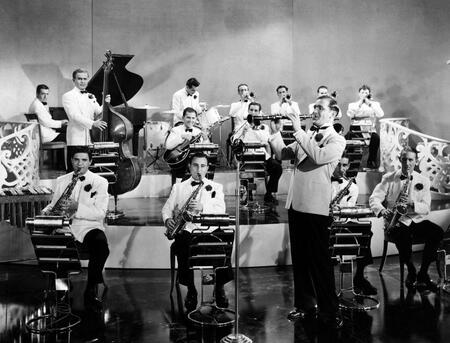
The 1930s—the era of swing. Jazz breaks out of clubs, dance halls, and local stages to fill large halls, reach the radio, recordings, movies, and mass culture. The music becomes louder, denser, and more organized. Big bands emerge. This is no longer the small New Orleans ensemble where several musicians could freely converse with each other. This is a large machine: trumpets, trombones, saxophones, rhythm section, arrangements, featured soloists, a dancing audience, and the strict necessity of keeping all this splendor intact in the second square. For the drummer, this meant a new level of responsibility. He could no longer simply add effects, as in a trap set, or accompany a small ensemble. Now, he had to conduct a large organism. The big band demanded a steady pulse, clear structure, powerful dynamics, the ability to sustain dance energy, and yet avoid turning the music into an artillery barrage. Although, if you listen to some novice drummers, it seems they still consider artillery a part of musical education.