continuation. Start here: https://hsedesign.ru/project/back-beat-istoriya-udarnoj-ustanovki-ot-1-4adbd58a19a84e1a9a5b95f2b744f594, https://hsedesign.ru/project/istoriya-udarnoj-ustanovki-regtajm-423148c318114ab6b9e9cf31665d773e, https://hsedesign.ru/project/istoriya-udarnoj-ustanovki-chast-2-0340d9dd4303493490a24f610eaa37eb
Riverboats, Dance Halls, and the New Profession of the Drummer
The 1910s and 1920s were not just about New Orleans. It was also about the movement of musicians across the country. Jazz spread through tours, riverboats, theaters, dance orchestras, recordings, sheet music, shows, and the migration of musicians to Chicago, New York, and other cities.
The drummer became part of the professional entertainment industry. They had to be able to play marches, dances, ragtime, early jazz, accompany shows, read parts, react to soloists, master the trap set, and be flexible enough not to derail the ensemble with the slightest change in tempo.
1917 stands out as the year of the development of New Orleans style drumming, and 1919 as the transition to Chicago style drumming. This clearly illustrates that the history of drumming was moving not just through time, but through geography—the style changed alongside the city, the stage, and the musical environment.
In New Orleans, the drummer was part of the street, club, dance, and theater life. In Chicago, the music became more urban, dense, connected to new venues and a new audience. The sound of the ensemble changed—and so did the role of the drummer.
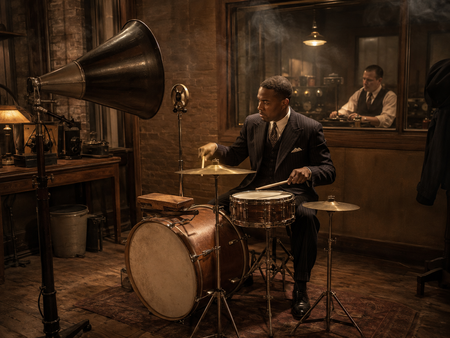
Cymbal vs. Drummer: The Technology Wasn’t Ready for His Authenticity
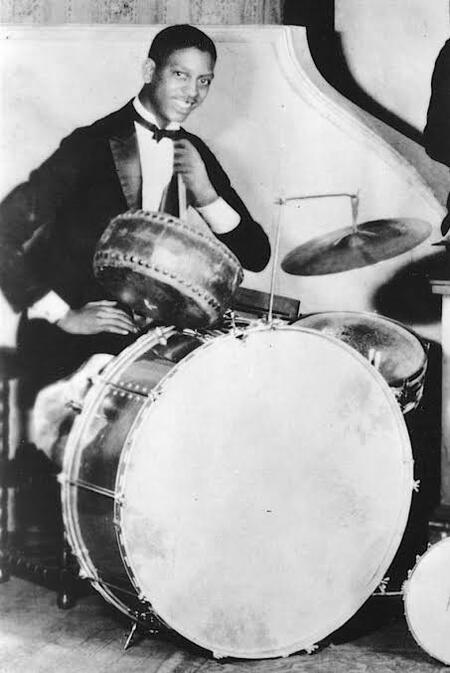
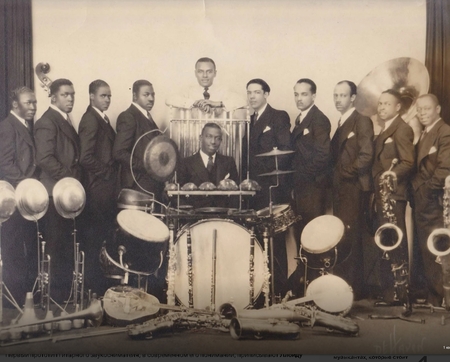
There is another critical factor: early sound recording. Today, drums can be recorded with dozens of microphones, then edited, compressed, cleaned up, arranged on a grid, and subjected to all kinds of digital manipulation—a process after which the musician may no longer recognize themselves. In the 1910s and 1920s, everything was different. Early acoustic recording poorly handled loud percussion. The kick drum could overload the recording, cymbals sounded harsh, and the snare could overwhelm the ensemble. Therefore, on early jazz recordings, drummers often had to play differently than they did on stage: softer, with less kick drum, sometimes substituting individual elements with woodblocks or other more «recordable» timbres. This significantly influenced how we hear early jazz drumming today. On recordings, it doesn’t always convey the real power and variety of a live performance. Photographs of early drummers often show richer setups than what can be heard in surviving recordings. And here arises an important historical trap: if you judge only by early records, you risk underestimating the drummer’s role. But when you look at photographs, read descriptions, and listen to later testimonials, it becomes clear: behind the scenes, the drum kit evolved far more dynamically than the old technologies allow us to hear. The recording technology simply wasn’t ready for the drummer.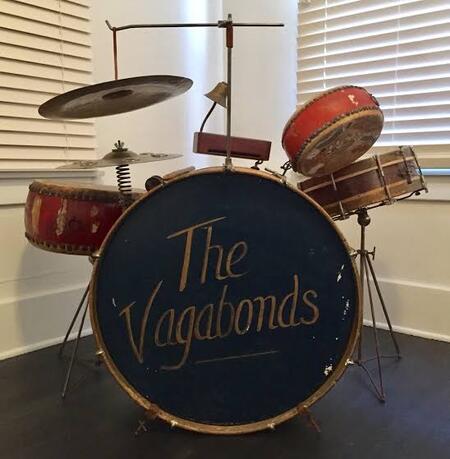
From Effects to Groove
In a trap set, the drummer was often a master of effects. He would depict, emphasize, embellish, and create scenic sounds. But in the 1910s and 1920s, another function gradually grew stronger—groove. The kit began to be perceived less as a collection of effects and more as the center of the ensemble’s rhythmic energy. The bass drum provides the lower foundation. The snare delivers accents, rolls, responses, and drama. Cymbals begin to form the upper layer. The low-boy adds a short, percussive foot pulse. Toms and toms provide color. Brushes expand the dynamics. This is not yet the modern rock beat. There is still a long way to go. But the logic of layering emerges—the logic upon which all modern drumming will be built. The kit ceases to be merely «what the rhythm is played on.» It becomes a system for controlling the music’s movement.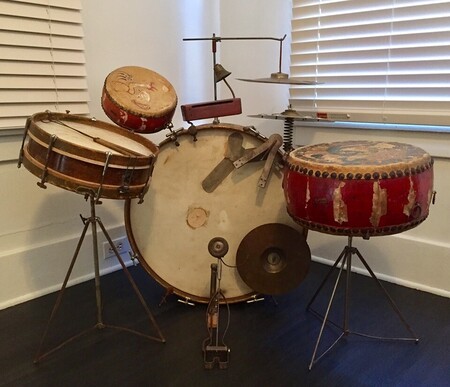
What Changed by the End of the 1920s
By the end of the 1920s, the drum kit was noticeably different from the trap set of the late 19th century. • First, the bass drum pedal became the norm, not an experiment. • Second, the snare drum firmly established itself as the central instrument of the kit. • Third, cymbals gained greater significance, though the modern role of the ride and hi-hat would still develop further. • Fourth, the low-boy paved the way for the emergence of the full hi-hat. • Fifth, the drummer transformed from merely a stage noisemaker or a «special effects person» into an ensemble musician who shapes the pulse, dynamics, and interaction. • Sixth, jazz made the drum kit not just a technical invention, but a musical language. This is perhaps the most important point. You can invent pedals, stands, cymbals, mounts, toms, and ten other pieces of hardware so that the drummer can agonizingly choose among them in a store. But the instrument becomes great not when it acquires equipment. It becomes great when it acquires a language. In the 1910s and 1920s, the drum kit began to develop a language.