About the Project
«Threads: Family Memory and the Material Culture of Modern Dagestan”—an exhibition project of contemporary art dedicated to family memory, material culture, and the ways personal and cultural experience is transmitted between generations in Dagestan.
The starting point for the project is the personal and family archives of the artists: photographs, letters, documents, household items, textiles, clothing, and other material evidence of previous generations' lives.
These materials allow us to view history not only through major events, official documents, and well-known facts, but also through the everyday experience of individual families. Objects that have been kept in homes for years can speak to migration, labor, traditions, changes in lifestyle, family relationships, and cultural belonging.
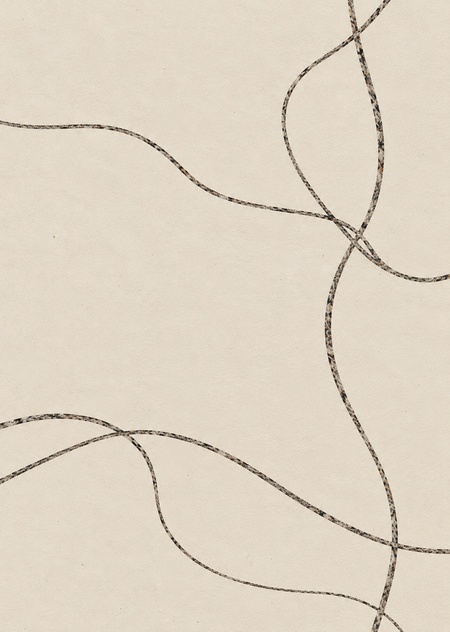
The title „Threads“ unites several meanings. A thread is a material element of fabric, embroidery, and manual labor, which holds a significant place in Dagestan’s culture. Simultaneously, it becomes a metaphor for kinship, continuity, memory, and the relationships between generations.
Threads can connect and intertwine, thin out, and break. Family memory is structured similarly: some stories are passed down from one generation to the next, others gradually disappear, and some acquire new meaning thanks to preserved objects and testimonies.
The exhibition invites viewers to consider the family archive not as a collection of static evidence of the past, but as a medium with which the contemporary artist can engage in a dialogue.
Curatorial concept and thematic framework
The central question of the project is: how does the uniqueness of different generations' cultural experiences manifest through personal and family archives, and how can contemporary art help preserve this experience?
Dagestan is a region rich in linguistic diversity, local cultures, family structures, and methods of knowledge transmission. Furthermore, the memory of previous generations is not solely preserved in historical research or museum collections; a significant portion remains within families.
A photograph might be the only surviving image of a relative. An item of clothing can be a testament to the daily life of a specific era. A letter can recount a separation, migration, or change in family circumstances. A household object can be a reminder of a person whose name and history are still remembered by the elders, but who may no longer be known by the younger generations.
This project addresses these material testaments as sources of memory that require careful investigation and gentle handling.
The exhibition does not aim to form a single image of the Dagestani family or present one universal tradition. On the contrary, the exhibition illustrates the diversity of family histories and ways of experiencing belonging.
A crucial element of the curatorial approach is the rejection of the dichotomy between the traditional and the contemporary. The artistic practices of the participants allow us to view inherited materials not as a frozen past, but as part of today’s cultural experience.
Project Goal
The project approaches personal and family archives as material sources of memory, enabling the exploration of past generations’ experiences and maintaining a connection to them.
The exhibition reveals the diversity of family narratives, cultural affiliations, and methods of transmitting memory. Through the personal archives of the artists, it becomes possible to see how varied the experience of generations can be, even within a single region.
A crucial element of the curatorial approach is the rejection of contrasting tradition with modernity. The artists’ practices allow inherited materials to be viewed not as a static past, but as part of the contemporary cultural experience—one that continues to change and take on new forms.
The project’s goal is not to imbue private histories with public significance, but rather to reveal the uniqueness of the culture and the experiences of different generations, encouraging viewers—residents and guests of Dagestan—to preserve and enrich their own personal and family archives.
It is important to me that after encountering the exhibition, the viewer is inspired to engage with their own family history: revisit old photographs, speak with relatives, record a story in their native language, discover the origin of a household item, or save documents that may become important testimonies for future generations.
Thus, the project suggests viewing contemporary art not only as a means of artistically interpreting memory but also as an opportunity to prompt a specific action—to preserve what can still be passed down.
Research Methodology
The project evolves at the intersection of artistic research, archival work, and curatorial practice.
Its research foundation involves studying local personal and family archives from Dagestan in collaboration with invited regional artists.
Each participant is asked to engage primarily with their own family archives. This is a foundational condition of the project: the artist does not act as an external observer of someone else’s history, but rather explores material connected to their personal experience, kinship ties, or the history of previous generations.
The work may include studying photographs and documents, conversing with relatives, tracing the provenance of objects, comparing surviving testimonies, and researching family histories.
The visual investigation underlying the exhibition also references artistic practices from the 1960s through the 2020s—specifically methods for working with personal and family archives and approaches to presenting works created from archival materials within exhibition spaces.
As guiding research frameworks, we consider the archival strategies of Gerhard Richter, Christian Boltanski’s artistic work on memory and loss, and practices relating to personal and historical memory in post-Soviet and Caucasian art.
The outcome of the research is not merely a theoretical text, but also a curatorial methodology that defines the principles for selecting works, handling archival materials, structuring the exhibition, and engaging with the viewer.
Artists
The preliminary project roster includes seven artists. Their practices vary across mediums and artistic modes of expression: from painting, graphics, and monumental art to textiles, ceramics, and interdisciplinary forms.This diversity is precisely what makes the exhibition meaningful. It allows for the exploration of family memory not through a single visual language, but through diverse material and artistic approaches.All candidacies are preliminary. The participation of the artists, the content of new works, and the conditions of their production are subject to discussion.
Jamal Saidov
Painting, monumental art, and the exploration of the domestic imageIn Jamal Saidov’s practice, a significant focus is placed on engaging with space and its symbolic meaning. The artist works with painting and monumental imagery, using the image of the home to speak about memory, human presence, and personal connection to a place.For this project, we are particularly interested in the opportunity to consider the home not only as an architectural structure but also as a space where the traces of multiple generations are preserved.
Madu Akhmedova
Painting, mixed media, working with visual imageryMadu Akhmedova is an interdisciplinary artist for whom painting remains her primary medium.Curatorial Proposal: To explore family photographs, objects, or memories and create a series of paintings where the archival image serves as the starting point for a new artistic interpretation.
Mariyat Kadyrova
Umukusum Khachilaeva
Apandi Magomedov
Magomed Daudov
Gabibulla Gabibullaev