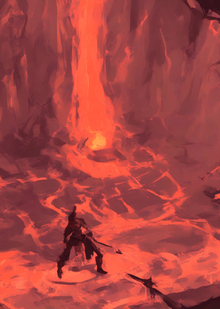
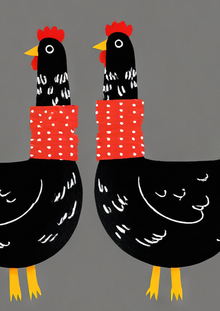
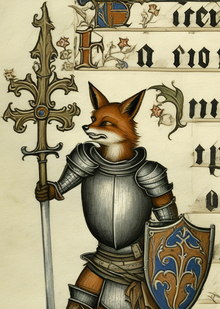
As part of a student project, I created a series of illustrated playing cards referencing engravings.

Concept
I became curious how the developed illustration style for maps could be applied to a full-sized narrative illustration.
I decided to train a generative model using my own works and use it to illustrate the Brothers Grimm fairy tale, «Rapunzel.»
The prepared dataset consists of 36 illustrations.
Generative Model Training
Since the maps are not 1:1 scale, I prepared images in the necessary format in advance.


After uploading the dataset, BLIP model was used to generate prompts describing the source images and assign a token identifier.


Based on the uploaded dataset and the generated descriptions, the model was trained using the following parameters:
The finished model was uploaded to the HuggingFace service.
Final Illustration Series


Based on the generated series, the following conclusions can be drawn:
The model successfully conveyed the overall mood and stylistic characteristics of the original set of works, specifically the hatching, the imitation of ink blots, the general color palette, and the character of the lines.
It is also worth noting that the neural network performed well in rendering the stylized contours and tonality. However, it should be mentioned that the model has issues with a sense of space and human proportions.
Despite these shortcomings, the neural network managed to generate a consistent, cohesive series of works that are stylistically aligned both with each other and with the references. The model scaled up the style and added narrative elements, resulting in decent illustrations for a fairy tale.
No Generative AI was used.