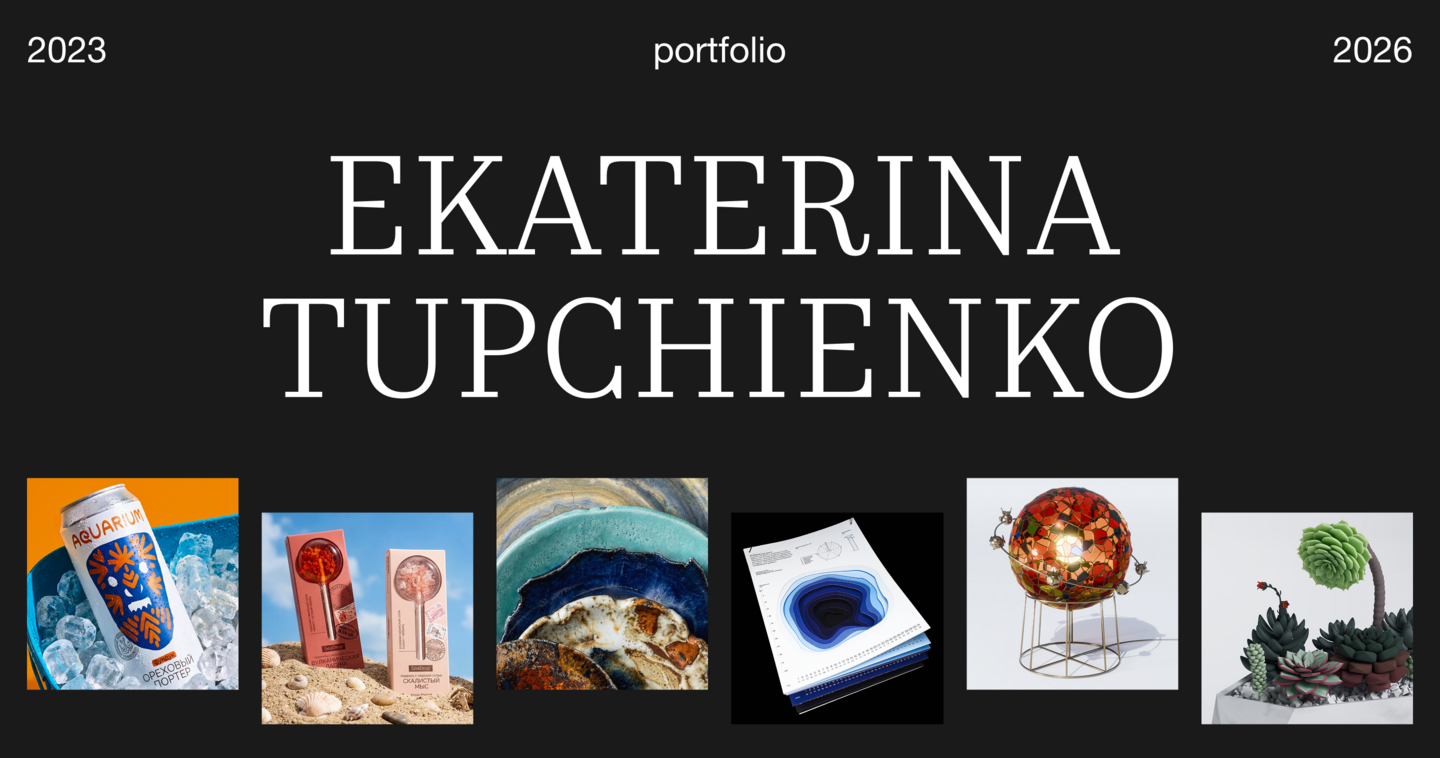
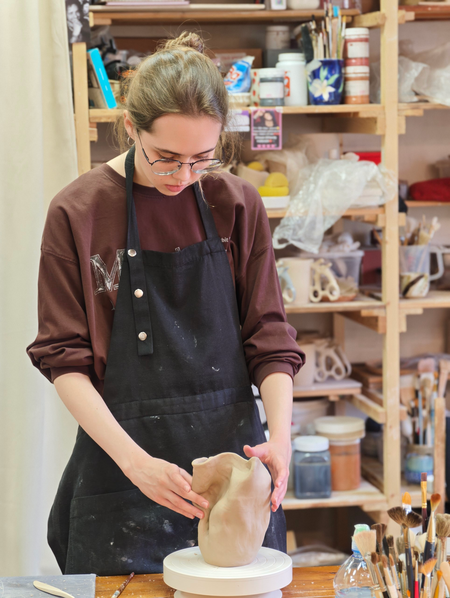
My name is Ekaterina Tupchienko. I’m a communication designer working in branding, packaging and object design.
Every project starts with a question: what is this really about, beyond the brief? I look for the answer in the material, in local history, in craft. Most often it comes from comparison — two things that seem unrelated but share the same logic. A planet and a plate. A coastline and a postcard. A calendar and a descent. Once that logic is found, everything else follows: how the object looks, how it’s made, and why it should exist — and the project becomes a system where every part carries the same idea.An idea holds when it’s built on something real.I often find inspiration outside design itself — in nature, in art, in history, in craft, in music. A coastline, an old mask, a planet’s surface, the structure of a melody: these are the things I start from. I look for the logic inside them, and then build the whole project around it.
How the work gets done
1. Research and brief. What is needed — the format, the client, the limits, the material.2. Ask. What is this really about, beyond the brief?3. Compare. Two things that seem unrelated but share the same logic — that’s where the concept might come from.4. Build. Sketches, 3D, tests. I turn the logic into form: the object, the material, the name, the brand.5. Check. Every part has to carry the idea.6. Final. Visuals, layout, presentation — the project finished and shown.By the end, nothing in the project should feel accidental — each part is there because the idea needed it. The project has to carry the idea itself, not a caption explaining it.
The projects below are grouped by what the comparison starts from — nature, art, place and history, and story. Each project shows the brief, the question, the insight, and the result. Research, sketches and tests stay behind the scenes.
Projects
When nature becomes an object
Cosmos in Texture: what if a planet could fit on your plate?
Space in the interior usually looks the same: glowing planet lamps for kids, or flat prints and stickers. Even in ceramics, planets are just painted with glaze on smooth plates. But planets aren’t flat. They have size, weight and a surface. Mars is rough. Saturn is pearlescent. Venus is dense, matte, wrapped in clouds.The idea came from a simple observation: a stack of plates standing one on top of another looks like planets lined up in space.The collection turns that difference into the main idea: eight plates, eight planets. No drawings — only size and texture.
Each plate is hand-moulded from dense pottery clay. The textures — craters, bands, waves — are modelled by hand, then covered with glossy, matte and pearlescent glazes. After double firing, every plate is checked against the planetary reference: texture, scale, colour. Then it gets a number and a certificate of authenticity.
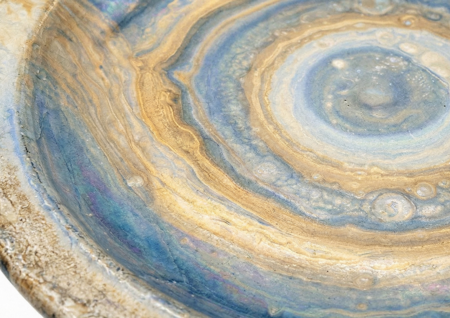
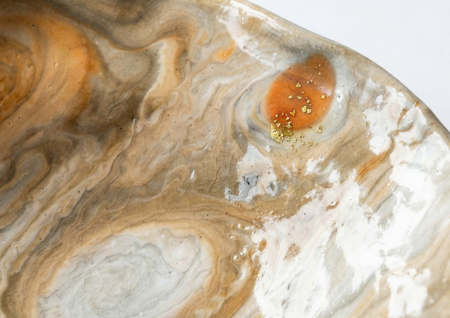
In the end, a planet is no longer flat — it has its own size and texture. The planets become everyday objects, and the solar system becomes part of the table.
*The plates shown are visualisations. This is a concept project: the images are renderings, and the production method is attached to each piece
Tactile Landscapes: imagine a landscape becoming furniture
Furniture «inspired by nature» usually looks the same: artificial grass, printed textiles, smooth or evenly textured surfaces. They show nature, but you don’t feel it. There is no furniture where tactile variety itself is the main quality.The idea came from a simple feeling: lying on grass and noticing how different it is under your hand — soft here, rough there.The collection turns that difference into the main idea: a chair, a pouf and a screen with handmade removable covers. Each cover reproduces a natural relief, and every texture is different — felt pompoms, acrylic pompoms, cotton plush and faux fur. There are two landscapes in the series: a forest meadow and a mountain slope.
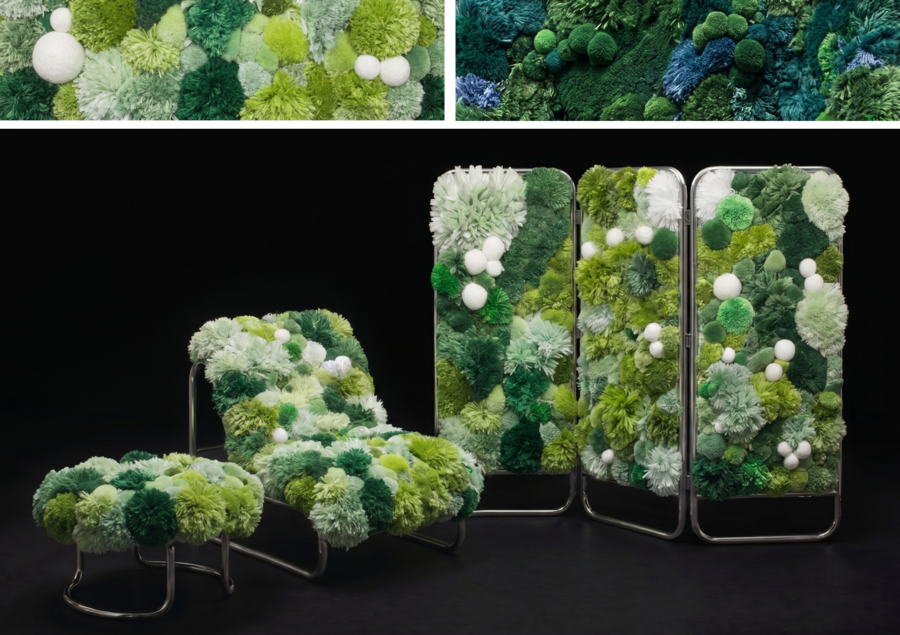
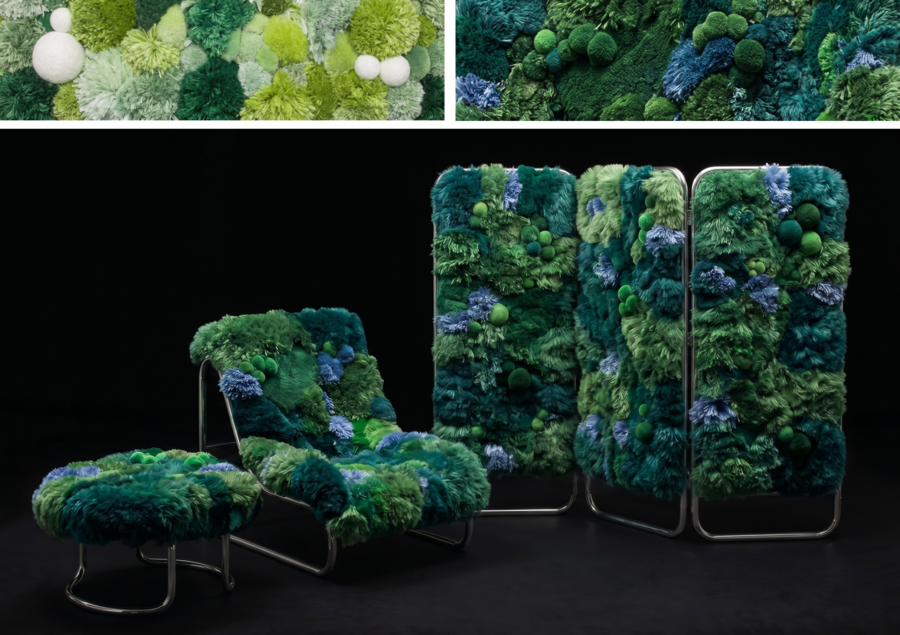
The pieces are built on one form with different covers: a cotton base with soft foam and a metal frame, and a simple system for changing the covers. The collection is built around collecting the covers, not the objects — three types of texture on one form, with a choice of landscape to fit the interior.
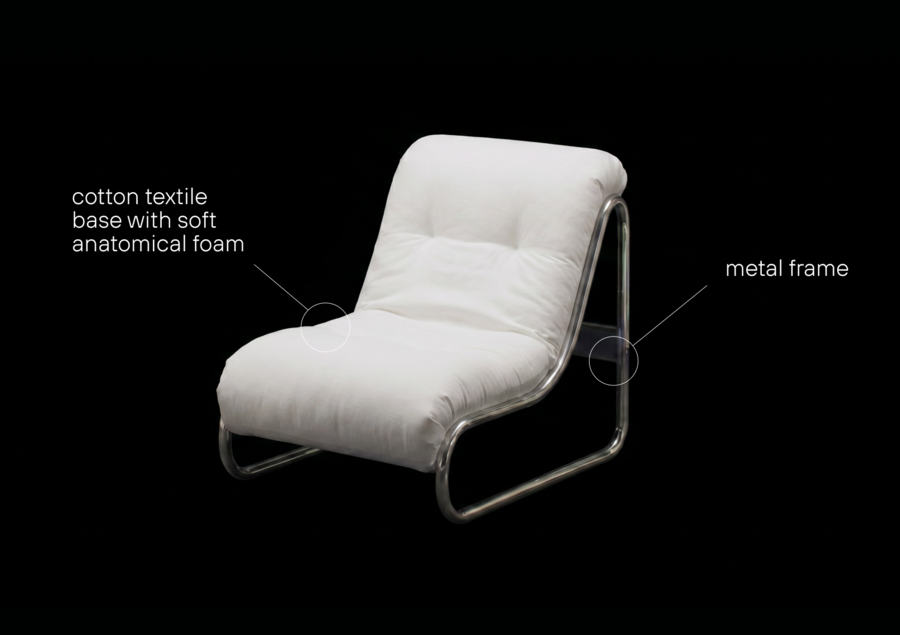
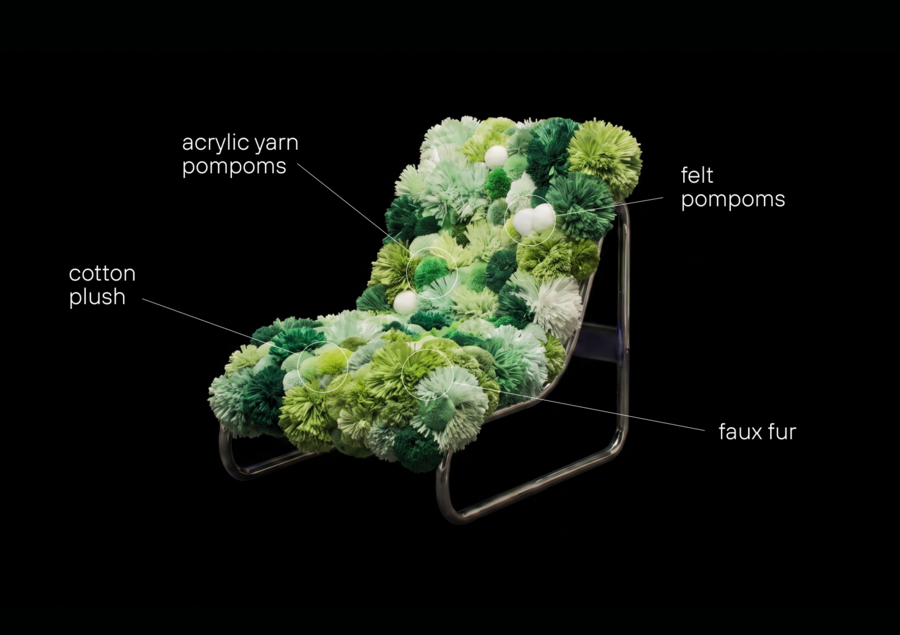
*The furniture shown is visualisation. This is a concept project: the images are renderings, and the production method is attached to each piece
In the end, it’s a collection where the main quality is tactile difference: you want to touch it, look at the texture, sit on it in different ways. A ready-made solution for «nature at home» — for architects and decorators, sensory rooms and relaxation studios, and private clients moving away from mass-market furniture.
Mariana Trench: a year, measured in depth