Concept
This study focuses on the imagery of transformation and hybridization in the art of the Chavín culture, which existed in the territory of modern Peru during the 1st millennium BCE. A distinctive feature of its artistic heritage is the creation of figures that merge human, animal, and mythical characteristics. In monumental sculpture and stone reliefs, there are depictions of creatures with unusual anatomy: human faces take on animalistic traits, body parts of different animals are combined into a single form, and the familiar contours of living beings are transformed into fantastic imagery.
This theme is interesting from the perspective of how conventional representations of animals and humans were mixed, altered, and acquired complex hybrid forms in ancient art.
The research intends to examine two interconnected phenomena—transformation and hybridization. Transformation is understood as the visual alteration of an original image, in which a human or animal figure acquires new traits not native to it. Hybridization is examined as the combination of elements from different creatures into a single figure, resulting in a mixed image. This distinction will allow for the tracing of various modes of interaction between human, animal, and fantastic forms, without reducing all representations to a single category.
Main Question:
What visual and plastic means within the art of the Chavín culture are used to create images that merge human, animal, and fantastical traits?
Structure
1. Transformation of the Human Figure
Images where the recognizable human foundation is retained, but it is complemented or altered by animal characteristics.
2. Hybridization
Images in which human and animal elements interweave, uniting into a single form.
3. Fantastic Creatures
Images that combine traits from several different animals to create novel, fantastical beings.
4. Conclusion
Chapter One. The Transformation of the Human Figure
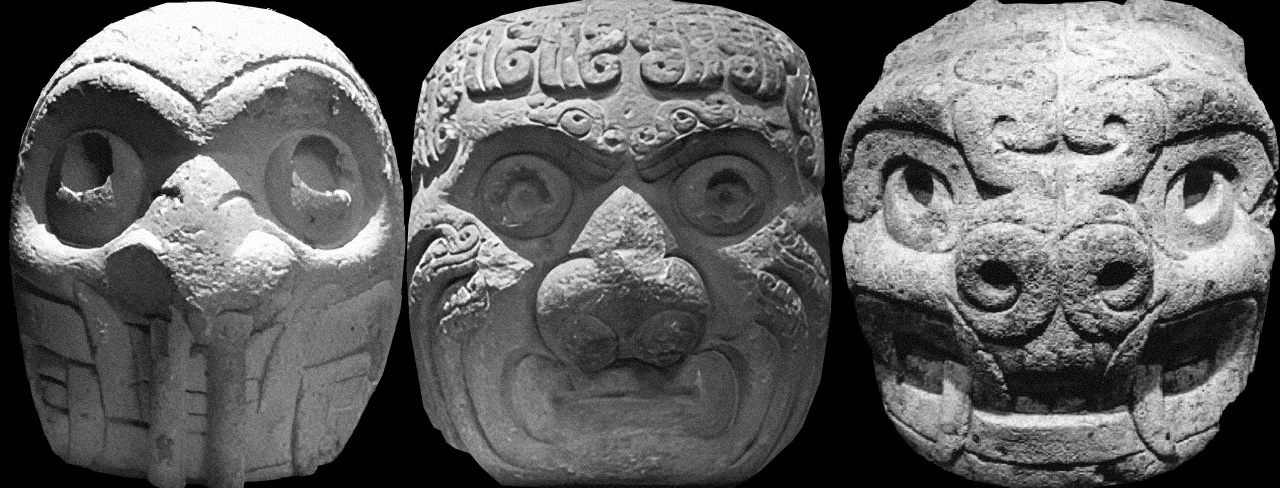
Stone head from the temple wall in the Chavín de Huántar religious complex, Peru. 1st millennium BCE. Stone, volumetric carving
One of the defining characteristics of Chavín culture’s art is the depiction of human figures endowed with unusual, animalistic traits. In these portrayals, the human form serves as the starting point for creating a new being: familiar facial features are altered, individual parts take on resemblance to beasts, and anatomy yields to a unique artistic expression.
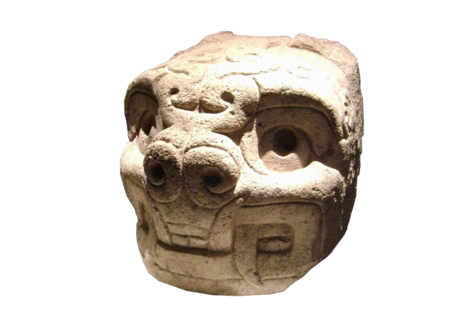
«Spiky Heads» are stone sculptures of heads that were inserted into the walls of ancient Peruvian temples. These sculptures depicted sacred animals: the heads of felines, snakes, and birds. The bird symbolized the celestial world; the feline represented earthly power; and reptiles and snakes were associated with the underworld. Human heads were also depicted, likely to summon ancestors belonging to the community’s common lineage.
Exhibition of Stone Heads (Tenon Heads). Chavín Culture and other ancient Peruvian cultures. Stone, volumetric carving. Larco Museum, Lima, Peru
This feature is particularly evident in the carved heads (cabezas clavas) that adorned the architectural complex of the Chavín de Huántar temple. These pieces were mounted on the exterior walls of the structure and consisted of substantial, three-dimensional stone depictions of heads. Despite sharing a general human facial structure, individual examples exhibit notable variations. Some feature prominent, protruding eyes, broad noses, unusual mouth shapes, canines, and other details reminiscent of predatory animals.
When observing these sculptures, it becomes apparent that the alteration of the human visage does not occur through a complete abandonment of its original form, but rather through the transformation of individual elements. Eyes may become disproportionately large and round, the nose and mouth take on an unfamiliar shape, and prominent fangs alter the expression of the face. As a result, the human face retains a recognizable structure, yet simultaneously begins to be perceived as something else—a transitional state between human and animal.
These kinds of images are interesting because the degree of human representation varies across them. In some sculptures, human features are still quite recognizable, while in others, they are so distorted that the face takes on a distinctly animalistic or characterful quality. This allows us to view the heads on these busts not as uniform representations, but as examples of diverse methods for visually transforming the human form.
Exaggeration of specific features plays a significant role in creating such imagery.
Chavin artists did not aim for a realistic depiction of human anatomy. On the contrary, they altered proportions, emphasized characteristic details, and combined elements not found in the natural human form. Because of this, the familiar human figure became unconventional and acquired new properties.
Thus, the method of depicting transformation is based on the alteration and exaggeration of individual parts of the human face. The image remains recognizable, but gradually acquires traits of another creature, which achieves the effect of metamorphosis.
«Head on a Stake (Cabeza Clava).» Chavín Culture. Stone, volumetric carving. Chavín de Huántar Temple Complex, Peru
Chapter Two. Hybridization
In Chavin’s works of cultural art, there are also images where human and animal traits merge into a single figure. Unlike depictions where animal features merely complement the human form, here they become an integral part of the being itself. The human figure connects with individual animal elements.
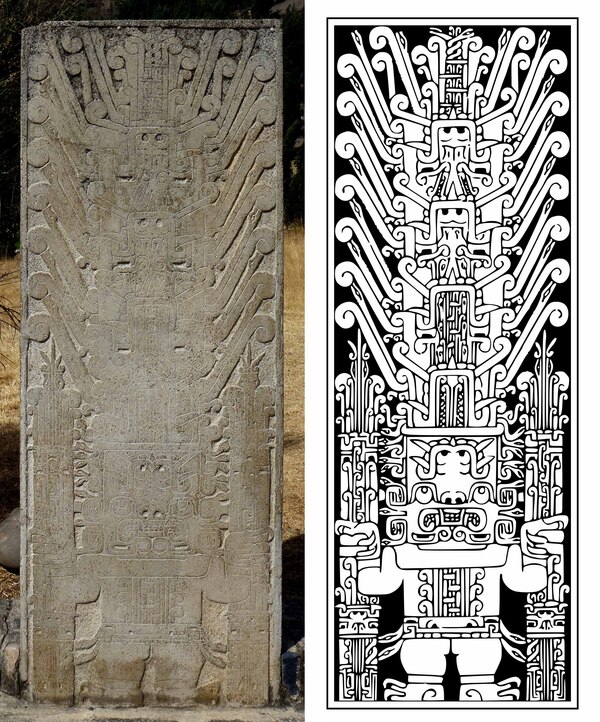
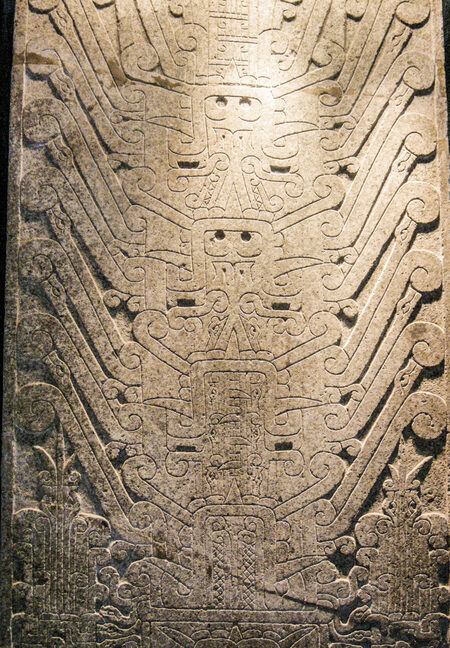
«Stela Raimondi.» Chavín Culture, circa 400–200 BCE. Stone, relief carving. National Museum of Archaeology, Anthropology, and History of Peru, Lima.
A particularly expressive example of this type of hybridization is Stella Raimondi
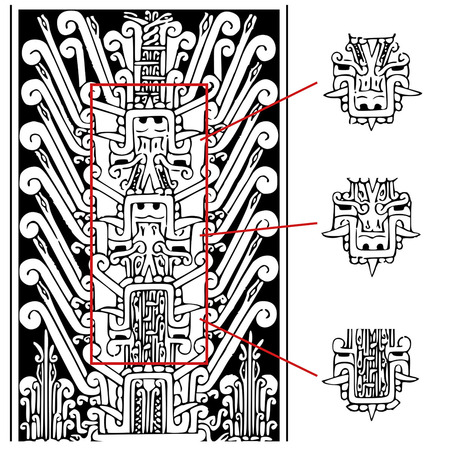
A stone slab depicting a frontal anthropomorphic figure holding two staves. Its image combines the human body structure with features of various animals. Large fangs, reminiscent of a feline predator’s maw, are prominent around the face. The hands and feet terminate in claws, and numerous serpentine elements emerge from the headdress and from the sides of the figure. The staves themselves are also adorned with winding forms and culminate in depictions of snake heads.
Such a combination of traits from different creatures is not a random decorative addition. Animal motifs occupied an important place in the Chavín artistic system. Researchers identify jaguars, snakes, caimans, and predatory birds as among the most frequently encountered motifs. It is particularly interesting that on the Raimondi Stela, separate parts of the human body gradually lose their conventional anatomical appearance and acquire properties of other beings. Claws replace fingers, the fangs of a predator are visible instead of usual teeth, and serpentine elements become part of headwear and staffs.
This is not merely a hyperbole of traits, as in transformation, but specifically a fusion of human anatomy with that of other animals held sacred by the Chavín culture.
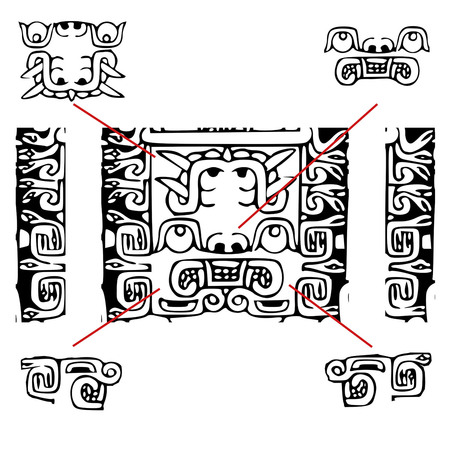
Similar mixing principles can also be observed in the stone heads.