quote by Eshkere
Navigation
I. Concept II. Alone with the Letter: The Geometry of Silence III. Witnesses and Mediators: The Tension of Gazes IV. The Moment of Creation: Gesture, Pose, and Theatricality V. Conclusion
Concept
In the 17th century, the establishment of regular postal service in Western Europe made private correspondence accessible to wide segments of the urban population. Reading and writing letters ceased to be a rare attribute in portraiture and emerged as an independent motif within the genre of daily life. This tradition was most vividly formed in the painting of the «Dutch Masters» of the 17th century, who first focused on depicting private life within the intimate domestic interior. In the 18th century, with the rise of Enlightenment culture and the popularity of the epistolary novel, interest in the theme of correspondence intensified in France and England. Artists shifted the focus from quiet contemplation to nuanced psychological characterization, expressive facial gestures, and complex narrative interactions between characters. This study examines these works from the perspective of formal visual analysis: my goal is to identify the techniques by which a sheet of paper organizes the canvas space and conveys the hero’s hidden emotions.
Key Question
What compositional, plastic, and chiaroscuro techniques did 17th–18th-century Western European painters use to structure the painting’s space around the brushwork and capture the characters' emotional state?
Hypothesis
I suggest that the depiction of a letter in 17th–18th century genre painting functions as a key compositional marker. The letter dictates the frame’s geometry, the vectors of gazes, and the plasticity of the hands' gestures, allowing the artist to convey complex psychological states—from calm concentration to anxiety and shock—exclusively through visual means, without direct literary commentary.
Principles of Visual Material Selection
Structuring Principle
aa aa
Principle of Selecting Text Sources
nv’a a a aa v
II. Alone with the Letter: The Geometry of Silence
tetktktktktktktktktkt tkktkt kt
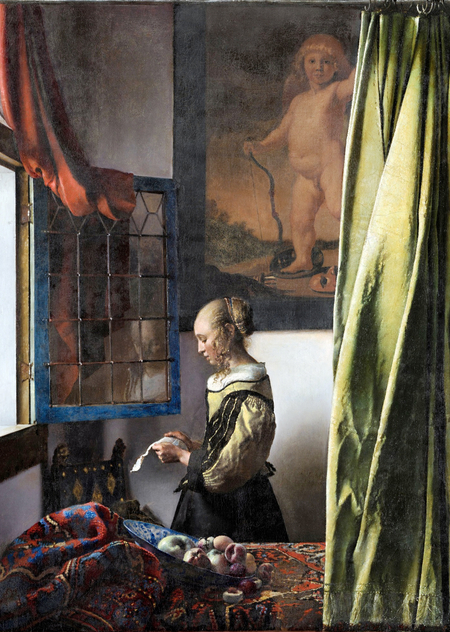
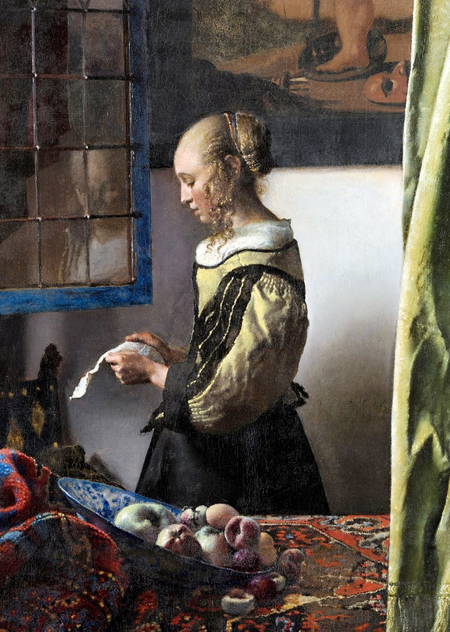
In Jan Vermeer’s painting, «Girl Reading a Letter at an Open Window, ” a sheet of paper becomes the semantic center of the interior, which is structured like a multi-layered theatrical curtain. On the right, a heavy greenish-ochre curtain defines the boundary of the space, acting as a „trompe-l'œil“: it seems to belong to the viewer’s space. In the foreground, the barrier before the girl forms a table covered with a crumpled Oriental rug and an inclined porcelain bowl of fruit. On the left, the verticality of the open window sash creates a geometric frame.
The letter is positioned at the intersection of these spatial barriers and functions as a light marker for the composition: the soft daylight from the window highlights the sheet of paper and the hands, making them a vibrant focal point of the canvas. The heroine’s psychological state is conveyed by the artist through the plasticity of her pose, the manipulation of light, and the line of her gaze. The young woman is depicted in profile; her torso is still, while her head is tilted slightly toward the text, creating a sense of intense focus. A slight tension is betrayed by the fingers of both hands—cradling the edge of the paper carefully yet firmly—as well as the subtle reflection of her face in the windowpane, which doubles the image and emphasizes the theme of solitude.
Discovered during a restoration completed in 2021, the image of Cupid trampling two masks of pretense—a «picture within a picture» on the back wall—reinforces the role of the text as a narrative key: the writing on paper connects the intimate domestic scene with the theme of love correspondence, subordinating all compositional elements to the act of reading.
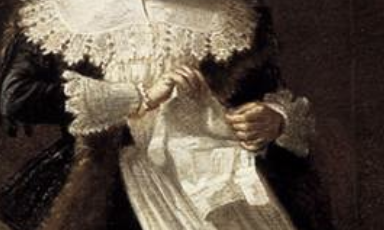
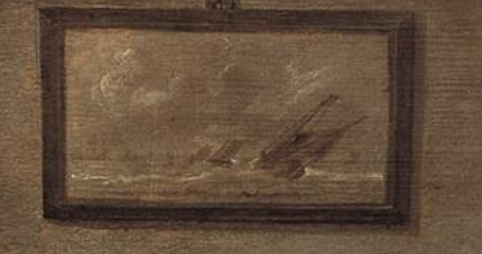
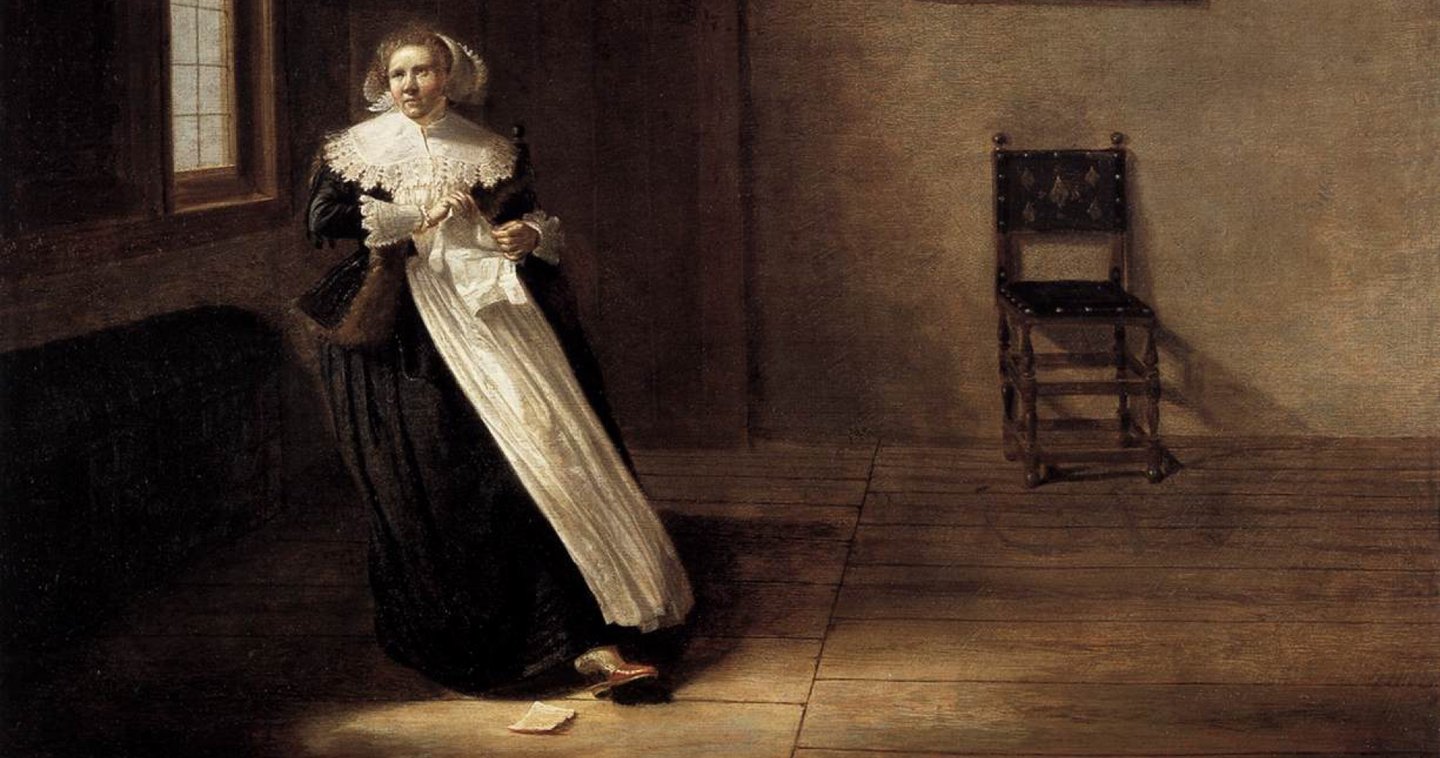
In Dirk Hals’s work, «Woman Tearing a Letter,» the composition is built on asymmetry and the contrast between filled and empty space. The heroine is shifted to the left side of a spacious, ascetic room, where the strict verticals of the closed door and tall window are balanced by a blank wall and a single chair on the right. The light focus is on the bright: a directed stream from the window falls upon the envelope dropped at the heroine’s feet, the diagonal of the white apron, and the hands, making the paper a bright spot against the restrained ochre-brown palette of the interior.The heroine’s emotional state is conveyed through her pose, the direction of her gaze, and the placement of her hands. Instead of immersing herself in the text, the woman leans her body to the side, turns away from the letter, and looks beyond it—outside the composition—creating distance from what she has read. The physical action is concentrated in the fingers of both hands as they tear the paper; the empty envelope has already been tossed onto the wooden floor, which reads in the context of the narrative as a sign of a definitive break in the relationship.A thematic complement to the scene is the seascape hanging on the back wall, depicting ships on a turbulent sea—a stable symbol in 17th-century Dutch iconography representing romantic turmoil and separation. The connection of this detail to the torn letter reveals the content of the domestic scene, showing the heroine’s reaction to the news she has received. It is noteworthy that this piece is considered the first dated painting in Dutch art on the subject of correspondence, highlighting its innovative nature for the genre.
In Pierre-Alexandre Ville’s painting, «The Lady with the Letter,» the composition transplants the tradition of the Dutch chamber interior into the space of late 18th-century French sentimentalism. The figure of the young woman occupies the central position before a heavy green drapery. On the left, the back of an armchair frames her; on the right, a chest of drawers and a small table, covered with a patterned tablecloth and porcelain dishes, define the boundary of the space. The letter, with illegible lines, is shifted toward the lower right section of the canvas.The scattered lighting highlights the light shawl with fur trim, the heroine’s face, and the unfolded sheet of paper, unifying them in a single luminous triangle against the subdued, dark interior. Unlike reserved Dutch genre scenes, the emotional state here is conveyed through the open theatricality of posture and expression—a trait tracing back to the style of Jean-Baptiste Greuze, whose studio Ville attended. The heroine is not looking closely at the text: her head is tilted back, and her gaze is directed upward—shock at what she has read is evident in her expression.The psychological tension is emphasized by the plasticity of the hands: the weakened fingers of the right hand barely hold the paper at the edge of the table, while the left arm hangs powerlessly with an open palm. This gesture—with its spread, seemingly exhausted hands—directs the viewer’s gaze straight to the letter, cementing its role as the narrative centerpiece. Meanwhile, the content of the text remains a secret: the unreadable lines withhold any solution, turning the letter into the engine of the plot. It explains the lady’s state and compels the viewer to independently construct the backstory—be it a love affair or sudden bad news. It is no coincidence that the painting has a second title—"Distressing News"—as it supports precisely this interpretation.
III. Witnesses and Mediators: The Tension of Gazes
tetetetete ete e e eee