Concept
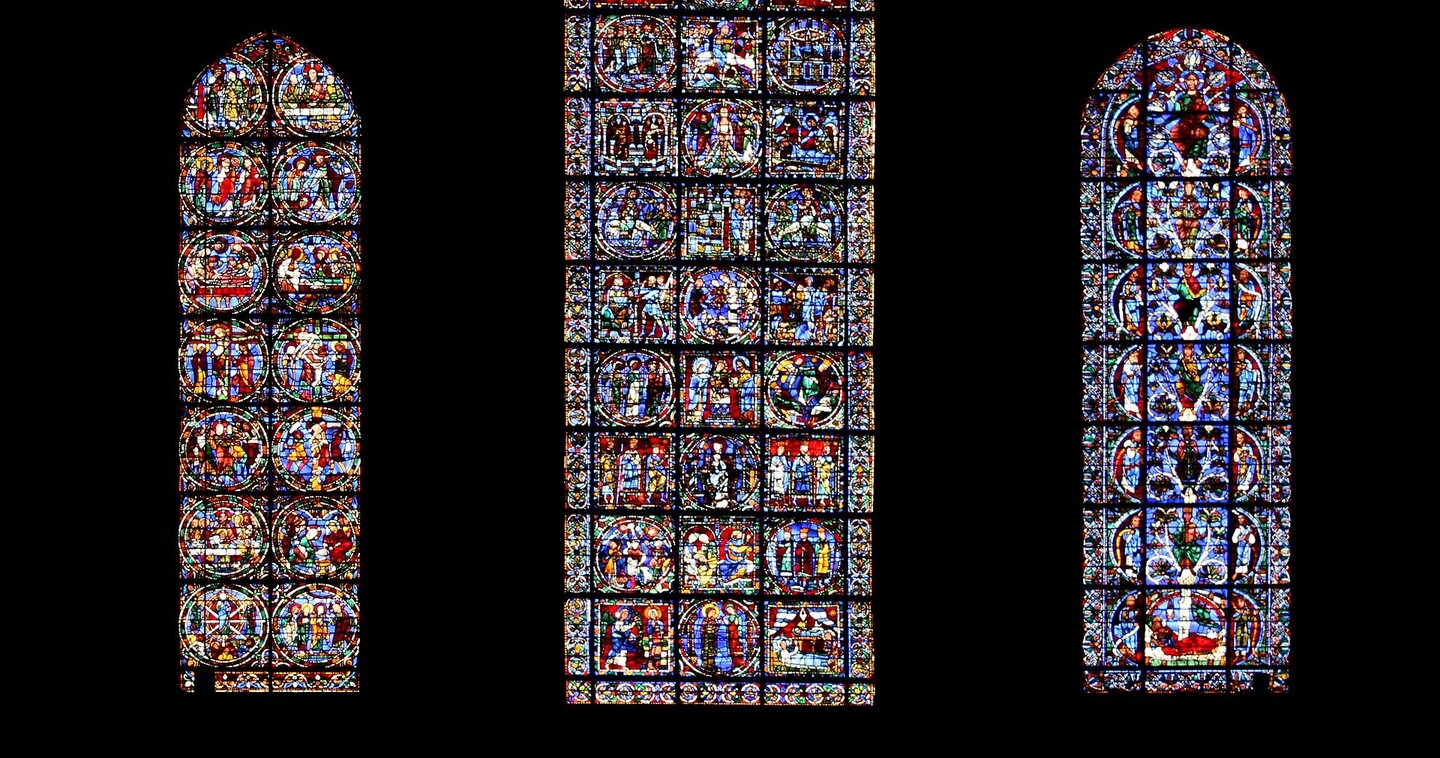
Color in medieval art was not merely a decorative element but also a vital means of conveying religious ideas. This was especially evident in Gothic architecture, where stained glass became an integral part of the building’s artistic identity. Through the colored glass, light ceased to be simple natural illumination and transformed into an independent medium of expression.One of the most famous monuments of stained glass art is the Chartres Cathedral in France. Its surviving medieval stained glass panels cover about 2,500 square meters, forming one of the largest complexes of this kind. Particular attention is drawn to the blue color, which became known as «Chartres Blue.» In the 13th-century stained glass, it takes on a deeper and richer character, interacting with red, green, and light glass elements.
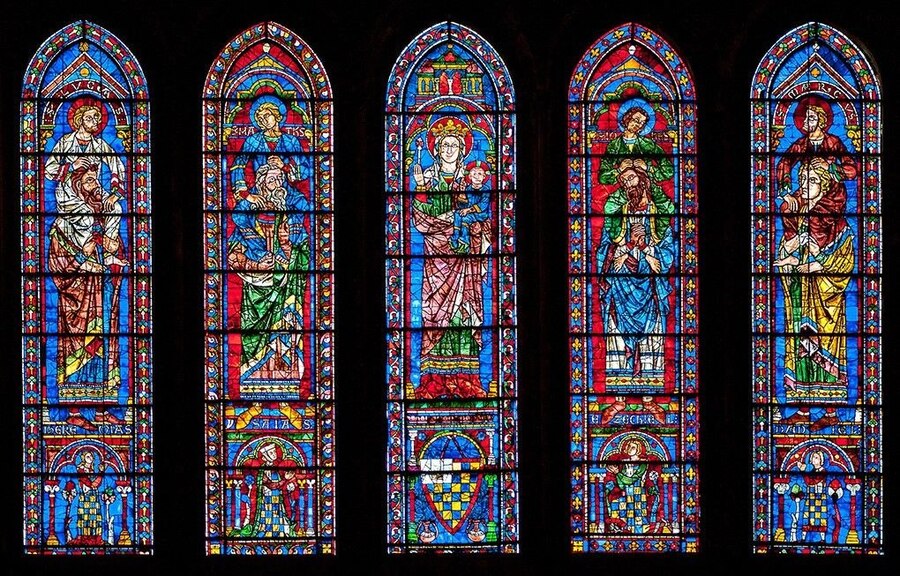
Lancet stained glass windows of the southern transept of Notre-Dame de Chartres Cathedral, created around 1221–1230.
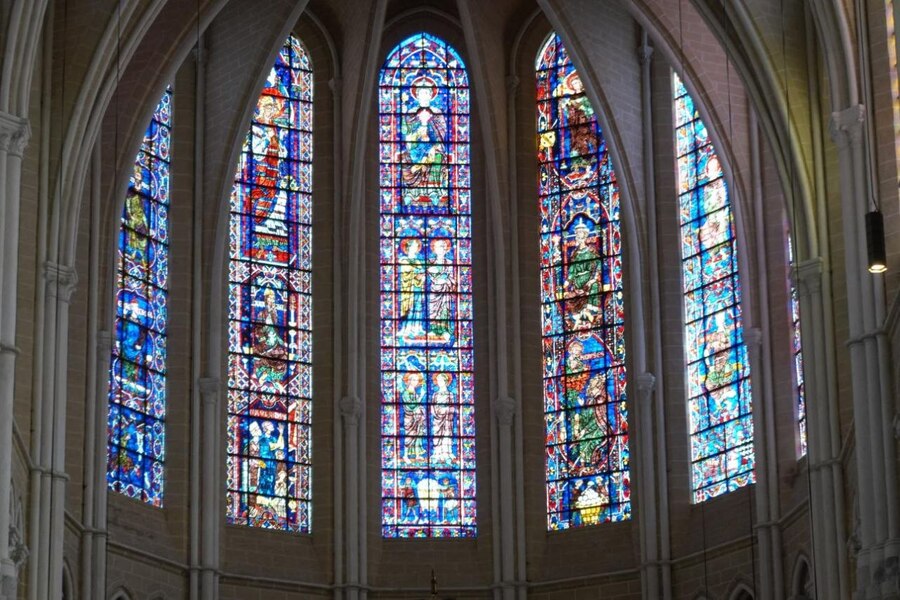
Stained Glass of the Upper Level of Chartres Cathedral
I’m interested in why blue occupies such a prominent place in the cathedral’s artistic design. How does it influence the perception of space? Why does ordinary glass transform into a source of saturated colored light under natural illumination? And how were the artisans able to achieve such expressive hues? For me, it is important to examine blue not just as a solitary color, but as a means of creating a specific image. In the Gothic cathedral, it becomes a connecting element between architecture, imagery, and light, forming a distinct atmosphere that can be perceived almost as a material embodiment of celestial space.
Key Question
How does the color blue in the 13th-century Chartres Cathedral stained glass transition from an artistic material to a means of evoking heavenly light, and how does it influence the perception of Gothic space?
Hypothesis
I propose that the expressiveness of the Chartres blue is determined not only by its hue but also by the interaction of several factors: the glass composition, its manufacturing characteristics, its proximity to other colors, the stained-glass composition, and the natural light passing through it. It is this combination that allows the blue color to create a sense of depth, spirituality, and a particular illumination of the cathedral’s interior space.
Material Selection Principle
The chronological scope of this study is limited to the 13th century. Primary focus is placed on the stained glass created in the first half of the century, approximately from 1200 to 1250. This selection is motivated by the fact that the core surviving ensemble of St. Stephen’s Cathedral stained glass was formed during this period. Window compositions from the nave, choir, transept, and the large rose windows of the cathedral, as well as individual fragments showcasing nuances of blue, color combinations, and the specifics of stained glass technique, have been selected for study. Monuments from other centuries are not used as artistic examples.
The Principle of Rubrication
The research is divided into five chapters, each exploring a different facet of the topic. The first is dedicated to the historical and architectural context of the appearance of the 13th-century stained glass ensemble. The second examines the materials and technology used to create colored glass. The third chapter focuses on the color blue itself—its hues, composition, and combination with other colors. The fourth analyzes the role of blue in the narrative and symbolic compositions of the stained glass. The fifth chapter reveals the interaction between color and natural light, as well as the influence of the stained glass on the perception of the cathedral’s interior space.
Principle of Source Selection
The primary sources utilized are materials from the official website of Chartres Cathedral, the Chartres Sanctuaire du Monde project, and UNESCO. These resources enable a study of the history, dating, location, and iconographic program of the stained glass ensemble. To examine the technology and chemical composition of the colored glass, scientific publications on the history of medieval glassmaking and the analysis of pigmenting components are consulted. Visual materials consist of photographs of specific stained glass windows and their fragments, allowing for a comparison between the overall composition and the intricate details.
Main body of the research
Chapter 1. The Gothic Cathedral as a Space of Light. 1200–1250
The first chapter examines the historical context of the creation of the stained-glass ensemble. Following the fire of 1194, the Chartres Cathedral began to be restored, and the main part of the surviving stained glass was created in the first half of the 13th century. Gothic architecture allowed for larger window openings and made colored glass a vital part of the interior. Stained glass ceased to be perceived solely as window infill; it became part of the cathedral’s overall artistic system. Special attention is given to how the window placement affects the perception of color and why stained glass must be viewed not in isolation, but in relation to the architecture.
Illustrations
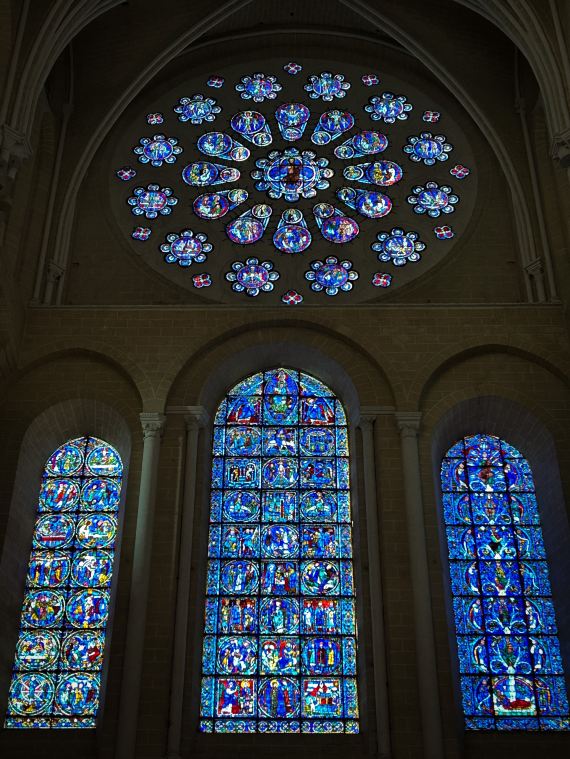
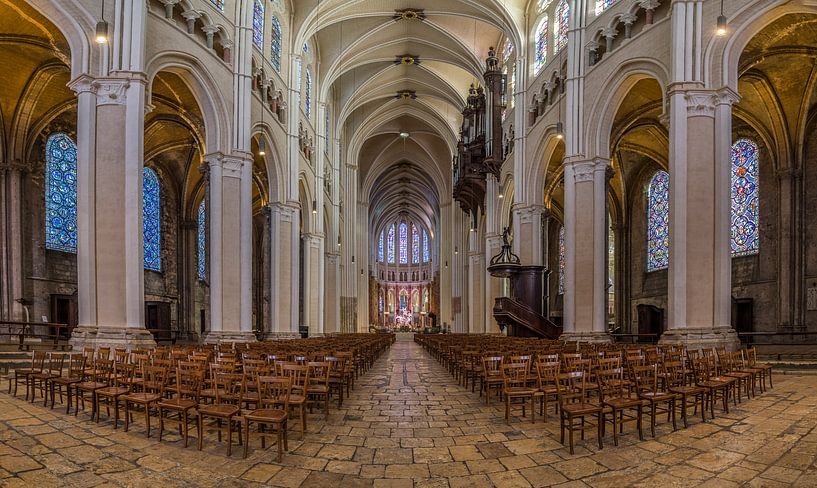
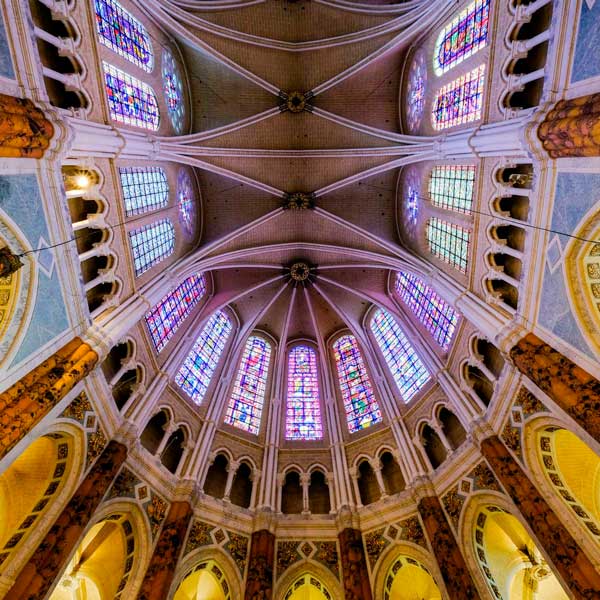
1 photo—Interior of Chartres Cathedral nave—overview. 2 photo—Choir stained glass—the interplay of windows and architectural space. 3 photo—Upper windows of the cathedral—the placement of colored glass at height.