This project is an academic assignment from a student at the School or a research project from a faculty member at the School. This project is not commercial and serves educational purposes.
Concept
The theme of what happens after death has always fascinated people. Throughout different eras, they have tried to conceive of where the deceased goes, who determines their fate, and what dictates life beyond. I wanted to explore how these conceptions manifested in art. To do this, I chose Ancient Egypt from the 14th–13th centuries BCE and Medieval France from the 12th–13th centuries. The subject of the Last Judgment is connected to beliefs about the resurrection of the dead and the end of time; in France, it was often placed above the entrance to a church. Centuries separate these cultures, yet within their works, one can find a surprisingly similar image—scales, by which a person’s afterlife destiny is determined.
The main theme of my research is a comparison between the judgment of Osiris and the Christian Last Judgment. I am interested in who participates in each judgment, what criteria are used to evaluate a life lived, and what the punishments and salvation look like. I am particularly keen to understand why artists used scales and who stood next to them. In Egyptian scenes, Anubis weighs the deceased’s heart against the feather of Ma’at, Thoth records the result, and Osiris accepts the justified person. In French depictions, Christ judges the resurrected people, and the archangel Michael often weighs the souls. He is an archangel and a heavenly guardian. In French scenes, he holds the scales, next to which the fate of the souls is decided. For me, it is important to understand where these narratives converge and what remains different between them.
First, I will examine the Last Judgment in French art. Sculptural church portals and stained glass windows will be suitable for this. On them, one can see Christ, archangels, demons, resurrected people—those saved and those condemned. I will pay attention to specific details: what rests on the scales, who is nearby, how the movement of people is depicted, and how the artist separates heaven and hell. These works also feature the motif of judgment over an individual soul after death. This needs to be explained so as not to confuse it with the universal Last Judgment.
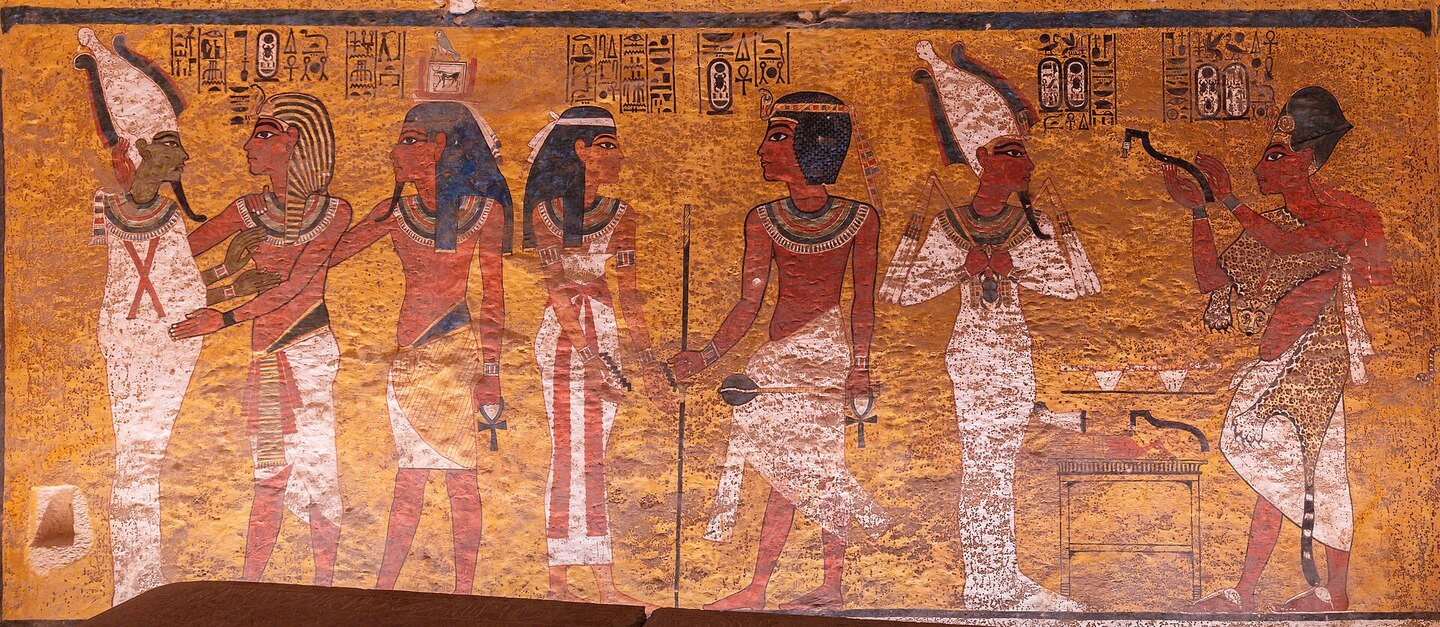
Next, I will examine ancient Egyptian depictions of the Osiris judgment. Osiris, the lord of the dead, presided over a tribunal that determined whether a person’s life adhered to Ma’at—truth and cosmic order. Papyrus scrolls from the «Book of the Dead» and tomb paintings allow us to observe the divine participants in the judgment and the perceived outcomes. I will focus primarily on the scenes of the heart weighing, and I will discuss the judgment’s consequences only in direct comparison with French works. Furthermore, I will limit my analysis to pieces created between the 14th and 13th centuries BCE.
The concluding part of the study will feature specific comparisons: who is depicted by the judge, how many people are judging, how the composition is structured, the scale of the figures, how the threat is shown, and what fate awaits the righteous and the sinful. Each observation is verified with a photograph of an actual work from the selected centuries. The similarity between the two types of scales does not, by itself, prove historical borrowing.
The Egyptian works date from the 14th–13th centuries BCE. The French works date from the 12th–13th centuries. Since the focus is on medieval and ancient works, the names of most creators of the sculptural and painted elements have not been documented. Accordingly, the authors of specific pieces are not listed everywhere.
Table of Contents
1. Concept
2. Main Body:
The Last Judgment in 12th–13th Century French Art.
The Osiris Trial in 14th–13th Century BCE Egypt.
A Comparison of the Two Trials
3. Conclusion
4. Sources and References
Main Body
In Christianity, the Last Judgment is viewed as an event at the end of time when the dead are resurrected. Christ judges humanity; the righteous go to heaven, and the sinful go to hell.
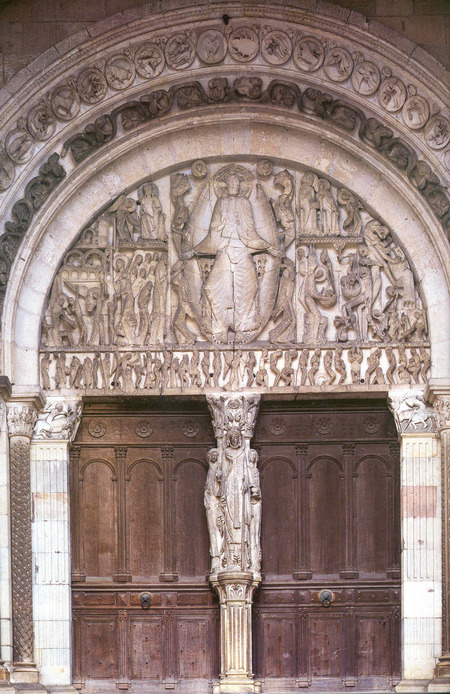
«The Last Judgment,» Tympanum of Saint-Lazare Cathedral, Ottonian Period Date created: circa 1130–1140. Artist: Gislebertus of Ottonian School
At the center of the composition is the majestic figure of Christ, enclosed within an almond-shaped aura—a mandorla—supported by four angels. His outstretched arms symbolize the impartiality of judgment. On either side are students, led by the Apostle Peter and the Virgin Mary, who stand as witnesses and intercessors for humanity.
«The Last Judgment, ” tympanum of Saint-Lazare Cathedral, Oton Date created: circa 1130–1140. Artist: Gislebertus of Otton
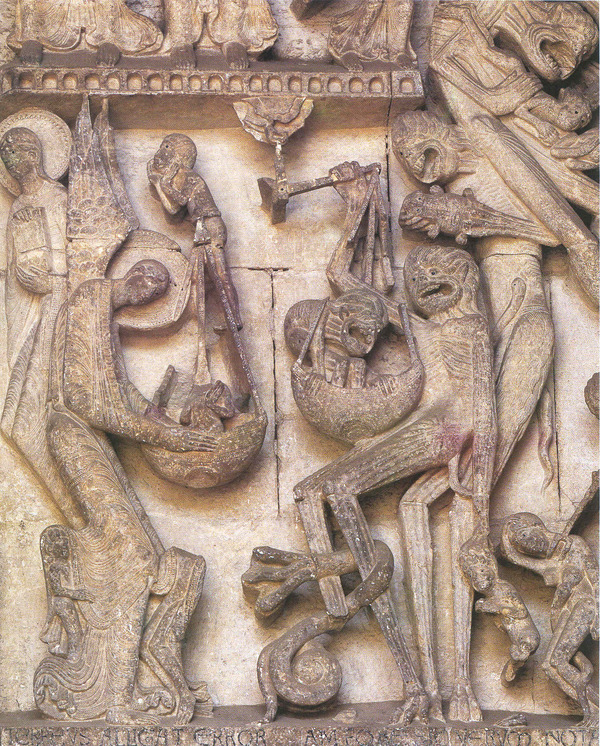
On the left, Heaven is depicted as a multi-tiered structure where angels assist the righteous in ascending. On the opposite side, the archangel Michael weighs souls, while demons attempt to tilt the scales in their favor. Below, Hell is shown with a fiery furnace and the maw of a monster devouring sinners. At the bottom of the composition, people rise from their graves at the call of angelic trumpets. On the left, the righteous earnestly strive toward Heaven, among whom stand pilgrims bearing distinctive symbols. On the right, sinners cover their heads in terror, and demonic claws drag one of them into the underworld.
«Weighing of Souls, ” capital of Saint-Nectaire Church, Auvergne 1146–1178. Artist unknown (Auvergne School)
At the center of the capital is the winged archangel Michael, adorned with a halo. In his right hand, he holds scales to weigh good and evil deeds; in his left, he holds the Book of Life inscribed with the names of the righteous. To the right are the righteous and resurrected martyrs bearing palm branches—symbols of immortality and victory over death. On the left, a fragment of the fourth horseman of the Apocalypse—Death—is visible, striking down sinners. The distinctive feature of the Saint-Nectaire church capital is the preserved traces of medieval polychromy, characteristic of 12th-century ecclesiastical sculpture.
«Last Judgment, ” tympanum of St. Foy’s church, Conques Date of creation: c. 1107–1125. Artist unknown (presumably from the Southern French Romanesque School)
Christ sits upon the throne as the supreme Judge: with his right hand, he blesses the righteous, pointing toward Paradise, while with his left hand, he directs the sinners to Hell. Archangel Michael weighs the good and evil deeds of the deceased, while the devil attempts to tilt the scales. The Virgin Mary, the Apostle Peter, saints, and historical figures, including Charlemagne, are directed toward Christ. Below are depicted the womb of Abraham—the dwelling of saved souls—and the Holy Faith, praying before the right hand of God. Sinners fall into the jaws of Leviathan, where Satan punishes them for the seven deadly sins.
«The Last Judgment, ” Notre-Dame Cathedral, Paris Creation Date: 1220–1230. Artist unknown (High Gothic period school)
The pointed architraves of the tympanum are decorated with figures of angels, saints, and patriarchs, symbolizing the Heavenly Court. In the lower right corner, infernal torments and the riders of the Apocalypse are depicted. The composition is divided into three tiers. At the bottom, angels sound trumpets, calling for the dead of all classes to rise from their tombs. In the middle tier, the archangel Michael weighs the souls while demons attempt to tip the scales. The righteous are led to Paradise, while sinners are dragged into Hell. At the top, Christ sits upon a throne, displaying the wounds of the crucifixion. Nearby, angels hold the instruments of Passion, and the Virgin Mary and John the Theologian pray for mercy.
«The Last Judgment,» the central portal of Amiens Cathedral Date created: circa 1225–1236. Artist unknown (High Gothic style).
Unlike Romanesque tympana, where Christ appears as a stern ruler within a mandorla, in Amiens he is depicted as a compassionate Judge. Calmly displaying the wounds on his palms, he recalls his sacrifice for the salvation of humanity. Among the resurrected and the condemned, figures from all social strata are visible—from kings and bishops to common laypeople. This emphasizes that earthly status does not guarantee salvation. The Archangel Michael, holding scales, is positioned in the center of the lower frieze among the resurrected, lending unity and dynamism to the composition.
Stained Glass «The Last Judgment, ” Bourgeois Cathedral Date created: c. 1215–1225. Artist unknown (Workshop of the „Masters of the New Testament“).
At the top of the stained-glass window, set against a blue background, Christ is depicted in a purple robe, displaying the wounds of the crucifixion. In the side medallions, angels hold the instruments of the Passion—the cross, the crown of thorns, the spear, and the nails. A characteristic feature of bourgeois stained glass is the juxtaposition of the earthly power of the priest to absolve sins with the final divine judgment. Christ is presented as a merciful Redeemer, and the righteous figures are depicted with illuminated faces. The rich blue glass and the fiery red hues of Hell create a dramatic glowing effect typical of 13th-century stained-glass art.
In ancient Egyptian mythology, the Judgment of Osiris was a trial that a person underwent after death. The gods would weigh the heart of the deceased against the feather of the goddess of truth, Maat. If the heart weighed less than or equal to the feather, the soul of the righteous gained the right to eternal life in the kingdom of Osiris. If, however, the heart was heavier due to sins committed during life, it was devoured by the monster Ammit.
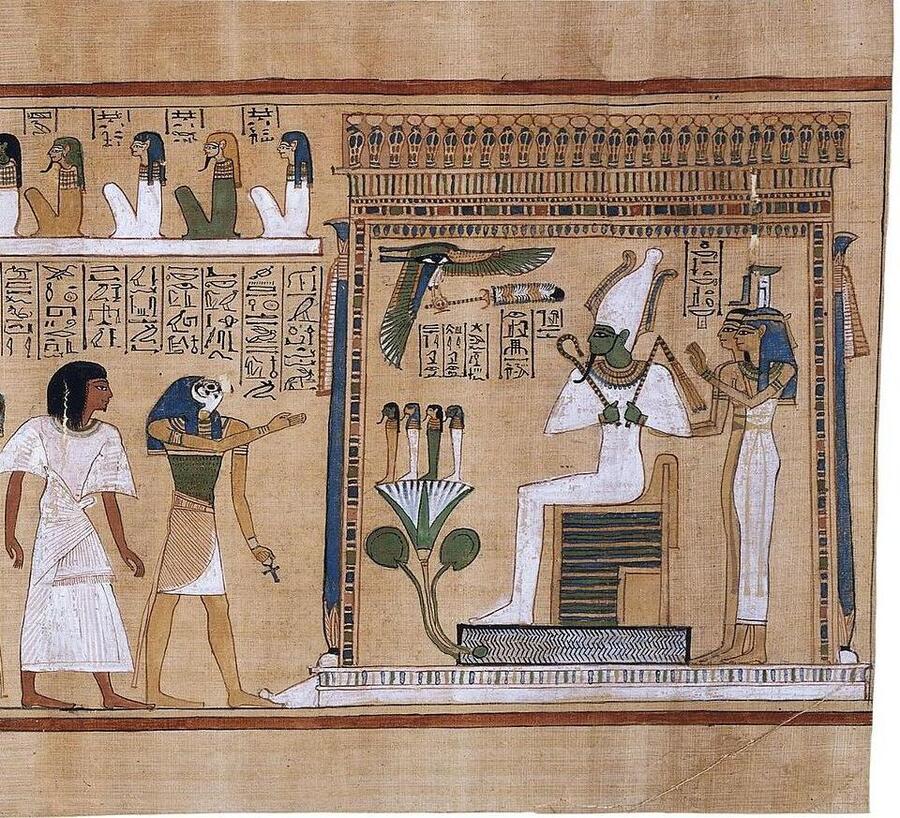
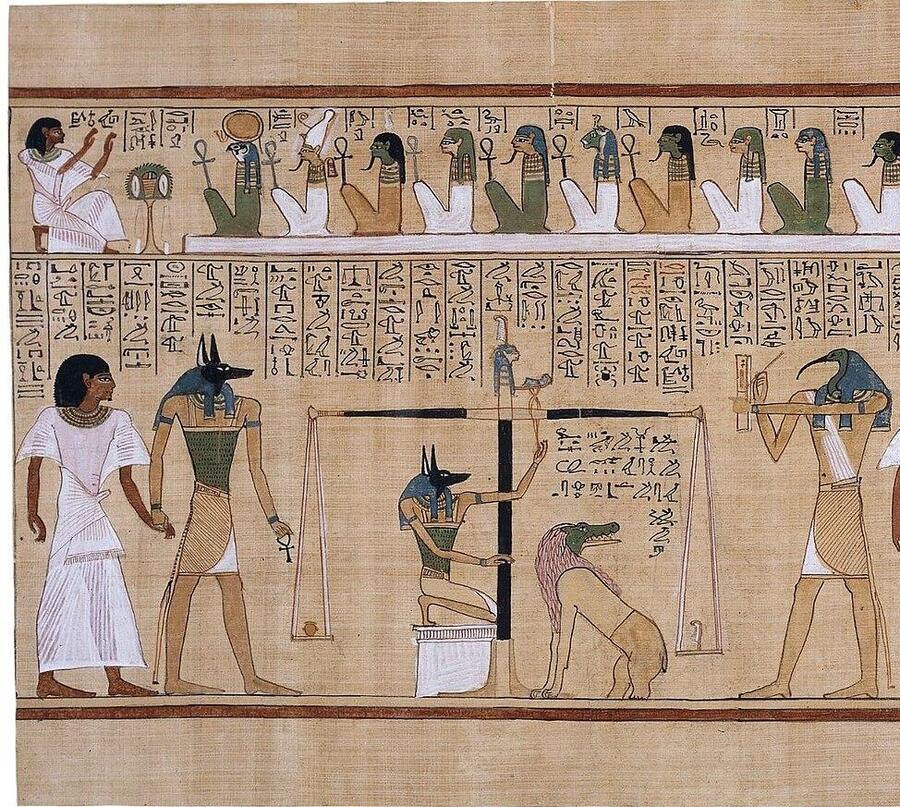
«The Judgment of Osiris, ” Hunefere Papyrus Creation Date: circa 1275 BCE Author unknown.
Hunefer is depicted multiple times on the papyrus, reflecting the sequential stages of the judgment. Anubis accompanies the deceased and examines the scales, Thoth records the outcome, and Horus guides Hunefer to Osiris. The horizontal composition illustrates the journey from trial to achieving afterlife. Ammit, positioned at the scales, symbolizes the threat of failure, although the judgment concludes successfully. The heart is represented symbolically, as a small vessel, and is weighed against the feather of Ma’at—a symbol of truth and justice. This is how the artist conveys the principle of moral assessment of the deceased. In contrast to the Egyptian heart, French reliefs more frequently depict a human figure or another symbol of the soul on the scales.
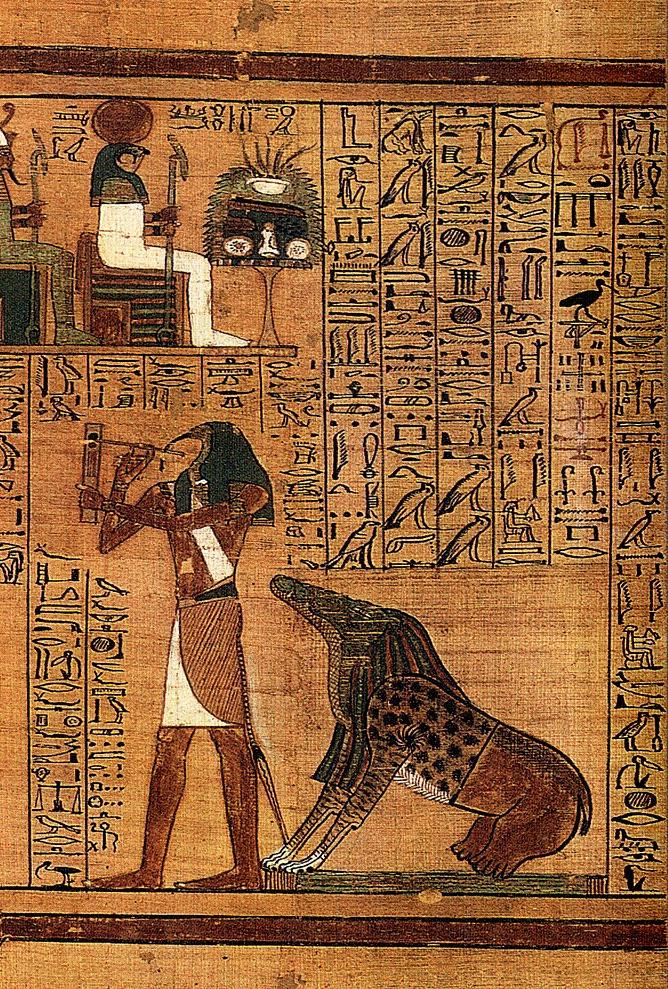
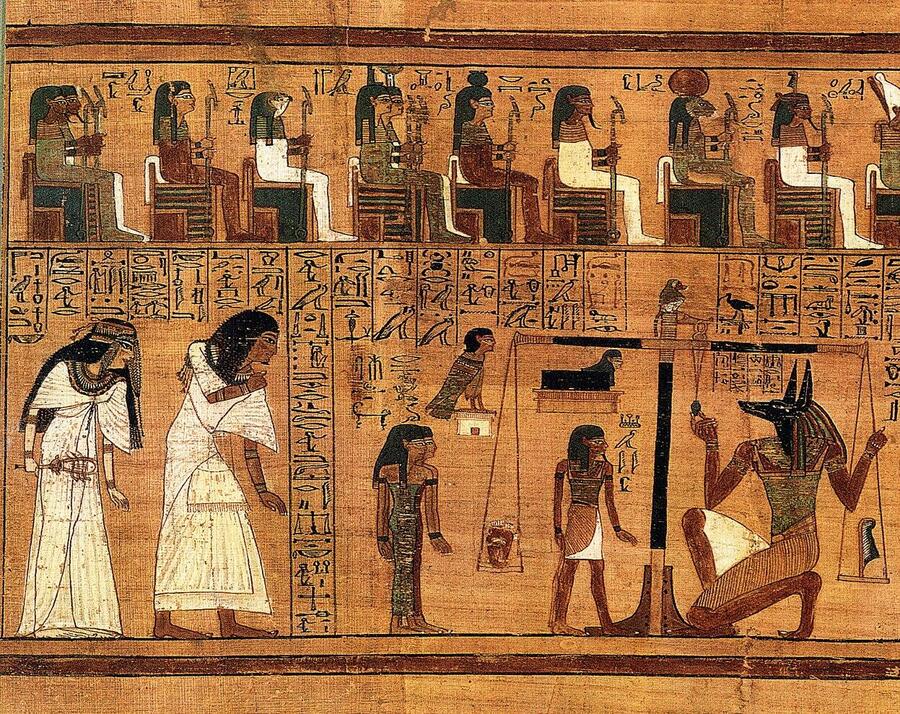
«Weighing of the Heart» from the Book of the Dead by Ani Creation Date: circa 1250 BCE. Artist unknown.