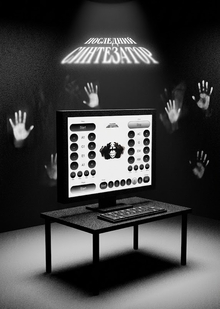
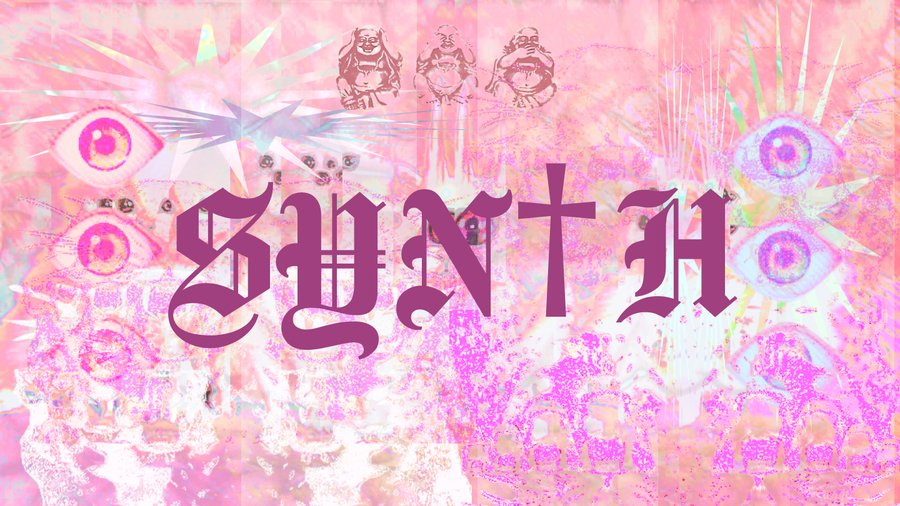
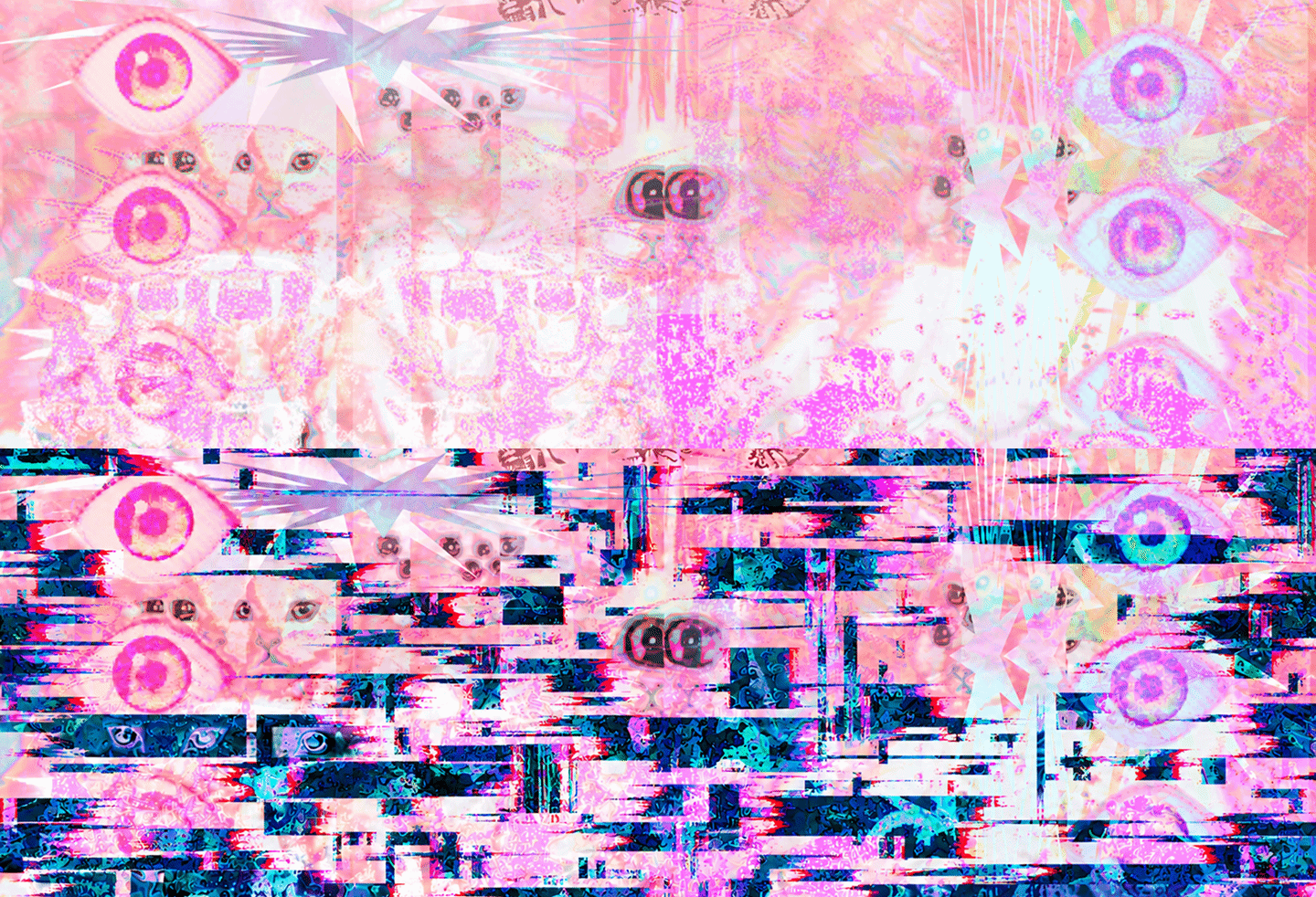
SYN†H — a web synthesizer crafted in the witch house aesthetic, combining overdriven bass, organ, synthetic choir, and a drum sequencer. Two voices, each with independent volume and stereo panning, allow users to adjust the sonic balance during performance. The pink collage background, gothic logo, and glitch animation further enhance the instrument’s musical atmosphere.
Concept and Features
The instrument fuses heavy, distorted soundscapes with organ and choral layers. The musical reference point is witch house from 2014, evoking the atmosphere of SALEM. Its unique feature is the ability to alter the dark sonic texture via a simple interface, without the need for a piano keyboard.
Tool Structure
S¥N†H consists of two synthesizers, a drum section, and an effects unit. — Two voices—independent synthesizers with selectable waveforms and pads for playing. Each voice has adjustable volume and panning. — Drum sequencer—creates a repeating rhythm using kick, snare, and hi-hat. — Effects—distortion adds saturation, filter modifies the timbre, delay creates echo, and reverb simulates spatial ambiance. — Global controls—start/stop the rhythm, adjust tempo, and control overall volume. Sound from the sources passes through processing chains and outputs to the master stereo output. Panning allows the voices to be distributed between the left and right channels.
Style
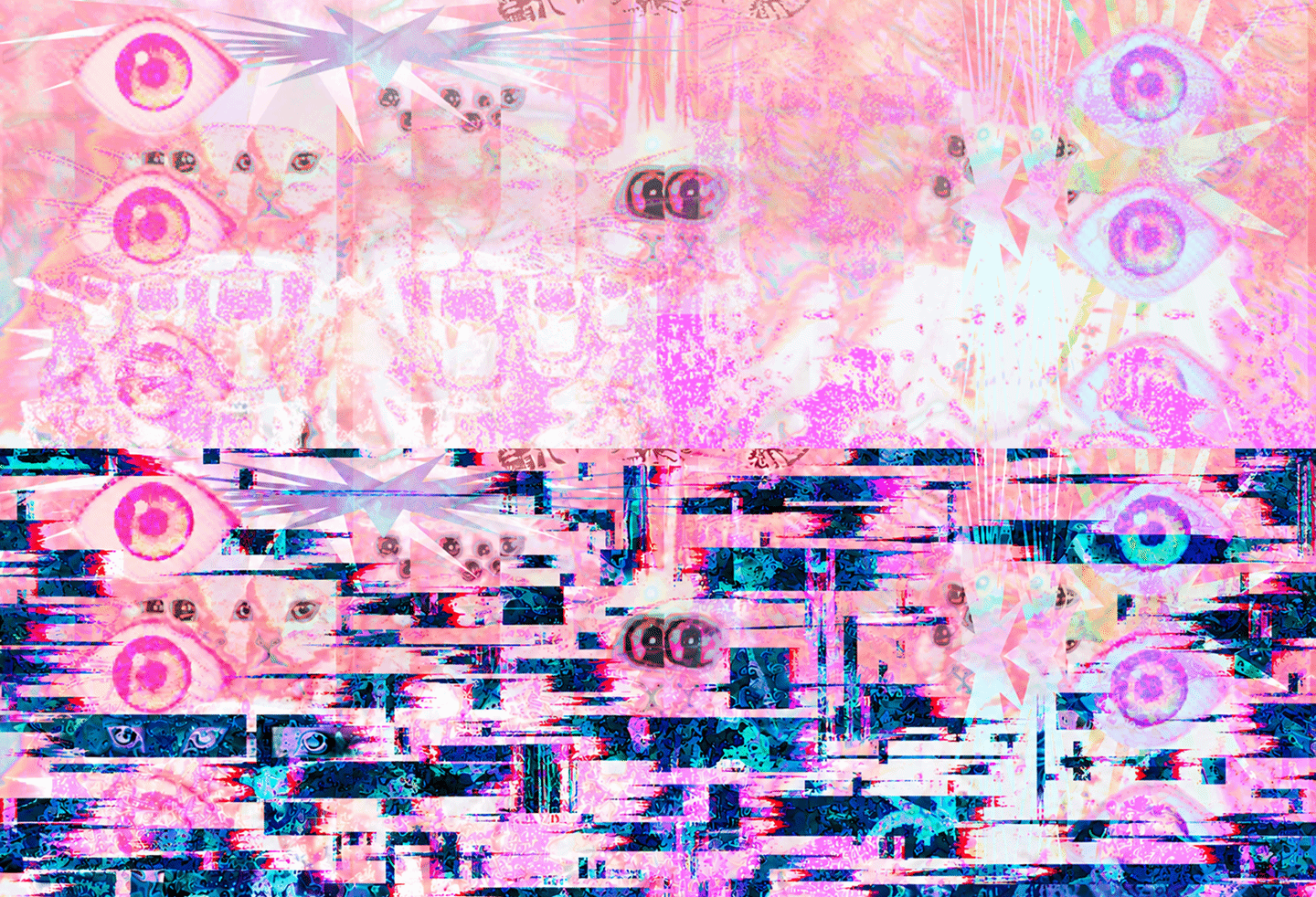
The S¥N†H style is inspired by witch house and the pastel goth aesthetic of 2014. A pink-lavender collage featuring eyes, cats, and symbols combines with gothic typography and translucent panels. Glitches and negative fragments visually convey sound distortion, creating a contrast between the delicate palette and the instrument’s dark sound.
Interface Components
Transport: PLAY, STOP, BPM;
Voices: waveforms, note pads, VOLUME, and PAN;
Drums: an eight-step grid;
Effects: four controls;
Master Output: MASTER.
Structure and Naming
The interface is grouped by function: transport controls at the top, two voices side-by-side, drums and effects below, and overall volume at the bottom. The names reflect their function: VOICE—voice, ORGAN—organ layer, DRUM SEQUENCER—rhythmic pattern, EFFECTS—processing, MASTER—overall volume.
The project was created using the ChatGPT / Codex neural network. The neural network helped implement the web synthesizer, the sound engine, and the background animation based on the design I provided. The sound quality was refined according to my feedback in the dialogue.