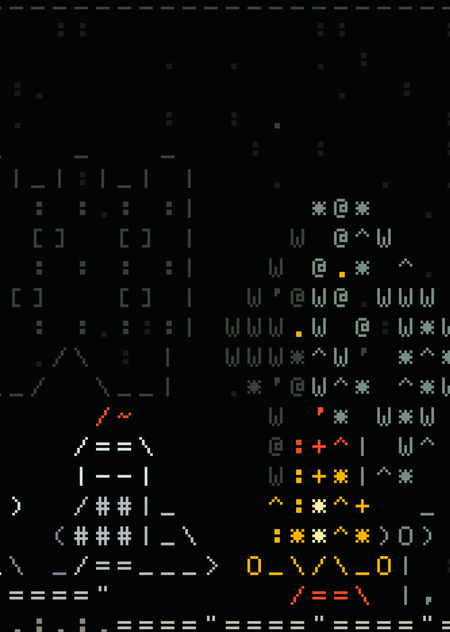
Concept
The sound compiles into a composition reminiscent of something cobbled together from old PSP game soundtracks and a classic home computer. Perhaps a character is searching for buried treasure, escaping a monster, digging through a dungeon, hiding from someone, or flying through space in search of something. The tool is a set of patterns that can be mixed, combined, and arranged into a cohesive composition.
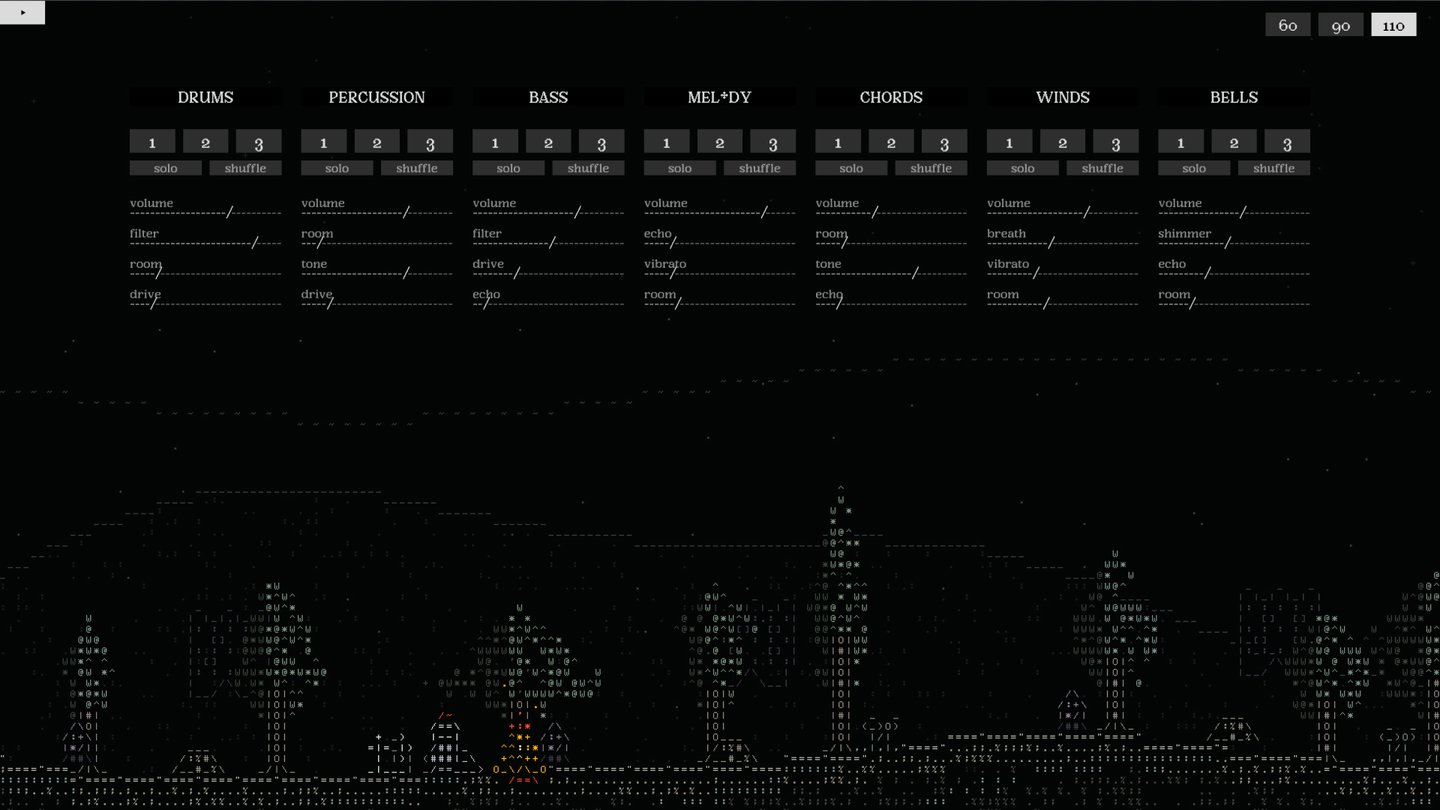
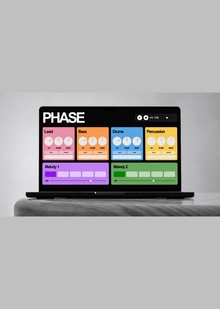
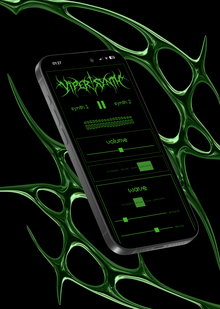
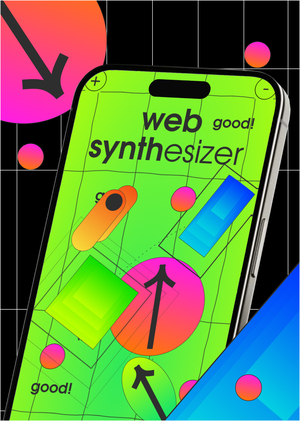
synthesizer interface
Structure
The instrument consists of 7 audio channels unified by a master sequencer. Each channel is responsible for a separate musical part and contains 3 options for rhythmic or melodic patterns.
Effects: filtering, distortion, echo, and reverb. All parts are synchronized and combined into a single composition.
SEQUENCER -> CHANNELS -> OUTPUT + VISUAL
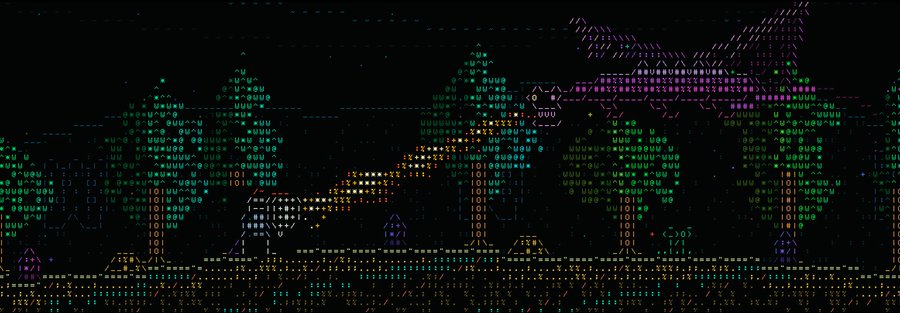
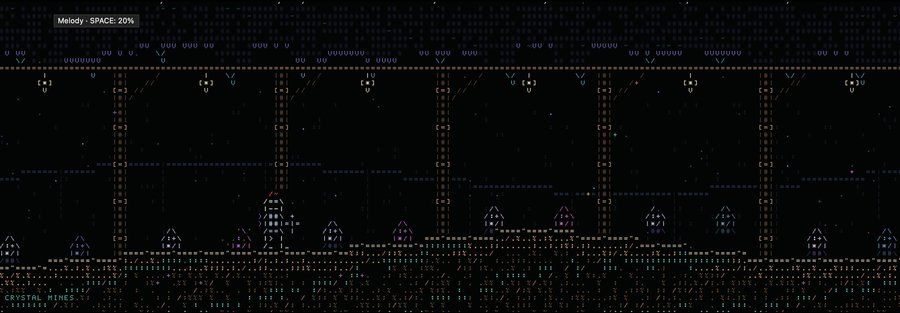
ASCII graphics are generated in real-time using JavaScript and Canvas
Tool Style
I have developed the aesthetics of games and terminal graphics.
Key components include characters, landscape, animated particles, and a control interface.
The visuals react to music, creating a unique hero’s journey.
Interface Elements
Each audio channel shares an identical control structure—pattern selection, volume adjustment, and effects modulation.
Component naming is based on their function:
Instruments
Bass, Drums, Melody
Effects
Delay, Reverb, Filter
AI Utilization
Using Codex, I added seven channels to the synthesizer—three patterns, effects, Solo, and Shuffle. I then created an ASCII world on the Canvas linked to the music’s state.
I used prompts to dictate the specific behavior of the graphics. The AI wrote the code, and I reviewed the output and refined the details. For the interface, I provided the Figma mock-up and separately described the font and interface elements.