Context
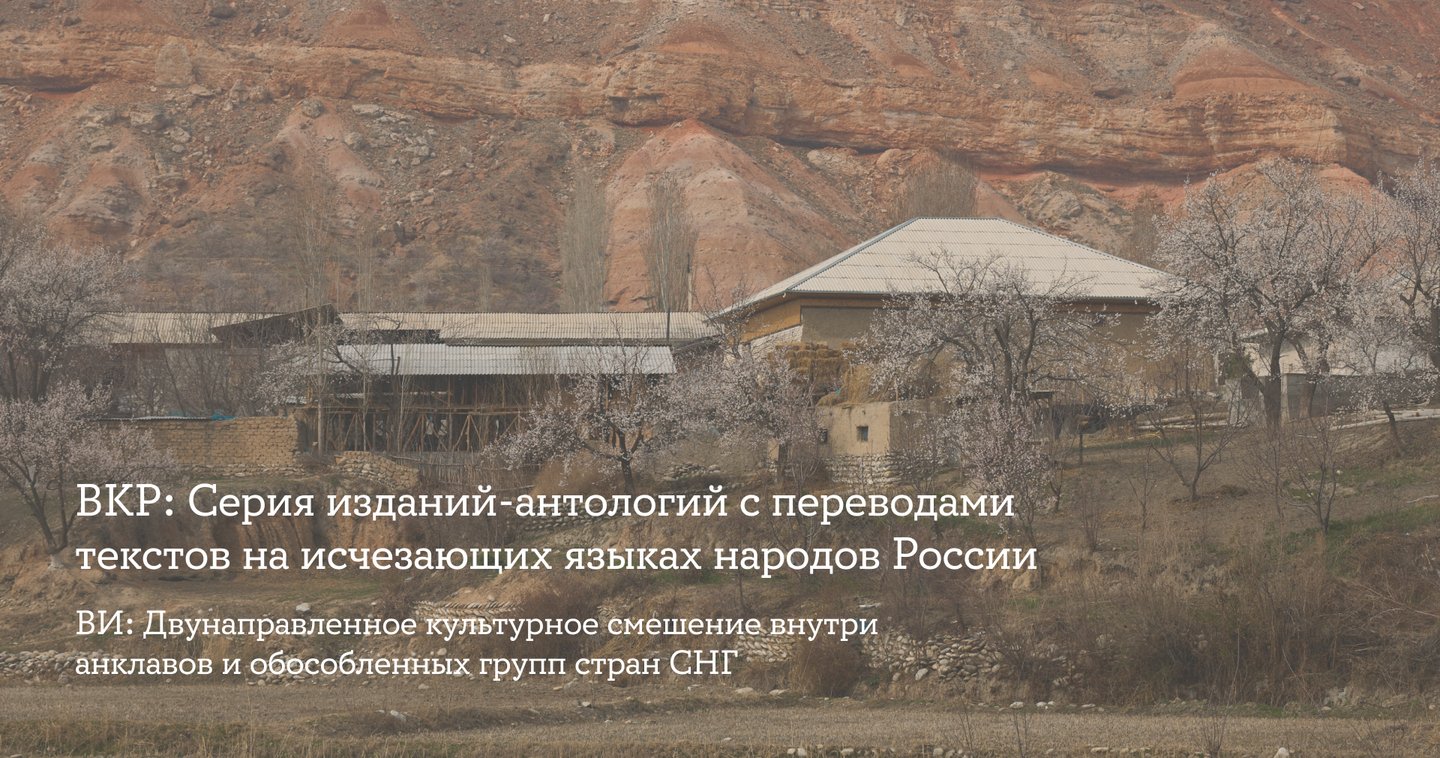
Currently, over 150 languages in Russia are threatened with extinction: they are increasingly rarely spoken in families as Russian takes precedence, meaning that cultural heritage is gradually disappearing with each new generation. Not every endangered language is one that simply has few speakers. For instance, Tatar (with about 4 million speakers) is also considered endangered because it is used less frequently in education, media, and government administration.
Relevance
In recent years, the young generation’s interest in their native culture and languages has significantly increased. However, the conditions for passing down knowledge from older generations are insufficient, and modern media are generally oriented toward globalization rather than preserving the traditions of smaller ethnic groups.
The Problem: Existing anthologies that collect texts in endangered languages primarily address a philological or documentary problem—the main objective of such books is to translate existing texts and introduce them into literary circulation. While these publications capture the text’s meaning, they often neglect its contextual element—the original language’s specifics and characteristics. The Solution: A series of anthology publications that focus not only on the translated text but also on its original version in the endangered language. The core objective of these publications is to preserve the original language’s contextual and vernacular nuances, thus allowing the reader to view the text through the eyes of a native speaker.
Concept
The project involves a series of four books, including original and translated texts, as well as supplementary commentary to help readers better understand the nuances of the original language. The series' dramatic structure is built around the idea of context loss—each book captures a specific stage of its preservation. For instance, the first volume will feature texts in languages spoken by millions but vulnerable to extinction, while the final volume will present rare preserved texts in languages spoken by only a few.
Target Audience
Primary: young people aged 16–30 from families where the native language is preserved by the older generation but has not been passed on Secondary: regional scholars, linguists, translators, and folklorists
Competitors
Direct Series: the anthology series «Contemporary Literature of the Peoples of Russia» published by OGI (United Humanitarian Publishing House).
Indirect: academic series oriented toward specialists in the field; publications in specific endangered languages; regional anthologies.
What is needed to get started
— Research Editor — Linguistic Editor
Implementation Stages