Navigator
Introduction
- Diesel and Be Stupid
- The Psychology of Absurdity
- Analysis of Advertising Materials
- Public Reaction
- Effectiveness and Limitations Conclusion
Introduction
Advertising typically aims to present a product in the most favorable light. But what happens if, instead of showing an attractive product image, we present ridiculous behavior, and instead of promising success, we suggest that the person be foolish?
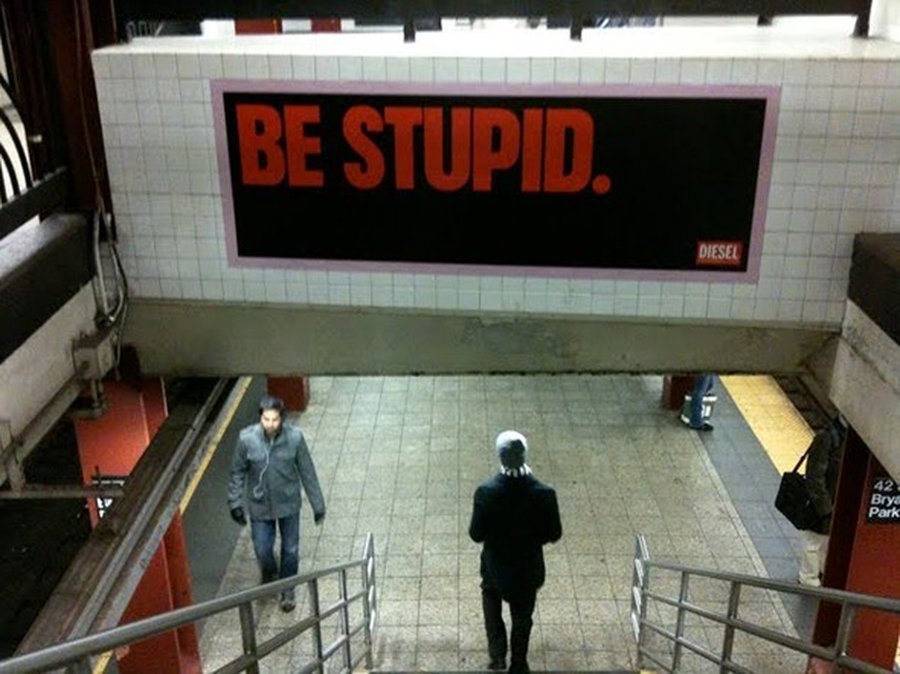
In 2010, Diesel launched the «Be Stupid» advertising campaign, created in collaboration with the Anomaly agency. The brand suggested abandoning the conventional view of rational behavior and viewing foolishness as an expression of boldness, spontaneity, and creative freedom. The campaign included print and outdoor advertising, as well as digital projects involving the audience.
The campaign elicited mixed reactions and became the subject of public debate. Some perceived it as a call for freedom of self-expression, while others criticized it for romanticizing reckless behavior. This makes Be Stupid an interesting case study for exploring the boundaries of provocation in advertising.
Research Concept
The study examines absurdity as a tool for advertising impact, using the Diesel Be Stupid campaign as a case study. The focus is on the contradiction between the provocative content of the advertisement, its psychological effect, and the audience’s reaction.
Hypothesis
Absurdist advertising can capture attention by subverting expectations, but a strong emotional reaction does not guarantee a positive brand perception.
Research Objective
Analyze how absurdity is utilized in the Diesel Be Stupid advertising campaign and determine the success of the chosen strategy in terms of attracting attention, conveying the advertising concept, and shaping audience perception.
2. Diesel and Be Stupid
How Rebellion Became Part of a Brand’s Marketing Strategy
The Italian brand Diesel was founded in 1978 by Renzo Rosso and Adriano Goldschmied. In 1985, Rosso bought out his partner’s stake and gained full control of the company. Diesel aimed to carve out a distinctive niche in the denim market by differentiating itself from traditional manufacturers. Even the brand’s name referenced diesel—an alternative fuel.The advertising strategy that made Diesel recognizable began to take shape in the early 1990s. Instead of conventional photos of models, the brand began using satire, exaggeration, and parody of popular culture. In 1991, the international advertising campaign «For Successful Living,» developed with the participation of the Swedish agency Paradiset, was launched.
Diesel: For Successful Living, 1990s. An image from the brand’s historical advertising campaign series.
In Diesel’s advertising, success was often depicted in a caricatured way. For instance, one poster showed a group of portly men happily indulging in fast food at a festive table. The scene imitated an atmosphere of prosperity, but the excess turned it into a satire of consumerist notions of the good life. This set Diesel apart from many fashion brands that built their communication around attractiveness, status, and idealized human images. The brand used familiar advertising promises to question their very meaning.
Diesel, How to Smoke 145 a Day, 1993. The advertisement parodies advice on an appealing lifestyle by using a known harmful habit.
By early 2010, provocation had become a recognizable trait of Diesel advertising. Be Stupid continued this tradition, but instead of mocking societal stereotypes, it proposed its own vision of what it means to be bold and independent.
Why Did Diesel Turn to the Idea «Be Stupid»?
In September 2009, Diesel handed over its global advertising account to Anomaly. Previously, the company had collaborated with various agencies on individual projects.
For Anomaly, «Be Stupid» became Diesel’s first global campaign. The objective was to reclaim the brand’s rebellious character. In a February 2010 interview with Hypebeast, Renzo Grosso explained directly that he wanted to return Diesel to its original identity—young, bold, and unconventional.
Hypebeast
Grosso recalled that the idea of selling new jeans that looked worn-in once seemed irrational to those around him. Now, this experience was leveraged as an argument in favor of non-standard thinking.
Diesel Marketing Director Christina Kesshofer articulated the company’s position in an interview with the German magazine HORIZONT as follows:
Only those who are willing to take risks, explore new paths, and propose unconventional ideas achieve long-term success.
Thus, Be Stupid was rooted in Diesel’s own experience: solutions that initially seemed unwise could later prove successful. The brand transformed this logic into the foundation of its advertising campaign.
How the Campaign Was Created
The Be Stupid campaign was developed by the Anomaly team, led by Mike Byrne. Art Directors Ian Thumbs, Andrea Gustafsson, and Coral Harvey, along with copywriter Sean McLaughlin, were involved in the project. Information about the team members is preserved in The One Club’s professional archive.
According to the team’s recollections, published by Resource magazine in the summer of 2010, the campaign began with the copy. Over three months, the agency developed and refined statements contrasting smart and stupid. These statements formed a unique manifesto that was later presented to Diesel.
For the photo shoots, they brought on photographers Chris Back, Melody McDaniel, and Christine Vicari. The photographers worked on various scenarios united by a common advertising concept. This allowed for the creation of a series of images that differed in tone and content.
Launch: Not seasonal advertising, but an annual strategy
Be Stupid was launched in January 2010. Unlike typical seasonal advertising for Diesel, this campaign was intended to run throughout the entire year.
The campaign spanned magazines, out-of-home displays, the internet, and special projects. For instance, leading up to the Bread & Butter exhibition in Berlin, plans included placing 250 illuminated billboards, 130 advertising columns, and a large-format image covering about 1,000 square meters near Checkpoint Charlie.
Diesel also reinstated the traditional red background of its logo with white lettering, emphasizing the connection between the new campaign and the brand’s established identity.
Diesel aimed for Be Stupid to be more than just advertising a new collection—it sought to be a standalone statement about freedom and unconventional thinking. The creators presented it as a movement that went beyond traditional fashion advertising.
3. The Psychology of Absurdity
Why Illicit Advertising Grabs Attention
Be Stupid is founded on several psychological mechanisms: the disruption of expectations, the search for meaning in contradictory information, and humor. We will examine how these mechanisms work and why unconventional advertising messages are capable of capturing interest, even when their content appears illogical.
Unmet Expectations