Research Concept
I examine avant-garde costume through a single specific question: what happens to the body when clothing stops «adorning» it and starts arguing with it?
In classical fashion, silhouette, fabric, and color work to make the figure leaner, more proportionate, and younger. In anti-fashion, the opposite occurs: the body is hidden, distorted, and what is emphasized is not comfort, but discomfort. In this visual study, I analyze how various designers address this challenge and what the result is.
As a starting point, I consider several key brands and collections:
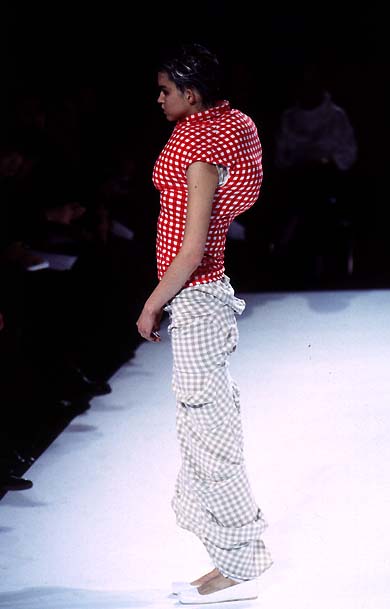
Comme des Garçons, Spring 1997 «Body Meets Dress, Dress Meets Body”—the legendary „lumps and bumps“ show where soft mounds are sewn onto the body and the silhouette is deformed, making the viewer literally unable to tell where the model’s shoulder ends and the hip begins.
Rick Owens, Fall 2017 and Spring 2018—totemic vertical figures assembled from layers of knits, wools, and down jackets, where the body transforms into a moving sculpture.
Balenciaga, Fall 2017 and Fall 22 „The Lost Tape”—hypertrophied shoulders, puffers, and office suits shot like a „lost cassette“ with VHS noise—fashion of the apocalypse and information-overloaded cities.
L.G.B (Le Grand Bleu)—Japanese rock underground featuring hand-distressed denim, extreme flares, and leather that looks like it has survived dozens of concerts.
Carol Christian Poell—a designer who intentionally exposes seams, forgoes lining, and dyes finished pieces entirely so that the garment reads as an object rather than an adornment for the body.
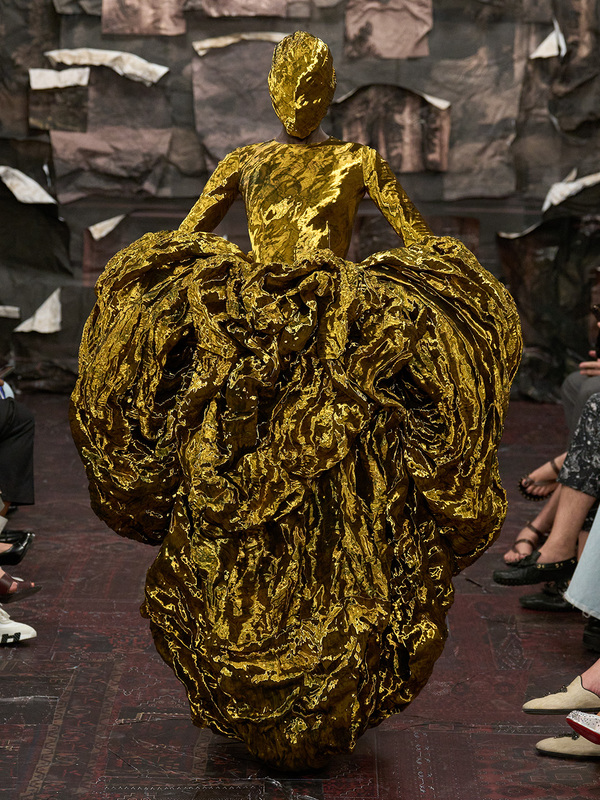
I will also include several focal points from Maison Margiela Artisanal 2025—the new collection from the deconstructivist brand.
My hypothesis is simple: the more the clothing takes on the function of protection, expression, or shock, the less „central“ the body becomes. It transforms into a carrier of form, a „machine“ upon which a sculpture is assembled.
Structurally, I divide the study into four sections:
1) Silhouette and Volume—how the body’s contour changes. 2) Materials and Seams—how a sense of weight and pathos is added. 3) Color and Mediality—how the palette and type of photography set the mood. 4) Character and Scene—what stories we read within these costumes.
Within each section, I will place several brands side-by-side to illustrate different contexts, yet they all share the same gestures of alienation.
Silhouette. When the body ceases to be «normal»
Comme des Garçons body as a systemic error.
The Comme des Garçons SS97 collection—a nearly perfect start. Dresses that could have been sweet are stuffed with soft «intestine» rolls, forming strange protuberances on the hips, abdomen, and back.
In a classic dress, the silhouette emphasizes the waist and the smooth curve of the hip. Here, the opposite is true: the fabric deliberately distorts proportions, making the body look slightly «broken.» These lumps don’t mask fullness; rather, they hyper-trophy it, turning it into a focal point.
Comme des Garçons SS97 — «Body Meets Dress, Dress Meets Body»
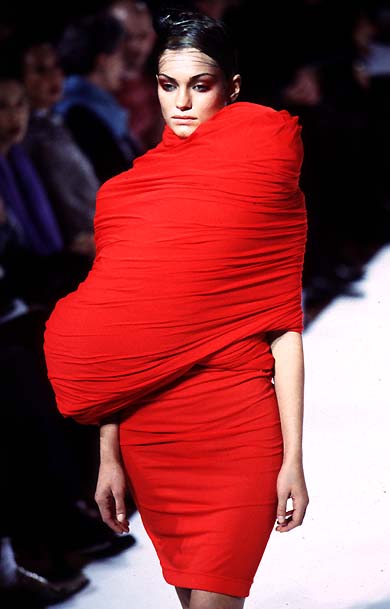
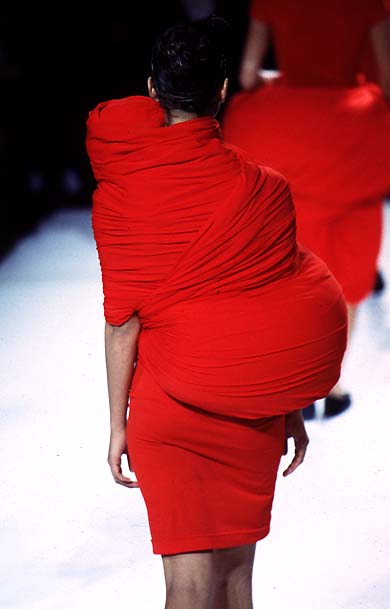
Comme des Garçons, SS 1997. Dress with «bubbles»
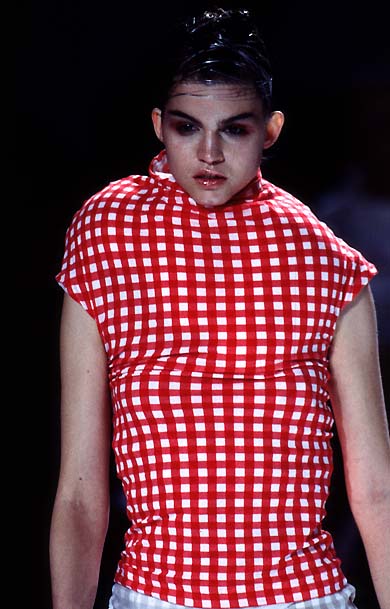
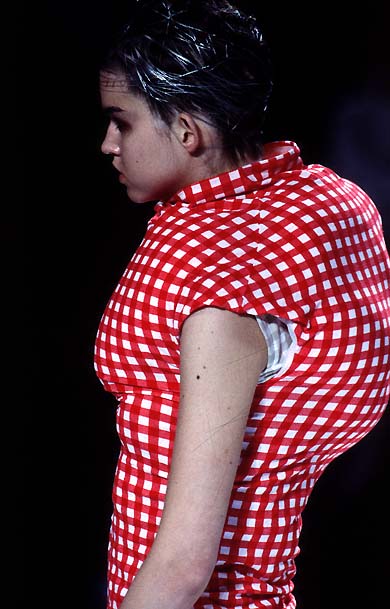
Comme des Garçons, SS 1997. View of distortions from the front and side
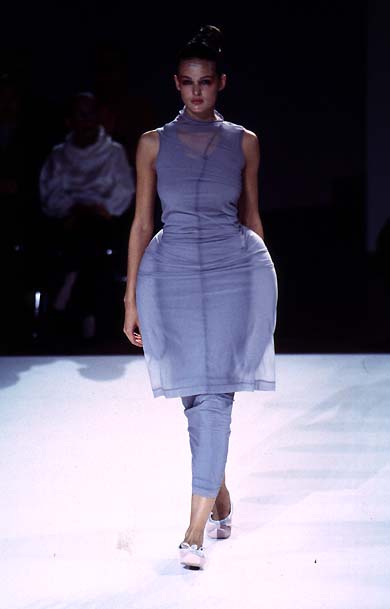
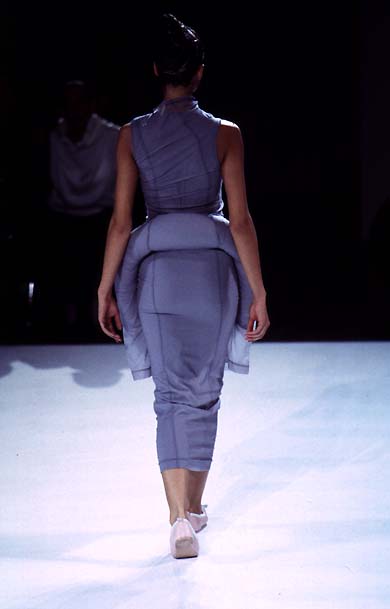
Comme des Garçons, SS 1997. When many distorted figures are present, the effect of strangeness is amplified.
Rick Owens. Totem in Place of Human
Where Kawakubo (CDG) seems to cause the body to swell from within, Rick Owens’ FW17/SS18 collections cause it to grow upward, transforming into a totem.
Layered skirts, heavy sweatshirts, and coats worn over one another render the figure columnar. In white, draped looks featuring «pillows» on the chest or head, the silhouette completely abandons the logic of the body—we see more of a column of fabric resting on platforms.
Rick Owens FW17 — Totemic Verticals
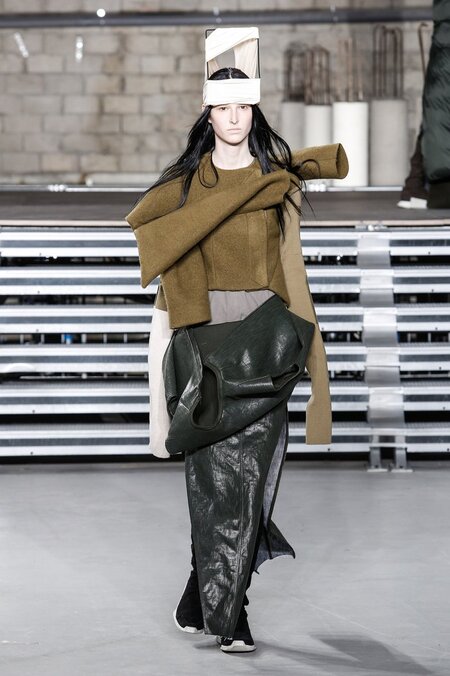
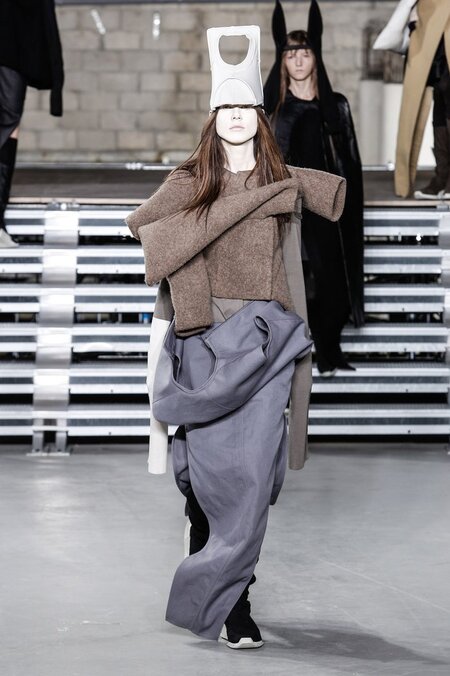
Rick Owens, FW 2017. A long flap skirt and a short top transform the silhouette into an elongated column without a distinction between «top» and «bottom.»
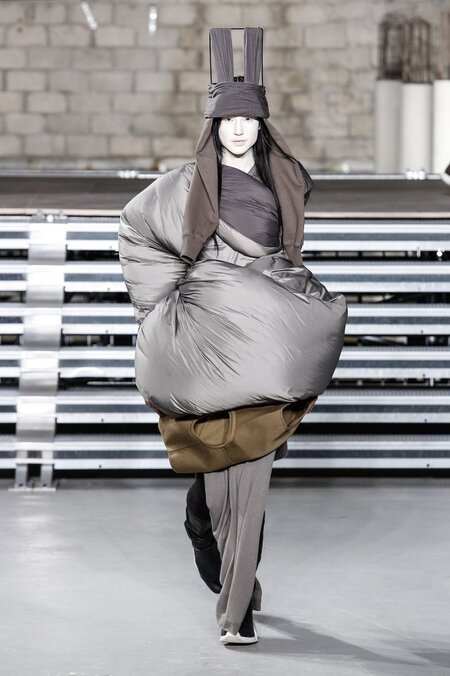
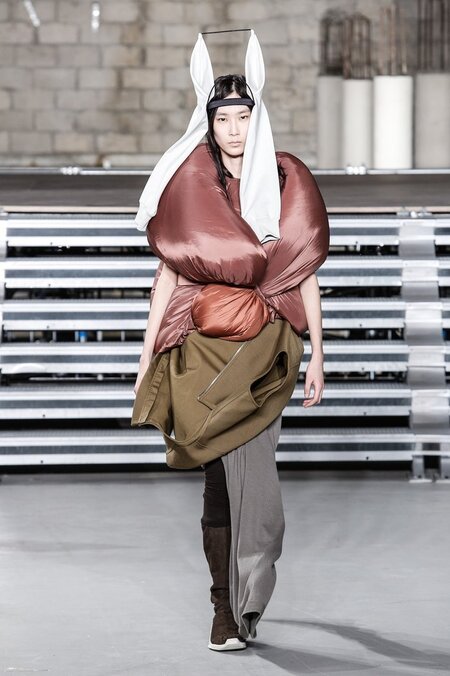
Rick Owens, FW 2017. Several layered jackets hanging forward—clothing as a heavy superstructure over the body.
The overall show plan in a dark industrial space—the clothing and the stage enhance the sense of ritual.
Rick Owens SS18 — White Draping and Platforms
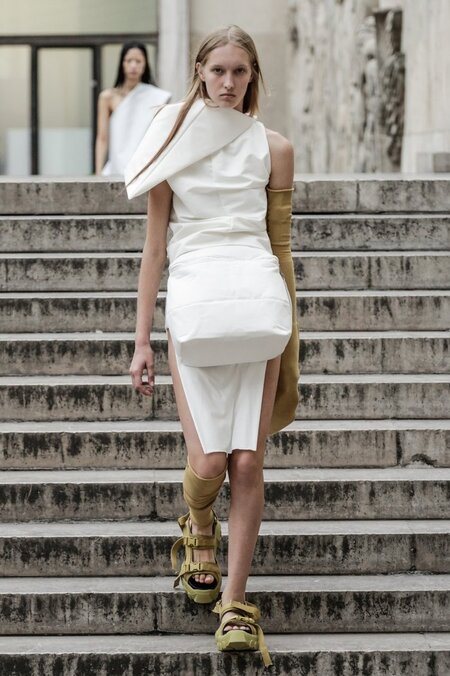
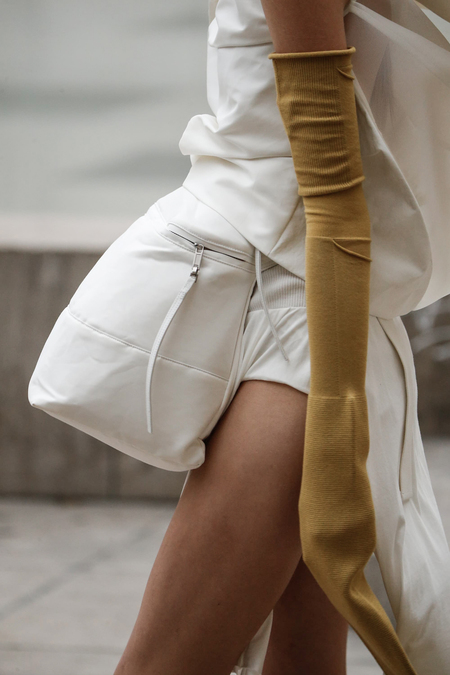
Rick Owens, SS 2018. A white draped look with a «pillow» bag across the chest—the form of the clothing supersedes anatomy.
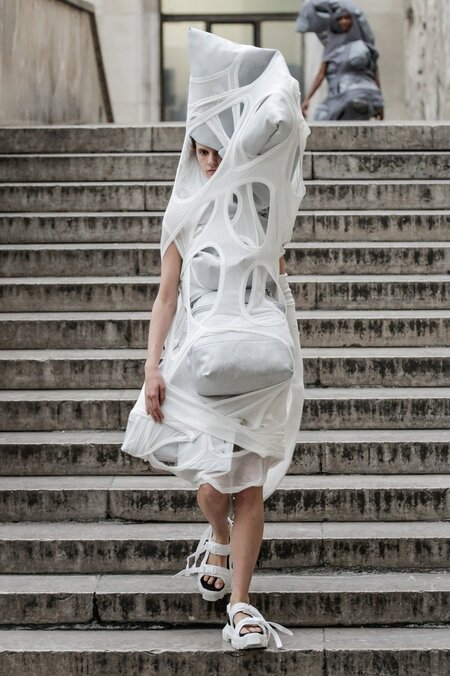
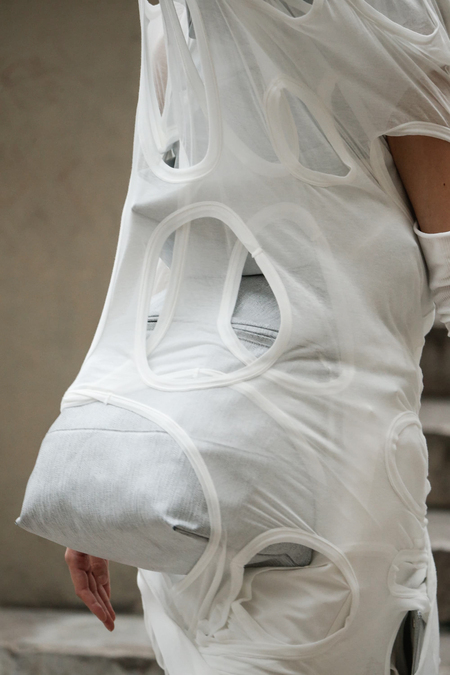
Rick Owens, SS 2018. The silhouette reads as a monolith, rather than as «feminine» or «masculine.»
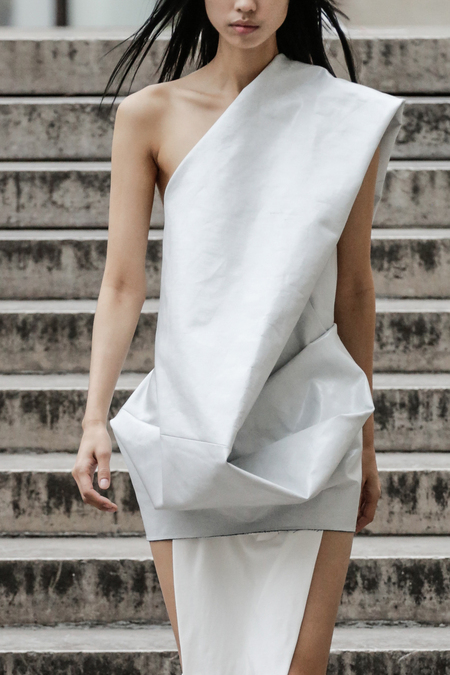
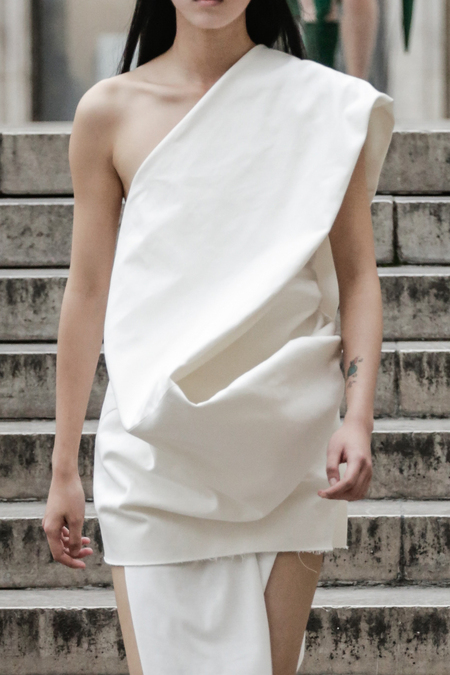
Rick Owens, SS 2018. Close-up of draping: heavy fabric forms large folds reminiscent of sculptural plaster.
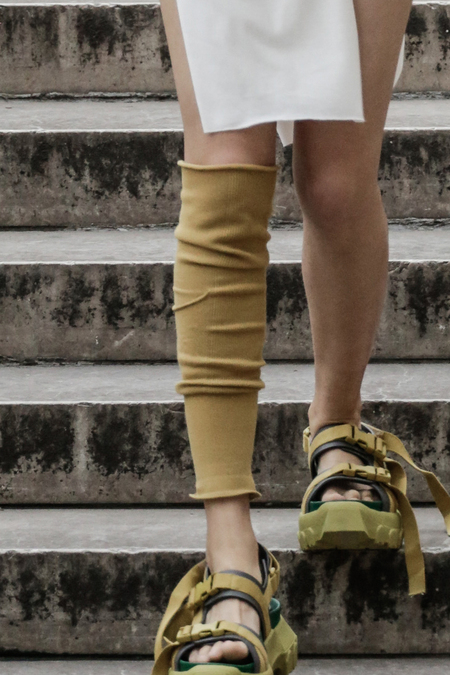
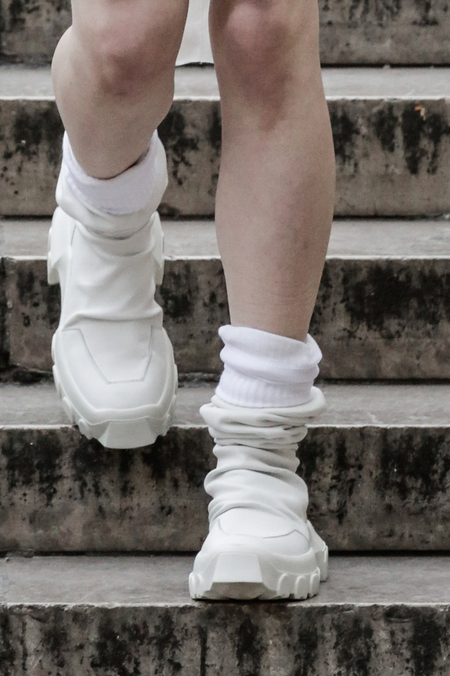
Rick Owens, SS 2018. Platform footwear combined with drapery lifts the body above the viewer, intensifying the totemic effect.
Several white figures on the runway created the impression of a procession, rather than a «fashion show.»
Balenciaga. The Office Worker in an Oversized Shell
For Balenciaga FW17, Demna takes archival couture silhouettes and «re-engineers» them—shoulders widen, coats become trapezoidal, and suits feature absurdly narrow or, conversely, gigantic trousers.
In Fall 22, with the collection «The Lost Tape,» familiar puffers, trench coats, and denim transform into armor: everything is just slightly too big, just slightly too heavy. Against the backdrop of VHS footage, it looks like a documentary from a parallel reality where office wear has evolved into protective shell.
Balenciaga FW17 — archives, exaggerated to absurdity
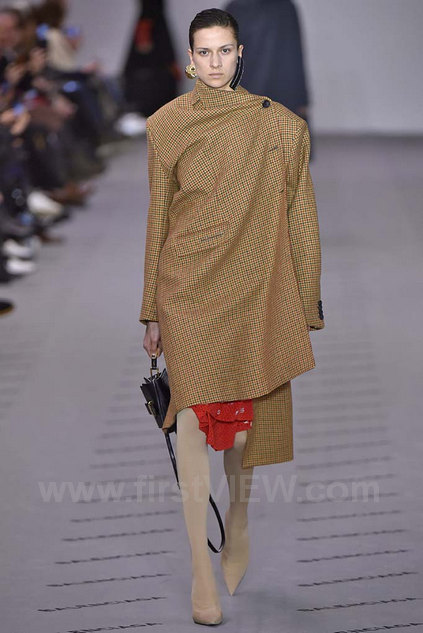
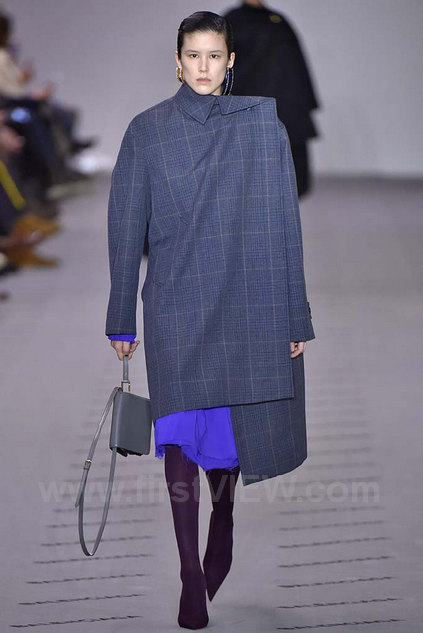
Balenciaga, FW 2017. A coat with exaggerated shoulders and an asymmetrical closure—an archival cocoon pushed to caricature.
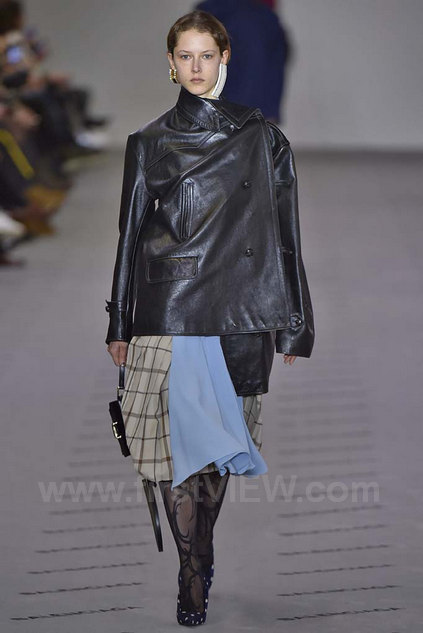
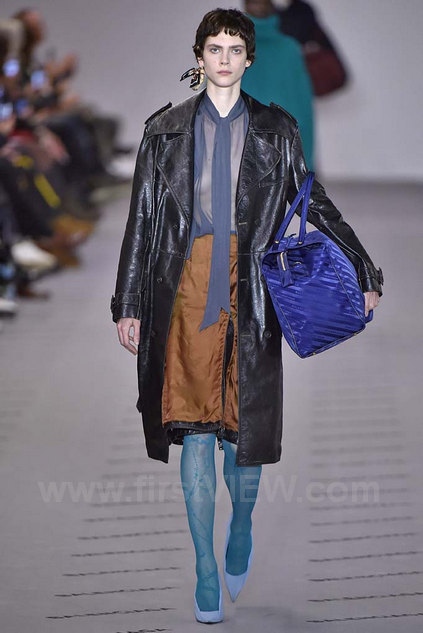
Balenciaga, FW 2017. Leather goods with excessive volume—the body drowns in a heavy shell.
Overall view: a row of enlarged silhouettes, where each costume is larger than the body within.
Balenciaga Fall 22 — «The Lost Tape»
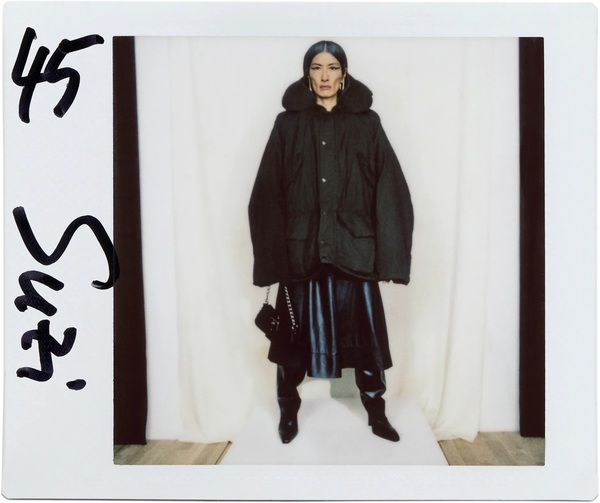
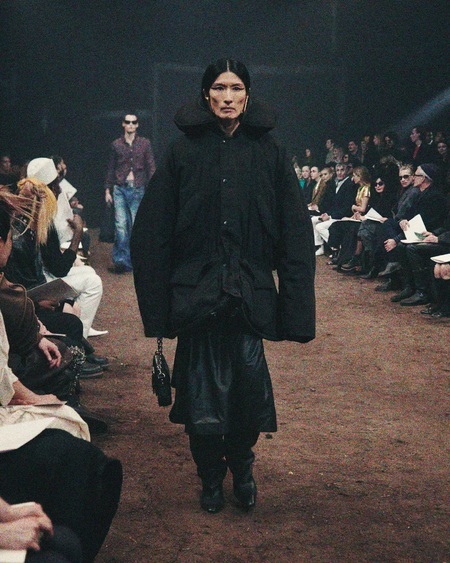
Balenciaga, Fall 2022 «The Lost Tape.» An oversized puffer jacket and wide skirt—an everyday piece transforms into a dystopian costume.
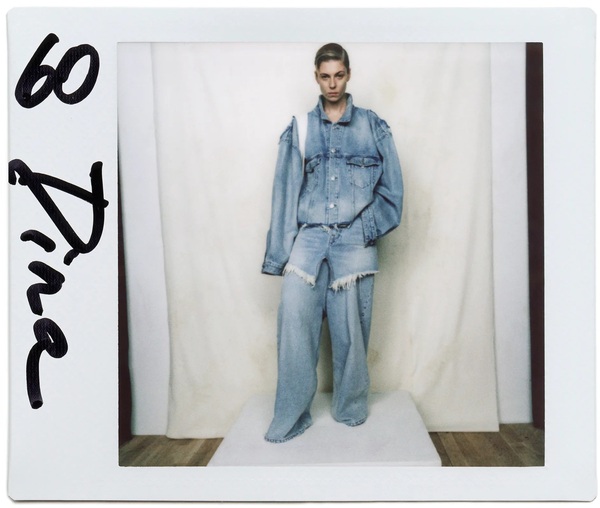
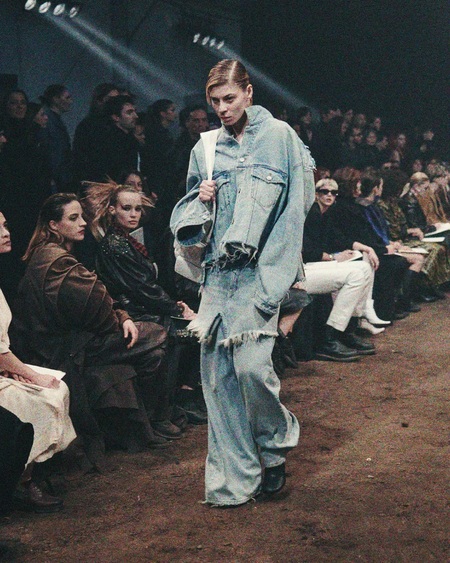
Balenciaga, Fall 2022. A denim total look featuring an oversized jacket—the top and bottom merge into a single, heavy silhouette.
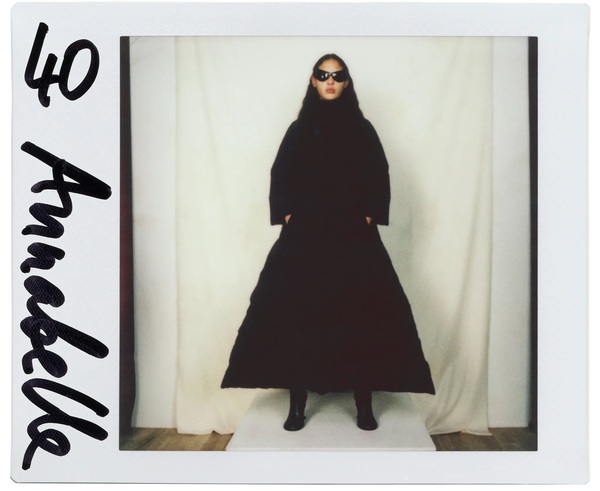
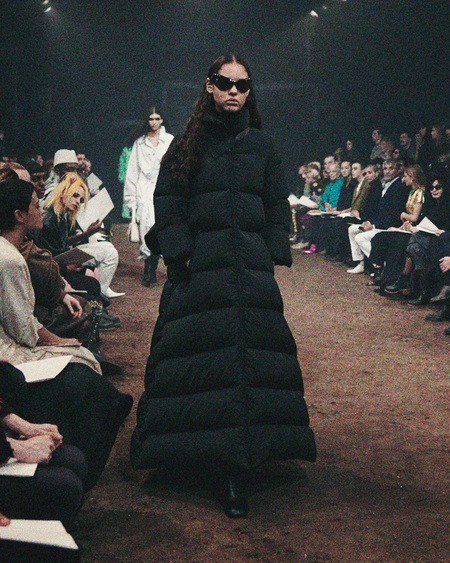
Balenciaga, Fall 2022. A very long down coat with a flare at the hem.
Maison Margiela Artisanal 2025. Towers, Corsets, and Ghost Bodies
Maison Margiela Artisanal 2025 introduces a distinct facet to the theme of the deformed body—the first haute couture collection for the house under the direction of Glenn Martens. Here, anti-fashion is built not so much on the «dirtiness» of street denim, but on a fusion of architecture, Gothic aesthetics, and the feeling of an unearthed archive.