Navigation Menu
- Research Concept
- Between the Workshop and the Factory 2.1 Object Availability and Labor Value 2.2 Craftsmanship and Industrial Method
- What People Expect from an Object 3.1 Material, Construction, and Human Sensation 3.2 Formal Expressiveness and the Return of the Past
- How Opposites Become Compatible 4.1 Manual Labor and New Technologies 4.2 Form, Material, and Usage Scenario
- Where Synthesis Ends 5.1 Conception and Material Limits 5.2 Serialization, Choice, and Accessibility
- Conclusions
- List of Textual Sources
- List of Image Sources
Concept
A chair promises something simple: it offers human support. Yet, various conceptions of a good life arise around this promise. One object is tasked with being accessible, another with being expressive, and a third with preserving the warmth of the material or the memory of handcraft. Sometimes these requirements support one another; sometimes, they force a choice.
This study explores the conflict of opposites in the design of chairs and armchairs. Its core issues relate to the mismatch between societal expectations and production capabilities. How can an object be made for many people while retaining a focus on the individual? Why does technical perfection not eliminate the need for ornamentation, historical memory, or individual expression? Is design doomed to choose between these demands?
New conditions make opposites compatible
This is the working hypothesis of the research. Under new conditions, we mean changes in technology, labor organization, and the perception of the object’s purpose. It is assumed that these changes allow for the reconciliation of certain requirements previously viewed as mutually exclusive. Synthesis here is defined as the solution within which it is possible to establish which qualities are preserved and how they have been reconciled. Mere external similarity or blending of materials is not sufficient for this.
The main body of work covers the period from the mid-19th to the early 21st century. An 18th-century armchair is introduced as a historical point of comparison. The selection of chairs and armchairs allows us to maintain the proximate function of the objects while accounting for the differences between brief seating and repose. Examples have been selected for which information regarding construction, manufacturing, or the designer’s concept is available.
The work is structured around specific problems. Initially, the relationship between craft and industry is examined, followed by the requirements of the body and the need for expressiveness. Subsequently, the methods of integrating these approaches and the boundaries of such integration are explored. Within each chapter, we compare the general silhouette, supports, surfaces, and joints. Repeated reference to the object serves to verify another characteristic.
Museum catalogs, designers' archives, and manufacturer technical documents are utilized to verify dates and the causes of changes. Visual comparison helps reveal differences, but it does not, in itself, prove influence, comfort, or accessibility. The conclusion is limited to the cases selected. The research posits that some contradictions may be compatible inherently, while others will persist even after technological shifts.
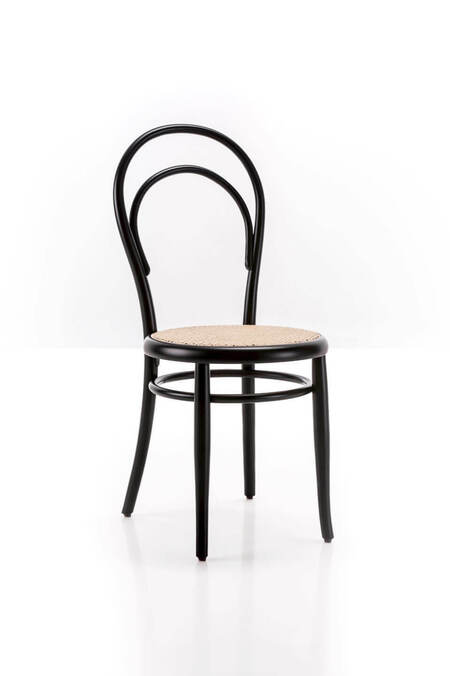
Михаэль Тонет. Стул № 14, ныне модель 214, 1859 год
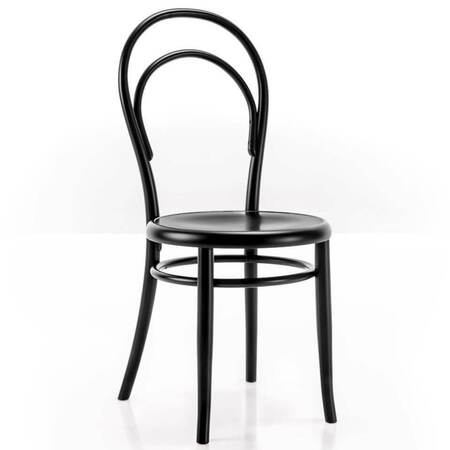
Алессандро Мендини. Poltrona di Proust, 1978 год
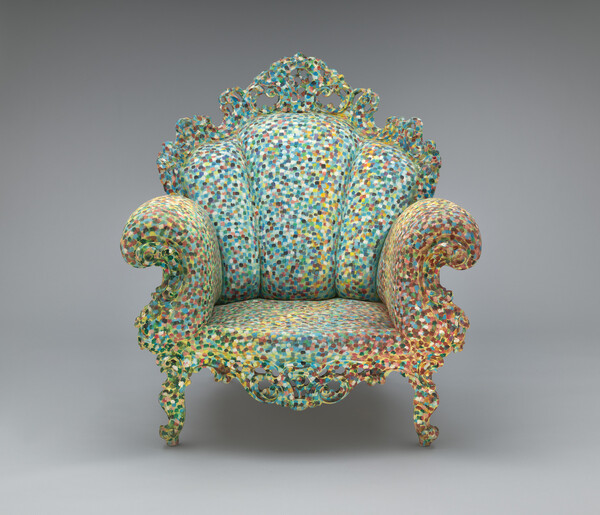
We are presented with two seating areas. In one, the gaze follows delicate curves, while in the other, it lingers on the drawing and volume. The difference is too profound to be explained solely by their function. The investigation begins with a question of the requirements surrounding this shared purpose.
Between the Studio and the Factory
The question of a good chair begins before a person sits in it. Who manufactured the components, how they are joined, and how many pieces can be replicated—these factors determine more than just the price. The method of manufacture reflects a vision of what labor should be and who should have access to the object.
The Accessibility of Objects and the Value of Labor
Михаэль Тонет. Стул № 14, Проект 1859 года (плетеная версия)
Филип Уэбб. Стул Sussex, Около 1865 года
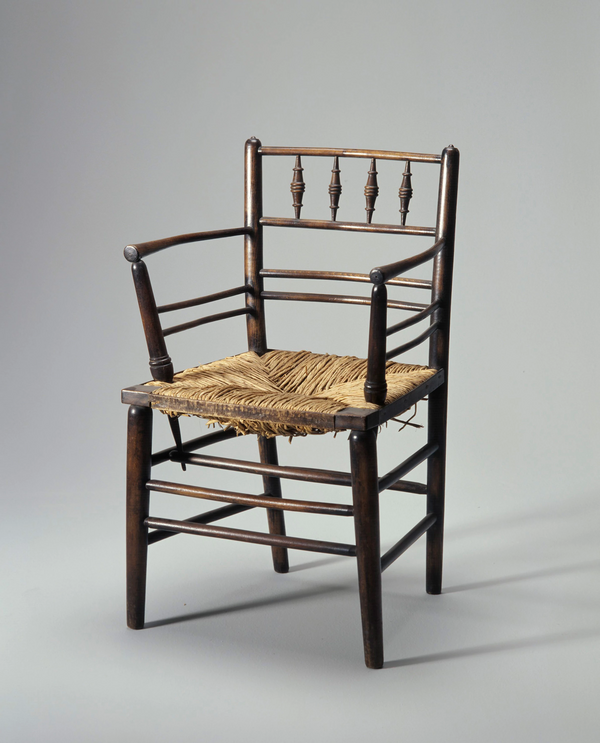
Both chairs are understated, yet their simplicity belies distinct focal points. The Arts and Crafts movement responded to deteriorating working conditions and the declining quality of industrial goods. Thonet’s system expanded the possibilities for replicating and distributing furniture. Comparing the two raises a social question: how can an object be made accessible while preserving attention to quality and human labor.
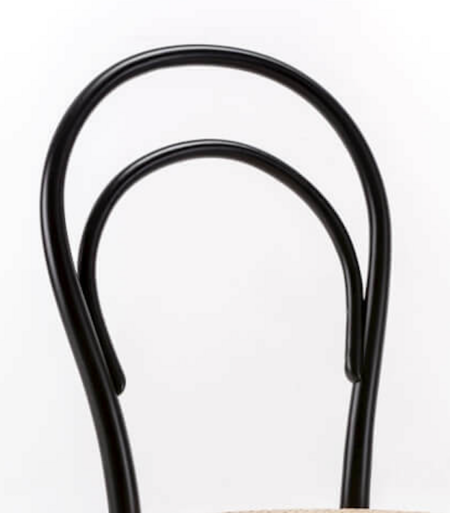
Михаэль Тонет. Стул № 14, Проект 1859 года (вблизи)
Филип Уэбб. Стул Sussex, Около 1865 года (вблизи)
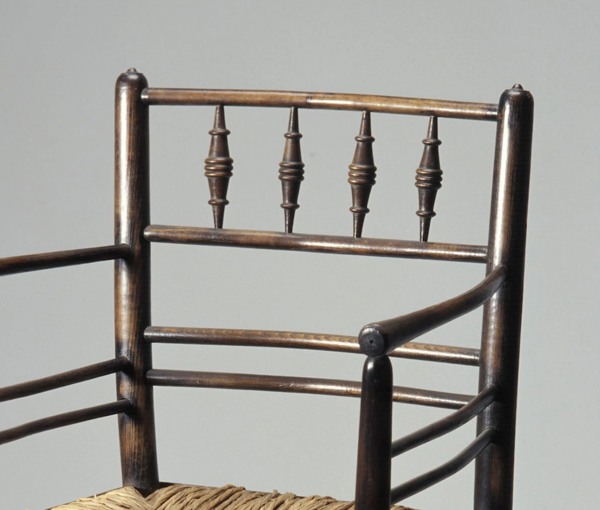
Toneta’s backrest is constructed around a large, curved arch, while the Sussex features vertical stiles and cross members. However, the woven seat remains consistent in both designs. The Sussex was relatively inexpensive and produced in batches. These different manufacturing methods likely addressed the common need for an accessible item, demonstrating how permeable the boundary between craft and industry truly is.
Schematic breakdown of chair No. 14 by Michael Thonet. Analytical research schematic, 2026, based on Thonet information.
At Toneta, the chair was designed as cargo. The disassembled construction allowed thirty-six chairs to be packed into one cubic meter and assembled at the destination. The change to the object impacted the entire journey from production to consumer. Space efficiency became an integral part of the design solution.
Craft and Industrial Method
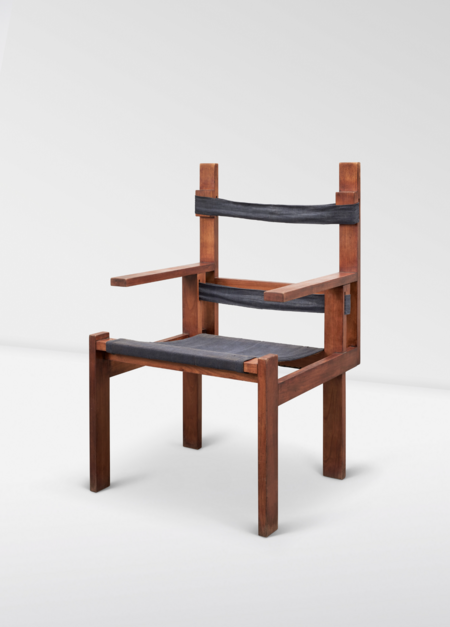
Марсель Брейер. Кресло. 1922 год. Дуб, шерстяная обивка.
Марсель Брейер. Кресло Wassily. 1925 год. Хромированная сталь, ткань.
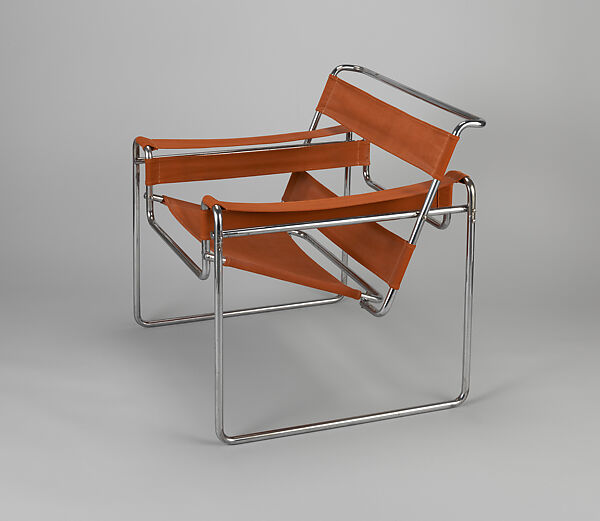
In the two-chair Breyer, wooden dowels give way to steel tubing, yet the open structure remains essential. This shift coincides with the revision of the Bauhaus curriculum. In 1923, Gropius reinforced the focus on mass production, partly due to the economic constraints of the former craft model. This example illustrates how a change in working conditions is accompanied by the search for a different structural language within a single school.
Tone and Breier work with different materials, yet in both cases, curvature helps organize the object. Similarity does not prove direct borrowing; rather, it shows that a new medium is capable of continuing the prior exploration of light and open construction.
What does a person expect from an object