Research Concept
In the public perception, an invitation to an exhibition is merely a piece of cardstock containing event information.
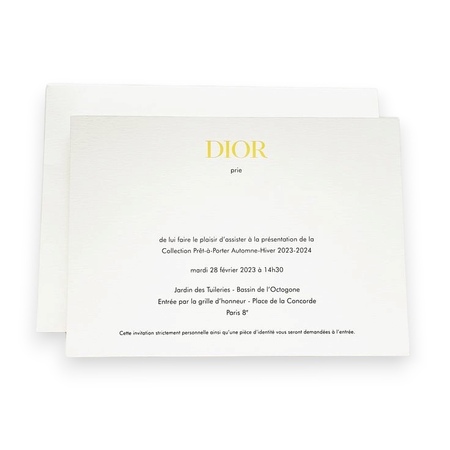
It typically conveys the date, time, and location, with its design playing a secondary role. However, contemporary invitations can become autonomous visual objects that familiarize the recipient with the brand’s aesthetic even before the show begins.Dior. Classic invitation. F/W 2023.
…the ritual of the paper invitation, personal and direct, has not lost importance—indeed, in an era of forced digitalization, it has assumed even more significance…
An invitation from Maison Margiela is also a standalone art object.
Maison Margiela — a fashion house founded by Belgian designer Martin Margiela in 1988. Its history is rooted in deconstruction, material experimentation, and the reimagining of conventional garment forms. Another defining characteristic of the house’s image was the founder’s anonymity, as he actively avoided public life. These principles are compellingly observable not just through the collections, but also through a less obvious medium—the invitations.
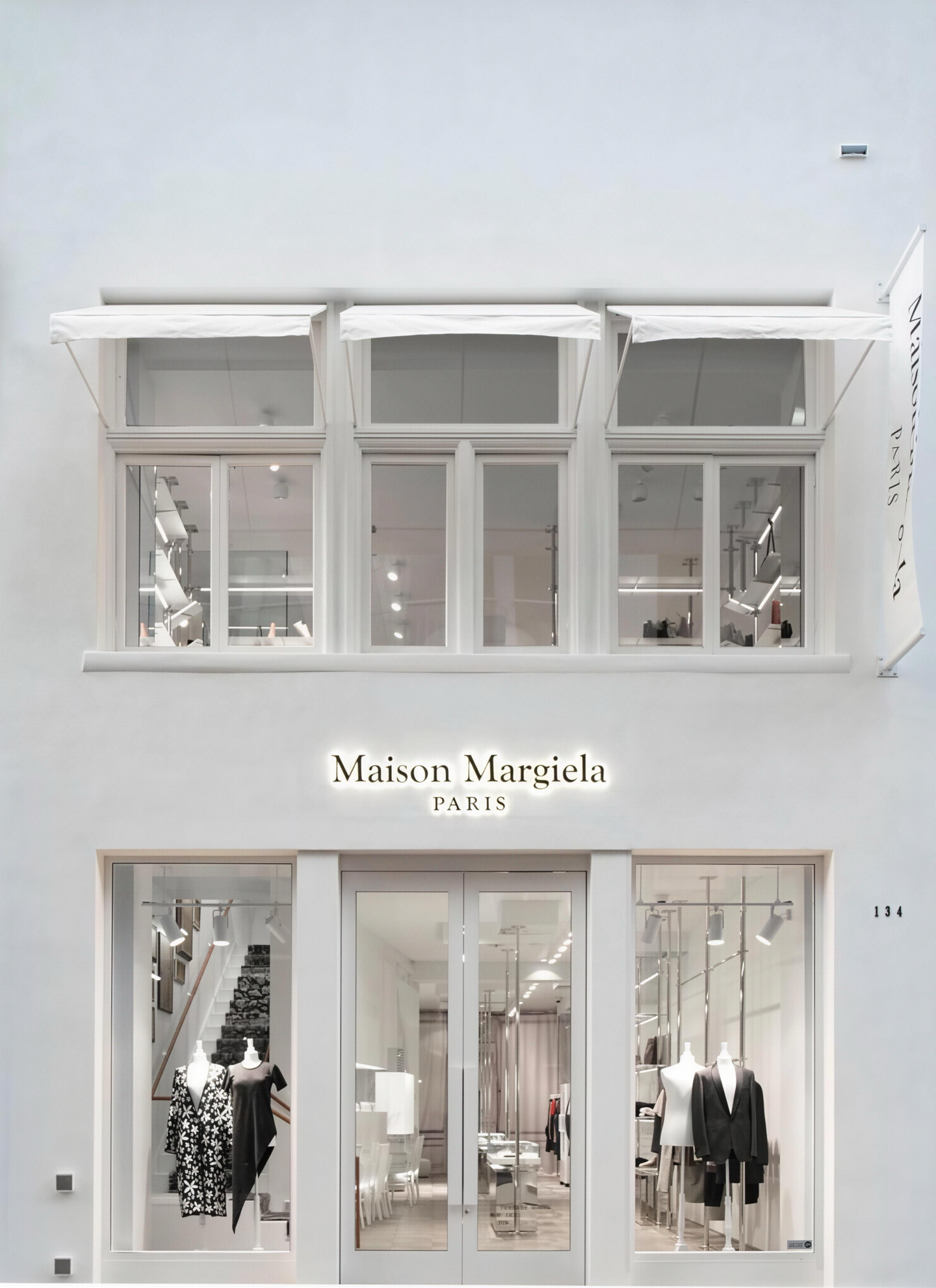
Maison Margiela. Boutique in San Francisco.
Maison Margiela invitations could take the form of a telegram, a newspaper advertisement, a subway ticket, or a bank card. In other instances, the information was presented on objects that needed to be included, assembled, unfolded, or modified. Plates, spoons, tokens, and other everyday items could assume a new function and become carriers of the event’s message. This transformed the invitation from a mere printed card—its visual identity was defined not only by the text but also by its form, material, color, and method of interaction with the object.
Relevance of the Study stems from the fact that these invitations allow us to examine a fashion house’s visual communication beyond apparel and advertising imagery. They exist at the intersection of graphic design, object design, and fashion culture. Analyzing them helps to understand how the principles associated with Maison Margiela can manifest in small objects that often remain outside the viewer’s attention.
The work places particular emphasis on the visual characteristics of invitations: form and composition, typography, color, texture, materials, information layout, and how it is read. We also examine white color and minimalist design, as well as the use of familiar objects in unconventional contexts. These characteristics are significant not in themselves, but in how they alter the perception of the invitation and relate to the fashion house’s visual language.
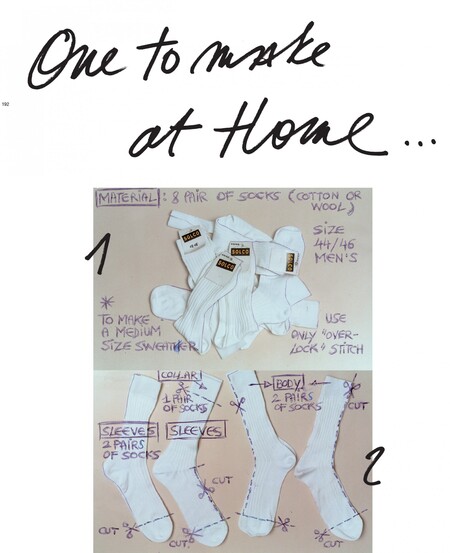
The theoretical foundation of this research comprises works on deconstruction in fashion, material objects, and visual communication. E. P. Maximova examines the characteristics of Martin Margiela’s work, including his interest in non-standard forms and anonymity [1]. V. Skivko analyzes deconstruction using Maison Margiela as an example [6], while A. Zborovsk views it as an approach to contemporary fashion design [7]. These studies help establish the context for analyzing invitations, though they do not themselves prove that every examined object directly expresses the principles of deconstruction.G. Riello’s work is dedicated to methods for studying objects in fashion history, helping to view an item not merely as a utilitarian object, but as material for researching cultural values [5]. V. Linfante and K. Pompa examine the fashion show as a multilayered communication channel [3]. Within the scope of this research, this approach is expanded by analyzing the invitation as an object that participates in communication even before the event itself.Martin Margiela. How to make a sweater from 8 socks for A Magazine. 2004.
Research Question: How do the visual characteristics of Maison Margiela invitations transcend their informational function, and how do they relate to the brand’s visual language?
Selection. Thirty-two invitations to Maison Margiela shows from 1989–[20XX] are analyzed from archives, museum collections, and publications.Selection Criteria: confirmed image, known show year, and source description. This volume allows for a comparison of different periods and formats: cards and letters, fabric, plastic, games, and objects.Sources and Methodology. The theoretical section is based on scholarly articles regarding deconstruction in fashion [4; 6; 7; 8], the show as a communication channel [3], and Margiela’s design practices [1; 2]. The methodology involves visual analysis with quantification: for each invitation, the format, material, method of information reading, color, and presence of the house name are recorded. The results are correlated with the principles of the house.
Research Hypothesis The hypothesis of this study is that the unconventional form of Maison Margiela’s invitations helps convey the unique aspects of the fashion house’s visual language. The material, design, method of information delivery, and interaction with the object can alter the perception of the invitation, making it a part of the brand’s communication.
Research Object: Maison Margiela’s visual communication.
Research Subject: invitations to shows—their form, material, text, and mode of consumption.
Research Goal: To determine how the form, material, and manner of interaction with Maison Margiela invitations influence their perception and allow them to transcend the boundaries of a mere informational medium. To achieve this goal, several objectives must be addressed: to examine invitations from different years, identify recurring visual techniques, group objects based on their design and usage principles, and correlate the analysis results with the specific visual language of Maison Margiela.
Research Materials consist of 30 invitations from Maison Margiela, created between 1989 and 2026. The sample includes examples from different years, materials, and methods of information delivery. Its purpose is to demonstrate the diversity of visual solutions and identify common principles using specific examples.A qualitative visual analysis is used for this analysis. Each object is examined based on several criteria: form, material, color, typography, information layout, method of acquisition, and the necessity of interacting with the object.Captions are formatted as follows: Timely name of the fashion house. Invitation format. Season and year.
The research period is based on 1989 to 2026 (from the first showing to the present day). It begins with the first telegram invitation and encompasses the years following the founder’s departure from the brand.
During the period under review, there were sufficient visual materials available for research; however, the quality of many images was limited. Therefore, AI tools were utilized to enhance the quality and detail of the illustrations prepared for analysis.
Main Body
Form and Typography
The invitation can resemble a telegram, a newspaper ad, or a ticket. Familiar formats convey information about the show, but in a new context, they take on a different meaning. Here, the typography, the arrangement of letters, and the choice of the medium itself are crucial. A telegram and a newspaper ad use conventional methods of information delivery, while a Paris Metro ticket evokes the urban environment. Such decisions demonstrate that an invitation does not necessarily have to look like a standard card.
Maison Martin Margiela. Invitation in the form of a telegram. S/S 1989.
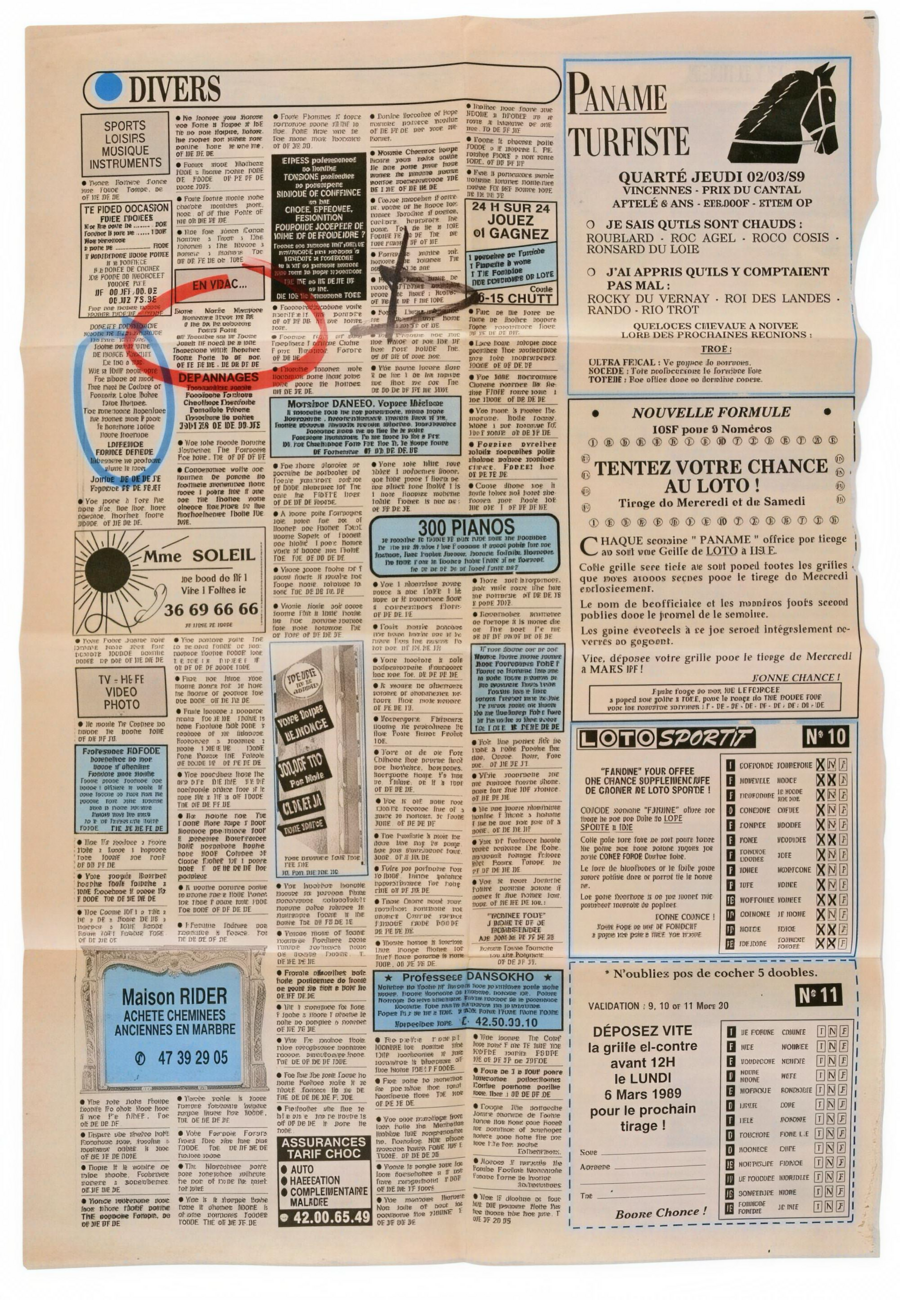
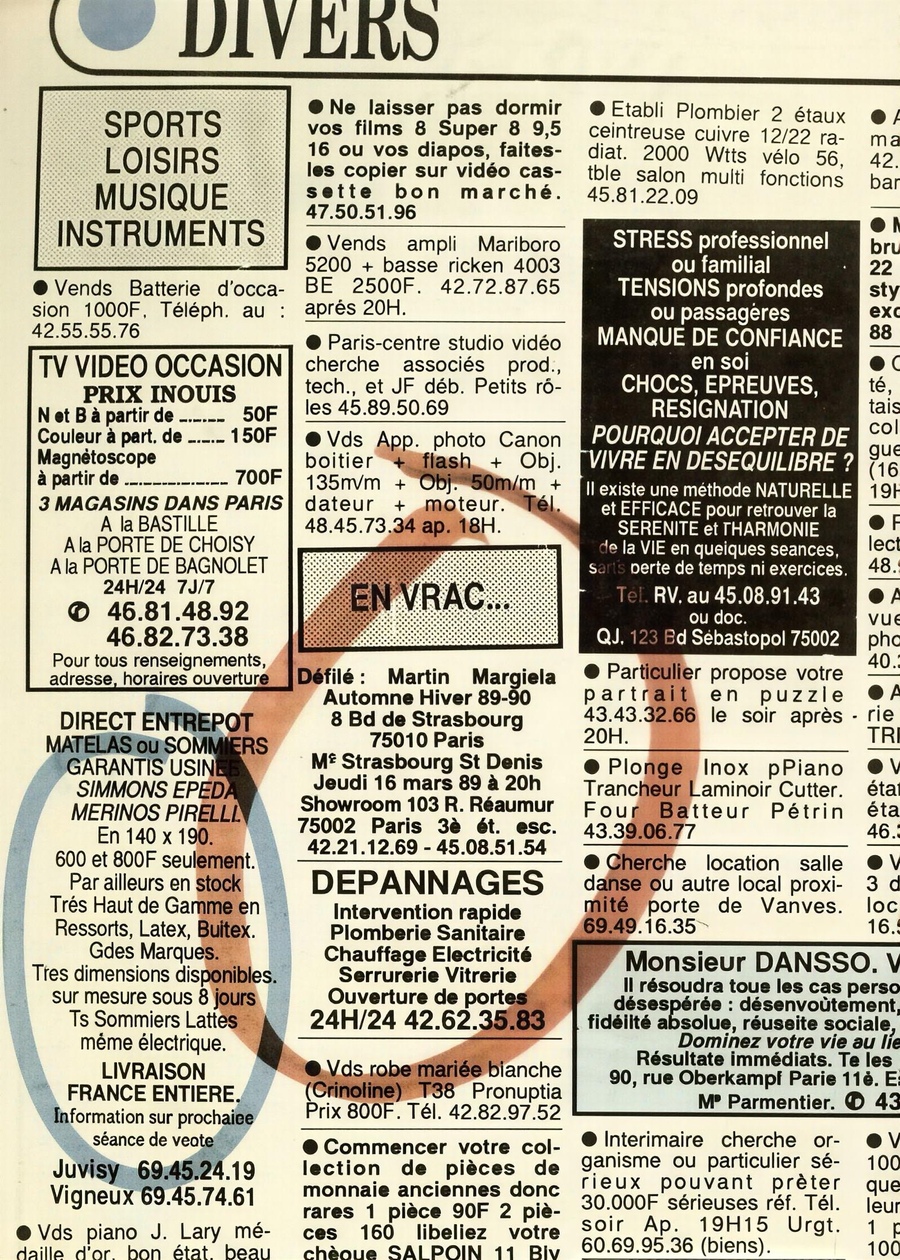
Maison Martin Margiela. Magazine advertisement invitation. F/W 1989.
Maison Martin Margiela. Invitation with children’s drawings. S/S 1990.
Maison Martin Margiela. Invitation with phone number. S/S 1993.
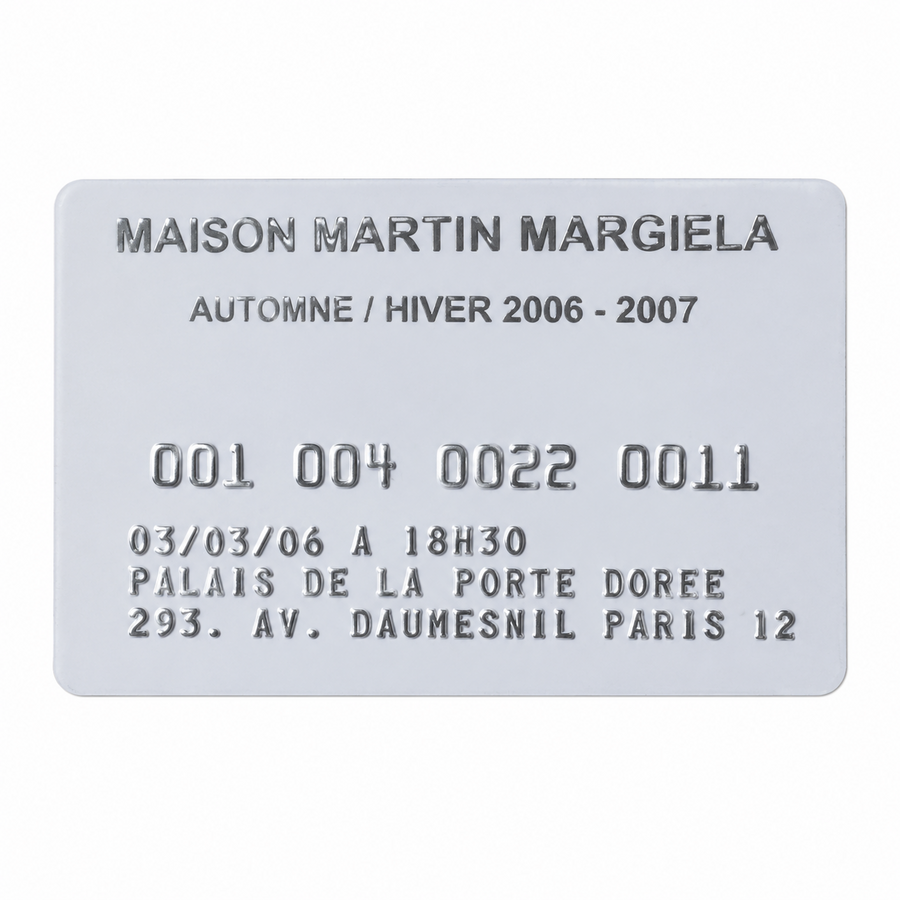
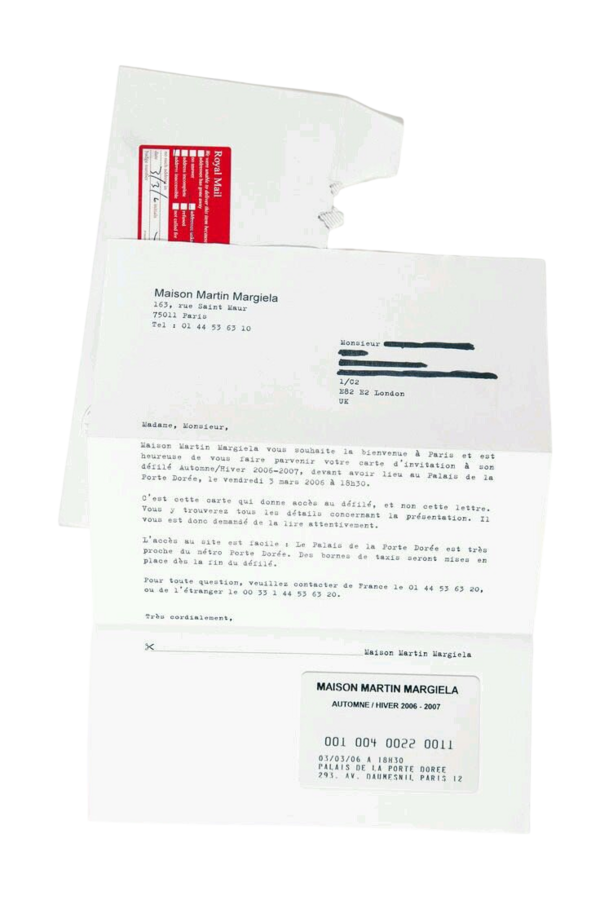
Maison Martin Margiela. Invitation–Bank Card. F/W 2006.
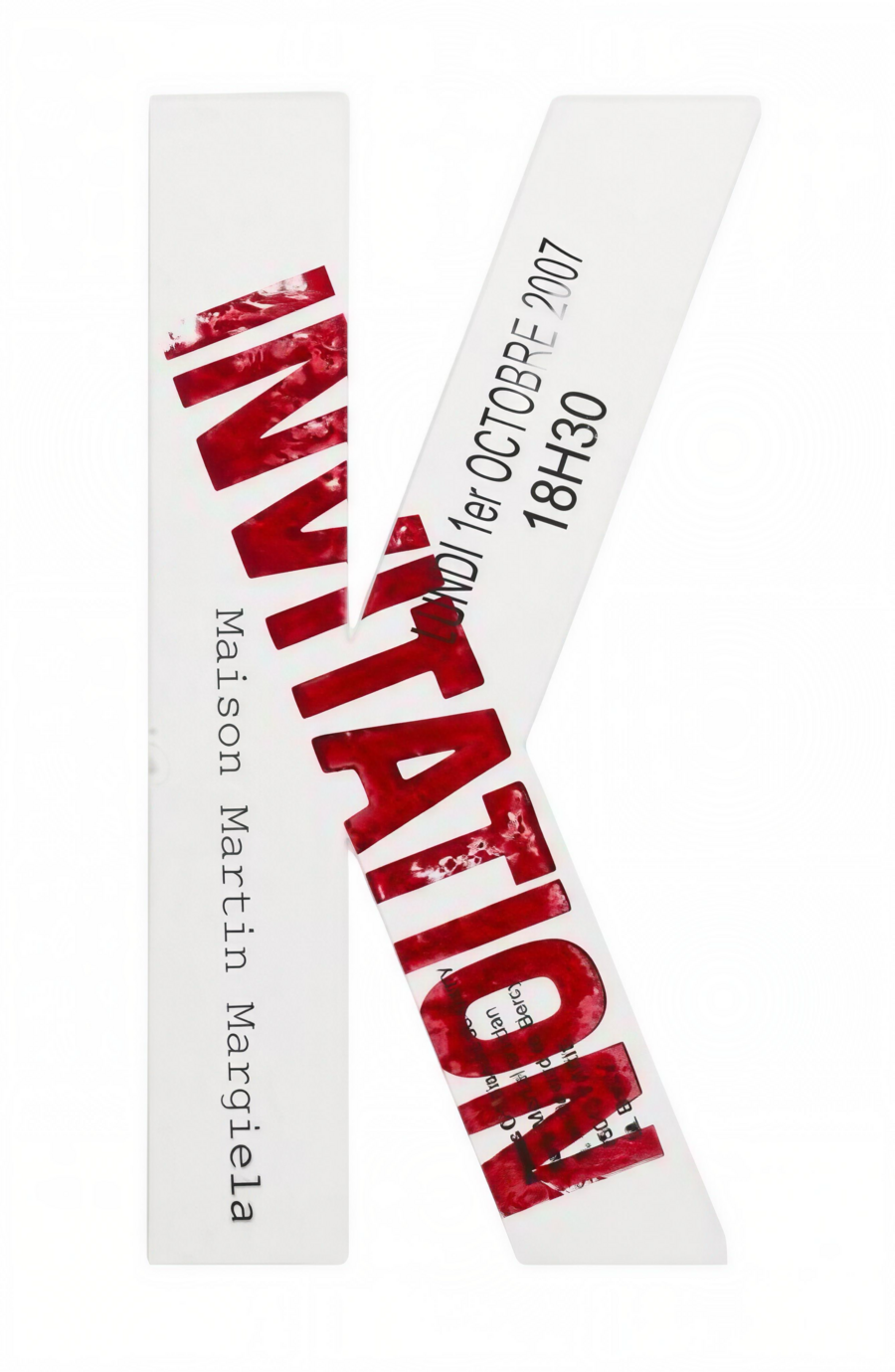
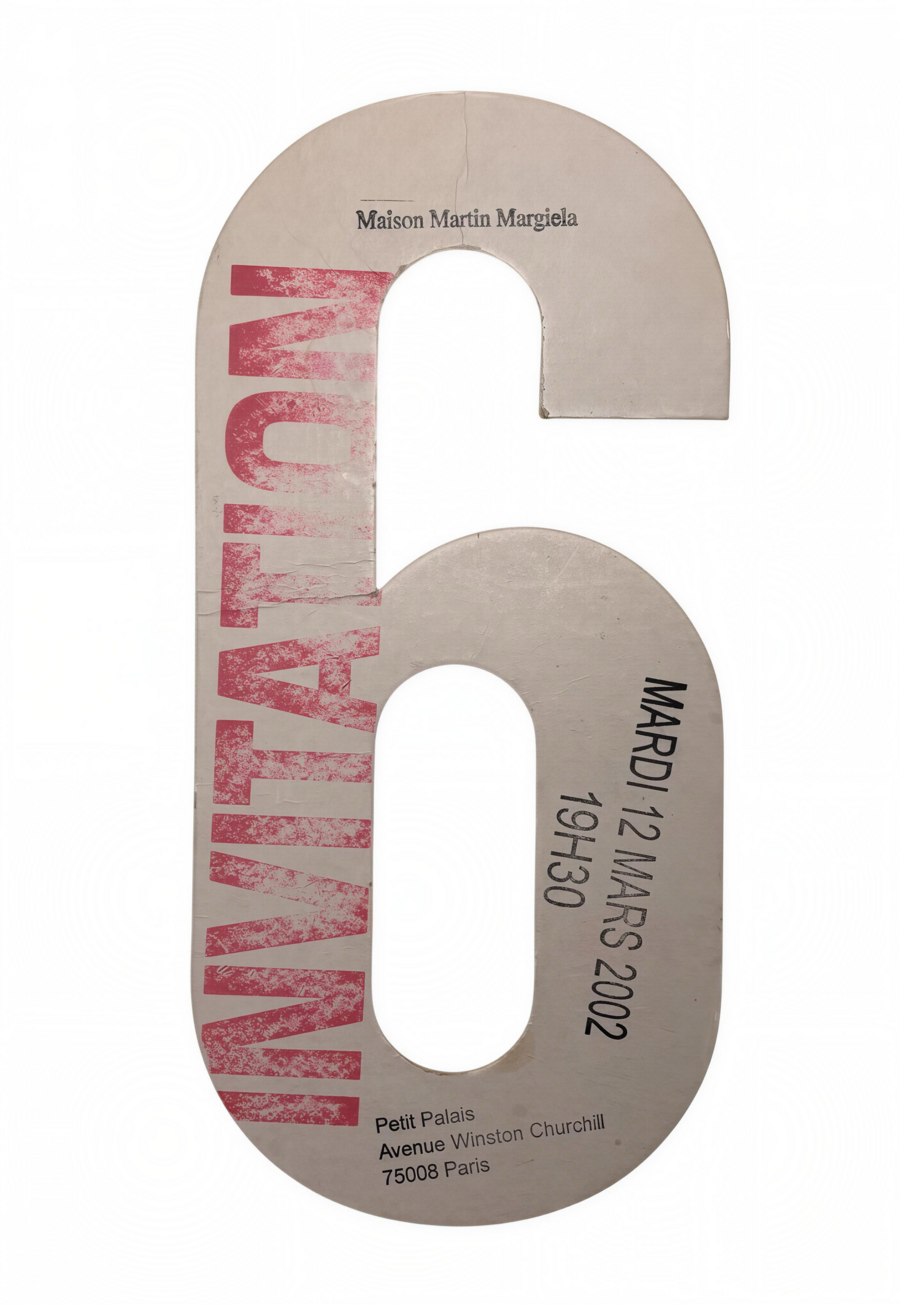
[1] Maison Martin Margiela. Invitation in the form of letters and numbers. S/S 2008. [2] Maison Martin Margiela. Invitation in the form of letters and numbers. F/W 2002.
Maison Martin Margiela. Invitation paper for rolling cigarettes. S/S 2009.
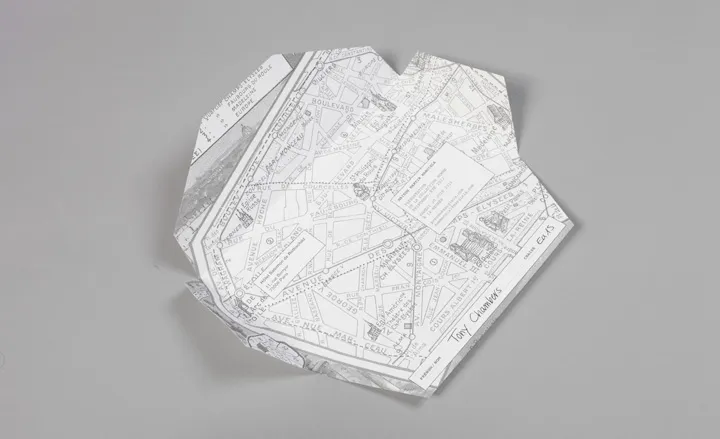
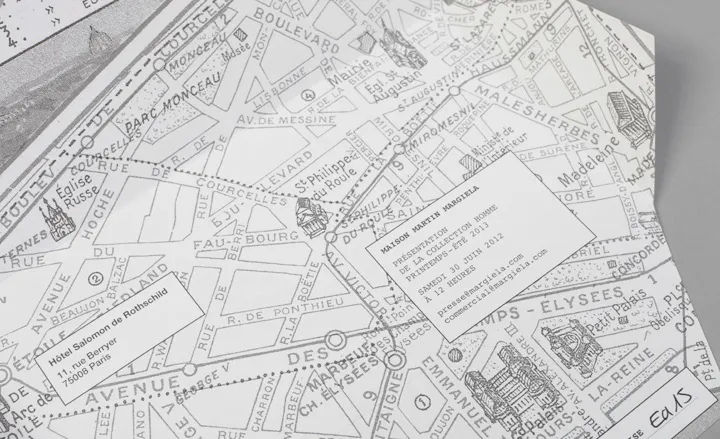
Maison Martin Margiela. Invitation Card. S/S 2013.
Maison Margiela. Invitation-ticket for the subway. S/S 2024.