Contents
I. Concept II. History of the Building: From Noble Assembly to Radio House III. The Voice of Blockaded Leningrad IV. Behind the Radio: People, Voices, and Daily Life V. Sound Environment and Radio Culture VI. The Radio House Today: Preserving Historical Memory VII. Conclusion Bibliography
I. Concept
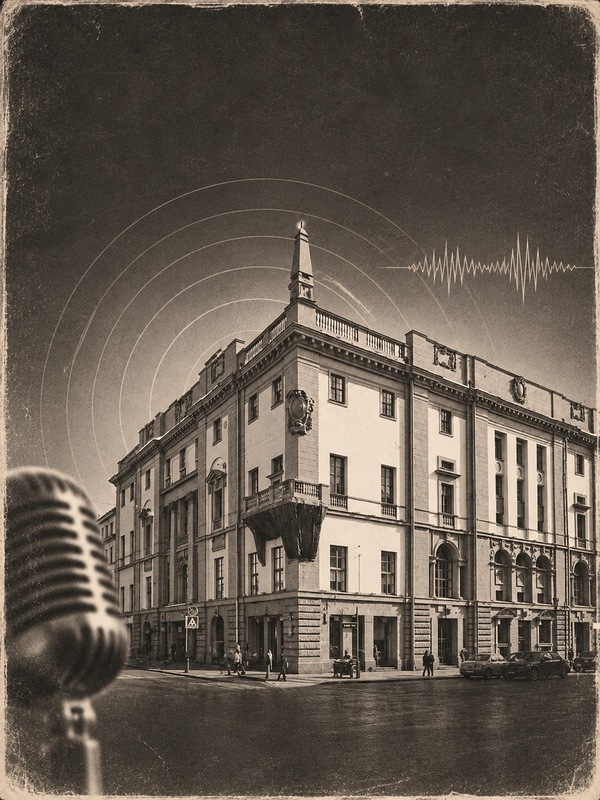
Sound is an integral component of the urban environment. It shapes the atmosphere of a space, preserves memories of events and people, and sometimes becomes a standalone historical document. Voices, music, radio broadcasts, and everyday noise can convey what cannot be seen in old photographs.In my visual research, I wish to examine the Radio House in St. Petersburg—a location whose history has been closely intertwined with the development of radio broadcasting for decades. The building on Italian Street became not only one of the cultural hubs of the city but also a space from which crucial moments of its history were broadcast.The Radio House gained particular significance during the Siege of Leningrad. During this period, radio became one of the few ways to maintain connection between the city and its residents. The voices of announcers, poetry readings, musical pieces, and metronome signals transformed into symbols of resilience and the daily life of the besieged city.
«One building—many eras. But radio became the longest chapter of its history.»
However, the history of the Radio House is not limited to the blockade period or its famous broadcasts. Behind every broadcast stood the work of a large collective: journalists, editors, announcers, musicians, and sound engineers. Their professional activities, personal memories, and preserved archives allow one to look at the history of radio from a different perspective—through the daily lives of the people who created its sound.
Within the scope of this research, I intend to trace the building’s history from the Noble Assembly to the modern Radio House, examine the features of its acoustic environment, and study the role of radio broadcasting in the life of St. Petersburg. Special attention will be paid to the personal archives of former employees, historical photographs, documents, and preserved audio recordings.
The main objective of this research is to demonstrate how a specific urban space becomes a carrier of collective memory and how the sounds of the past help preserve the history of a place.
The visual component of this work will be based on comparing archival and contemporary photographs, historical documents, portraits of people associated with Leningrad Radio, as well as graphic images that convey the idea of sound and broadcasting.
Switchgear and distribution equipment from the Radio House, 1970.
II. History of the Building: From the Noble Assembly to the Radio House
From a society club to a city symbol
Bookmark from the Noble Assembly House, 1912.
The Facade of the Noble Assembly Early 20th Century.
The House of Radio building is located at the intersection of Italian Street and Malaya Sadovaya Street. It was constructed between 1912 and 1914 based on the design by architects Vasily, Vladimir, and George Kosyakov. Initially, the building was intended for the St. Petersburg Noble Assembly—a club where members of the affluent society could gather for balls, musical and literary evenings, theatrical performances, and other events.The building’s architecture was commensurate with its representative function. Spacious halls, grand staircases, and large foyers created a space for the public and cultural life of St. Petersburg. However, the home’s original purpose changed even before it had a chance to become a full-fledged center of high society.
Interior of the Noble Assembly
Shifts in Era and Purpose
The outbreak of World War I impacted the fate of the new building: in December 1914, it housed the Japanese Red Cross detachment hospital. Later, the spaces were utilized by various cultural institutions. A theater opened in 1918. However, the performances—directed by Mgebrov—primarily consisted of declamations of poems by proletarian poets. In 1924, one of the halls was converted into the «Koloss» cinema. Nevertheless, the members of the Proletkult Dom never left. Over the next few years, theatrical clubs, a book publishing house, and the Labor Institute of the Gubprofsoplet (an organization that conducted research in economics and occupational health) all operated here in parallel.Thus, the building gradually changed its function alongside the city and the country. The space, originally designed for balls and gatherings, became a center for public, cultural, and humanitarian life.
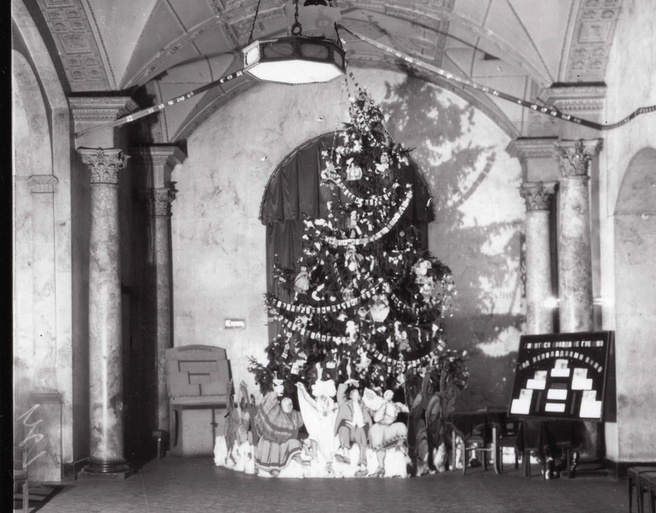
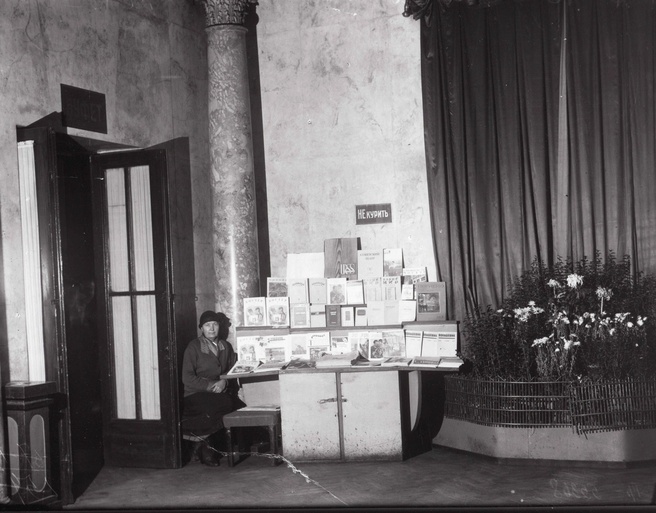
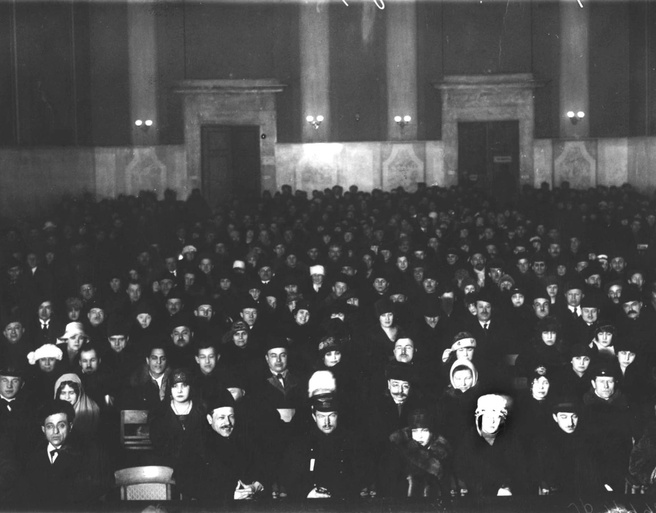
Bookstand in the lobby of the «Koloss» cinema, 1936.