Concept
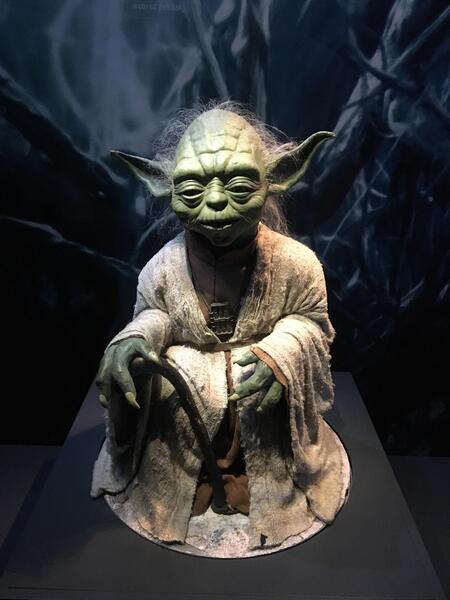
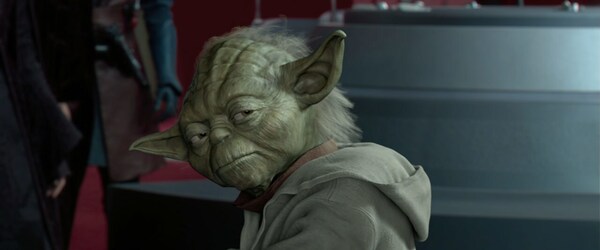
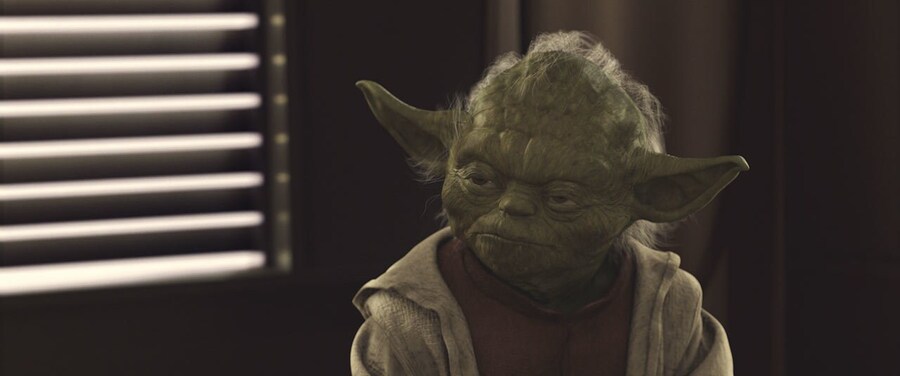
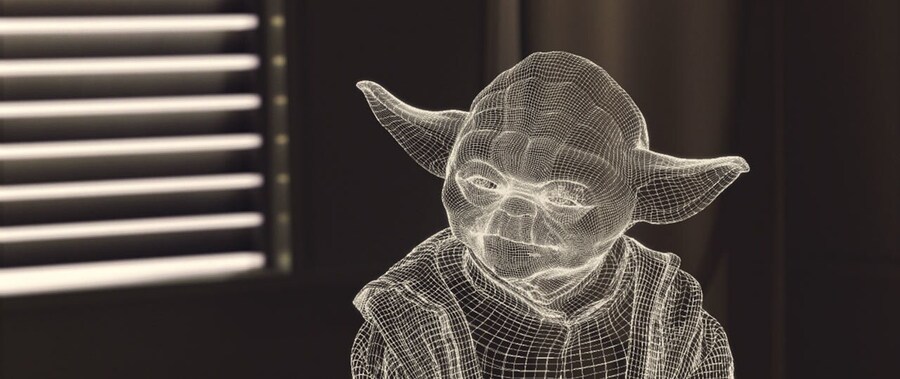
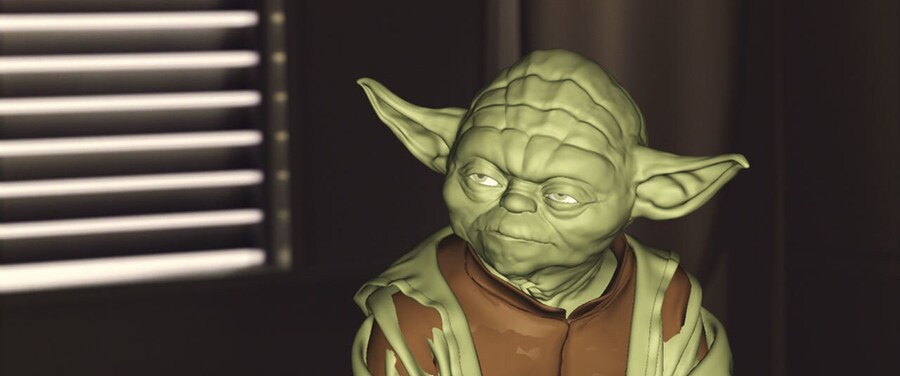
Yoda first appeared on screen in the film «Star Wars: Episode V — The Empire Strikes Back» (1980) as a puppet controlled by three puppeteers.His first full digital appearance: Later, with the advent of CGI technology, Yoda became fully digital in the film «Star Wars: Episode II — Attack of the Clones» (2002).
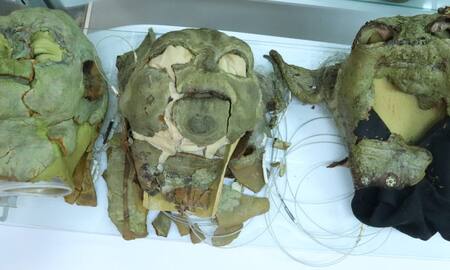
Puppet Figure: Returning to the Roots «Star Wars: The Last Jedi» (2017)
For the scene with Yoda, a puppet was created using original molds and scans of older materials, employing minimal VFX and SFX effects to achieve maximum character realism.
The key question is: why, when state-of-the-art computer graphics and effects were available, did we choose to return to the puppet?
Yoda in Star Wars: Episode V — The Empire Strikes Back
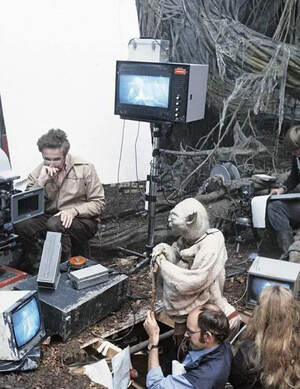
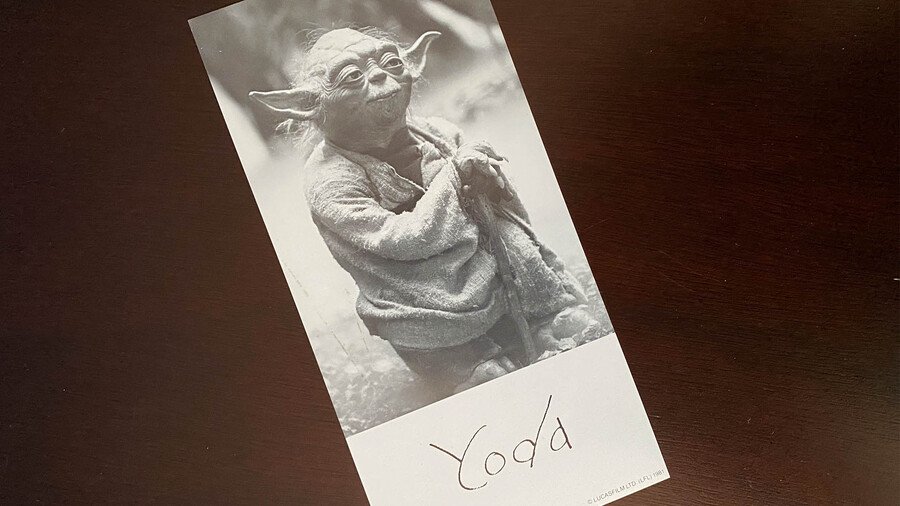
The volume of the head, the relief of the folds, and the shape of the eyes existed before the camera even before post-production; the characteristic distortions were set by the construction, and VFX and SFX technologies were practically not used on Yoda in the frame.
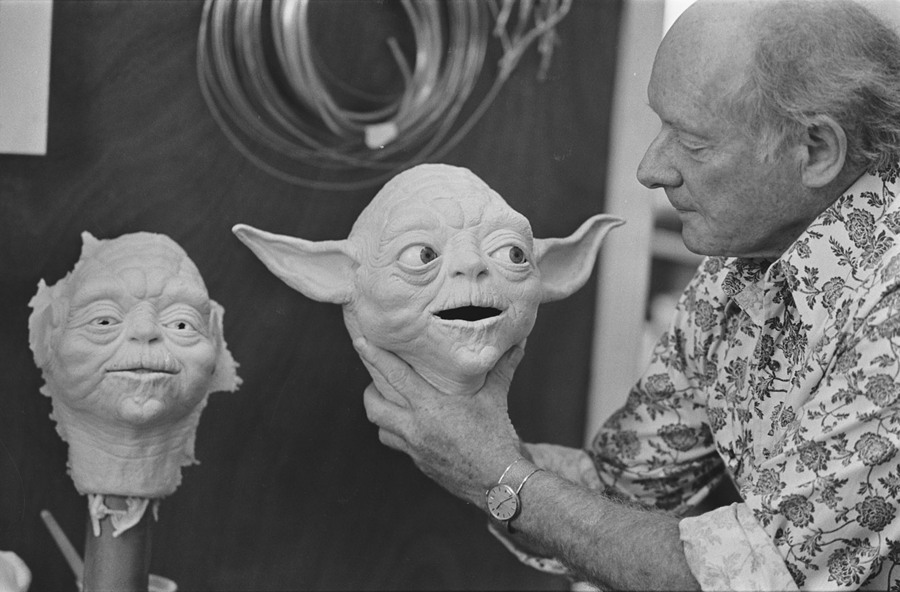
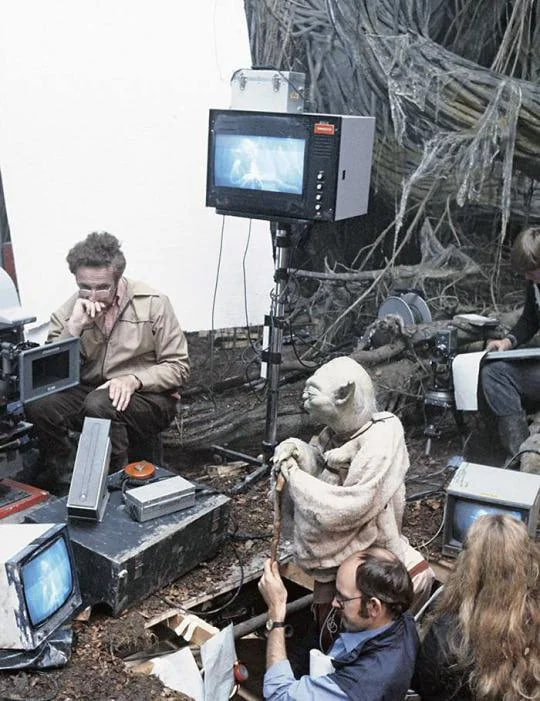
Yoda’s construction dictated his appearance even before filming began. The puppet was designed with Frank Oz’s hand size in mind, as he would be controlling the character’s head and expressions from inside. First, the head was sculpted from modeling clay; then, molds were created to achieve a flexible shell made of foamed latex. Beneath this shell was a rigid framework of fiberglass and polyurethane, which housed the control elements.
The film received the Special Achievement Award (Oscar for Visual Effects). Award recipients: Richard Edlund, Bruce Nicholson, Brian Johnson, Dennis Meren.
Crew: Richard Edlund — VFX Supervisor. Brian Johnson — SFX Supervisor. Stuart Friborn — Yoda’s face and construction creator. Frank Oz — principal Yoda puppeteer. Fendi Feind — sculptor and puppet master. Katie Mullen, David Barkley — puppeteers. Irvin Kernschner — director.
The original shooting rig utilized both mechanical and electronic elements: Mark Hemill recalls that the doll could blink and move its ears; malfunctions required repairs in Friborn’s workshop. The puppeteers operated beneath the floor level; Wendy Fraud managed the eye movements, according to Katie Mallen.
At his initial appearance, Yoda was supposed to be a «non-existent character,» according to George Lucas, possessing a quirky charm—which is why he was made small and green.
The primary technical challenge lay in creating a convincing face. The latex skin needed to simultaneously retain sculptural texture while deforming flexibly under control, and—at the same time—appear human and believable.
Frank Oz manipulated the main puppet from behind the set, while other puppeteers assisted in moving individual elements. Specialized mechanisms were developed for the eyes and eyelids.
Every change in facial expression required physical manipulation of the structure. Wrinkles, folds, eyelid position, and mouth shape were not computer-rendered; their appearance on camera was determined by the puppet’s design and the operation of mechanical parts.
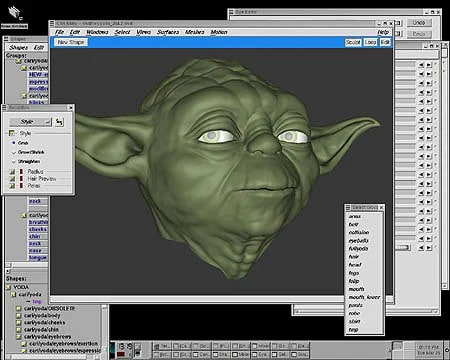
Star Wars: Episode II — Attack of the Clones (2002) The application of CGI and the influence of SFX and VFX on Yoda as a digital character
Working Team:
SFX Supervisors — Pablo Hellman, Dennis Meren, Ben Snow, John Noll