The research topic focuses on the evolution of technologies used to create iconic monsters in cinematic fiction. They have existed in cinema for nearly a century and regularly reappear in new interpretations. The recurrence of these archetypes and their stable cultural status create conditions wherein each generation of technology offers a different approach to visualizing the body, anatomy, plasticity, and texture. This temporal scope allows for an investigation based on comparing solutions to the same artistic problem across different historical epochs.
Representations of non-human entities offer one of the most striking examples of how technological development directly impacts visual outcomes. Creating anatomy that extends beyond human physiology is required for these subjects, which makes the technical solutions particularly noticeable in the frame. Comparing practical methods from the early period with modern digital tools allows us to understand exactly which technologies shape the believability, materiality, and presence of a body on screen.
For analysis, we selected several film adaptations from different decades that depict enduring archetypes of non-human creatures. The films are categorized by era: the classical period, which primarily features practical makeup, puppetry, and optical printing; the post-classical period, which incorporates animatronics and hybrid techniques; the early CGI era of the 1990s–2000s; and the contemporary stage, characterized by digital modeling, procedural deformation, tissue simulations, digital doubles, performance capture, and virtual production.
Navigation
- Practical Methods of the Classical Era
- Hybrid Solutions of the Late 20th Century
- Early CGI: The 1990s–2000s Crossover
- Contemporary Digital Modeling (2010–2025)
- Conclusion
Key Research Question and Hypothesis: How has the evolution of technology changed the ways of creating convincing non-human anatomy and atmospheric imagery while preserving recognizable traits of the classical archetype?
The hypothesis is that despite radical changes in production tools, the visual persuasiveness of an image depends less on the specific technology and more on how that technology adapts to the structural characteristics of the archetype. Modern methods allow for a more precise imitation of fabric physics and material biological properties; however, the practical effects provide a different perception of «physical presence.» Comparing different eras reveals that technological advancement changes not only the appearance of a being but also the very visual logic of horror, which is based on the interaction between materiality, movement, and integration with the real environment.
Practical Methods of the Classical Era
During the classic period of horror film production (roughly from the advent of sound film through the late 1970s), the creation of monster imagery relied almost entirely on practical effects. The nonhuman body existed physically on set—as makeup applied to an actor’s face, prosthetics, masks, sometimes puppet constructs, or mechanical elements beneath a costume. The audience saw not a digital simulation, but photographed material that was genuinely in front of the camera. From this emerged the entire visual logic of classic images; they were always «tangible, ” yet constrained by the limitations of materials and human anatomy.
The image of the «assembled» body, most characteristic of early versions of Frankenstein, required not only changes to the skin texture but also a complete restructuring of the head’s geometry. In «Frankenstein» (1931), Jack Pierce began his work using a plaster cast of Boris Karloff, onto which he molded an enlarged forehead, a flat parietal area, and a distinctive rectangular platform atop the crown. All the details were cast in porous foam latex, cut into sections, and manually adhered to the actor’s face. Pierce also used metal plates beneath the eyelids, which made the eyes appear droopy. The seams were formed as raised elements, painted to match the skin.
Photo from the filming of the 1931 film Frankenstein. Special makeup designer and creator Jack Pierce
The werewolf archetype was significantly more complex. It requires changes to the skull shape, fur growth, elongation of the nose, widening of the cheekbones, and the emergence of bestial musculature. In the classic cinematic decades, this was technically impossible to realize in motion. In The Wolf Man (1941), Jack Pierce created the look of Lon Chaney Jr. using thick latex overlays on the forehead and cheeks, hand-applied fur using the yak hair technique, and rigidly fixed dental appliances.
Photos from the filming of the movie «The Wolf Man,» 1941. Special makeup designer and creator Jack Pierce.
Because the appliqués and fur restricted the actor’s movement and the fur lacked inherent dynamism, optical and cinematographic techniques were required to realize the transformation effect that needed to be shown in motion. The method itself—staging the actor in a fixed pose in successive stages: first without makeup, then with partially applied fur, and finally with full coverage—is a classic optical technique widely used in early cinema to create the illusion of transformation.
«Man-Wolf, ” 1941. Directed by George Wagner. Plastic makeup developed and created by Jack Pierce.
In «Dracula» (1958), the vampire archetype first gained a strongly defined physicality. Makeup and practical effects became the primary tools.
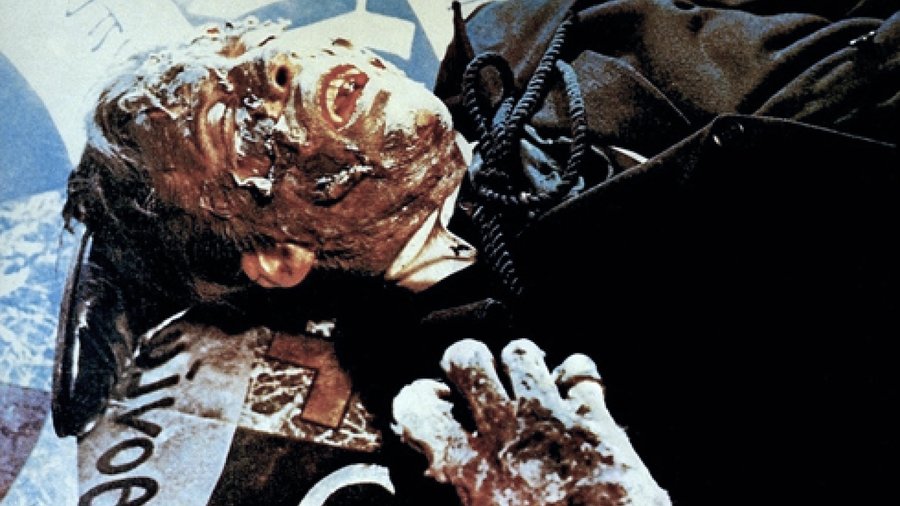
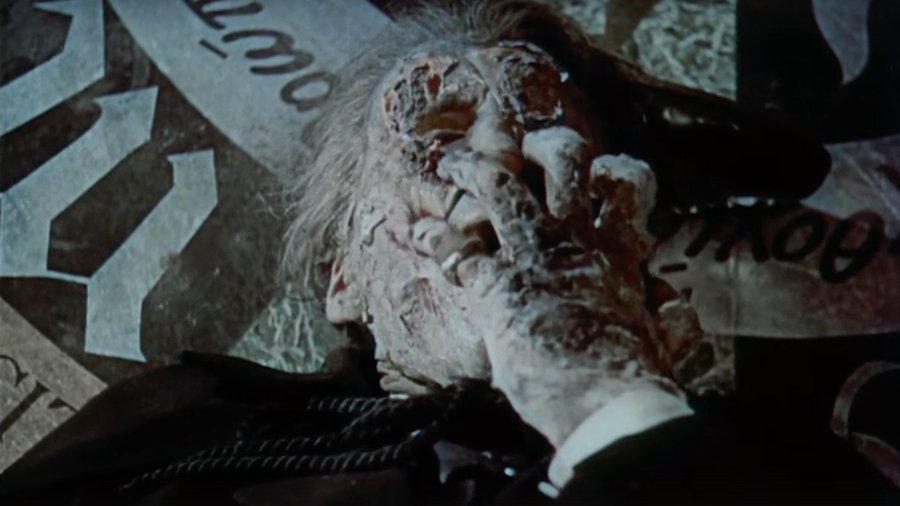
Stills from the film «Dracula,» 1958. Directed by Terence Fisher, makeup by Phil Lake, special effects by Syd Pearson.
The final scene of the body’s decay in Dracula (1958) was achieved using practical effects by makeup artist Phil Lilke and special effects supervisor Sid Pearson. Cosmetic layers, latex, powders, and optical filming were used to depict the tissue decomposition. Throughout the 1970s, films continued to develop practical aesthetics. During this period, visual technologies remained entirely reliant on physical materials, lighting, and the makeup design of the character.
The general technical limitations for all three archetypes were the same. The actor’s appearance became a physical boundary of possibilities; it was impossible to alter limb proportions, shoulder height, or neck length. No technology allowed for dynamic facial transformation, and any thick layers of latex deteriorated facial expressions. Lighting was used as a camouflage tool—backlighting, narrow key sources, and deep shadows concealed the seams of the overlays. The scale was also limited; in the classical era, the monster could only be an actor in makeup, not a newly created organism.
Hybrid solutions of the late 20th century
The hybrid era of the 1980s and 1990s was a time when practical techniques for creating non-human bodies reached peak complexity. This period forms the bridge between the classical masks of the 1930s–1950s and the digital deformations of the 2000s. During this era, several types of technologies were employed to depict vampires, werewolves, and «assembled» bodies: multi-layered prosthetic makeup, cable mechanisms beneath prosthetics, animatronic models, chemical effects, optical printing, double exposure, rear projection, and the first attempts at digital retouching. These tools allowed the monster to be moved out of stasis for the first time—skin began to move, bones changed shape, fur grew, and the transformation of the body became a process unfolding within the frame, rather than occurring outside of it.
«The American Werewolf in London» 1981. Director John Landis. Special makeup developer and creator Rick Baker.
One of the key areas of development was the mechanization of techniques previously accessible only to animators or stop-motion masters. The most famous example is «The American Werewolf in London» (1981), where the developer and creator of the special effects makeup was Rick Baker.
Photos from the set of the 1981 film «An American Werewolf in London.» Director John Landis. Special makeup developed and created by Rick Baker.
His task was to show, for the first time in cinema history, a full werewolf transformation entirely on set, without the optical effects that were still used in the 1940s. To achieve this, multi-layered prosthetics made of foam latex were created and affixed to the actor’s face and body. Beneath these prosthetics, cable mechanisms were positioned, driven by a team of mechanics. These systems manipulated the brows, shifted the nose, altered the jaw width, and created the sensation of «bone movement.»
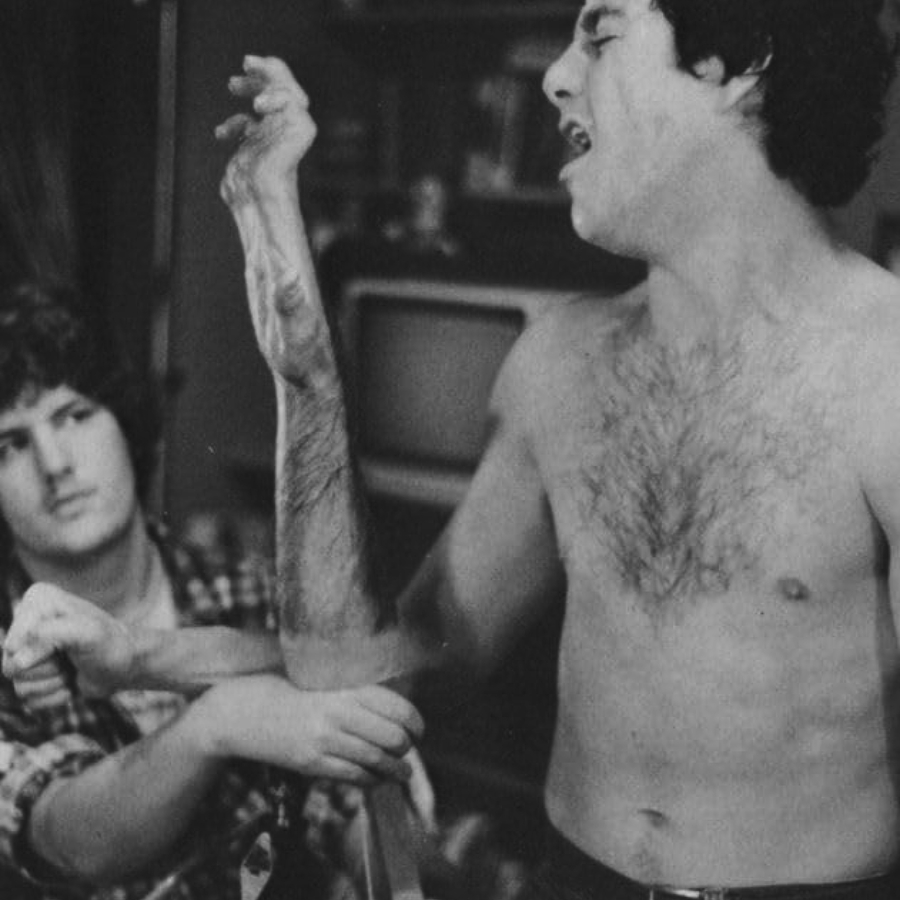
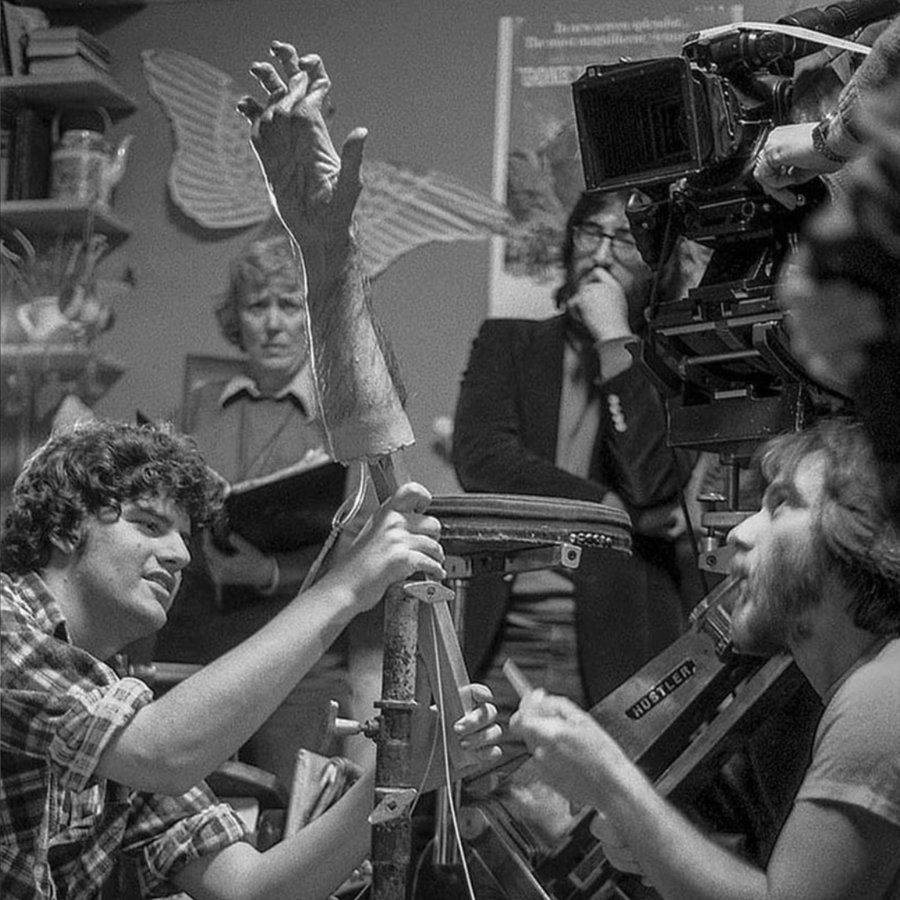
Photos from the set of the 1981 film «American Werewolf in London.» Directed by John Landis. Special makeup by Rick Baker, the developer and creator.
Makeup artist Rick Baker used a similar logic to create the effect of suddenly growing fur; Baker pulled the hair into the material, and the footage was later played in reverse so that it appeared to be growing. In the shot, the audience saw the transformation for the first time, rather than a sequence of static phases.
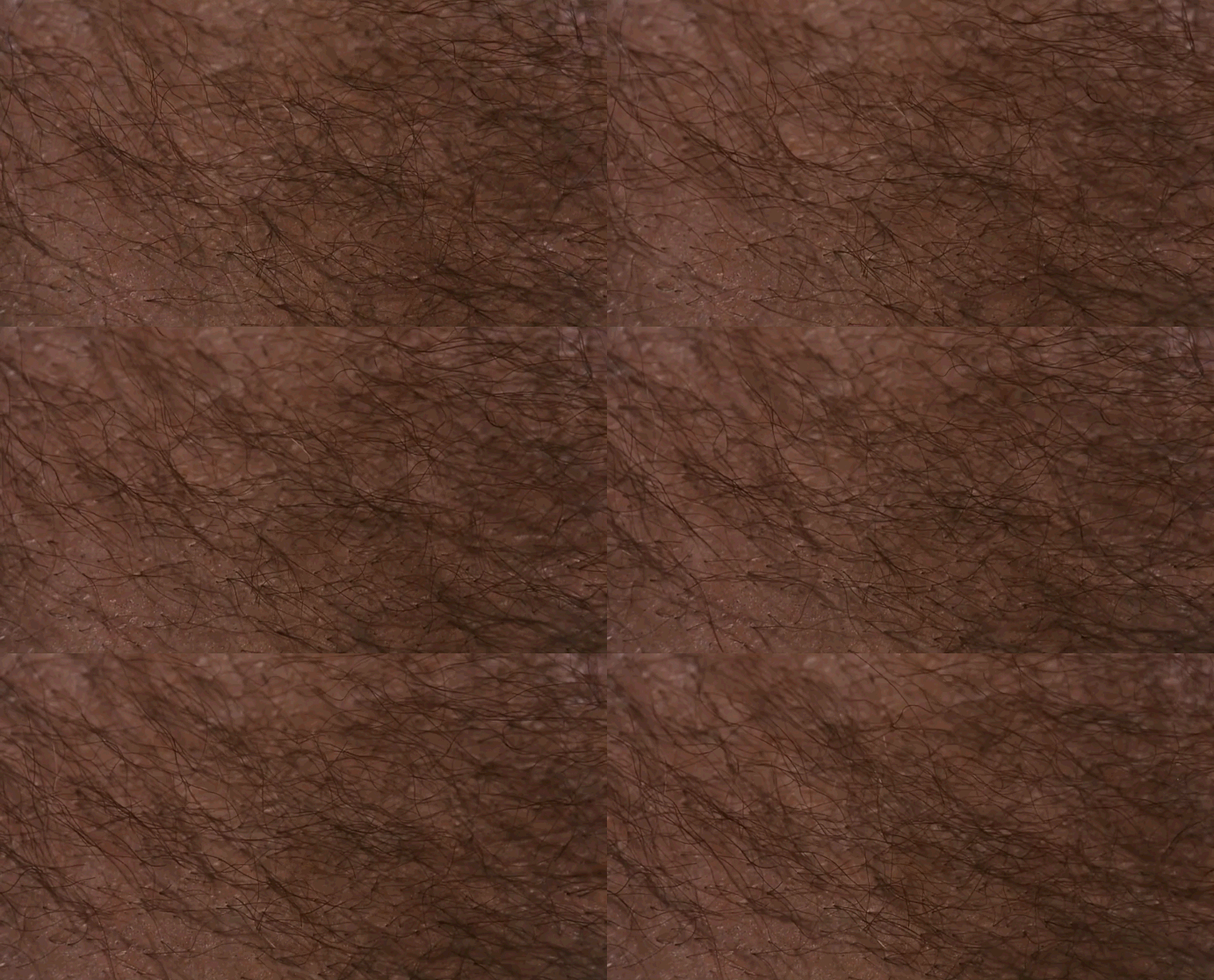
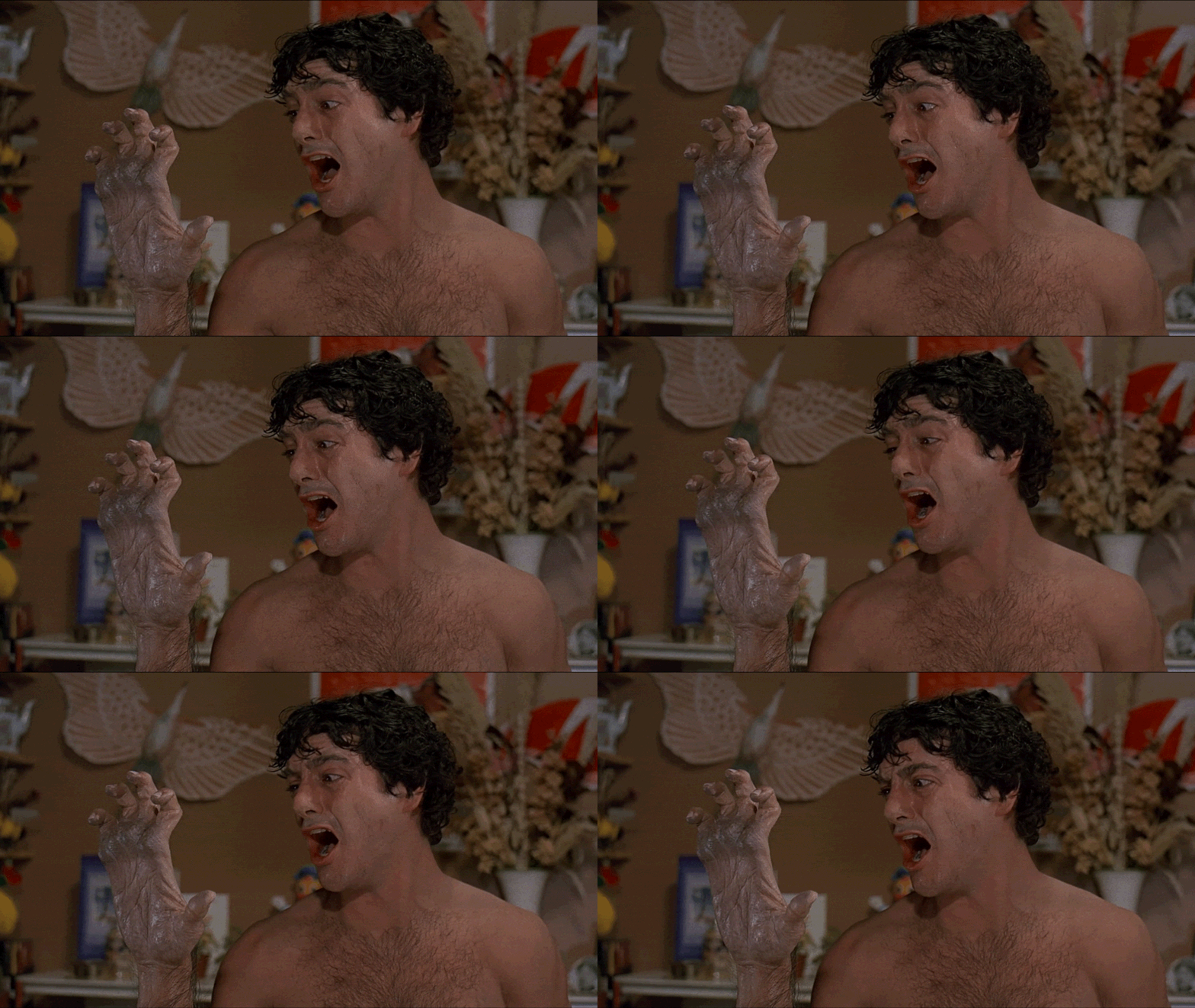
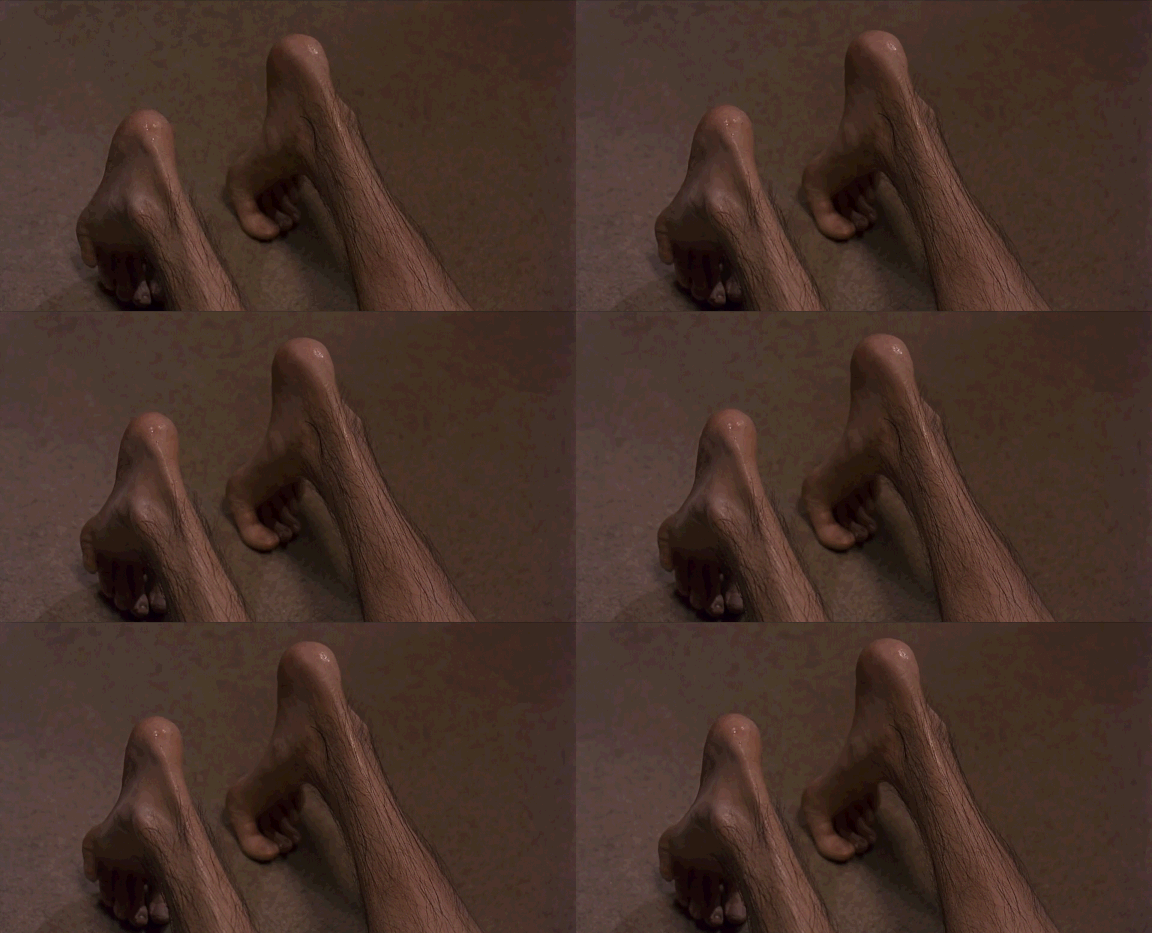
«The American Werewolf in London» (1981). Directed by John Landis. Special makeup designed and created by Rick Baker.
Its transformations looked more aggressive; beneath the overlays were air cushions and mechanical elements that created the illusion of contracting muscles. The mechanism was integrated into the overlays to «grow» when the telescopic components expanded. The result: the 1981 werewolves first achieved a dynamic texture that could not have been attained in the classic era.
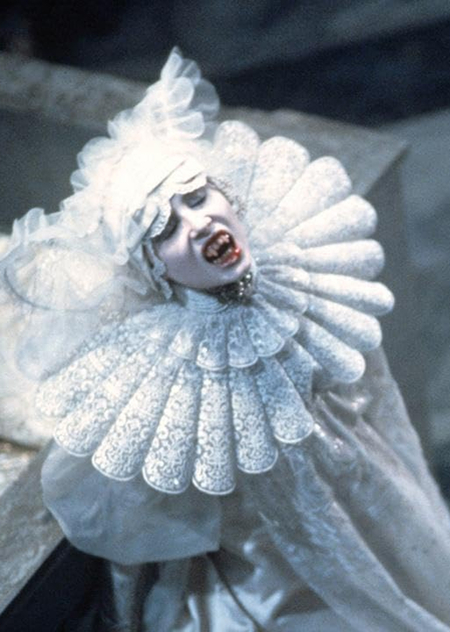
In the film «Dracula» (1992). Its visual language represented the culmination of the development of practical technologies and optical tricks. Director Francis Ford Coppola intentionally banned the use of CGI, which constituted a fundamental artistic decision that defined the technological approach. The primary creators of the effects were makeup artists Eichi Maekawa and Greg Cannom, while the overall special effects processes were overseen by visual effects supervisor James Haberman, with the assistance of editing and optical processes under the direction of VFX supervisor Richard Raksim.