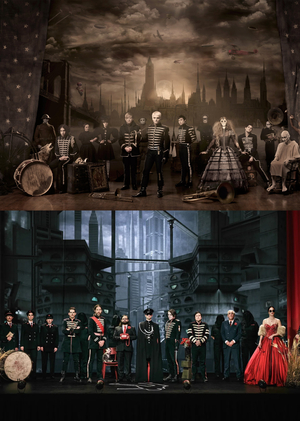
Concept
The topic of the evolution of the visual language of Soviet cinema posters in the 20th century was chosen because the film poster is not merely a promotional tool for films, but also an independent form of graphic art that reflects the artistic, cultural, and social changes of its time. Throughout the 20th century, the Soviet cinema poster went through various stages of development: from the constructivist experiments of the 1920s to the realistic graphics of the mid-century and the diverse authorial solutions of the 1960s–1980s. These changes were evident in composition, typography, the use of color, photography, illustration, and methods of conveying the film’s content.Of particular interest is examining the Soviet cinema poster within the international artistic context. Its development occurred in parallel with foreign graphic design practices, including European avant-garde, American film advertising, and the Polish poster school. However, similar artistic techniques could be employed to solve different problems and acquire their own characteristics depending on the cultural and historical context. Comparing Soviet and foreign works allows us to identify the distinctive features of the Soviet cinema poster and determine its place in the history of global graphic art.The basis of this study consists of Soviet cinema posters from the 1920s–1980s, including works by Vladimir and Georgy Stenbergov, Alexander Rodchenko, Nikolai Prusakov, Boris Zelensky, Vasily Ostrovsky, Vilen Karakashev, Vladimir Sachkov, and other artists. For comparative analysis, works by foreign authors are considered, including John Hartfield, Laszlo Moholy-Nagy, Saul Bass, Henry Tomashevsky, Jan Lenica, and Waldemar Świerzy. The material was selected based on its historical significance, representativeness of a specific period, and the expressive power of the artistic techniques. Special attention is paid to works that allow for a comparison of Soviet and foreign approaches to designing film posters.
The research is divided into five chapters, which reflect the main stages in the development of the Soviet film poster throughout the 20th century. The structure is built on a chronological principle, allowing one to trace the evolution of the visual language, identify the characteristic artistic techniques of each period, and compare them with international practices. Particular attention is paid to changes in composition, typography, color, and methods of visually interpreting the film.
Museum and archive collections of film posters, exhibition catalogs, art historical publications, and studies on the history of graphic design are used for analysis. A significant part of the source base consists of materials from the Museum of Modern Art (MoMA), Poster House, archival collections of Soviet poster graphics, and publications dedicated to European and American film posters. The visual analysis is based on comparing composition, color, typography, illustrative techniques, degree of stylization, and methods of interpreting the film’s content. This approach allows for an examination of the evolution of the Soviet film poster not only in historical sequence but also through the comparison of specific artistic solutions.
The main research question:
How did the visual language of the Soviet film poster change throughout the 20th century, and what characteristic features can be identified by comparing it with foreign artistic practices?
Introduction
Movie Posters as Part of 20th-Century Visual Culture
Throughout the 20th century, the film poster held a significant place in the system of mass visual communication. It not only informed the viewer about a film’s release but also shaped their initial impression of the movie, conveying its genre, mood, and core artistic imagery.Unlike cinema, which relies on a sequence of moving images, the poster had to capture the film’s content within a single, static composition. This characteristic turned the film poster into a space for experimentation with photography, illustration, typography, color, and graphic form.In the Soviet Union, the development of the film poster was closely intertwined with artistic and societal shifts. Over decades, its visual language transformed: from the avant-garde experiments of the 1920s to the realistic graphics of the mid-century and the diverse auteurial approaches of the 1960s–1980s.
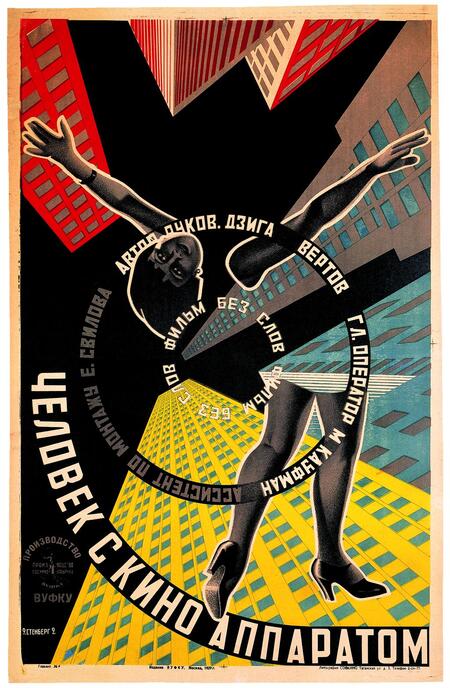
1920-е. «Человек с киноаппаратом», 1929
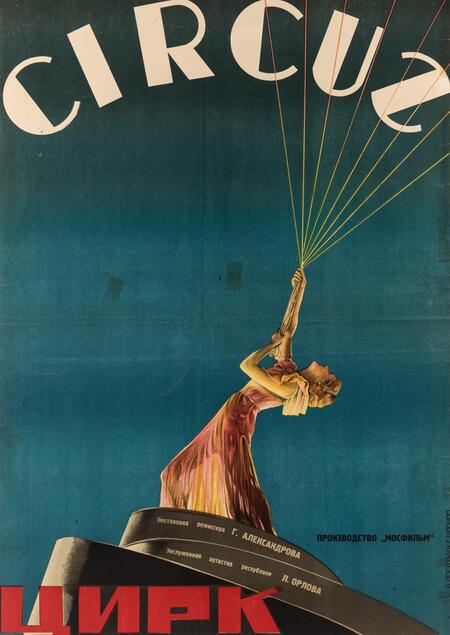
1930-е. «Цирк», 1936
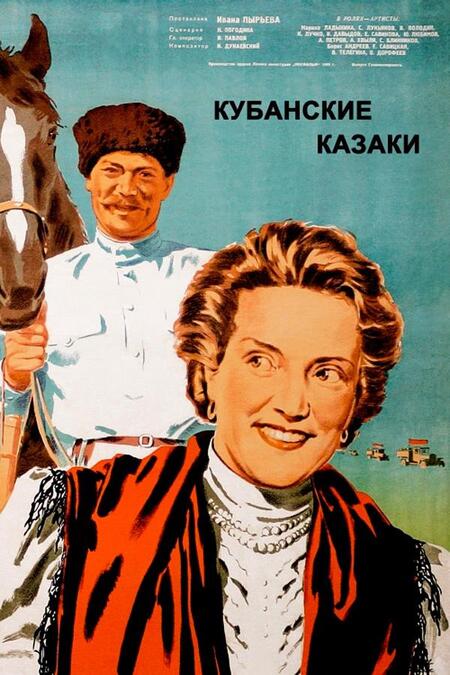
950-е. «Кубанские казаки», 1950
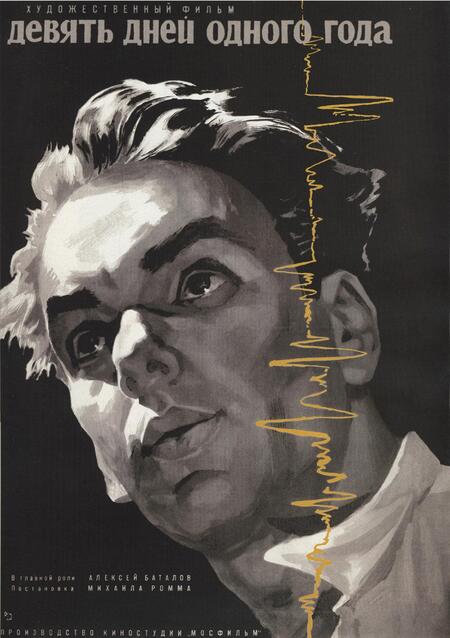
1960-е. «Девять дней одного года», 1961–1962
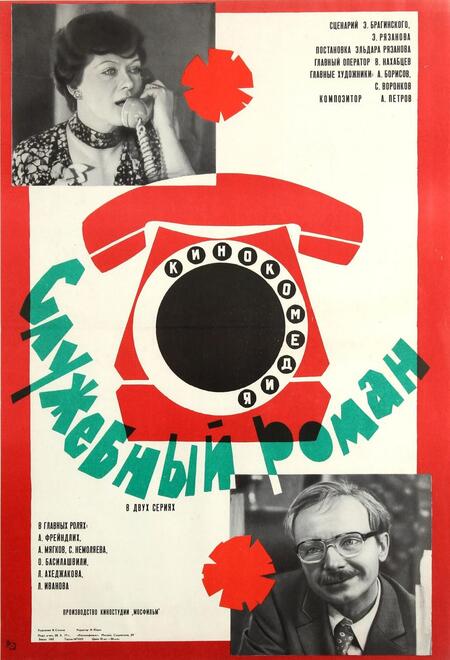
1970-е. «Служебный роман», 1977
1980-е. «Иди и смотри», 1985
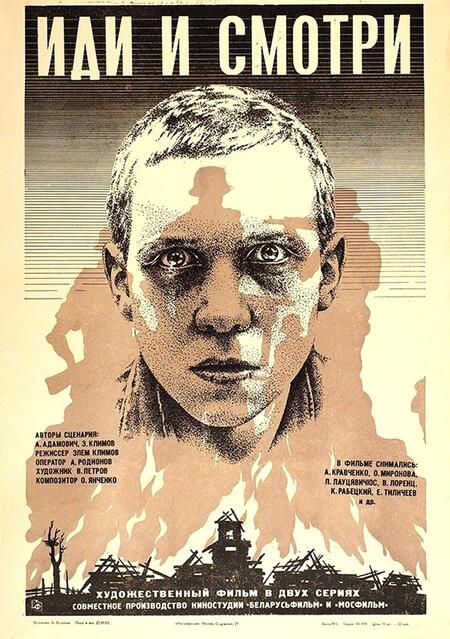
These works demonstrate the remarkable diversity of artistic language in Soviet film posters. Throughout different decades, not only the visual elements but also the principles of image-text interaction, character representation, and the degree of abstraction in graphic composition evolved. It is important to note that these changes were not a sequential replacement of one style by another; realistic and experimental artistic approaches could coexist simultaneously.
Soviet Film Posters in the Global Artistic Context
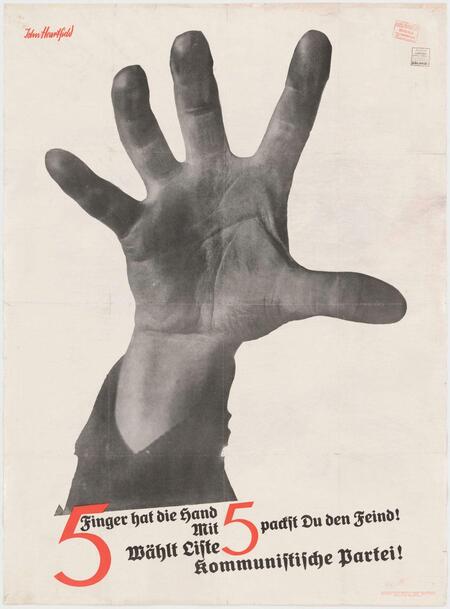
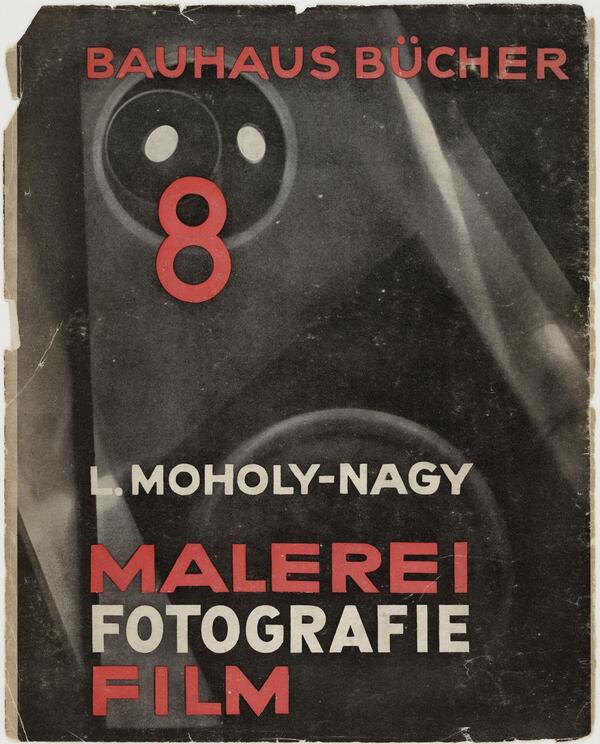
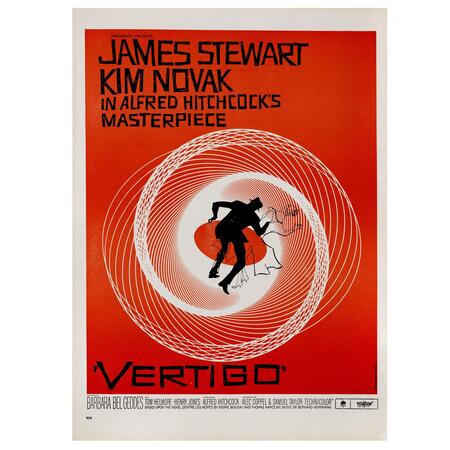
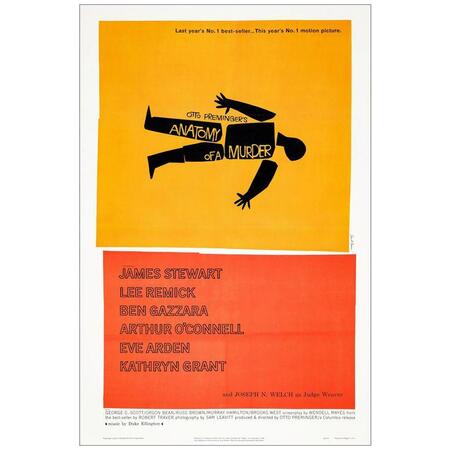
The evolution of the Soviet film poster occurred in dialogue with international artistic trends. In the 1920s, Soviet constructivists employed techniques closely aligned with the experiments of German Dadaism and the Bauhaus. In the mid-20th century, Soviet poster graphics developed parallel to European and American film advertising, and the comparison with the Polish school of poster art is of particular interest from the 1960s to the 1980s.
Германия, 1928. Джон Хартфилд — фотомонтаж
Баухаус, 1925. Ласло Мохой-Надь — типографика и композиция
США, 1958. Сол Басс — «Головокружение»
США, 1959. Сол Басс — «Анатомия убийства»
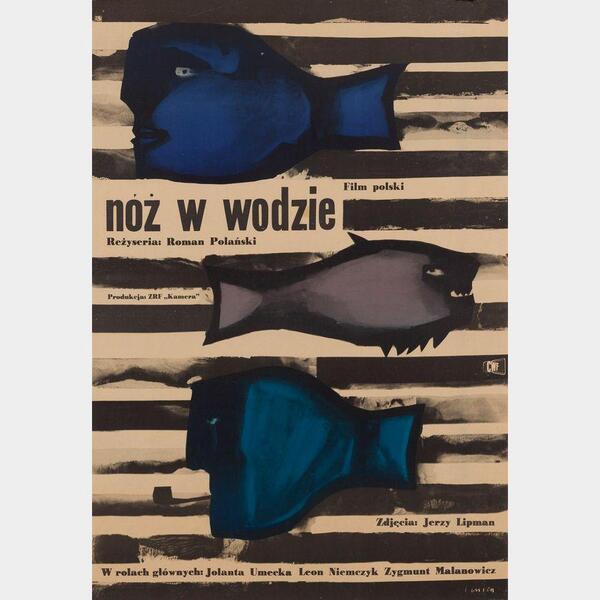
Польша, 1962. Ян Леница — «Нож в воде»
Польша, 1967. Вальдемар Свери — «Фотоувеличение»
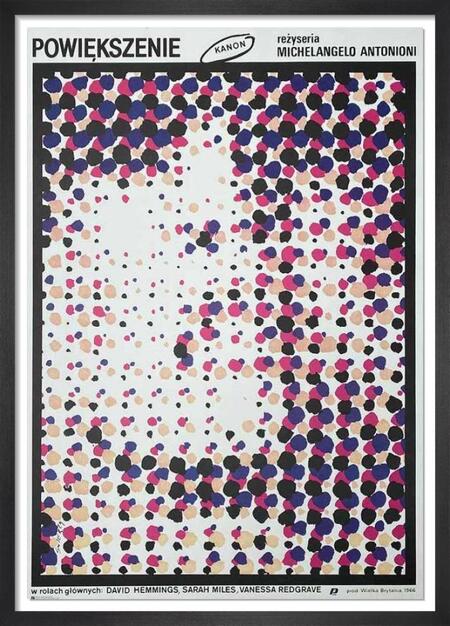
Comparing these works allows us to trace how artistic methods characteristic of 20th-century international graphic design were utilized in Soviet film posters. For example, experimental typography and photomontage link Soviet Constructivism to the European avant-garde, while the development of visual metaphor in the latter half of the 20th century allows for comparisons with American film design and the Polish poster school.
Conclusion
Soviet cinema posters of the 20th century represent a heterogeneous artistic phenomenon that reflected shifts in aesthetic principles, technology, and mass communication methods. Examining its evolution in comparison with international practices allows one not only to trace the change in artistic methods but also to define the specificities of the Soviet approach to creating a cinematic image through graphic design.
Chapter 1. Soviet Film Posters of the 1920s in the Context of International Avant-Garde
In the 1920s, the Soviet film poster emerged as one of the most experimental forms of graphic art. Its development was tied to the proliferation of constructivism, photomontage, and new principles of typography. Artists moved away from traditional illustrative imagery in favor of dynamic compositions, unconventional angles, close-ups, and contrasting color palettes.These shifts occurred within the context of the international avant-garde. Similar artistic explorations were taking place in German Dadaism, the Bauhaus, and European experimental photography. However, the Soviet film poster applied these novel graphic methods to a specific goal—drawing mass audiences to the cinema.A defining characteristic of this period was the drive not so much to retell the film’s content as to convey its motion, emotional intensity, and artistic character. Experimental composition transformed into an autonomous tool of visual communication. MoMA+1
1.1. The Formation of Constructivist Visual Language in Soviet Film Posters (Vladimir and Georgy Stenberg, Alexander Rodchenko, Nikolai Prusakov)
Vladimir and Georgy Stenberg: Dynamic Composition and the Transformation of the Cinematic Image
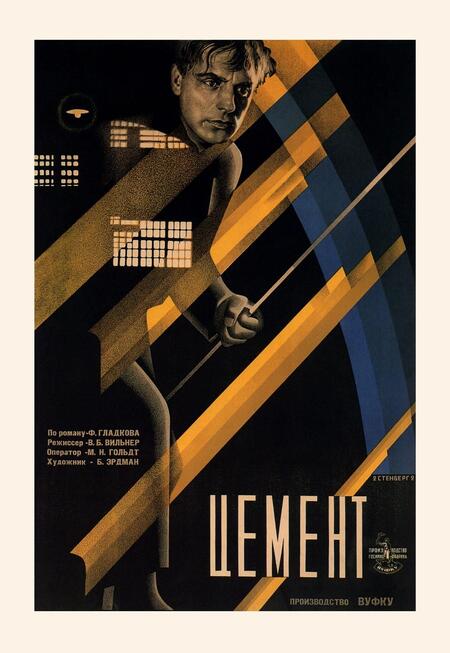
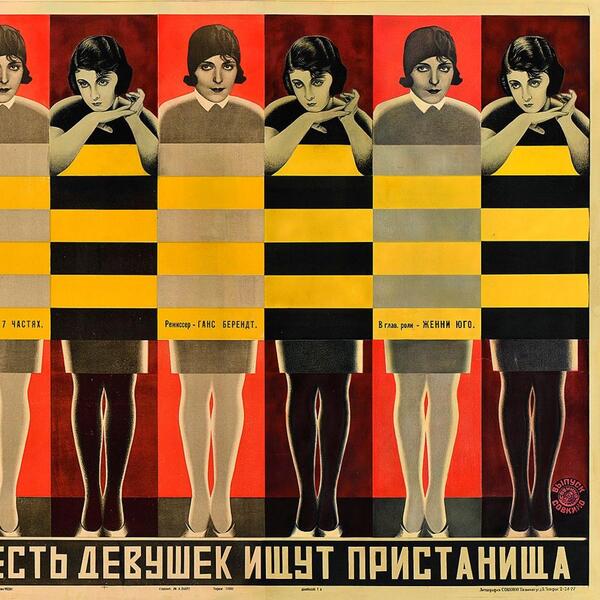
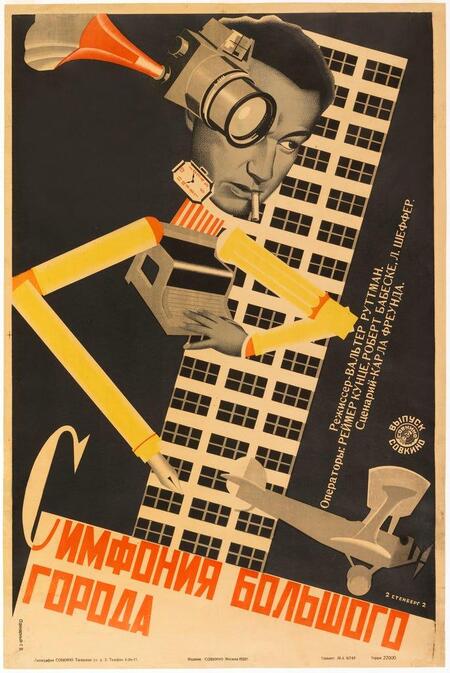
Vladimir and George Stenberg are among the key representatives of Soviet Constructivist film poster art. In their work, the traditional illustrative composition gives way to experimental visual structuring. The artists utilize diagonal axes, abrupt scale shifts, figure fragmentation, and unconventional viewpoints. Unlike posters focused on sequentially presenting plot and characters, the Stenberg works aim to convey the visual energy of the film. The imagery is organized to capture the viewer’s attention from a distance and evoke a sense of motion.
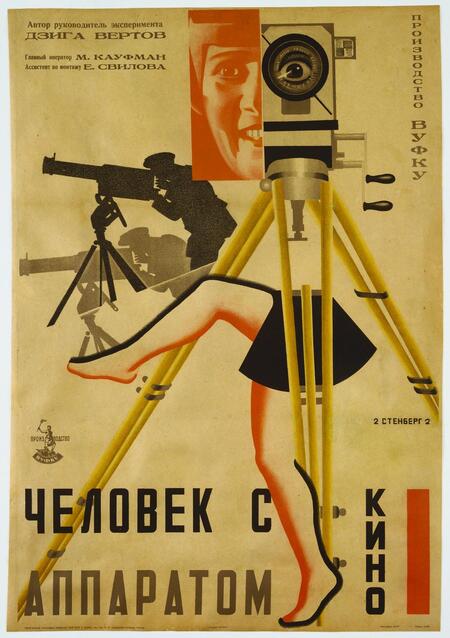
«Человек с киноаппаратом», 1929
«Цемент», 1928
«Шесть девушек ищут пристанища», 1928
«Симфония большого города», 1928
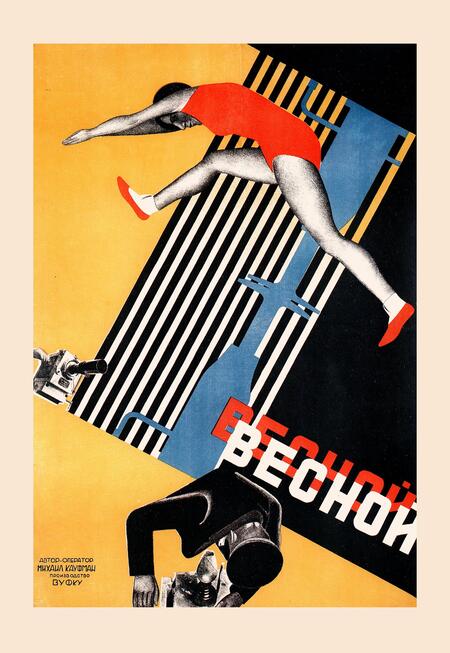
«Spring,» 1929
The Stenberg brothers employ cinematic techniques in their film posters—close-ups, unusual angles, shifts in scale, and image montage. Diagonal compositions, the repetition of figures, and dynamic typography create a sense of movement. Thus, the posters do more than just present the film’s characters; they convey its visual rhythm and atmosphere.
Alexander Rodchenko: Photography and Typography as Elements of Visual Construction
In Alexander Rodchenko’s work, the film poster becomes part of a broader search for new methods of visual communication. The artist treats photography, typography, and geometric form as equally valid elements of composition.
A fundamental characteristic of his method is the rejection of decorative embellishment. Every element of the image must perform a specific compositional and communicative function.
Rodchenko worked on the graphic design for the films of Dziga Vertov and Sergei Eisenstein. His activities included not only posters but also intertitles, artistic design elements, and other components of the cinematic visual environment.
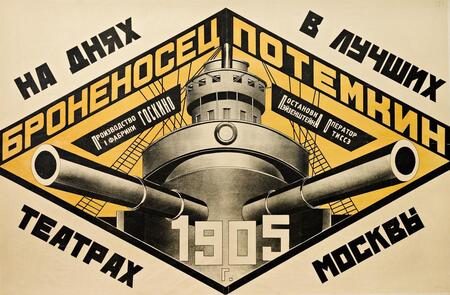
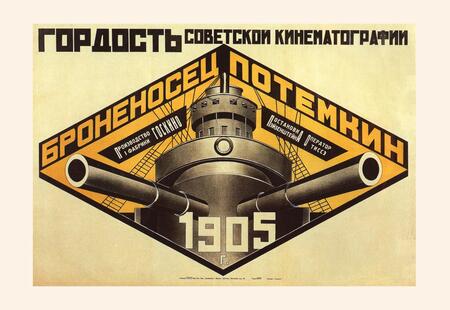
«Potemkin Battleship, ” 1925