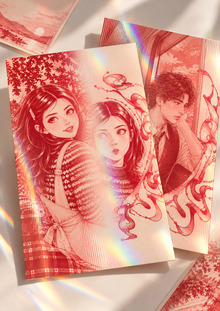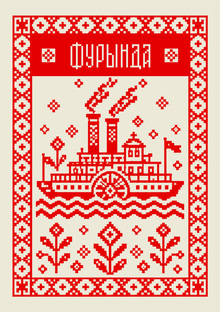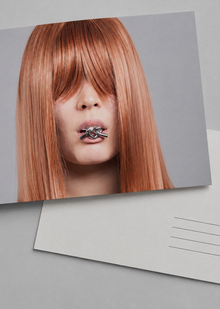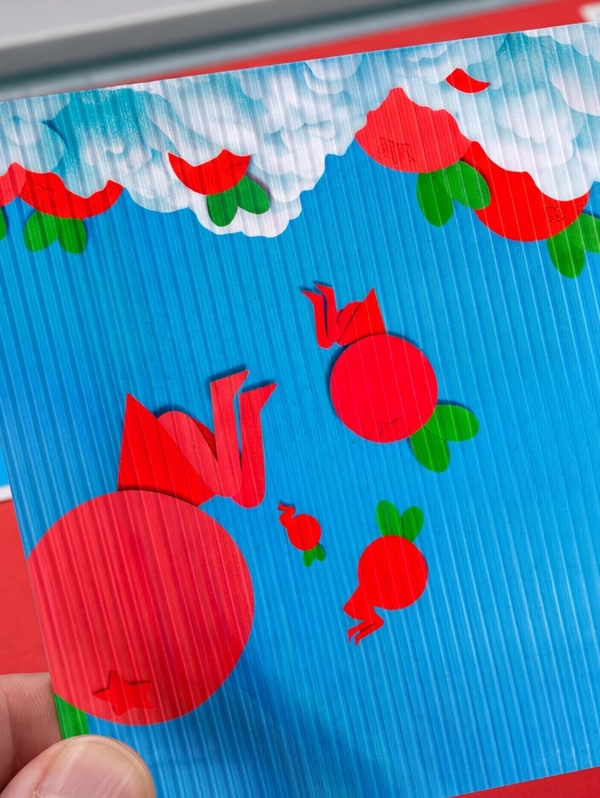
Cranberry in sugar—a flavor familiar from childhood—sounds different in a new interpretation: it is a sweetness with character and a small piece of Nizhny Novgorod you want to take with you. The postcard is built around a metaphor for movement: the cranberry is alive; it runs, jumps, and falls. The cloud represents the sugar from which the berries have fallen.
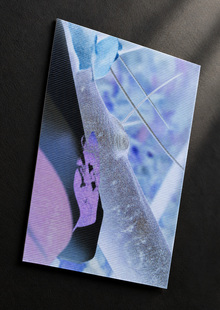
On the lenticular print, the cranberry falls for real: when the postcard is tilted, the cloud releases the berries, and the viewer triggers the motion themselves.
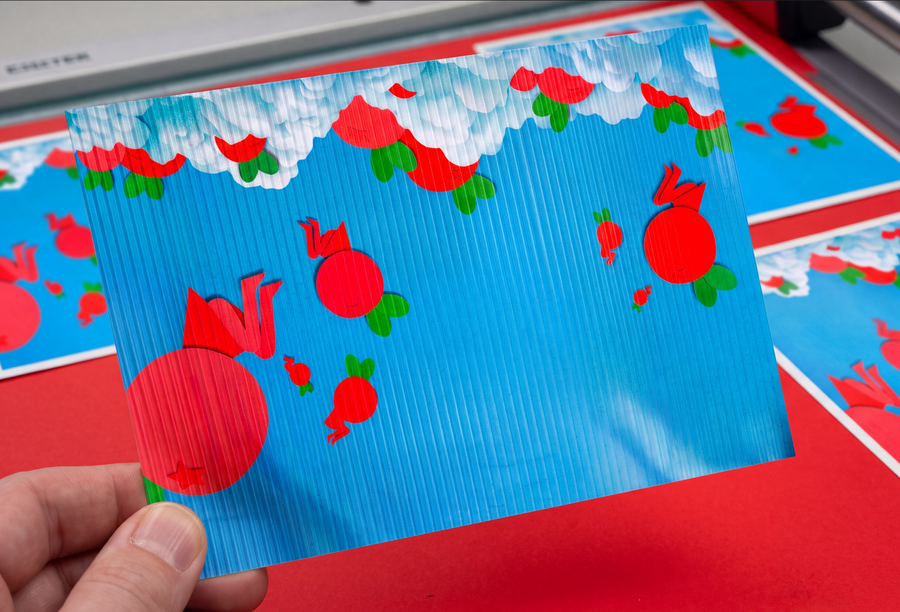
The static image freezes the fall—you only see the result: the berries have already dropped. Lenticular printing delivers something standard printing cannot—the movement itself, without a screen or video. A person tilts the postcard, and the cranberries fall: the hand gesture and the movement in the image match.
Plus, there is an important synchronicity: the frame transition goes from top to bottom—exactly where the cranberries are falling. The direction of the tilt and the direction of the fall work in concert, allowing the effect to be registered instantly.