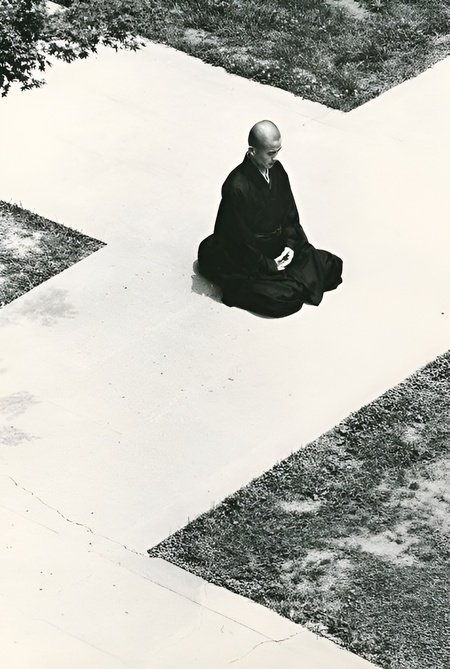
Concept
Rationale for Topic Selection
The theme of void in Japanese and Chinese art holds profound philosophical interest and represents a unique cultural phenomenon that has manifested across calligraphy, painting, architecture, and contemporary art. Void—or ku (空) in Japan and xū (虚) in China—is not merely an absence; it actively participates in shaping the composition and content of the work. In Eastern philosophy, the void is perceived as a potent source of energy, depth, and potential, reflecting concepts of the unsaid, silence, and contemplation. Examining the concept of void opens new perspectives for understanding the aesthetics, spiritual values, and the interaction between art and the cultural backdrop of East Asia. This study will also help trace how the ideas of void influence contemporary Japanese and Chinese art, where traditional principles intertwine with innovative forms.
Material Selection Principle
Historical Representation: Photographs of works that present traditional examples of void in Japanese and Chinese painting, calligraphy, architecture, and garden design. For example, images of calligraphic scrolls where empty space plays a key role in the composition, or photographs of traditional Japanese gardens where emptiness becomes an element of harmony. Philosophical Content: Photographs reflecting the philosophical ideas of Daoism, Buddhism, and Zen concepts, where emptiness symbolizes ineffability and a state of inner tranquility. These images may include both traditional art elements and contemporary works where void conveys philosophical ideas, creating space for contemplation. Contemporary Interpretations of the Void: Photographs of works by modern Japanese and Chinese artists who employ minimalism and void within the context of new art forms, such as installations, performance, and digital art. Photographs of these works should demonstrate how emptiness becomes an essential part of the composition, expressing ideas and the viewer’s emotions.
Structuring Principle
The research will be divided into the following logical sections:
Introduction to the concept of emptiness in Eastern philosophy: An overview of key notions of emptiness in Daoism and Zen Buddhism and their aesthetic reflection in art. Emptiness in Japanese and Chinese calligraphy and painting: An analysis of classical works where negative space becomes an integral part of the composition, creating balance and symbolizing harmony. The aesthetics of emptiness in architecture and garden design: An exploration of the principles of emptiness in the organization of Japanese and Chinese gardens, as well as their influence on spiritual practices and daily life. The influence of the concept of emptiness on contemporary art: Examples of works by modern Japanese and Chinese artists where the concept of emptiness manifests within the context of minimalism and the philosophy of contemplation. Conclusion and findings: A final reflection on the significance of the concept of emptiness and its philosophical aspects in art, as well as its interpretation and relevance to contemporary art.
Principle of Selecting and Analyzing Textual Sources
Art Theories: Articles and books on the history of Eastern art that describe how emptiness is utilized in painting, calligraphy, and architecture. These materials will provide insight into how the concept of void is embodied in visual art. Contemporary Research: Recent studies and articles dedicated to the influence of the concept of emptiness on modern Japanese and Chinese art. These texts will help trace how traditional ideas of void are reflected in contemporary art. Artist Interviews and Commentary: Texts and interviews with modern Japanese and Chinese artists who incorporate the concept of emptiness into their work. This offers an inside look at how contemporary creators understand and interpret emptiness.
Key Question and Hypothesis
Key Question: How is the philosophical concept of emptiness in Chinese and Japanese culture reflected in art, and how does it influence contemporary artistic practices? Hypothesis: The influence of the concept of emptiness on Japanese and Chinese art is shaped by Eastern philosophy, which views emptiness as an active and significant space. In traditional art, emptiness served as a means to convey spiritual values and unity with nature. In the modern context, however, influenced by globalization, the concept of emptiness retains its relevance, transforming into the forms of minimalism and an aesthetics of the unsaid, exerting a significant impact on global art.
The Buddhist Concept of Emptiness
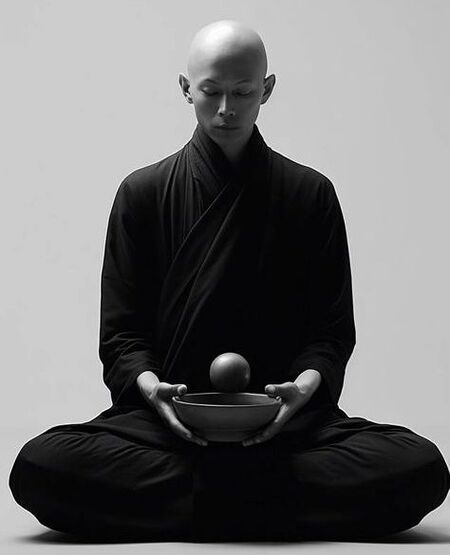
In Buddhism, emptiness (Sanskrit: shunyata) describes a state where forms do not possess inherent existence and are interdependent. This concept permeated Japanese and Chinese art, where emptiness becomes a symbol not of literal nothingness, but of open space for perception.
Emptiness in Calligraphy
The Significance of Negative Space in Calligraphy. In Chinese and Japanese calligraphy, the emptiness on the canvas holds the same expressive power as the strokes. Each line enveloped by negative space gains significance and energy. This art form values lightness and rhythm, which can only be conveyed through the use of empty space.
Ink Magicians, Wang Sizhi, 303–361
Foreword by Dingwu Lanting, Wang Xizhi, 353
Sun After Snow, Wang Sijizhi, 303–361
Text of the Heart Sutra, Yuan Shun, 635
A Dialogue between Confucius and Bu Shan, Yuan Xun, 557–647
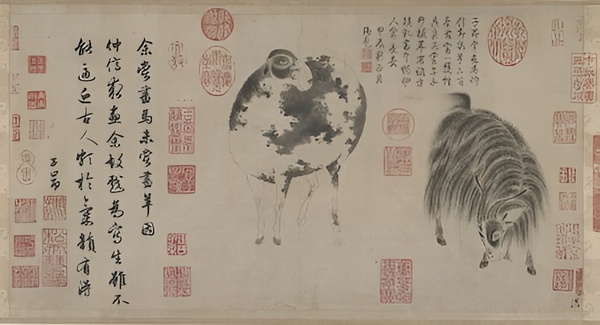
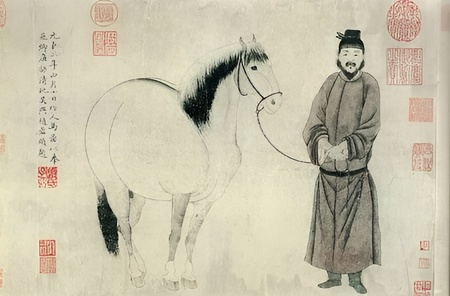
Sheep and Goat, Zhao Mengfu, 1300 // Horses and Stables, Zhao Mengfu, 1296–1359
Twin Pines, Level Distance, Zhao Menfu, 1310
Imperial Record of the Posthumous Title Grant to Priest Enchin Ono-no-Michikaze, 894–966
Autobiography of the Master of Slurred Poetry, Fujiwara no Yukinari, 972–1027
Emptiness in Painting
In Japanese painting, negative space is often utilized to emphasize natural elements—a cherry blossom branch, a pine tree, or a bird might occupy a small section of the canvas, leaving the rest empty. This technique strengthens the symbolism and cultivates an atmosphere of contemplation and tranquility.
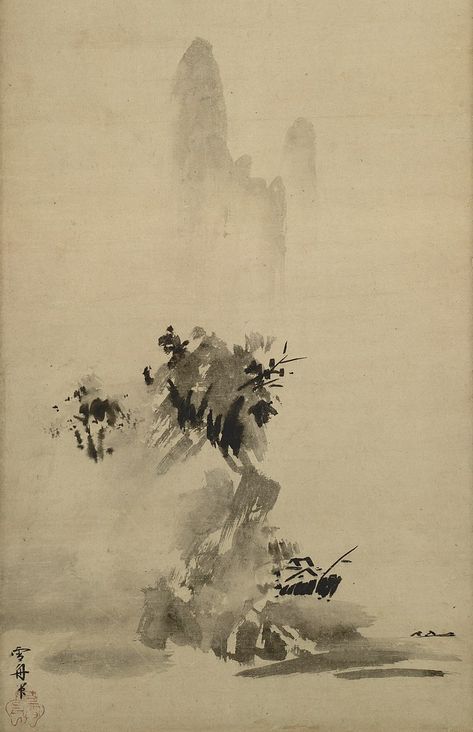
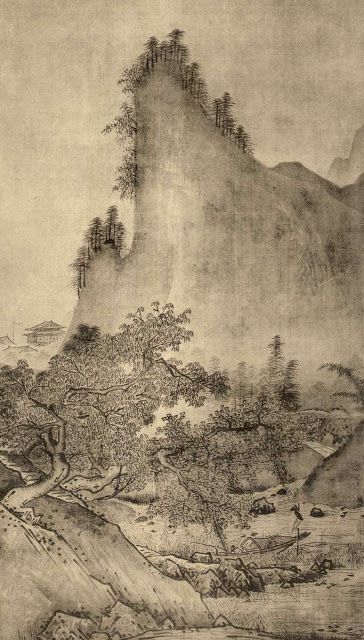
Landscape with Broken Wash, Sesshu Toyo, 1495 // Four Seasons, Autumn, Sesshu Toyo, 1420–1506
Monkey, Hakuin Ekaku, 1685–1768
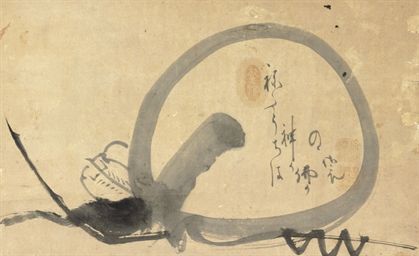
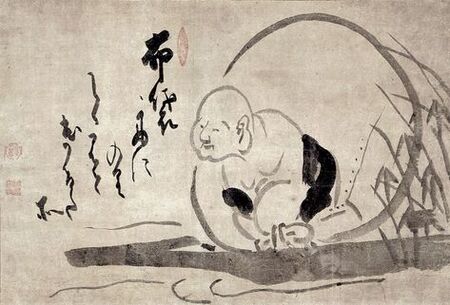
Sealed Hōjō, Kakuan Ekaku, 1685–1768 // Bodhisattva Maitreya on a Boat, Kakuan Ekaku, 1685–1768
Flowering cherry trees, Kaicho Yūshō, 1533–1615