(00) Menu
(01)
Concept(02)
Space: How Color Grading Interacts with Narratives(03)
Parallel Editing: A Method to Portray the Victim’s Narrative for Salvation(04)
Scale Contrast: The Narrative of Small People in a Big World(05)
Symbols Through Close-Up: How Objects Become Narrative(06)
Circular Composition: Retrospection(07)
Conclusion(01) Concept
In Christopher Nolan’s Interstellar, gravity ceases to be merely a physical law holding planets in orbit. It transforms into the secret force of the narrative itself—an invisible pull that binds people across years, distances, and the silence of space. The heroes are separated by precious time, which flows differently for each of them, yet a connection persists between them: fragile, tragic, and precisely for that reason, so vivid. This is how the film connects science with drama—the infinity of the universe with the most understandable and terrifying human emotion: the fear of losing someone you love [2].
I propose examining Interstellar through the lens of the techniques used to achieve complete immersion in the film’s narrative. The focus will not be so much on the picture’s scientific ideas as it will be on the ways the directorial form transforms those ideas into a dramatic experience. It is difficult for the average person to grasp the drama of the savior-scientist:
how do you present the experiences of such a complex hero in a way that even someone completely removed from space can feel themselves as Cooper, who left home to save all of humanity?
So, the key question of this research is identifying techniques from «Interstellar» that amplify the narratives, transforming a science fiction story about space and time into an emotional drama about connection, loss, and hope.
Synthesizing the preceding points, I have formulated my research hypothesis: the powerful dramatic impact of Interstellar is achieved not solely through the narrative content, but also through a system of visual techniques that render the film’s narratives emotionally tangible—such as close-ups, spatial manipulation, and so forth. In this study, I will thoroughly examine each technique, focusing on the visual elements drawn from film footage, as well as excerpts from the original screenplay of Interstellar (2014) and its accompanying scripts (2008 and 2014).
The subject of this study was specific narrative details from the film Interstellar that amplify the script’s key narratives. Through a comparative analysis of the script and the footage, we will assess how effectively the director handled the characters' drama and the work’s themes.
We will also evaluate how and what techniques help to unveil the conflict, heighten the emotional tension, link disparate timelines, and transform a science fiction plot into a deeply personal human story.
Thus, the research views Interstellar as an example of a film where the visual form does not merely illustrate the script but actively creates the drama. For a more thorough analysis, I organized the entire work into sections dedicated to specific visual strategies employed in the film.
(02) Space — How Color Grading Works with Narratives
In «Interstellar,» space functions not merely as a setting, but as an independent narrative tool.
The film seems to translate the characters' inner states into the architecture of space, color, light, and the scale of the frame.
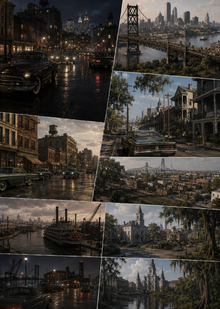
In the film’s beginning, the Earth is not presented as a home, but rather as a place that is gradually becoming uninhabitable. It is a space of dust, drought, plant disease, and a vanishing future.
Yet, despite this, the Earth feels like home to us—it is our home, even if, as one of the voice-overs said, «Our home decided to destroy us.»
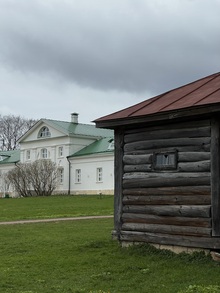
Visually, the Earth is constructed using a subdued, dusty color palette: yellowish-browns, grays, ochres, and washed-out tones.
Colors used for the Earth space in the frames.
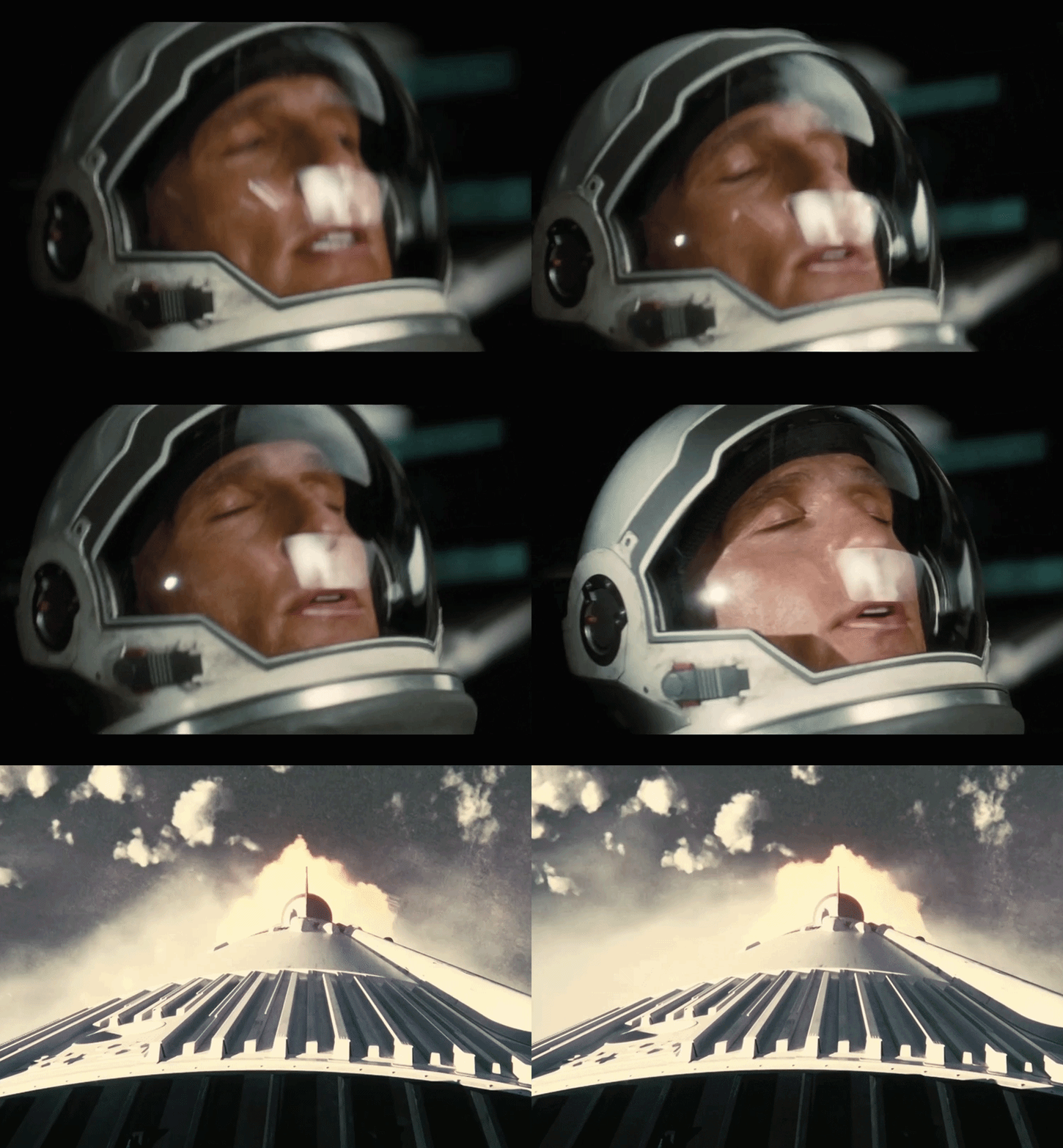
This shot very effectively conveys the change in space and context for the protagonist. Cooper’s face, in the beginning of the film—with its familiar tanned tone—shifts to cooler undertones as the hero transcends the atmosphere of Earth toward the vast, boundless, and equally cold Cosmos.
Space sharply contrasts with Earth in the film. While Earth is filled with dust, sounds, daily life, and physicality, space is emptiness, silence, blackness, and vast distance.
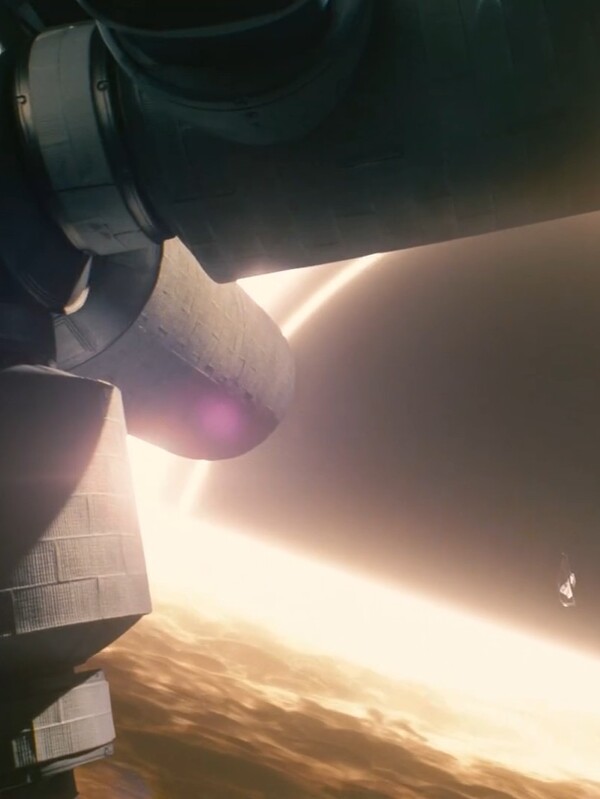
The color grading of the cosmic scenes is built upon cold and high-contrast hues: deep black, the white light of stars, the metallic gray surfaces of the ship, and the cool glow of the planets and Gargantua. There is almost no domestic warmth, such as what was present on Earth.
Colors used to depict outer space in the frames.
The narrative of space is a narrative of the unknown, risk, and isolation.
Yet, space is not only frightening; it also offers the possibility of the future. Therefore, it is visually dualistic: on one hand, it is a dangerous void, and on the other—a space of hope. This is why, within this darkness of despair, we see various sharp lights—from stars, from galaxies, and even from a black hole…
Even in an alienated place like space, the human heart searches for salvation.
(03) parallel montage—a technique to portray the victim’s narrative in service of salvation
After Cooper’s departure, the narrative splits into two threads: he moves further into space, while Murphy remains on Earth and gradually matures. These storylines exist independently, but the editing constantly shifts the viewer between one or the other.
Thanks to this, the film refuses to be forgotten: the space mission is not some abstract salvation for humanity, but a personal wound for a specific family.
The «victim narrative» in the film is also revealed through parallels. Cooper sacrifices time with the children for the mission. Murphy sacrifices personal resentment for the sake of a common goal. Brandt sacrifices self-assurance for belief in love and connection. Even Dr. Mann becomes a dark reflection of this theme: he cannot endure sacrifice and chooses self-preservation.