Concept
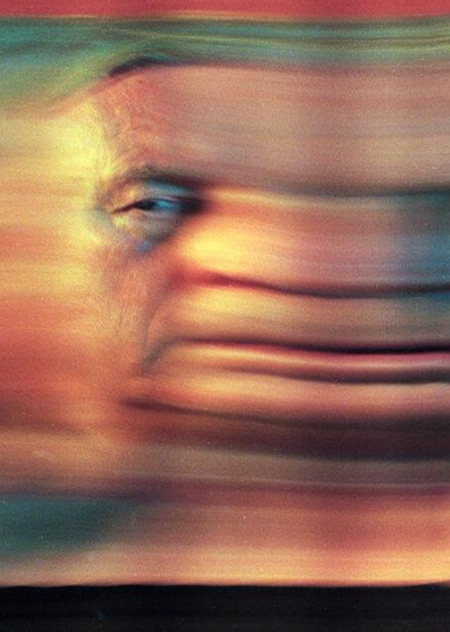
Visual Exploration is dedicated to slit-scan photography and its development in cinema. This technique allows for the creation of unusual imagery by sequentially capturing discrete sections of a scene through a narrow slit. As a result, objects can stretch, deform, transform into lines of light, or create a sensation of space that does not actually exist.The primary focus of this work is how slit-scan photography was used to create the illusion of infinite depth and how its visual principles have continued in digital effects.The study is based on three films: «2001: A Space Odyssey» (1968), «Contact» (1997), and «Interstellar» (2014). Each one depicts impossible space, yet employs different technical solutions to achieve it. In the first case, the effect is based on optical shooting through a narrow slit; in the second, on digital visual effects; and in the third, on a combination of practical set design, digital modeling, and slit-scan visual principles.I am interested in tracing how the depiction of infinite space has evolved alongside the development of cinematic technologies. Specifically, why can light strips captured photographically be perceived as a volumetric tunnel, how this changed with the advent of computer graphics, and why contemporary VFX specialists continue to draw upon the principles of analog photography.Research Question: How have the technologies for creating the illusion of infinite space evolved from optical slit-scan photography to digital visual effects, and how have these changes influenced the image captured on screen?Hypothesis: The shift from optical to digital technologies has allowed for greater freedom in manipulating spatial form, camera movement, and object placement. However, the visual principles of slit-scan photography—which rely on image stretching and the transformation of time into spatial forms—remain significant for contemporary VFX.Research Goal: To trace the development of slit-scan photography from early sequential photographic methods to modern digital interpretations and to identify the distinctions between optical and digital techniques.
Topics
- Concept
- Origins of slit-scan: panoramic photography and shooting through a narrow slit
- Early experiments with photography, motion, and time
- How slit-scan works: camera, slit, motion, and exposure
- «2001: A Space Odyssey»: Douglas Trumbull and Star Gate
- The illusion of infinite space: light, perspective, and motion
- Technology development in the 1970s–1980s
- Slit-scan and image deformation: stretching space and time
- Transition to digital technology and an analysis of the film «Contact»
- Modern interpretations: «Interstellar» and media art
- Conclusion
Origins of slit-scan: panorama photography and imaging through a narrow slit
In contemporary cinema, visual effects enable the creation of spaces that are impossible to build or film in reality. Among these are fantastic tunnels, multidimensional structures, and infinite corridors where the familiar laws of perspective and motion operate differently. Today, such imagery is often associated with computer graphics, yet many methods for creating them originated long before the widespread adoption of digital technology.
One such method is slit-scan photography—a technique of registering an image through a narrow slit. Its distinctive feature is that different sections of the image are recorded not necessarily at the same moment in time. Through the movement of the camera, the captured material, or the object itself, unusual spatial distortions can be achieved.
Historically, similar principles were applied in panoramic photography and photofinish cameras. In these instances, the sequential registration of the image solved practical problems: it allowed for the capture of a large area or the precise determination of the position of moving objects. Later, artists and visual effects specialists began utilizing these same characteristics to achieve intentional deformations.
One of the most famous examples of slit-scan photography in film is the sequence from 2001: A Space Odyssey by Stanley Kubrick’s Star Gate. To create this effect, Douglas Trumbull developed a specialized rig that transformed light imagery into elongated lines, producing the sensation of movement through an infinite tunnel.
Fig. 1. «2001: A Space Odyssey, ” 1968. Star Gate sequence. Effect designed by Douglas Trumbull.
With the development of computer graphics, similar artistic challenges began to be solved in different ways. In the film Contact (1997), the viewer witnesses a journey through a fantastic spatial tunnel created using digital visual effects. In Interstellar (2014), the Tesseract space is formed by a combination of physically built elements and digital geometry, with its visual concept partly based on slit-scan photography.In this study, I aim to compare not only the appearance of the images but also the technologies that brought them into existence. To do this, it is important to understand the principle of slit-scan operation, examine specific production solutions, and determine how the characteristics of each method are reflected in the final frames.The primary focus will be on the form of the light lines, the organization of perspective, the sense of depth, the nature of deformation, and the degree of control over the virtual space. These specific attributes allow for the comparison of films from different eras, despite the differences in the technologies employed.
The history of slit-scan photography is linked to the development of photographic devices that formed an image gradually rather than capturing it all in a single, brief exposure. Early efforts included the panoramic cameras of the 19th century. These cameras were designed to capture images of spaces that did not fit within a standard photographic frame. Various constructions were employed, including cameras with rotating lenses and systems where the image was sequentially recorded onto photographic material. In some panoramic shooting methods, the camera or its optical component moved during exposure while light passed through a narrow aperture. By synchronizing the movement of the image and the photographic material, it was possible to produce a long panorama showing a significantly wider field of view than standard photography.
Fig. 2. A historical panoramic camera with a mechanical serial image recording system.
If you compare such a photograph to a standard shot, the main difference will be in how the image itself is formed. In standard photography, all areas of the frame relate to approximately one moment of exposure. In a scanning panoramic camera, different parts of the image are recorded sequentially.
It seems to me that this distinction became an important prerequisite for the development of slit-scan technology. The camera stopped being a device that necessarily captures the entire visible scene simultaneously. It could gradually assemble the image, using motion as part of the photographic process.
Initially, panoramic photography was not intended to create fantastical spatial effects. On the contrary, its purpose was to render real space more completely.
However, the characteristics of this method led to moving objects appearing unusually. If a person or object moved while individual sections of the frame were being recorded, its shape could become distorted.
Later, these distortions began to be used intentionally.
One of the primary technical elements of slit-scan is the narrow aperture, which limits the portion of the image recorded onto the photosensitive material.
In standard photography, the lens forms an image of the entire scene. When shooting through a slit, only a small part of that image is recorded simultaneously. The rest is formed through motion.
If the slit moves relative to the object or the photographic material, the final photograph becomes dependent on the time spent during scanning.
This means that a spatial coordinate on the finished image can correspond to a specific moment in time.
For example, if a person moves in front of a fixed scanning line, different parts of their figure may be recorded at different moments. As a result, conventional proportions are disrupted, and the figure appears stretched or compressed.
This highlights a fundamental difference from conventional long-exposure photography. A long exposure can create blurring of a moving object, but slit-scan allows for a different organization of motion registration—transforming a sequence of temporal changes into a spatial image.
A significant stage in the development of the technology was the use of slit photography in sporting competitions.Finish line cameras were designed to determine the order in which athletes crossed the finish line. Unlike a standard camera, they recorded a very narrow area of space through which the athletes passed.Since the image was formed sequentially, the horizontal direction in the photograph often corresponded to the flow of time.
Fig. 3. Example of a slit photograph of a photofinish.
If you examine such a photograph, you can notice that it differs from a typical image of a horse race. The participants are positioned as if they were not simultaneously occupying the same space. Their placement in the photograph is determined by the moment they intersected a single fixed line.
This means the shot does not capture a single moment of an event, but rather a sequence of moments.
It is this principle that proves vital for the subsequent artistic use of slit-scan photography.
The photograph can not only record movement but also transform it into an unconventional form. Depending on the scanning method, time can appear as a stretched surface, a distorted shape, or a series of light trails.
Thus, the technical foundations of slit-scan existed long before its application in cinema. However, in panoramic photography and photo finishing, distortions were mainly a result of the capturing apparatus, whereas in experimental art, they gradually evolved into an independent visual technique.
Early Experiments: Photography, Motion, and Time
In the latter half of the 20th century, artists began actively exploring the possibilities of photography beyond conventional realistic capture. Their interest extended not only to the subjects in front of the camera but also to the very process of image formation.One line of experimentation involved using camera movement, long exposure, and mechanical scanning to deliberately alter the form of objects.Unlike panoramic photography, where the main result was intended to be a recognizable space, experimental photographers began using deformation as an artistic objective.The resulting image might no longer conform to the ordinary perception of reality. A human figure could stretch, repeat, or transform into an almost abstract form.Crucially, these effects were not created through computer processing; they emerged directly during the act of photographing.
Fig. 4. William Larson, Figure in Motion, 1967–1970.
An example of this approach is the series Figure in Motion by American photographer William Larson, created between 1967 and 1970.
To capture these images, Larson used a modified camera that allowed him to stretch the human figure during the photographic process.
As a result, the human form ceased to adhere to conventional anatomical proportions. Individual body parts could transform into elongated lines, and movement influenced the final shape of the subject.
It seems to me that these works particularly demonstrate how photographic technology can alter not only the image itself but also our perception of form.
The viewer understands that they are looking at a photograph of a real person, yet the image does not resemble how that person would appear in a typical shot.
Unlike traditional action photography, which relies on blur, here movement becomes the cause of a structural transformation in the form.
This marks an important shift from the camera’s documentary function to its experimental potential.
Experimental photography has shown that a photographic image does not necessarily have to reproduce reality in its conventional form. The very act of capturing the image can become a tool for constructing new spatial forms. This held particular significance for cinema because the sequence of individual photographic images creates movement. If each frame is subjected to controlled distortion, a new visual environment emerges upon playback. The deformation is no longer perceived as a characteristic of a single shot but becomes a continuous transformation of space. Douglas Trumbull utilized this very possibility when developing the Star Gate effect. However, before examining his installation, it is necessary to delve deeper into the technical principle of slit-scan photography.
How the slit-scan principle works: camera, slit, motion, and exposure
In the classic cinematographic variation, slit-scan photography employs several core elements: a camera, an opaque surface with a narrow slit, an illuminated image, and a controlled motion mechanism.Unlike conventional shooting, where the camera records the entire illuminated scene, only a narrow segment of the image is available simultaneously.During a prolonged exposure, the camera or the image is moved. Consequently, different positions of the light pattern are gradually recorded onto a single frame.
Fig. 5. Slit-scan setup for the Star Gate sequence.
To achieve the motion sequence, the process is repeated frame by frame, with minor adjustments to the camera position, drawing, or other installation elements. This creates a sensation of continuous movement through the light structures when played back. It is important to understand here that the camera is not merely recording an existing tunnel; it is participating in the creation of its image.
The slit restricts the amount of light information that enters the camera simultaneously. Its width and position affect the shape of the resulting image. The narrower the registration area, the more pronounced the result’s dependence on motion during exposure can be. If illuminated graphic material is placed behind the slit, its individual sections are gradually recorded as the camera moves. This can lead to the formation of elongated color lines. It is particularly important that the final shape is determined not only by the original image but also by the trajectory of the relative movement of the setup’s elements. Thus, slit-scanning allows simple graphic materials to be transformed into images with a complex spatial structure.
Camera movement is one of the primary factors in shaping the effect. If the camera moves relative to the slit, the image can stretch in a specific direction. When the nature of the movement changes, the visual form of the light bands also changes. For cinema, it is especially important that the sequence of such frames creates the illusion of the viewer moving through space. For example, with a specific shooting arrangement, the light bands may appear as if they are approaching the camera from the depth of the frame. The viewer perceives this as movement through a tunnel, even though in reality, a flat light material is in front of the camera. I believe this is the main characteristic of the slit-scan as a cinematic special effect. The technology transforms mechanical motion into an image of spatial depth.
Long-exposure photography allows for the registration of changes in the light pattern within a single frame. In conventional photography, a long exposure often results in blurring of moving objects. In slit-scan, this principle is utilized in a more controlled manner: the slit defines the area of registration, and movement dictates how the light trace is distributed across the image. As a result, bright areas can form long, continuous bands. Ultimately, the resulting image depends on the coordination of several parameters: the speed of movement, the position of the slit, the brightness of the source material, and the exposure duration. Changing any one of these can result in a noticeably different outcome. Therefore, slit-scan requires precise equipment calibration.
The primary limitation of the classical slit-scan lies in the requirement to physically organize the capture process. To obtain a different image variation, a specialist may need to adjust the camera position, change the source material, reconfigure the motion, or re-expose the scene. Creating an animated sequence is particularly labor-intensive. Furthermore, the resulting image already contains photographically registered light trails. Individual elements of these trails cannot be freely relocated in the same manner as they can within a digital scene. However, the physical method of image formation possesses its own visual characteristics. The lines arise from actual exposure, and their shape can depend on minor variations in the motion and lighting of the source material. This makes the optical slit-scan an interesting subject for comparison with computer graphics.
«2001: A Space Odyssey»: Douglas Trumbull and the Creation of Star Gate
In 1968, Stanley Kubrick’s film 2001: A Space Odyssey featured the Star Gate sequence, which is considered one of the most technically fascinating episodes. In this scene, the viewer observes movement through an abstract light space. It does not resemble a conventional architectural tunnel; instead of walls, there are stripes of light, colored surfaces, and elongated forms directed into the depth of the frame. The primary goal was to create an image of a space that could not be captured with a standard camera. For this sequence, Douglas Trumbull developed a specialized slit-scan photography system. Technically, this effect differed from conventional composite filming techniques. Rather than photographing a pre-built miniature or set, the team created the image directly during the exposure. Trumbull’s article, «The Slit-Scan Process, ” published in American Cinematographer in October 1969, is one of the foundational primary sources for studying the device and capabilities of this system.