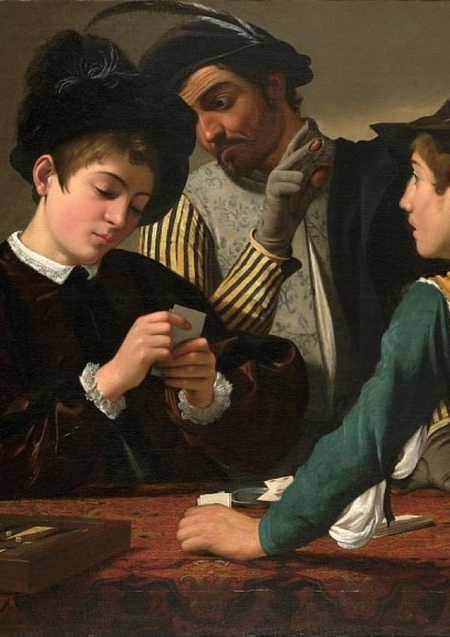
Concept
Playing cards are one of the few objects of everyday culture that have maintained worldwide recognizability for several centuries. The four suits—hearts, diamonds, clubs, and spades—appear to be simple graphic symbols, yet few stop to consider the history hidden behind each one.
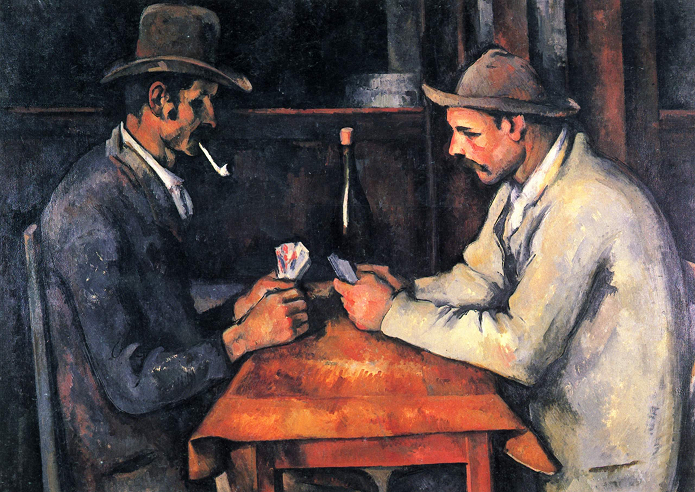
Paul Cézanne, 1892–1893, Family Gathering of the Emir of Qatar
In this study, I aim to trace the origins of the four card suits, examine their visual transformation across different cultures and eras, and analyze the meanings people attributed to these symbols and why certain associations have endured to this day.
My hypothesis is that contemporary playing card suit symbols are not arbitrary graphic forms: their visual appearance and meanings were shaped by the cultural, religious, and social perceptions of different eras. To test this hypothesis, I will follow this research plan:
1. The Path of Playing Cards
2. Latin Suits: Objects of the World
3. The German Tradition
4. The French System: The Birth of Modern Symbols
5. Symbolic Meanings and Visual Code
6. Russian Terminology
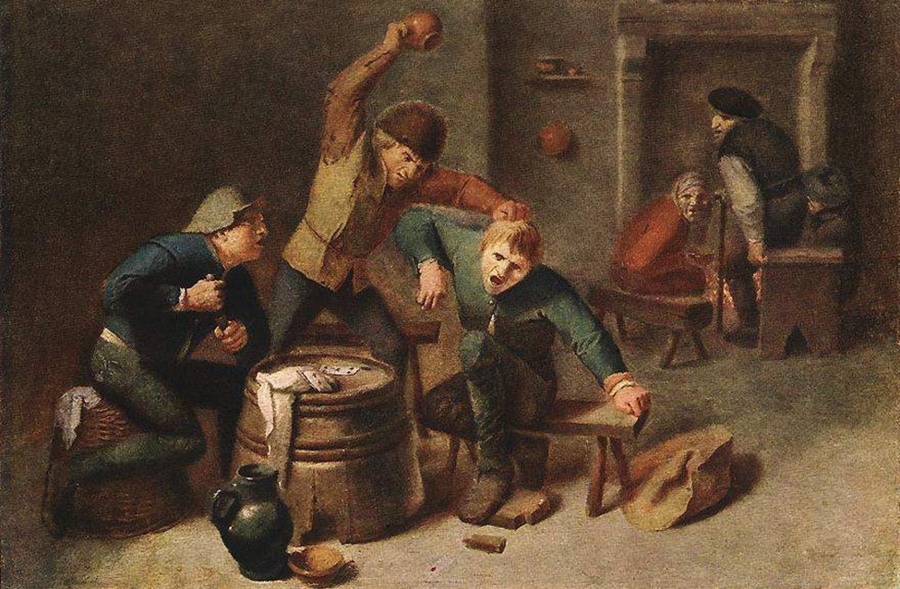
Key research questions:
1. Where and when did the first playing cards appear, and what suit systems existed before the formation of the modern deck? 2. How did the images of the suits change as cards spread? 3. What objects, natural phenomena, religious imagery, or social categories might have underpinned the familiar symbols? 4. Why did different peoples assign different meanings to the card symbols? 5. What original meanings have survived in contemporary cards, and which have been completely lost?
1. The Path of Playing Cards
The most common hypothesis links their emergence to China: the first mentions of card games or similar «sheet» games appear in Chinese sources from the 10th century, although they do not describe the appearance of the cards or the rules of the games.
«It is definitively true that Chinese playing cards, which have reached us today, originated from Chinese paper money featuring illustrated denominations.»
Chinese paper banknotes, 10th–16th centuries
Over time, these paper currencies transformed into cards—cards that bore no resemblance to ours. They were narrower and elongated, and the Chinese deck contained 120 cards—30 of each suit.
The First Chinese Playing Cards
Along with trade routes and migrations, playing cards from China spread to India, Persia, and subsequently across the Middle East.
Mamluk Egypt played a significant role in the history of playing cards. The Mamluk decks that have survived date primarily to the 15th century, but earlier fragments suggest the existence of a card culture in the region as early as the 12th–13th centuries.
Mamklyuk Maps, 15th–16th Centuries
These cards were typically used for divination; they are the earliest ancestors of the Tarot. The deck consisted of 52 cards and was divided into four suits: cups, coins, swords, and staves for polo games. These very symbols became the foundation for later European systems.
In Italian and Spanish decks, «polo sticks» evolved into staves or clubs because the game of polo was unfamiliar to Europeans.
Chronicles of the Swiss city of Bern, predating 1367, report the imposition of a ban on playing cards, as this activity was deemed «ungodly.» Despite subsequent similar restrictions across Europe, the fascination with cards was only beginning to gain momentum. By 1392, the accounts of the treasury of the French monarch Charles VI recorded that the royal treasurer paid the artist Jacquemont Gringonche for the creation of three decks, lavishly decorated with «gold and several colors, featuring many novelties for the amusement of our Lord—the King.»
Initially, playing cards were handcrafted, lavishly decorated with patterns and ornaments, and could only be afforded by wealthy city dwellers. As woodcut printing and other methods of mechanical reproduction spread, cards became cheaper and more accessible.
2. Latin Tones
The Latin decks became the foundation for Italian, Spanish, and parts of Tarot decks. They still retain this system: Italian cards use swords, clubs, cups, and coins, while Spanish cards use swords, batons, cups, and coins.
Trophies: The World of Feasts and Ritual
The Cup is the first of four symbols in the Latin system. It is associated with drinking, feasting, hospitality, and ritualistic actions. In medieval culture, the vessel held more than just a utilitarian meaning: the chalice was used in religious rites, feasts, and diplomatic ceremonies.
In card symbolism, cups later became associated with emotions, feelings, love, and spirituality. The romantic and more sacred meaning developed gradually as the cards moved beyond the game and began to be used in divination practices.
Coins: The World of Wealth and Exchange
Currency is directly linked to trade, property, transactions, and social status. In medieval Europe, it was also a symbol of power; it featured rulers, coats of arms, religious symbols, and inscriptions. In card traditions, the suit of coins became the foundation for future trump cards.