Navigation
- Concept
- The TR-808 as a Rhythmic Instrument (1980s)
- Transition from Kick Drum to Bassline (Late 1980s — 1990s)
- The TR-808 in Contemporary Music (2000s–2010s)
- Conclusion
- Sources
Concept
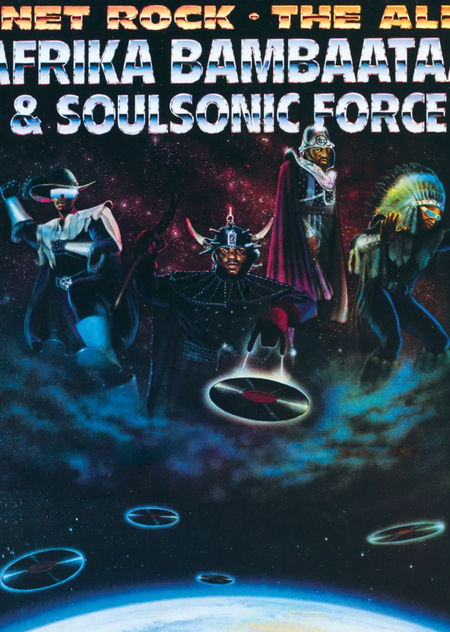
In 1980, Roland released the TR-808 Rhythm Composer, a drum machine where percussive sounds were generated by analog electronic circuits. Its sixteen-step sequencer allowed users to program repeating rhythmic patterns, and the controls on the panel permitted modification of individual instrument characteristics. The kick drum, in particular, offered extensive capabilities for further processing. Its sound combined a short attack with a low-frequency tone, whose duration was controlled by the Decay parameter. Chris Carter, who worked with the original TR-808, detailed these properties in a 1997 article for Sound on Sound [2]. In the early 1980s, musicians primarily used the TR-808 to create drum parts. In Marvin Gaye’s «Sexual Healing» (1982), its rhythm accompanies the vocal melody. In Afrika Bambaataa & The Soulsonic Force’s «Planet Rock» (1982), the kick drum aligns rhythmically with a separate synthesized bass line. The difference between these compositions relates to how the electronic drums are positioned within the arrangement. In the first case, the repeating pattern supports the song structure; in the second, it defines the dance pulse. By the end of the decade, producers began using the kick’s low-frequency tone as source material for independent bass lines. Samplers allowed for the recording of a single hit, which could later have its pitch altered. In the composition «Just Give the D.J. a Break» by Dynamix II (1987), the TR-808 sound was combined with the attack of the TR-909, and the resulting sample was played back at different pitches. The further development of this technique is connected to Miami bass (a direct ancestor of trap and a hip-hop subgenre that originated in Miami, known for its deep sub-bass) and Southern hip-hop.
Gradually, the designation «808» began to be used more broadly than the original name for the drum machine. In contemporary musical practice, it is often used to refer to a low-frequency sound with a distinctive attack and long decay, which can be obtained from the original instrument, its sample, or a software emulation. To analyze it, one must distinguish between the sound’s origin and its musical function. The main question of this study is how the musical function of the Roland TR-808 sounds evolved from the 1980s to the 2010s, and what properties of the kick drum allowed it to be used across various genres. It is hypothesized that the long decay of the kick drum and the proliferation of sampling technologies played a crucial role. Initially, the sound was used to mark rhythmic accents. Later, it began to be tuned in pitch, creating bass lines linked to the composition’s harmony. Furthermore, early methods of using the drum machine continued to exist alongside newer ones.
The research materials consist of electronic music and post-punk recordings from the 1980s, Miami bass compositions, techno from the 1990s, and hip-hop from the 2000s–2010s. To facilitate comparison, pieces featuring the use of the TR-808 or its samples—confirmed by documentary sources—were selected. This allows us to trace the role the drum machine sounds play in the arrangement. Primary focus is given to the interaction between the kick drum and the bassline. Historical information is established through interviews with participating musicians. To explain the acoustic characteristics, the work «Harmonic and Transposition Constraints Arising from the Use of the Roland TR-808 Bass Drum» by Emmanuel Deruty (2024) is referenced. The research by Anne Danielsen and her collaborators, «Shaping Rhythm» (2023), aids in examining the connection between the timbre of the drum sound and rhythmic perception. The study is divided into three chapters by period, each examining a specific method of using the TR-808 bass drum. The first chapter is dedicated to rhythm programming in the 1980s. The second examines the use of sampled sounds to create basslines in the late 1980s and 1990s. The third chapter focuses on pitch-organized 808 bass in music from the 2000s–2010s.
Chapter 1. The TR-808 as a Rhythmic Instrument (The 1980s)
The Roland TR-808 allowed musicians to create rhythmic patterns by sequentially triggering hits within a 16-step sequencer. For each instrument, the musician would select the placement of the hits within the measure, after which the resulting sequence would loop. The rhythm could be altered by switching between patterns, and certain sound parameters could even be adjusted during performance.
Roland TR-808 Rhythm Composer, 1980
Comparing an acoustic drum kit to the TR-808, the sound of the latter was not dependent on the physical movements of the drummer. The duration and attack of the sound were determined by the characteristics of the electronic circuit. The same rhythmic sequence could achieve a different sonic quality by adjusting the instrument settings.
Yellow Magic Orchestra, BGM, 1981
One of the early examples of using the TR-808 in live performance was the Yellow Magic Orchestra’s rendition of «1000 Knives» at the Nippon Budokan in Tokyo in December 1980. Subsequently, the drum machine was used in the recording of the album BGM (1981). Since YMO was already working with sequencers, the new instrument added to the existing method of arranging electronic parts.
Rob Rickett, TR-808 programming scheme for Yellow Magic Orchestra «1000 Knives, ” 2012
In the album version of «1000 Knives, ” the recurring percussion pattern is synchronized with synthesizer sound sequences. The rhythmic development depends on changes in the density of the parts and the introduction of new accents. Electronic drums establish a steady rhythm against which the melodic parts gradually become more complex.
Roland, analog polyphonic synthesizer Jupiter-8, 1981.
In Marvin Gaye’s «Sexual Healing» (1982), the TR-808 was already incorporated within a vocal-focused song structure. Sound engineer Mike Butcher initially worked with a pre-programmed drum pattern. Gaye recorded the synthesizer parts on a Roland Jupiter-8, gradually building upon the composition’s original foundation.
Marvin Gaye, Sexual Healing, 1982.
The rhythm of «Sexual Healing» is based on the repetition of electronic hits, among which the low bass drum and dry percussion sounds stand out. They maintain a steady pulse throughout the vocal sections. Gay’s melody is organized more freely in relation to this pattern. The elongated endings of the vocal phrases contrast with the short electronic accents. Thatcher also utilized the side-stick sound (a drumming technique where the stick strikes the rim, creating a dry click) in positions atypical for an acoustic drum track. The distinctive quality lies in the programming method itself. Drum sounds can be placed on any step of the sequencer, disregarding the limitations of a real-life kit. In this recording, Gay uses the capabilities of the TR-808, which would not be available if the same part were played on an acoustic drum set.
Moog Music, analog monophonic synthesizer Micromoog, 1975
Another organizational principle for the low register is presented in «Planet Rock» (1982) by Afrika Bambaataa & The Soulsonic Force. Producer Arthur Baker created the rhythm on the TR-808, while the bass line was performed on the MicroMoog synthesizer (the Prophet-5 was used for other synthesizer parts) [13].
Rob Rickett, Program Your 808: Planet Rock, 2012
The primary low-frequency accents occur when the kick drum of the TR-808 coincides with notes from the MicroMoog (this is because the synthesizer bass was intentionally following the rhythm of the percussion instrument). Their simultaneous sound makes the accents heavier, even though the bass drum and the synthesizer continue to fulfill different roles.
Afrika Bambaataa & The Soulsonic Force, Planet Rock, 1982
A significant portion of the rhythmic activity is created by short electronic sounds placed between the main beats. Incidentally, vocal phrases do not require constant changes in accompaniment. A repeating rhythm allows one to return to the same musical sections while maintaining the track’s danceable character. Compared to «Sexual Healing, ” the low-frequency component is more pronounced here. In Guy’s tracks, the drums support the movement of the vocal melody. In „Planet Rock, ” the kick drum is directly linked to the synthesizer bass line. The later use of 808 samples allowed these functions to be combined into a single sound. In the same year, the TR-808 appeared on Cocteau Twins' debut album, Garlands. For early performances, the band used other drum machines, including the Boss DR-55 and the Soundmaster SR88, but they replaced these with the TR-808 during studio recording. Robin Guthrie felt the resulting sound was too clean and lacked the power of the live performance.
23 Envelope, Cocteau Twins Garlands Album Design, 1982.
Electronic percussion is embedded within the dense guitar texture of «Blind Dumb Deaf.» The bass guitar occupies the lower register, and the repetitive drum pattern maintains the rhythmic foundation. Compared to «Planet Rock, ” the drum machine sounds are less distinct from the other instruments here. The studio sound of the TR-808 proved too clean compared to what the band was accustomed to on stage. This difference was especially noticeable in the dense guitar arrangement. Moving forward, the producers plan to use processing and distortion as means to alter the character of the 808. In New Order’s composition „Confusion“ (1983), recorded with producer Arthur Baker, the TR-808 was used to create a dance rhythm intended for club sounds. The electronic drums provide a consistent dance beat that connects the vocal sections with prolonged instrumental episodes.