Navigation
- Concept
- What holds the pattern?
- How is the glass mesh structured?
- When does a pattern become a letter and a figure?
- How does light change things?
- From blank to filigree
- Comparison and conclusion
- Sources
Concept
Where did the question come from?
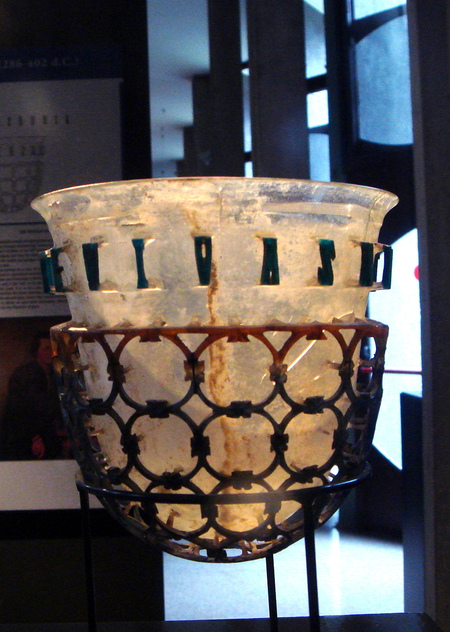
At first glance on the photo of the filigree goblet, the exterior mesh is what catches the eye. If you look closely, you can see the vessel wall behind it. A gap remains between the mesh and the wall, and the attachments are almost invisible in the overall image. This gives rise to the research question—what makes the glass pattern appear suspended, and in what places does it actually connect to the goblet? The answer can be found in the details of the objects themselves, by comparing the overall view, side shots, and close-ups.
What holds the pattern
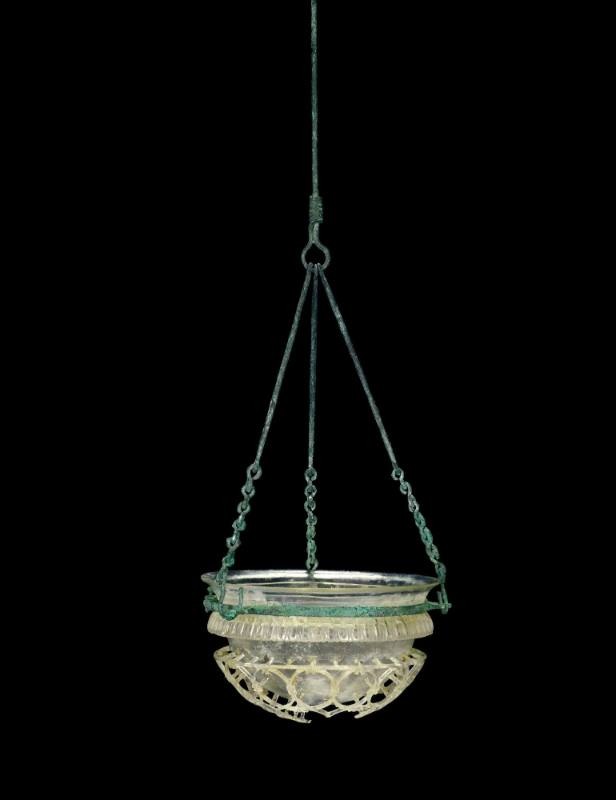
Goblet with an openwork mesh. Likely 4th century AD. Colorless glass, fittings made of copper alloy.
Corning Cup
In the group photo, you can see a grid encircling the lower portion of the Corning Cup. The mounts are harder to distinguish. Their placement helps refine the museum description.
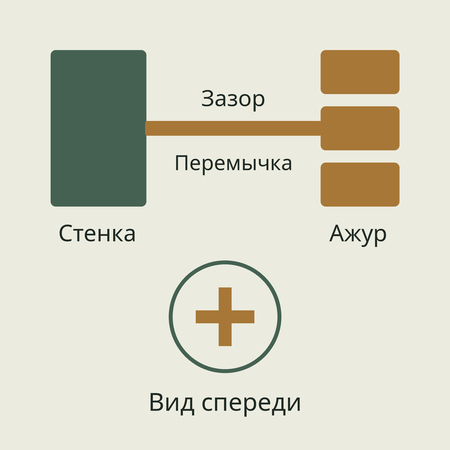
Attachment within the joint.According to the museum’s description, some of the crossbars are hidden behind small crosses between the cells. These details are part of the design, so from the outside, the connection point can easily be mistaken for a standard mesh node.How the viewing angle changesFrom the front, the cruciform detail covers the crossbar. On the side diagram, you can trace how the crossbar runs from the wall to the outer part of the pattern.
Excerpt from The Met
The fragment allows one to observe the edge of the vessel, a slotted band beneath it, and part of a male figure. The Met’s record for this piece specifies five handles. The museum suggests the depiction is of a Satyr or Dionysus.
In the second photograph, the curve of the wall behind the figure is more clearly visible. Along the edge of the chip, the thickness of the surviving glass and how far the relief projects can be observed.
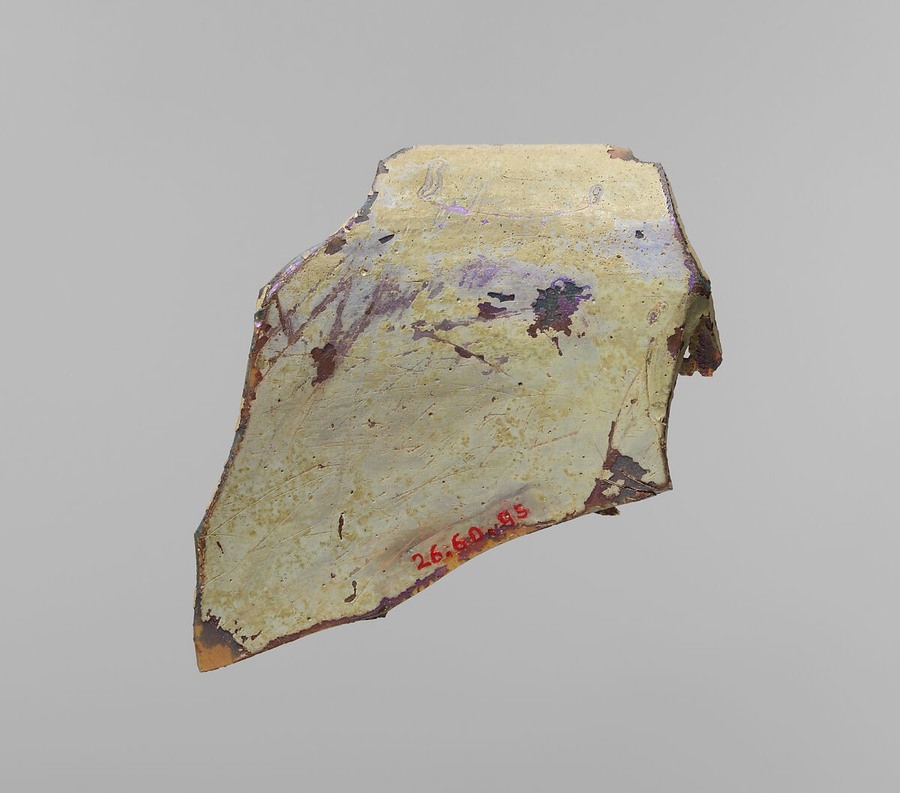
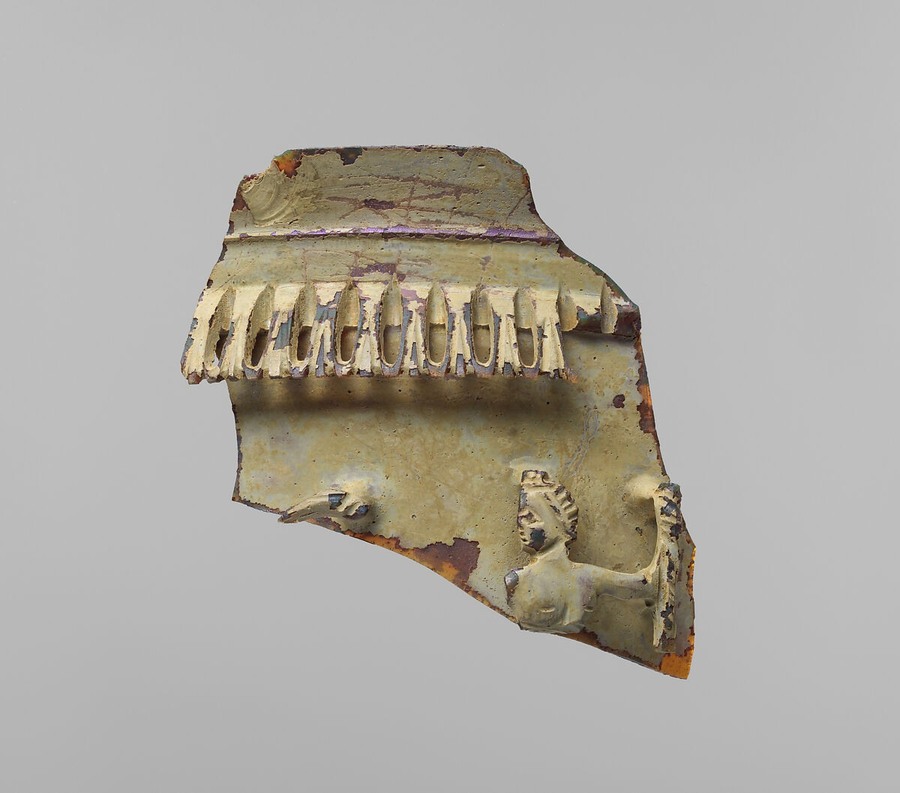
For the Corning Cup, the points of connection can be found by looking for repeating crosses. In the fragment from The Met, the protruding parts of the figure serve as a reference. The photographs show the relief’s position, and the number of connecting bridges is indicated in the museum catalog. A general view helps observe the pattern, while an oblique angle reveals the gap behind it. When the point of connection is concealed by ornamentation, its position can be clarified by the museum’s description.