I. Concept II. Artist-Curator III. Curator-Artist IV. Exhibition as Medium V. Conclusion VI. Bibliography VII. Image Sources
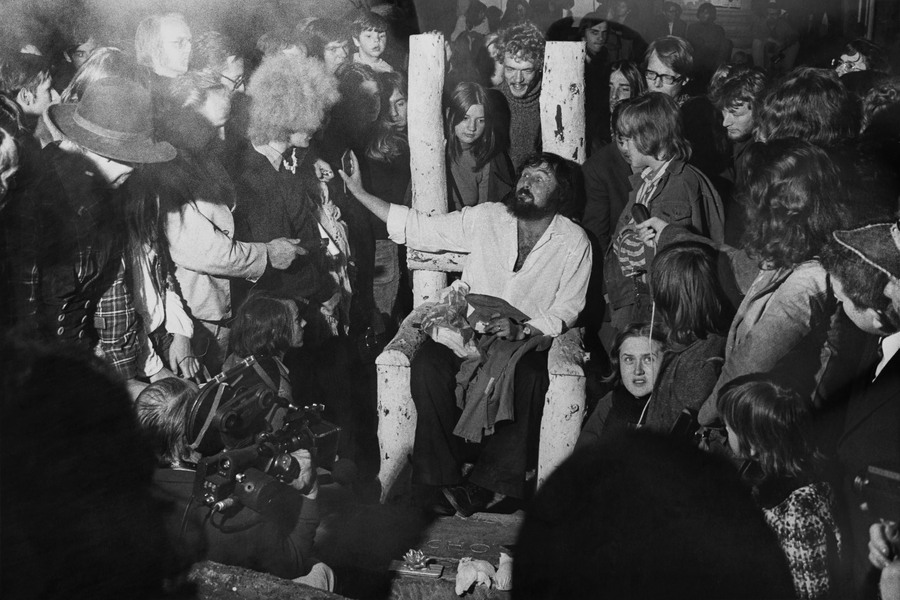
Harald Zeeman / Last Day of documenta 5 / 1972 / Kassel
CONCEPT
The convergence of artistic and curatorial practice—this visual study’s primary focus. Lucy Lippard’s work, particularly her exhibition «557, 087» (1969), inspired my choice of topic. It was the first time it offered a chance to view the curator as an artist, which reverses conventional roles. Long before this, artists often curated their own shows, and the approach to exhibition-making was less a conscious practice than a necessity for self-organization. It wasn’t until the late 1960s that the profession of the «independent curator» began to take shape—and the efforts of its practitioners to demystify their work started to define the curator’s responsibilities and delineate the boundary between themselves, the artist, and the institution. In this context, Lippard’s exhibition does not support the broader effort of the art community in the 1960s–70s to separate roles; rather, it emphasizes the blurring of boundaries and the practical absence of demarcation when it comes to the exhibition’s «author.»
The convergence of these two roles was also driven by the lack of clear definitions for curatorial practice. Projects by the first independent curators, such as Seth Siegelaub and Harald Szeemann, attempted to address this issue, leading to the later phenomenon of «demystification.» On the other hand, in the 1960s, «institutional critique» became relevant among art practitioners; they questioned the conditions of art representation, the role of the institution, and reevaluated the relationship between the institution and the artist. Thus, both curators and artists—each from their own perspective—moved toward the sphere of one another’s function in the search for answers regarding exhibition.
The need to clarify the relationship between the curator and the artist is also linked to the challenges of working within a single medium. Mediation—the act of articulating words about art—has traditionally been considered the curator’s domain. However, with the emergence of conceptualist practices, text has become an integral part of artists' work. As the ideas of conceptualism and the dematerialization of art have developed, language and text have become a shared medium for both the artist and the curator.
From one chapter to the next, I examine the most striking examples of 20th-century exhibitions, outlining the roles of their creators. The focus is on the period from the 1960s to the 1990s, though earlier examples are also included for historical context. The visual research is structured around an analysis of two aspects—curatorial and artistic practice—and how they interact. The study’s hypothesis is that the merging of these roles generates unconventional methods and forms of display. This observation leads to the assertion that the exhibition is a medium of contemporary art in which both artists and curators work.
Eccentric Abstraction / Group Exhibition Curator — Lucy Lippard / 1968 / Fischbach Gallery
ARTISTIC CURATOR
The first artist to independently create an exhibition space, critic O’Doherty suggests, is Courbet, who created the «Pavilion of Realism» in 1855. This self-organization, as a reaction to the policy of the Paris Salon institution, subsequently gave rise to the «Salon des Refusés.»
The problem of art representation was important to modernist artists, and from the beginning of the 20th century, individual examples began to emerge of how they consciously addressed the issues of work exhibition and interaction with the viewer. For example, Marcel Duchamp was involved in the exhibition design for the International Exhibition of Surrealists (London, 1936).
«1200 Bags of Coal» / Marcel Duchamp / 1938 / Fragment from the exhibition design of the «International Surrealism Exhibition»
Duchamp’s work, «1200 Bags of Coal,» designates the ceiling as part of the exhibition space by placing objects upon it. Another example of Duchamp’s exhibition design is «String of Pearls,» which was shown at «First Documents of Surrealism» (New York, 1942). The artist was invited by exhibition organizer André Breton specifically to work with the exhibition space.
«Tension» / Marcel Duchamp / 1942 / Exhibition: «First Documents of Surrealism»
The precedent of an exhibition as a form and an exhibition as a medium simultaneously can be found in an Exhibit (1957), a collaborative work by Richard Hamilton, Victor Pasmore, and Lawrence Alloway.
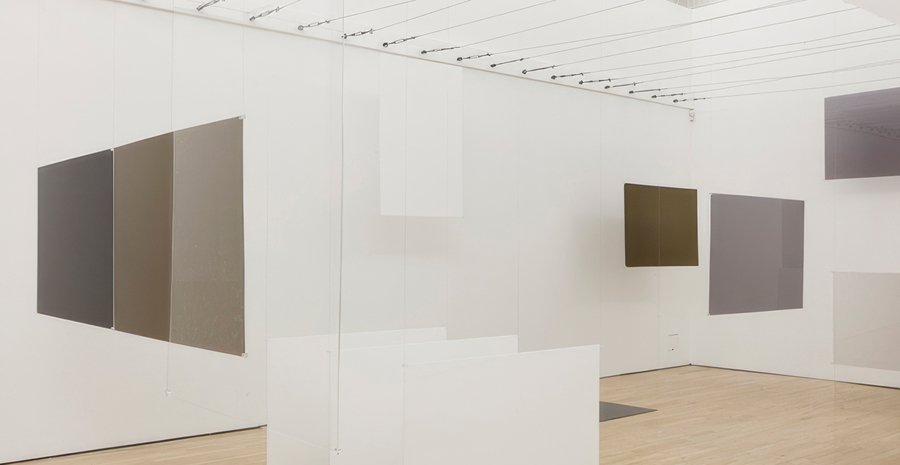
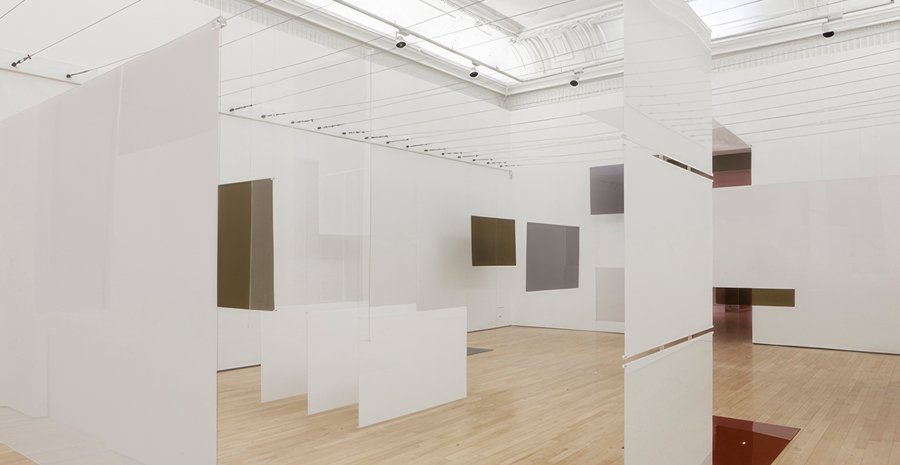
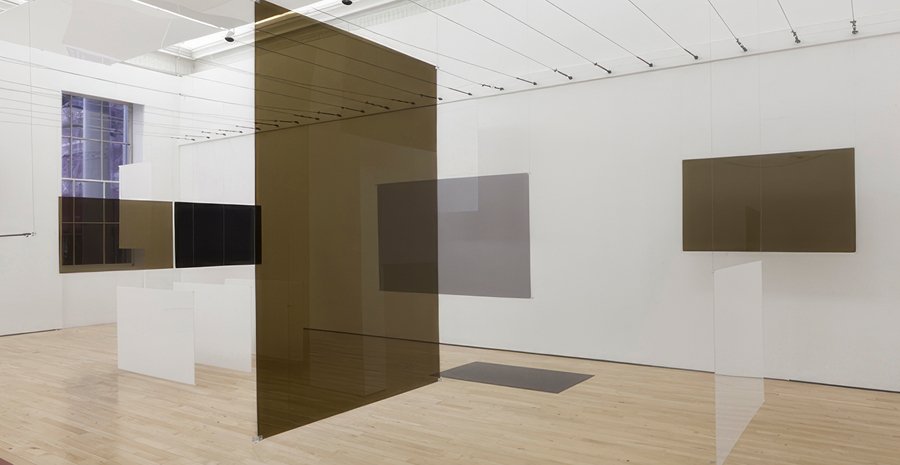
Reenactment of the exhibition an Exhibit by Richard Hamilton, Victor Pasmore, and Laurence Alloway / 2014 / ICA
An Exhibit / Richard Hamilton, Victor Pasmore, Lawrence Alloway / 1957 / Hatton Gallery
Without works, pure exhibition design—an arrangement of transparent colored sheets referencing Bauhaus aesthetics. Ivan Klein’s Predisposition to the Void (1958)—an exhibition of an empty gallery, an act of art dematerialization.
However, for Hamilton, the absence of works is not the thematic center of the exhibition. The artist-curator’s focus is on revealing the structure and organization of the show, aiming to articulate how he perceives things within space.
«The Void» / Yves Klein / 1958 / Galerie Iris Clert
CURATOR-ARTIST
Lucille Rieppart’s creative work is usually viewed within the context of the ideas she presented in the book, «Six Years: Dematerialization of the Art Object from 1966 to 1972.» Dematerialization and questions regarding the existence of an artwork in the form of an idea, without emphasis on physical form (or its absence), became critical aspects of the discourse on conceptual art in the late 1960s and early 1970s. Rieppart’s persona is also important in the discussion about the blurring boundaries between the curator and the artist. Quoting Peter Pflugens: «Lucy Lippard is actually an artist, and her medium is other artists» (from The Culture of Curation, Paul O’Neill, 2015).
«If today’s exhibition curator increasingly begins to feel like a super-artist for whom the artworks created by others serve to articulate his own ideas, then this strategy is merely a response to the artistic strategies of the 20th century.»
Boris Groys «Utopia and Exchange, ” 1993
The curatorial approach of Lippard is unconventional and experimental: for the exhibition «557,087, ” she asked artists to submit postcards containing instructions for their work, rather than physical pieces. By including these instructions in the exhibit, Lippard transformed herself into an intermediary and challenged traditional notions of authorship, ownership, and control in art, emphasizing the importance of process and idea over material objects. Thus, creating a group exhibition becomes a form of self-expression by the creator—the curator herself.
«557, 087» / Curator of Group Exhibition — Lucy Lippard / 1969 / Seattle Art Museum
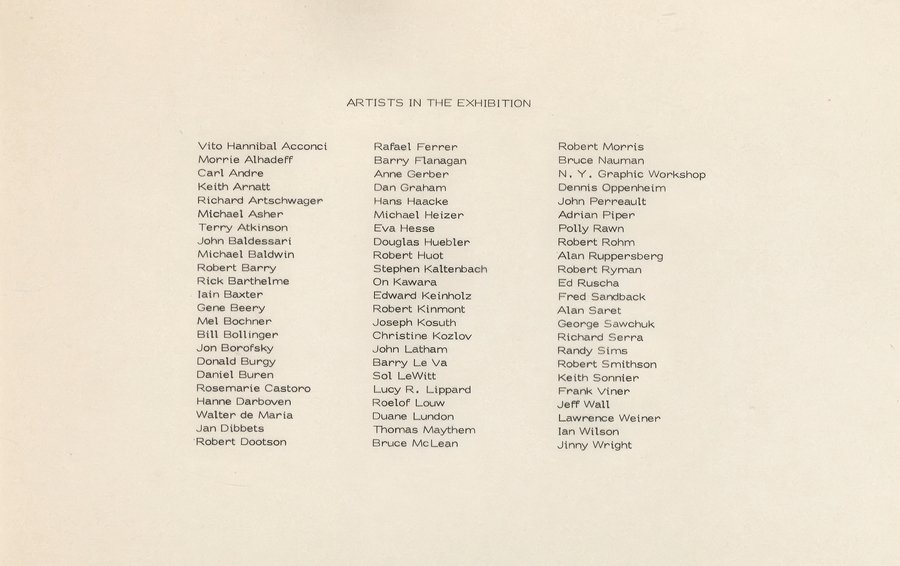
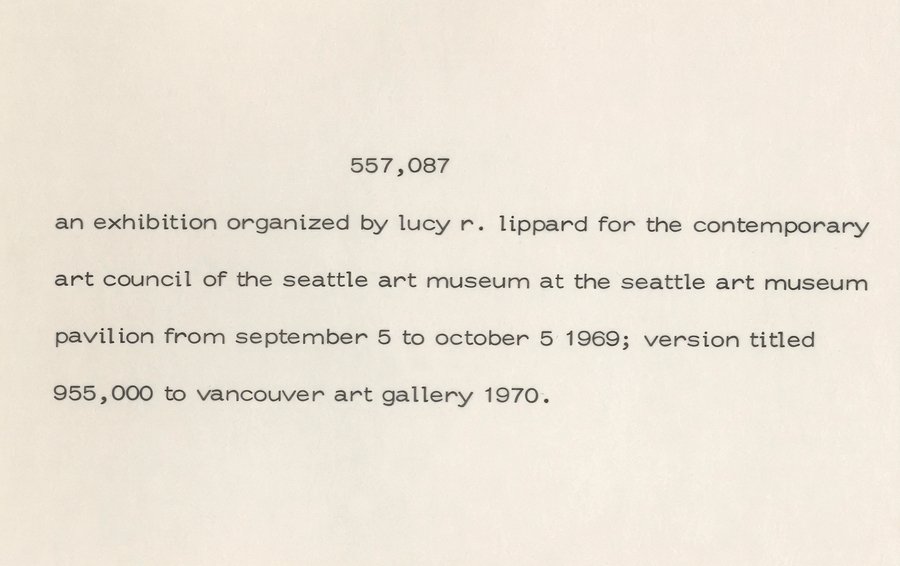
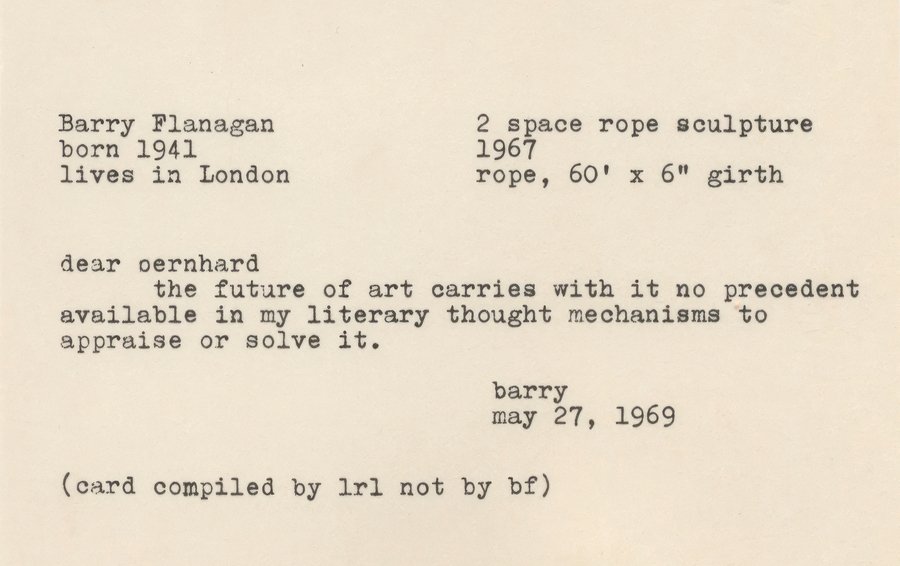
«557, 087» / Group Exhibition Curator — Lucy Lippard / 1969 / Seattle Art Museum
The curator acts by realizing their creative aspirations and ideology, and the creation of the exhibition becomes a manipulation of the artists' work, failing to prioritize the authors' interests with their individual pieces—a dynamic that exposes the themes of artistic independence and curatorial intervention. It is worth recalling the continuation, «557,087”—the „955, 000“ exhibition. The curator’s overvisibility and recognizable style devolve into didacticism and create fertile ground for criticism; moreover, Lippard herself acknowledged that her approach with instructions was imperfect: the exhibition turned out not as intended due to issues in the realization of the works.
«955,000» / Curator of the Group Exhibition — Lucy Lippard / 1970 / Vancouver Art Gallery
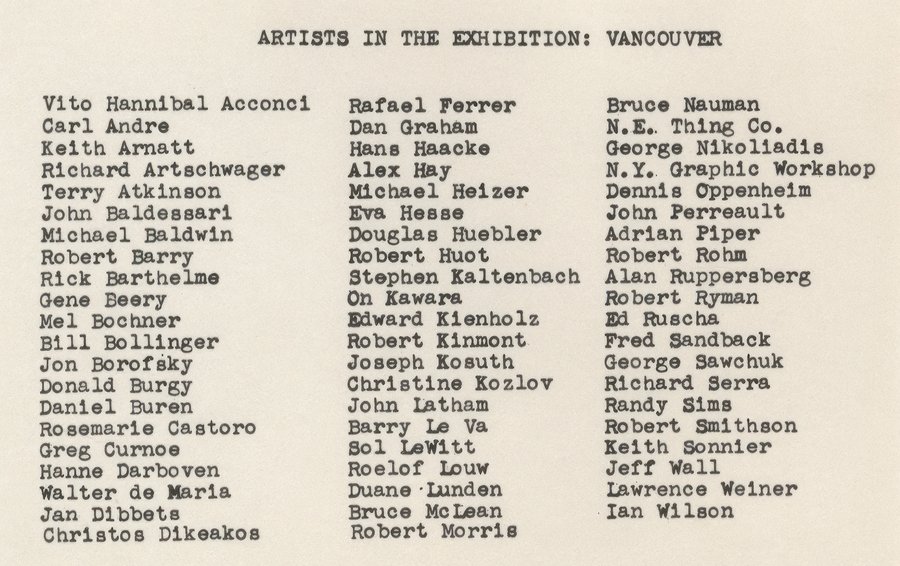
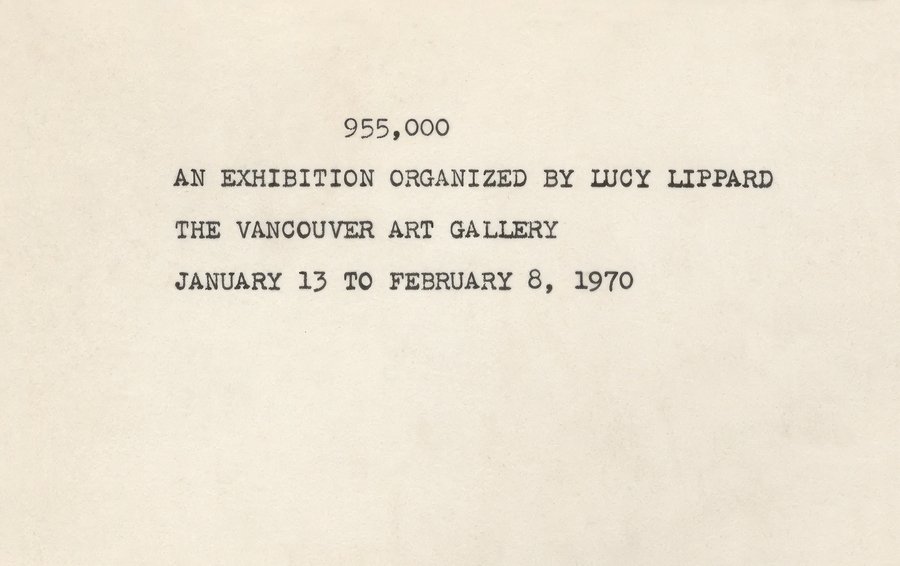
«955,000» / Curator of Group Exhibition — Lucy Lippard / 1970 / Vancouver Art Gallery
Textual works and the construction of personal statements through the curation of others' work, following Lucy Lippard’s practice using the example «4,492,040.»


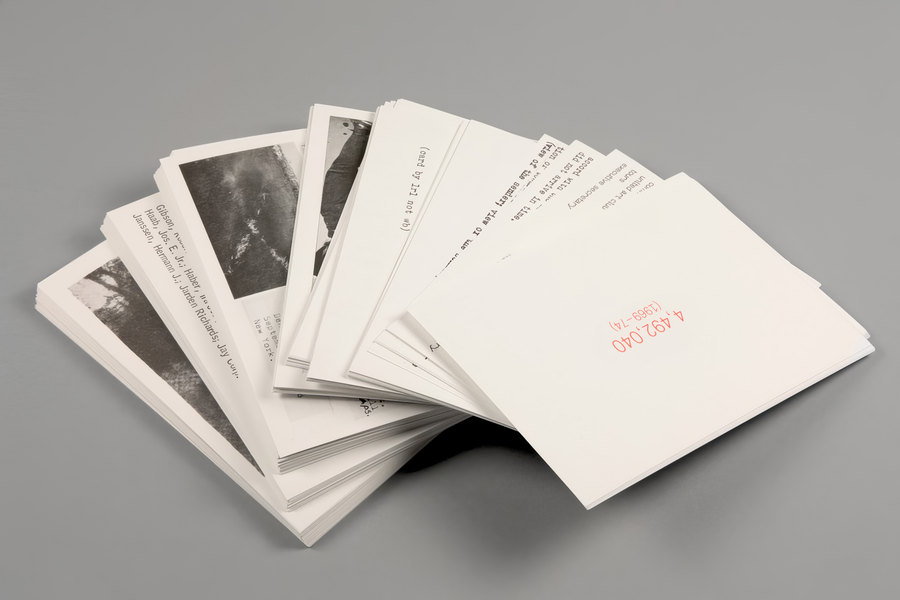
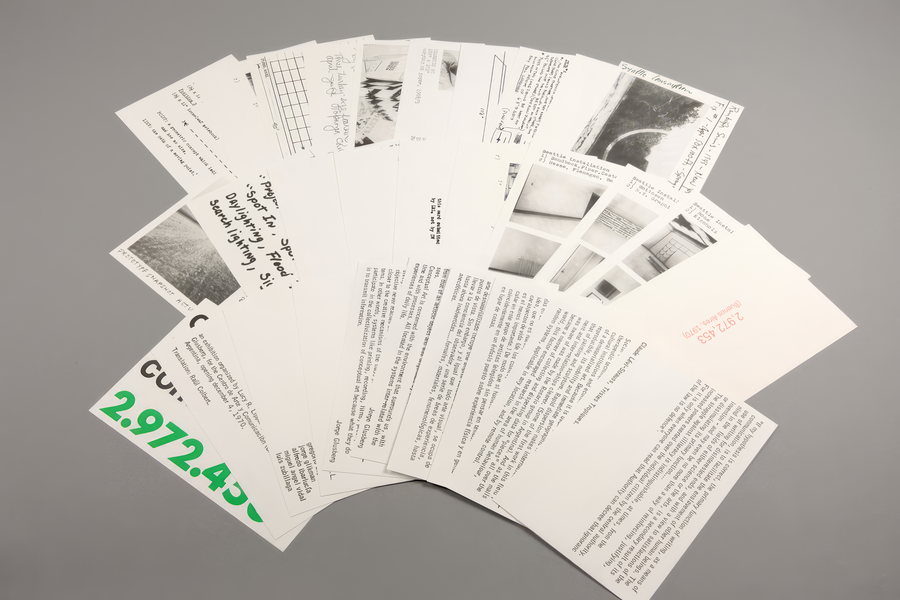
«4,492,040» / Lucy Lippard / Reissue of catalogs from «numbered» exhibitions / 1969–74
The most recognizable hand of the curator is Harald Szeemann’s. His defining work in the overall development of curatorial practice is the exhibition «When Relations Become Form» (1969)—an artistic act emphasizing processuality and site-specificity.