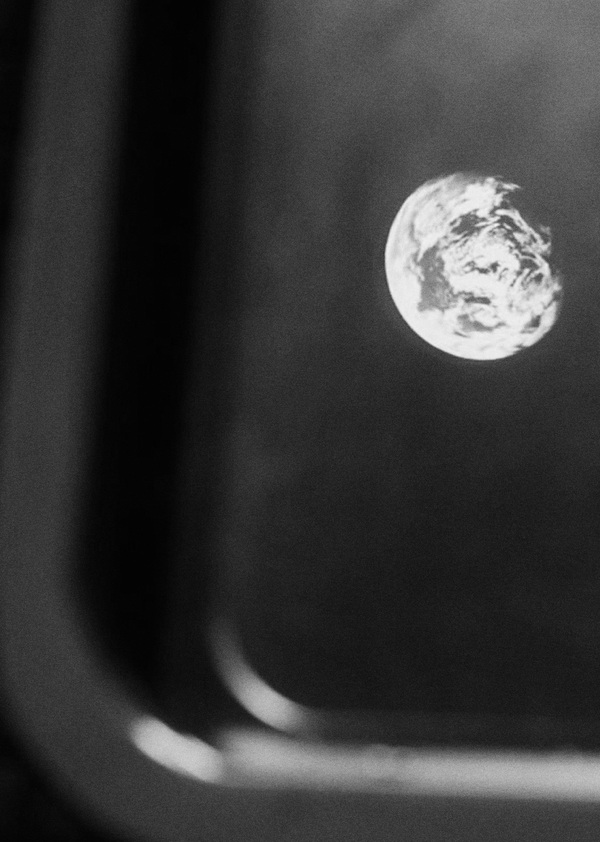
The concept of a mobile dwelling has been known to humanity since ancient times—it is, in a sense, intrinsic to us.
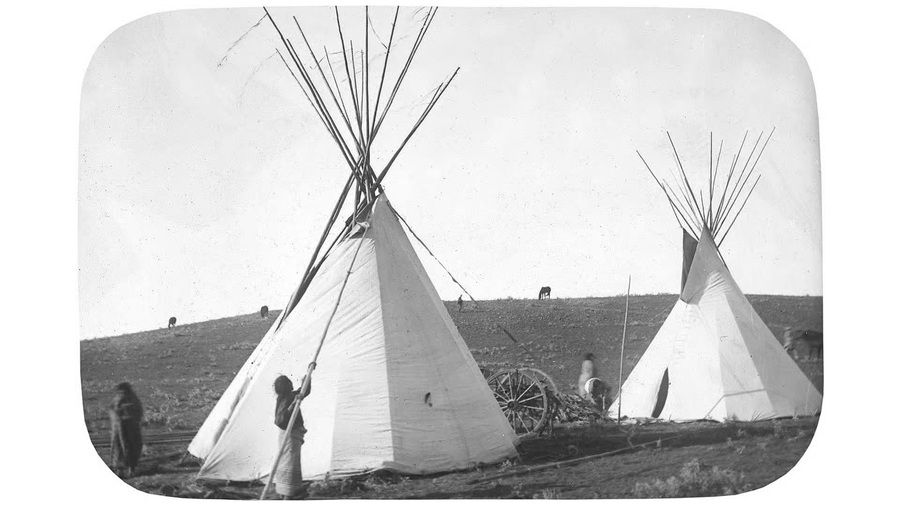
Unknown artist. Women from the Crow tribal reservation pull back the window coverings for ventilation, early 1900s.
Initially, such structures were employed out of necessity: the approach as a whole was dictated by the strong influence of the environment, low technological development, and a limited availability of building materials. However, in our time, a mobile dwelling in people’s minds is connected to something far more important and significant than mere limitations—the semantics of freedom. After all, it is precisely in this way, unbound to any location at the most fundamental level, that a person can truly feel independent of everyone and everything. This, I believe, leads to the close connection between the mobile dwelling and the theme of space exploration—the exact same boundless, vast space and the same person, free from all earthly, domestic constraints.
But at exactly this moment—when the connection between the two themes begins to manifest with such expressiveness—we encounter the inexplicable: most of the interior spacecraft look old-fashioned, almost archaic.
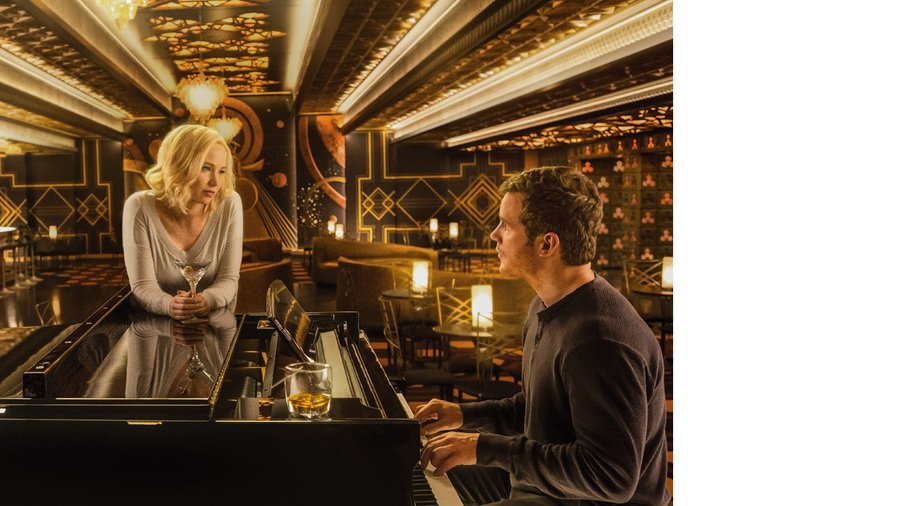
Morthen Tildum, «Passengers,» 2016.
The discussion here is not so much about style or its elements, but about the overall feeling of the space. It’s about the intention with which the space is organized: for some reason, in a condition of absolute detachment from home, a person starts to return to it themselves—not physically, of course, but through familiar, earthly objects. The logical contradiction is immediately apparent, yet it is difficult to find a proper explanation for it in literature, especially in art critical literature that views space through the prism of design in general and specific original design insights.
Stanley Kubrick, «2001: A Space Odyssey, ” 1968
In this study, I want to examine how spaceships are portrayed across different eras and genres in art—both externally and internally—how these imagery relates to real-life designs and documentary footage, and what ultimately happens to the semantics of freedom within the interiors that seem best suited for it. First, I will discuss the ship’s exterior: its form, what it resembles, and what it fundamentally does not resemble, and why, in this context, art moves away from any analogy with earthly dwellings. Next, I will explore what happens inside: how this space is organized, where familiar objects originate within it, and what becomes of those objects when there is nothing around to recall home.
Comparing these two perspectives—from the outside and from within—should reveal whether freedom still has a place aboard a spaceship and continue the dialogue about whether a perfectly designed habitat can truly become a home for its inhabitants.
Mitchell Stuart, Concept Art for the film «Elysium: Paradise Lost,» 2013.
[1] Shell
In the first section, we will look at the shell—how the exterior appearance of a spacecraft functions from a design perspective. It is important to clarify: in this section, we are more interested in the intention behind the form and the underlying thought embedded within it.
Bruce Goff, Bavinger House, 1950
Bruce Goff, Bavinger House, 1950
Why is nature so often mentioned when discussing traditional nomadic housing? At first glance, the pattern here seems simple: the better a dwelling is adapted to its environment, the more effectively it performs its functions. A conical or hemispherical shape grants it the greatest resistance to wind; a circular plan minimizes the perimeter while maintaining the same area, which allows for savings in building materials.This close connection to nature also makes the housing intuitive. We immediately grasp its form and the function behind it. More modern reinterpretations of similar architecture also prove this. Bavinger House, designed by Bruce Goff, is a bold and profound reinterpretation of the archetype—the traditional dwelling of the American peoples. The structure appears unusual, but its simple underlying forms, along with the use of stone cladding, help it blend with its surroundings.
Bruce Goff, Hopewell Baptist Church, 1950.
Bruce Goff, Hopewell Baptist Church, 1950.
The same applies to the Hopewell Baptist Church, also designed by B. Goff. Here, the additional structural elements protruding beyond the building already suggest the architecture’s novelty, yet the main form remains equally recognizable and grounded.
Richard Buckminster Fuller, Dome Dymaxion, 1927
Richard Buckminster Fuller pushed his experiments even further. The Dymaxion House, which resembles a traditional yurt in its form, is entirely sheathed in metal: these rounded, streamlined shapes foretell an entire architectural movement—Streamline Moderne. Here, it is crucial to see that in Fuller’s design, form prevails over material. The house seems to have emerged from the future. However, the logical connection between it and what we saw before it is equally clear.
J. J. Abrams, «Star Trek: Revenge,» 2013
J.J. Abrams, «Star Trek: Retribution,» 2013.
The starship «Enterprise» from the Star Trek films and series also relates significantly to streamlining. The smooth, swift contours of the hull, the symmetry, the elongated silhouette. But what is this needed for? What does this form allude to?
Rudolf Matthae, «When Worlds Collide, ” 1951.
George Lucas, «Star Wars: Episode I — The Phantom Menace, ” 1999
These vessels strive to be unlike anything else. They are too new, too inscrutable, too detached from everything familiar to us. This is precisely the primary function of their aesthetic—to be extraterrestrial, even unattainable. Gradually, this drive becomes the prevailing trend in the design of spacecraft within art: more almost random forms, inexplicable curves, and proportions. Immediately, spacecraft move away from established traditions, to which nomadic builders constantly revert.
Ridley Scott, «Alien,» 1979
Fede Alvarez, «The Other: Romulus, ” 2024
It seems that the drive to reject any earthly form, which characterizes the design of spacecraft, reaches its peak in the «Alien» film series. It is completely unclear to the viewer what each element is responsible for or how they fit into the overall composition. The directors only amplify this effect: often, spacecraft are shown only through outlines, highlights off the hull, or spotlights glowing in the darkness. Instead of one unified form, there are disparate, unconnected patterns whose meaning remains unrevealed.However, in later designs, spacecraft turn away not only from nature but also from humanity itself. We observe this most clearly in the film «Interstellar.»
Christopher Nolan, «Interstellar, ” 2014