Concept
Who Narrates the Story
It has long been assumed that a museum is a place where the viewer encounters authentic history, presented as it is. To support this, museums provide documentation: records, lists, and photographs. But who decides which parts of history deserve attention, how that history should be presented to the viewer, and do museums have the right to express their opinion?
Behind every exhibition lies its own narrative—a story that has often been rewritten by the individuals who acquired the object. Historically, the museum and the collector received primary focus, while the history of the object’s acquisition and its original owners remained peripheral. Today, museums, researchers, historians, and indigenous communities are offering new perspectives on established cultures.
In this research, I examine how new trends in decolonization are transforming museum exhibitions and displays across the nation. For this study, I draw examples from countries such as the Netherlands, Australia, and Brazil, focusing on the idea of how the context shifts when the periphery is brought to the foreground and allowed to tell its own story. One of the central questions is: who has the authority to tell a story, and how does this influence our contemporary understanding of art?
The Museum — Not a Neutral Space
Behind a museum lies the crucial decision of which exhibition to host, which artifacts to feature and which to omit, the sequence in which objects should be presented, and what accompanying text should accompany each piece—this is precisely what shapes how the public perceives history. In The Birth of the Museum (1995), Tony Bennett writes that a museum is more than just a repository of knowledge; it actively influences how people conceive of culture, society, and national identity. This implies that an exhibition doesn’t just present the past directly; it constructs and curates it for the public in a specific manner. However, any one of these presentations highlights one aspect while obscuring another. A museum can extensively detail an object’s material and manufacturing techniques or its religious significance, but it cannot reveal whether it was purchased, received as a gift, recovered during a military expedition, or taken without the owner’s consent.In Decolonizing Museums: Representing Native America in National and Tribal Museums (2012), Amy Lontri notes that for a long time, the narratives about Indigenous peoples in museums were largely constructed by outside specialists rather than by the communities themselves. She understands decolonization as a process that requires not only changing the language of the exhibit but also frankly addressing the consequences of colonization, historical trauma, and the right of communities to explain their own culture. Bennett helps us understand how museums shape public knowledge, while Lontri explains why we must re-evaluate not just the content of the exhibition, but also the structure of power within the museum itself.
How the colonial gaze is formed
In his book Orientalism (1978), Edward Said illustrates how Western perceptions of the East were constructed through dichotomies—civilized versus exotic, modern versus backward. His famous quote, «The Orient was almost a European invention, ” points to the influence of Western assumptions on the image of other cultures.
Linda Tuhiwai Smith, in Decolonizing Methodologies: Research and Indigenous Peoples, critiques the ways knowledge is produced, where Indigenous peoples often become subjects of study without having control over the research direction. A decolonial approach requires re-evaluating who creates knowledge and whose perspective is considered authoritative. Decolonization encompasses investigating the origins of objects, revising historical narratives, involving communities in curatorial work, and repatriating cultural artifacts. It is crucial not just to change labels, but to acknowledge historical violence and its consequences.
Colonization from the perspective of the «unsettled» exhibition
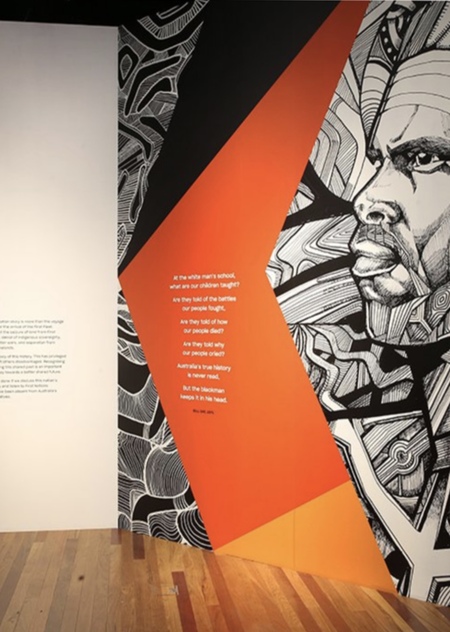
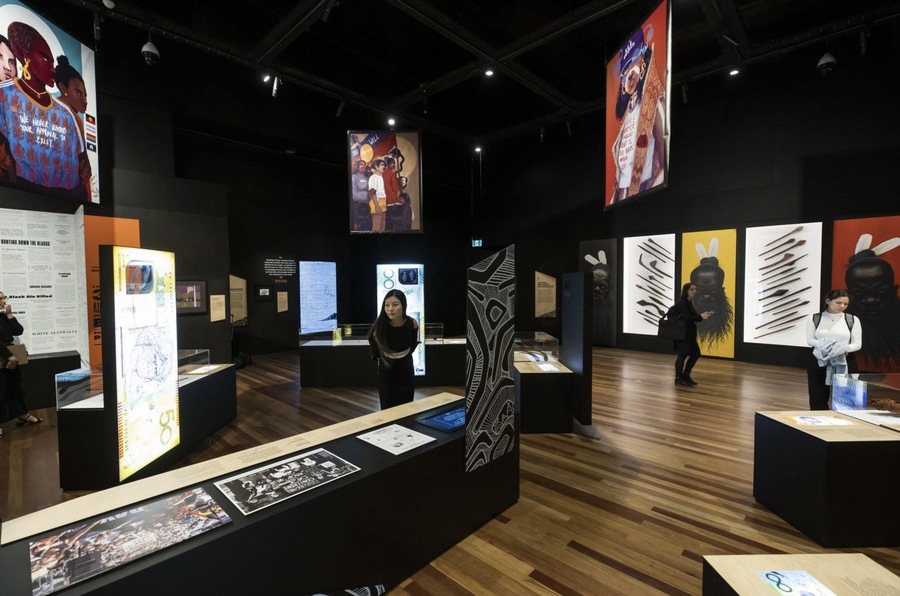
The Unsettled exhibition, presented at the Australian Museum in Sydney in 2021, re-examines Australian history through the experience of Indigenous peoples. James Cook’s 1770 European voyage was often described as the discovery of the continent, whereas for its original inhabitants, colonization meant land loss, violence, and the denial of sovereignty.
The exhibition invites visitors to view these events not only from the perspective of European explorers but also through the testimonies and interpretations of Indigenous communities. The title Unsettled emphasizes that the colonial past remains a subject of debate and continues to influence the present. The project demonstrates how museums can revise national histories by altering not just the content, but also the participants in the exhibition’s creation.
Véxoa Exhibition: We Know
The exhibition Véxoa: Nós sabemos («Véxoa: We Know») took place at the Pinacoteca from 2020–2021. Nine Tena served as the curator, and 22 indigenous artists and artistic collectives participated in the project. Painting, photography, video, and installations demonstrated that Indigenous art is not limited to traditional crafts or ethnographic heritage. The artists addressed contemporary political and social issues, positioning themselves as authors of their own statements. The exhibition’s title asserts the right of communities to independently generate knowledge about themselves. The project also raises the question of who defines the boundaries of contemporary art and the artistic value of works.
Netherlands: Unfinished Pasts
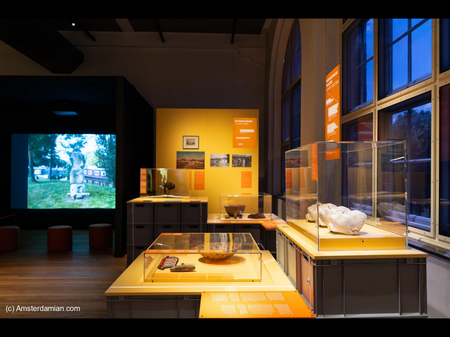
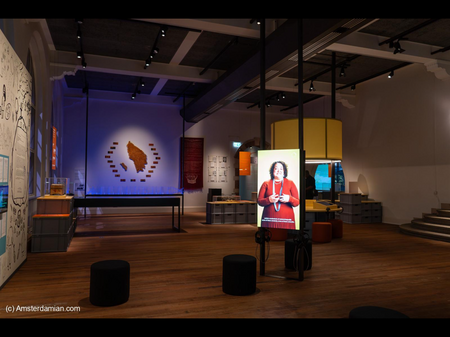
The exhibition «Unfinished Pasts: return, keep, or…?» at the Wereldmuseum Amsterdam, opening in 2025, explores the origins of museum collections and the issue of restitution. Objects from Asia, Africa, and Oceania entered European museums through various means, including colonial violence and removal without owner consent.
Investigating the provenance of these items helps reconstruct the history of their movement, yet archival documents do not always reflect the positions of the communities themselves. In the report «The Restitution of African Cultural Heritage» (2018), Felwine Sarr and Benedict Savua examine the return of African heritage as an opportunity to redefine the relationship between European institutions and African nations.
Unfinished Pasts demonstrates that the question of returning objects is tied not only to property rights but also to cultural memory, spiritual values, and historical responsibility.
Can all museums seek to be fully decolonized?
Even when returning artifacts and changing exhibitions, the museum remains part of a historically formed institutional system. There is a risk of symbolic change: the institution may speak about colonialism while maintaining the old decision-making structure.
Therefore, decolonization must be understood not as a finished state, but as a constant revision of collections, research methodologies, and the distribution of curatorial power. It is important to assess not only what the museum shows, but also how the exhibition is created and who has the authority to influence its content.
Conclusion
The decolonial turn is reshaping not only the content of museum exhibitions but also the very principle of constructing historical knowledge. The projects examined here demonstrate that the past can be explored through diverse perspectives, acknowledging previously marginalized voices and contentious origins of collections. For me, the central question is whether the museum can cease to be the sole authoritative narrator and instead become a space for dialogue. Perhaps decolonization begins with recognizing that history is composed of multiple experiences that do not always align.
Bennett, T. The Birth of the Museum: History, Theory, Politics / T. Bennett. — London; New York: Routledge, 1995. — https://repository.museumsiam.org/bitstreams/0ee78fa4-46b5-44a9-86f7-a1bc63c23f88/download
Lonetree, A. Decolonizing Museums: Representing Native America in National and Tribal Museums / A. Lonetree. — Chapel Hill: University of North Carolina Press, 2012. — https://www.jstor.org/stable/10.5149/9780807837528_lonetree.6
Said, E. W. Orientalism / E. W. Said. — New York: Pantheon Books, 1978. BN 0-394-42814-5. — https://books.google.com/books?id=dVpxAAAAMAAJ
Smith, L. T. Decolonizing Methodologies: Research and Indigenous Peoples / L. T. Smith. — 3rd ed. — London: Bloomsbury Academic, 2021. https://www.bloomsbury.com/us/decolonizing-methodologies-9781786998125/
Sarr, F. The Restitution of African Cultural Heritage: Toward a New Relational Ethics / F. Sarr, B. Savoy. — 2018. — https://www.culturetype.com/wp-content/uploads/2024/03/restitution-of-african-cultural-heritage-report-2018-by-sarr_savoy_en.pdf
Unsettled / Australian Museum. –/australian.museum/learn/first-nations/unsettled/
Véxoa: Nós sabemos / Pinacoteca de São Paulo. –https://pinacoteca.org.br/programacao/exposicoes/vexoa-nos-sabemos/
Unfinished Pasts: Return, Keep, or…? / Wereldmuseum Amsterdam. –https://amsterdam.wereldmuseum.nl/en/whats-on/exhibitions/unfinished-pasts