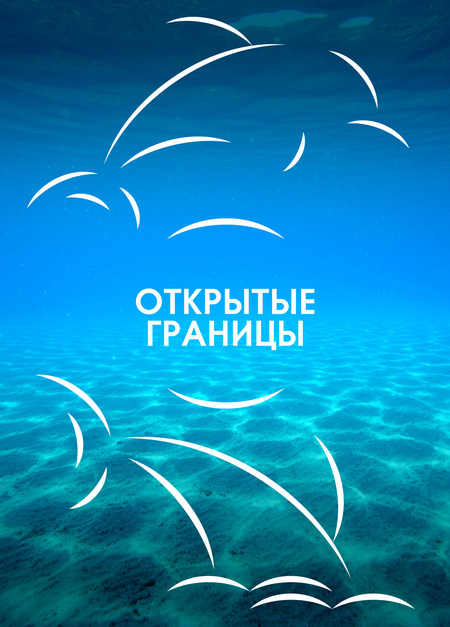
Original size 1148x1600

Communication strategy of Open Borders brand

PROTECT STATUS: not protected
This project is a student project at the School of Design or a research project at the School of Design. This project is not commercial and serves educational purposes

Communication theory in modern design

Communication theory shows that design is a process of encoding and decoding meanings through visual symbols in a specific context, not just «making things look nice». Below are examples from real brands that illustrate how key concepts from the communication theory work in contemporary design practice.

Semiotic tradition: logos as sign systems

The semiotic tradition sees communication as sharing meaning through systems of signs. In logo design, every shape and color works as a sign that triggers specific associations and helps audiences construct the brand’s identity.

A well-known example is the Airbnb «Bélo» symbol, which combines the letter «A», a location pin, an abstract person and a heart; this multilevel sign encodes ideas of place, belonging and emotional connection at the same time.

The Nike Swoosh is another classic semiotic case: the dynamic check‑mark shape and black or white color encode motion, achievement and victory, so the logo itself functions like a condensed narrative about sport performance.

airbnb logo, 2014/NIKE logo, 1971

Socio‑cultural tradition: visual identities and culture

The socio‑cultural tradition defines communication as a symbolic process that reproduces social order and everyday practices. Visual identity systems of global brands help normalize particular lifestyles by repeating specific images and graphic codes.

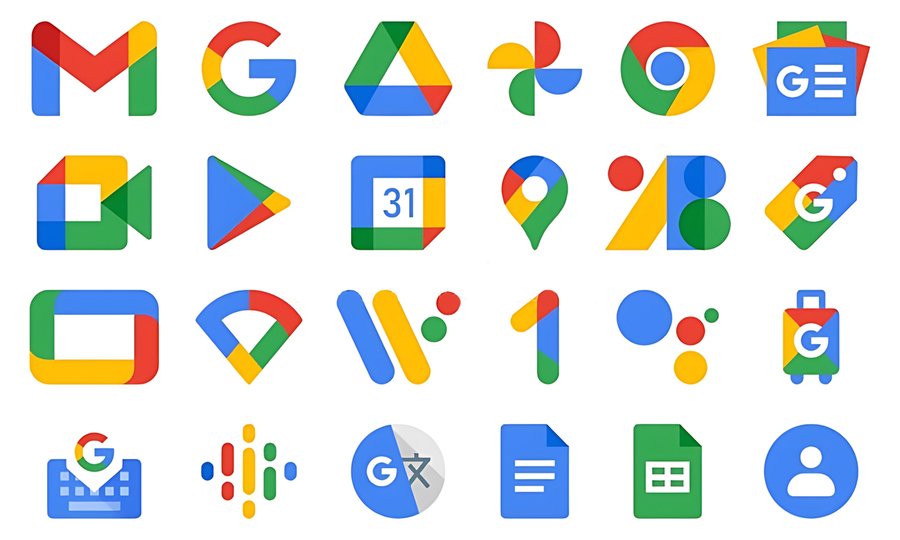
For example, Google’s product branding uses bright primary colors, rounded geometric shapes and friendly sans‑serif typography; these elements present technology as accessible, playful and democratic, reinforcing a culture where digital tools are part of daily life for everyone.

Another example is Starbucks’ green siren logo and store graphics, which combine organic textures, hand‑drawn elements and warm photography; this visual system encodes the idea of a «third place» between home and work, supporting socio‑cultural narratives about community and everyday rituals. Branded packaging and in‑store posters show how this atmosphere is constructed visually.
big
Original size 1600x960

Google’s product branding, 2015

Original size 3080x1600

STARBUCKS logo, 2011

Rhetorical and socio‑psychological perspectives

Rhetorical tradition focuses on strategic, persuasive communication, while the socio‑psychological tradition studies how messages influence attitudes and behavior through stimuli and responses. In design, layout, hierarchy and color function like rhetorical devices that guide attention and emotional reactions.

On many crowdfunding platforms, successful landing pages follow a similar persuasive pattern: a strong headline, a central «hero» product image or video, a short benefit‑oriented subheading and a contrasting call‑to‑action button. Designers use a large product photo plus a bright button like «Back this project» to lead users from problem to solution and reduce friction before conversion.

Apple’s product pages use a different but related rhetorical strategy: large, high‑contrast product renders on dark or white backgrounds, short headlines like «Power. It’s in the Air.» and controlled scrolling animations. This design encodes technological superiority and calm confidence, guiding the viewer through a sequence of visual arguments about performance and quality rather than presenting raw technical data first.

Original size 1895x890

KICKSTARTER landing, 2025

Original size 1896x916

apple store landing, 2025

Critical and intercultural approaches

Critical communication theory reminds us that media and design can reproduce dominant ideologies and power relations, while intercultural communication theory stresses that meaning depends on cultural context. Global brands often adapt their visual systems to local audiences to avoid misinterpretation and to show respect for different cultural codes.

Coca‑Cola’s global campaigns provide a clear example: the core elements (red color, Spencerianscript logo, contour bottle) stay stable, but local billboards and social media visuals feature different models, clothing styles and festive motifs depending on the region. The same red‑white palette can frame Christmas family gatherings in Europe, Ramadan iftars in the Middle East or summer street festivals in Latin America, aligning with local cultural narratives while keeping one global brand story.

Unilever’s Dove «Real Beauty» campaigns also illustrate a critical and intercultural approach: the visual design intentionally includes diverse body types, ages and skin tones in clean, minimal compositions, visually challenging narrow beauty standards. The choice of photography and layout supports a more inclusive ideology while still operating inside commercial branding.

Coca Cola advertisement, 2024

Original size 1702x630

Dove advertisement «Real Beauty», 2024

Presentation of Open Borders brand for a general audience

post

What if the boundary between our world and the ocean’s world wasn’t a barrier, but a place for meeting? What if discovery came not only from data, but from mutual respect and genuine connection?

Welcome to Open Borders. We are more than a research center on the Black Sea, we are a living bridge between human inquiry and the profound intelligence of dolphins. This place was founded on a clear vision: to create a sanctuary where science is inspired by direct experience, and where personal renewal deepens our understanding of all life.

Original size 3500x2480

Does this sound like you? Is true discovery, for you, as much about feeling a connection as it is about gathering facts? If meeting the gaze of a dolphin makes you pause and reflect, not just smile, if you seek places that challenge your mind and restore your spirit — then your perspective is already aligned with ours. You are a thoughtful optimist who believes in a more harmonious future. And we invite you to help build it.

So, what does that look like here? It’s joining learning programs designed as immersive journeys and sea expeditions where you are an engaged participant, not a passive spectator. Here, meaningful research and mindful wellness exist in tandem, allowing you to contribute to vital studies and find calm in nature’s rhythm. The reward is a sense of contribution, a genuine appreciation for these remarkable creatures, and membership in a forward-thinking community.

Original size 3500x2480
0

Our style reflects this philosophy. Think of the clarity of the horizon and the dynamic flow of water—this is our visual language. It speaks of openness, tranquility, and a modern, purposeful outlook. A clean, minimalist aesthetic conveys a sense of space, calm, and a confident view of the future.

Our shared mission is to move beyond observation toward meaningful dialogue. We are building a community where intellect and empathy converge, united by a powerful idea: by opening the borders of our perception, we create new possibilities for coexistence.

Join us. Let’s shape this future together.

Original size 3500x2480

Presentation of Open Borders brand for a professional audience

post

The essence of the brand

«Open Borders» is a scientific research center, located at a resort in the Black Sea, dedicated to fostering healthy and positive interactions between humans and dolphins. We offer extensive facilities and resources for studying the behavior and lifestyle of these marine mammals in their natural habitat. We also organize conferences, educational programs, sea excursions, and other activities that allow our visitors to combine professional pursuits with leisure.
Original size 1152x816

Our competitors

We have adopted the best practices from our colleagues in the marine life field and enhanced them with our own unique approach.

For instance, we resonate with the Schmidt Ocean Institute’s focus on cutting-edge science and technology, and its commitment to sharing knowledge openly with the public. We admire the Dolphin Research Center for creating an environment of peaceful coexistence and cooperation between marine mammals, humans, and their surroundings. The Dolphin Discovery, who call themselves «ocean ambassadors», excel at emotionally engaging visitors in their programs, inspiring a sense of care and personal connection to marine life. Similarly, the Dolphin Academy places a strong emphasis on the physical and mental well-being of the dolphins in their care. Finally, the Anapa Dolphinarium on Bolshoy Utrish is appealing for its stunning natural location in an open lagoon of the Black Sea.

We embrace all of these values. However, we also add our own distinctive feature: the integration of scientific research and educational activities with wellness and relaxation.

Original size 3500x800

Logos of our competitors

Our auditory

Our scientific research center will appeal to individuals and groups dedicated to studying the underwater world, as well as to the conservation and welfare of marine life. This includes scientists and researchers in relevant fields, animal welfare advocates, and others committed to marine ecosystems.

Furthermore, our work will be of interest to those who raise public awareness about these issues, such as journalists and documentary filmmakers, and those who wish to engage new volunteers in environmental stewardship.

This audience is typically characterized by a high level of awareness, strong critical thinking skills, and clear goals related to environmental science and its popularization.

Original size 3500x1145
post

Brand positioning

Our Mission:

To cultivate a bond of mutual respect and friendship between humans and dolphins through ethical, creative, and sustainable methods. 

Our Vision:

To create a premier destination for bright minds passionate about the environment — a place where scientific research and recreation merge, and where the science of dolphins is shared with the world in an accessible way. 

Our Values:

Freedom, Safety, Sustainability. 

Brand Personality:

Inquisitive, Compassionate, Innovative. 

Emotional Benefits:

Transparency: Demonstrated through our open operations and fair value. Harmony: The seamless integration of nature and science. Respect: A compassionate and ethical approach to our relationship with dolphins. 

Rational Benefits:

Freedom: Our dolphins thrive in their natural habitat, not in captivity. Safety: An unwavering commitment to the well-being of our visitors and the dolphins. Scientific Rigor: Our programs are grounded in a rational, evidence-based approach.

Our identity

Our visual identity is built on design principles that reflect our core values: freedom, transparency, safety, and sustainability. The overall aesthetic conveys a modern, dynamic, and forward-thinking brand image.

A minimalist design system ensures that information is presented clearly and structured effectively. Our primary graphic element, a pattern derived from parentheses, evokes the natural imagery of waves, reflections on water, and fish scales. This pattern is paired with clean, minimalist typography, reinforcing our commitment to clarity.

Original size 3500x2480

Our minimalist color palette — black, white, and an accent blue — is chosen to evoke a sense of premium quality, purity, and technological sophistication.

On a strategic level, our system reflects interdisciplinarity and flexibility; it is functional and readily scalable, which demonstrates the careful planning and long-term nature of our approach. On an emotional level, our style instantly positions us as a modern, innovative hub, attractive to the world’s best minds, creating the image of a leader in our field.

Original size 3500x800

Our palette: #ffffff | #17e5f3 | #000000

On a rational level, our brand appeals with its technical foundation, modern equipment, and a professional team of employees and consultants from all over the world.

Brand trust emerges as a result of visual communication with a consumer who perceives an honest, friendly identity with clear messages.

Verbal messages, transmitted through various branded media, exert an emotional influence on the consumer — «The main thing is to establish contact», «Towards new horizons», «Be on the wave».

The communication theory as the basis for our presentations

post

Elaboration Likelihood Model

Our presentation strategy is grounded in the psychology of persuasive communication. We tailor our approach based on the audience.

For a professional audience, which is typically highly engaged and results-oriented, we employ a data-driven approach designed to appeal to the central route of information processing. This means we focus on logical arguments, verifiable facts, and the tangible value of our work.

Conversely, for a general audience our approach centers on vivid storytelling and emotionally resonant language to engage the peripheral route. We utilize techniques such as rhetorical questions, direct address, powerful imagery, and a manifesto-like tone. This strategy connects with the audience through broader themes and emotional cues rather than requiring deep analytical processing of the content.

post

Craig’s Traditions

Our approach to brand communication is informed by several of Robert Craig’s Traditions of Communication Theory:

The Socio-Psychological Tradition: Our strategy focuses on building meaningful relationships — both interpersonal and interspecies (human-dolphin) — grounded in mutual understanding and trust.

The Rhetorical Tradition: We employ the art of persuasive communication through carefully crafted language. This includes our brand name, slogans, storytelling, media content, and our overall tone of voice.

The Semiotic Tradition: We recognize that our brand is a system of signs that communicates meaning non-verbally. Our visual identity — including our logo, color palette, typography, and core patterns — is intentionally designed to convey our values and mission.

post

Membership Similarity

It was important for us to influence the individual’s desire to be a member of a common group, which is why our messages clearly offer to satisfy the personal need for belonging and identity, as well as an invitation to share common values. Our brand is purpose-driven, centered on a journey of mutual discovery that explores both the natural world and our place within it. In line with social identity theory, this enables our community members to align their personal identity with a meaningful mission: advancing scientific knowledge and promoting the welfare of marine life.

Optimal Distinctiveness Theory

According to the Optimal Distinctiveness Theory, an individual is satisfied when their needs for assimilation and differentiation balance each other. This is achieved through social groups. Our brand recognizes this need — on the one hand, we join more experienced colleagues, and on the other, we distinguish ourselves with our unique approach and our own voice.

post

The Rhetoric of Aristotle

Ethos: The Appeal to Credibility and Trust We establish our ethos by demonstrating the expertise of our team, maintaining a tone of goodwill and grounding all our claims in robust scientific and technical support. This builds an image of a trustworthy and authoritative source.

Logos: The Appeal to Logic and Reason We appeal to logos by constructing clear, logical arguments supported by verifiable facts, data, and sound reasoning. Our goal is to present a rational case that is both compelling and easy to follow.

Pathos: The Appeal to Emotion We engage pathos by connecting with the audience on an emotional level. Through powerful storytelling, vivid imagery, and a tone that resonates with shared values, we aim to inspire a genuine emotional response that moves our audience to action.

Public relations

The dialogue with the consumer is very important for our brand, so the team pays special attention to choosing effective PR strategies (in accordance with dialogic theory). In the brand’s messages we tried to convey commitment to the following principles:

  • Two-way symmetrical communication.
  • Building relationships based on empathy and the ability to listen.
  • Mutual interdependence and reciprocity.
  • Positivity.
  • Openness and honesty.

Sources

Bibliography
Show
1.

Зарецкая Е. Н. Риторика. Теория и практика речевой коммуникации: монография. — 5-е изд. — М. : Проспект, 2023. — 472 с. — ISBN 978-5-392-19316-5.

2.

О компании // Московский дельфинарий. — URL: https://www.dolfinarium.ru/company (дата обращения: 12.12.2025).

3.

15 Examples of Brand Visual Identity // Column Five Media. — URL: https://www.columnfivemedia.com/15-examples-of-brand-visual-identity/ (дата обращения: 12.12.2025).

4.

About Dolphin Academy // Dolphin Academy. — URL: https://dolphin-academy.com/about/ (дата обращения: 12.12.2025).

5.

Best Landing Page Examples // Justinmind. — URL: https://www.justinmind.com/ui-design/landing-page-examples (дата обращения: 12.12.2025).

6.

Best Pre‑Launch Landing Page Examples // LaunchBoom. — URL: https://www.launchboom.com/crowdfunding-tips/best-pre-launch-landing-page-examples/ (дата обращения: 12.12.2025).

7.

Crowdfunding Landing Page // Turbo Crowd. — URL: https://www.turbocrowd.it/en/crowdfunding-landing-page/ (дата обращения: 12.12.2025).

8.

Dolphin Discovery // Dolphin Discovery. — URL: https://www.dolphindiscovery.com/ (дата обращения: 12.12.2025).

9.

How Semiotics Can Create a Successful Brand Identity Design // ZillionDesigns. — URL: https://www.zilliondesigns.com/blog/semiotics-create-successful-brand-identity-design/ (дата обращения: 12.12.2025).

10.

How Semiotics Can Create a Successful Brand Identity Design // ZillionDesigns. — URL: https://www.zilliondesigns.com/blog/semiotics-create-successful-brand-identity-design/1000/?amp=1 (дата обращения: 12.12.2025).

11.

Landing Page Inspiration: Crowdfunding Platforms // Pages.report. — URL: https://www.pages.report/inspiration/landing-page/platforms/crowdfunding (дата обращения: 12.12.2025).

12.

Our History // Dolphin Research Center. — URL: https://dolphins.org/our_history (дата обращения: 12.12.2025).

13.

Revista Latina de Comunicación Social. — URL: https://nuevaepoca.revistalatinacs.org/index.php/revista/article/download/1493/3474/8552 (дата обращения: 12.12.2025).

14.

Schmidt Ocean Institute // Schmidt Ocean Institute. — URL: https://schmidtocean.org/about/ (дата обращения: 12.12.2025).

15.

Semiotics and Brand Perception: How Symbols and Signs Influence Consumer Behavior // Woxsen University. — URL: https://woxsen.edu.in/research/white-papers/semiotics-and-brand-perception-how-symbols-and-signs-influence-consumer-behavior/ (дата обращения: 12.12.2025).

16.

Semiotics in Brand Identity and Creative // Honey & Buzz. — URL: https://www.honeyandbuzz.com/blog/semiotics-in-brand-identity-and-creative (дата обращения: 12.12.2025).

17.

Semiotics in Logo Design // Logo Geek Podcast. — URL: https://logogeek.uk/podcast/semiotics-in-logo-design (дата обращения: 12.12.2025).

18.

Semiotics in Marketing: Symbols and Signs // Winsome Marketing. — URL: https://winsomemarketing.com/winsome-marketing/semiotics-in-marketing-symbols-and-signs (дата обращения: 12.12.2025).

19.

The Brand Identity // The Brand Identity. — URL: https://the-brandidentity.com (дата обращения: 12.12.2025).

20.

What Is Semiotics? 6 Semiotics Examples in Marketing // Built In. — URL: https://builtin.com/articles/semiotics-examples (дата обращения: 12.12.2025).

Image sources
Show
1.

7 фактов про логотип Nike [Электронный ресурс]. — Режим доступа: https://sneakerhead.ru/blog/7-faktov-pro-logotip-nike/ (дата обращения: 14.12.2025).

2.

Купить iPhone [Электронный ресурс]. — Режим доступа: https://www.apple.com/shop/buy-iphone (дата обращения: 14.12.2025).

3.

Лучшие рекламные ролики Coca-Cola [Электронный ресурс]. — Режим доступа: https://r19.ru/journal/luchshie-reklamnye-roliki-coca-cola/ (дата обращения: 14.12.2025).

4.

Airbnb [Электронный ресурс]. — Режим доступа: https://www.airbnb.ru/ (дата обращения: 14.12.2025).

5.

American Association of Zoo Keepers [Электронный ресурс]. — Режим доступа: https://aazk.member365.org/publicInj/jobBoard/jobDescription/1095 (дата обращения: 14.12.2025).

6.

Dolfinarium [Электронный ресурс]. — Режим доступа: https://www.dolfinarium.ru/ (дата обращения: 14.12.2025).

7.

Dolphin Academy [Электронный ресурс]. — Режим доступа: https://dolphin-academy.com/wp-content/uploads/2019/12/DolphinAcademy_logo-1.png (дата обращения: 14.12.2025).

8.

Google Icons [Электронный ресурс]. — Режим доступа: https://icons8.ru/icons/set/google (дата обращения: 14.12.2025).

9.

HSE DESIGN [Электронный ресурс]. — Режим доступа: https://hsedesign.ru/project/741bd4904f7440639aae60fb24a24a6c (дата обращения: 14.12.2025).

10.

Keep Beauty Real [Электронный ресурс]. — Режим доступа: https://www.dove.com/us/en/campaigns/purpose/keep-beauty-real.html (дата обращения: 14.12.2025).

11.

Kickstarter [Электронный ресурс]. — Режим доступа: https://www.kickstarter.com/ (дата обращения: 14.12.2025).

12.

PeerSide [Электронный ресурс]. — Режим доступа: https://www.fio.usf.edu/peerside/?utm_medium=organic&utm_source=yandexsmartcamera (дата обращения: 14.12.2025).

13.

Starbucks [Электронный ресурс]. — Режим доступа: https://www.starbucks.com/ (дата обращения: 14.12.2025).

14.

Wikimedia Commons [Электронный ресурс]. — Режим доступа: https://commons.wikimedia.org/wiki/File:Dolphin_Discovery_Logo.jpg (дата обращения: 14.12.2025).

We use cookies to improve the operation of the website and to enhance its usability. More detailed information on the use of cookies can be fo...
Show more