Concept
Good design for an object never arises in isolation. Its form is supported not only by reworked artistic imagery but by something deeper: the cultural circumstances, scientific breakthroughs, technical experiments, and intellectual explorations of its time.
When looking at objects whose visual language embodies the spirit of the future, we ask ourselves what formed the basis of such design thinking. Conversely, we ask why the design of certain groundbreaking objects from the past has become obsolete.
One could argue that almost every new object has its scaffolding. Designers do not guess the language of the future; rather, they attempt to predict it based on signals of the present that others have yet to notice or dare to employ. Therefore, a futuristic object is not merely an unusual-shaped item or a technically complex creation. It is a materialized hypothesis, reflecting a specific era’s vision of what is to come.
This visual study demonstrates how such a hypothesis transforms into a tangible product. The designer acts as an intermediary between imagination and reality. They connect engineering thought with artistic expression, reference achievements in science and culture, challenge conventional rules, and propose alternative possibilities for the material world.
Design, in this sense, becomes less about finding a single correct solution and more about exploring possibilities.
Futuristic design that transcends its original era manifests in two forms. In the first case, the object is still perceived as the «look of the future»: its concept anticipated reality, and it still appears unfamiliar. In the second case, the object has become the norm: its idea has prevailed, dissolved into the material world, and ceased to evoke surprise, along with the feeling of futurism. The criteria for analyzing both types of objects are similar: the form is determined by function and logic, not by fashion or fleeting trends; if the ornamentation and temporal markers are removed, a functional core remains; and the problem the object solved remains relevant today. Therefore, in this visual study, a futuristic object is defined as one whose idea has outlived its time.
Studying the design process for such objects is invaluable because it allows us to reconstruct the journey from idea to industrial product, identify patterns in the emergence of the novel, and discern principles that maintain relevance regardless of the era.
I. New Engineering Solutions. Braun SK 4, 1956
Hans Gugelot and Dieter Rams designed the Braun SK 4 with the involvement of the Ulm School of Design (HfG Ulm). This compact desktop radio player integrated a receiver, amplifier, and record player. Braun commissioned an inexpensive, standard radio for people of modest means—a departure from outdated «furniture-like» designs.
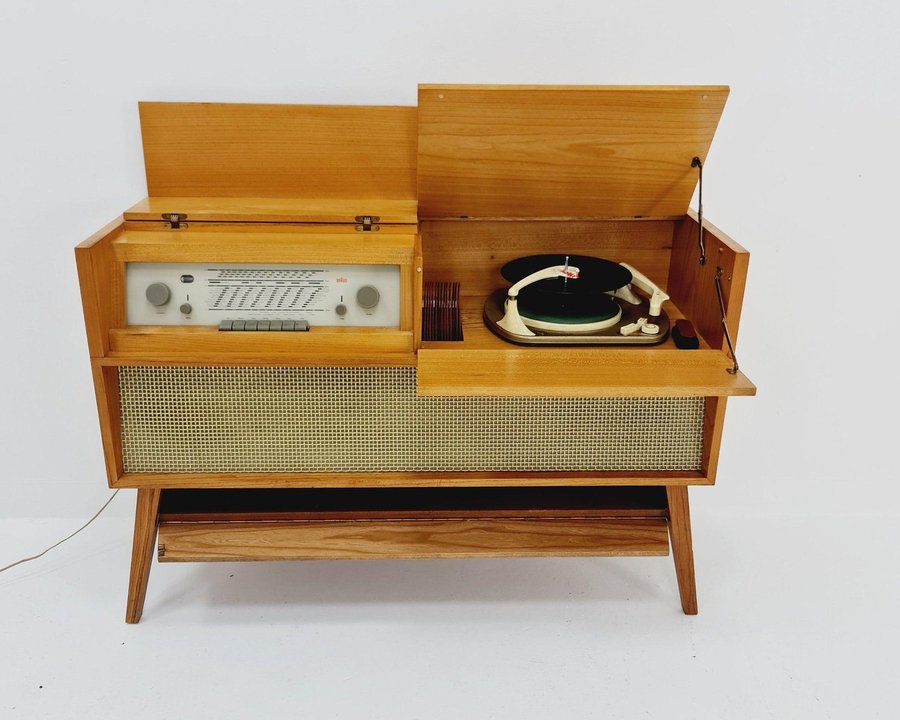
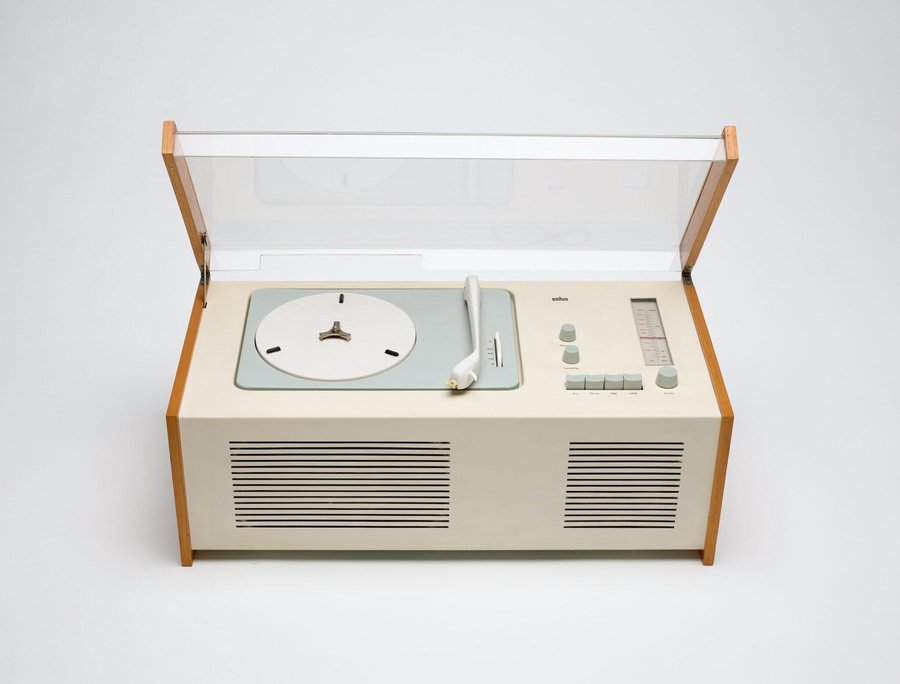
Comparative collage: on the left, Braun MM4 Stereo, 1959–1960 (wooden floor music box); on the right, Braun SK 4, 1956 (compact tabletop radio).
Radios of that era resembled a chest of drawers: the mechanisms were hidden inside a wooden cabinet, and the body disguised the technology as furniture. The SK 4 abandoned this logic. Gugelot proposed constructing the casing from sheet metal instead of wood, something previously unheard of in radio technology. A transparent Plexiglas lid that revealed the mechanism was added later during refinement. The wooden side panels retained the connection to domestic comfort. The design became part of the overall aesthetic, and the function became the source of expressiveness—the object ceased to look like furniture and became technology.
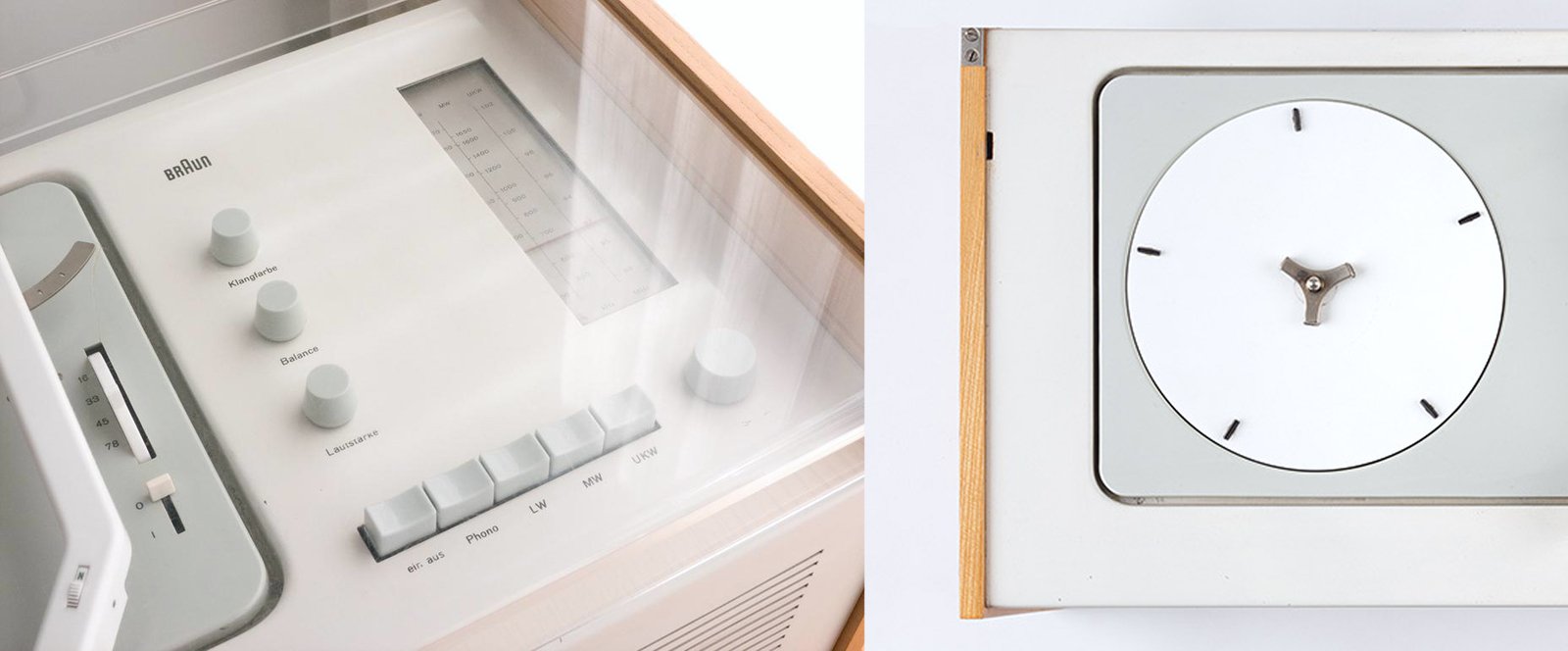
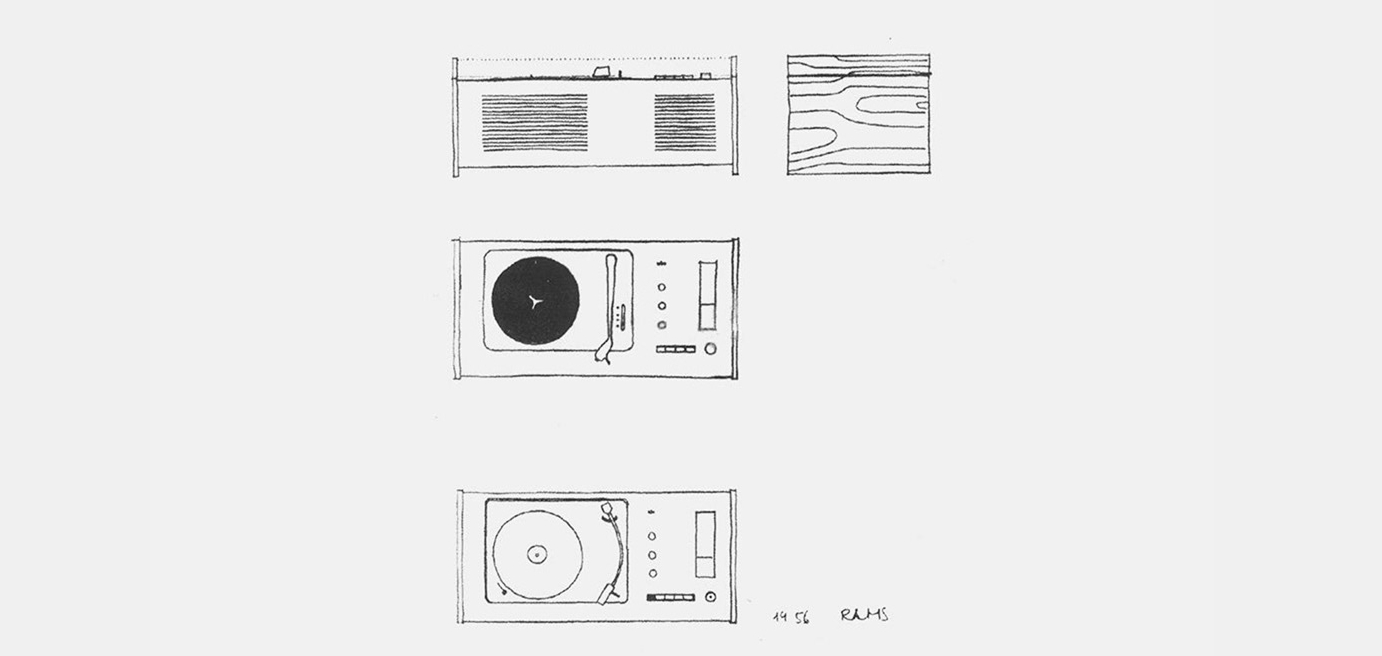
Рабочие эскизы Дитера Рамса
SK 4 demonstrates several principles of innovation: it reinterprets the familiar form of the radio cabinet, strips away unnecessary design elements, exposes its internal functional components, and experiments with material combinations.
Technically, SK 4 is outdated, but its visual language remains effective. Its geometric form, minimalism, transparent elements, and open demonstration of mechanics have become standard in modern electronics. The idea has prevailed and dissolved into the physical world, so today SK 4 is perceived less as a «vision of the future» and more as the genesis of familiar solutions.
Apple iPod, 2004; Beats Studio Buds, 2023; Logitech Pebble Mouse 2, 2023
I. New Engineering Solutions. Artemide Tizio, 1972
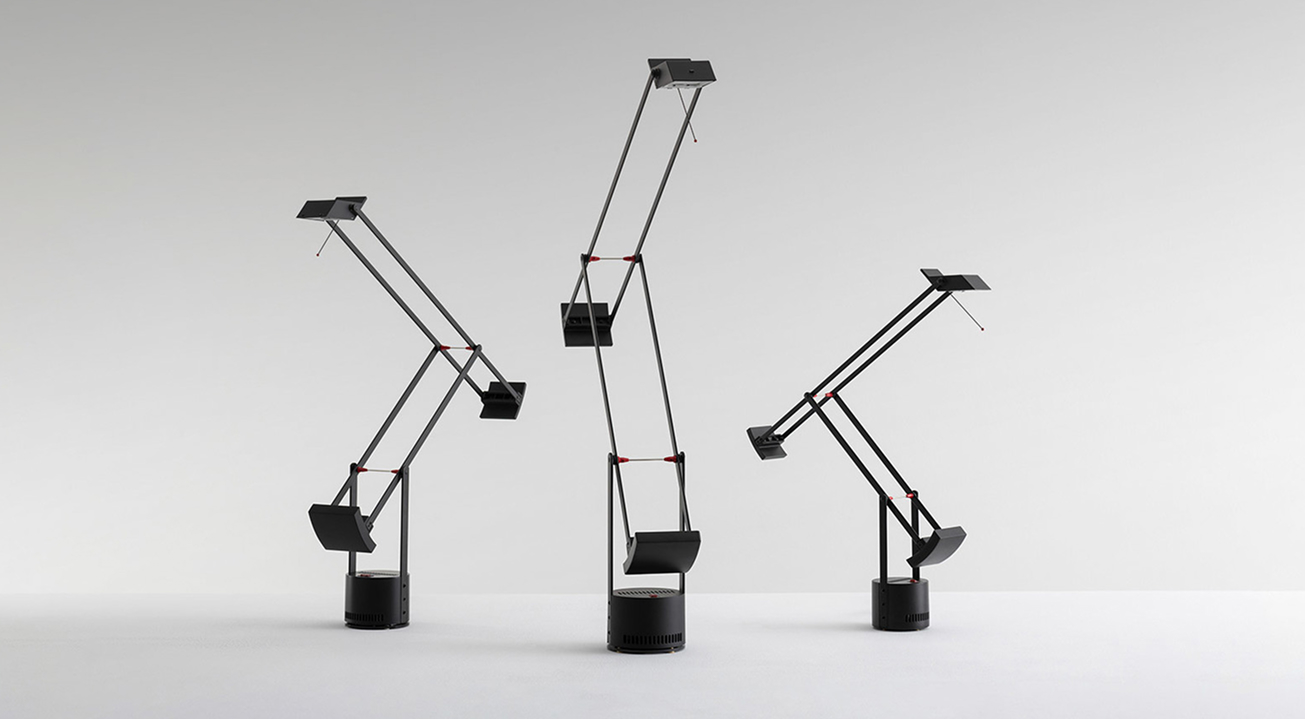
A desk lamp designed by German industrial designer Richard Sapper for the Italian company Artemide in 1972. Sapper’s own need was the starting point for creating the lamp. At the time, he could not find a fixture that had a small light head for ease of use, could move freely in space, yet maintain its chosen position without additional clamps. The solution arose from two borrowed concepts: a compact halogen lamp was adapted from the automotive industry, allowing the light head to be reduced in size. Instead of springs, Sapper utilized the principle of mechanical balance, similar to that of an oil pump.
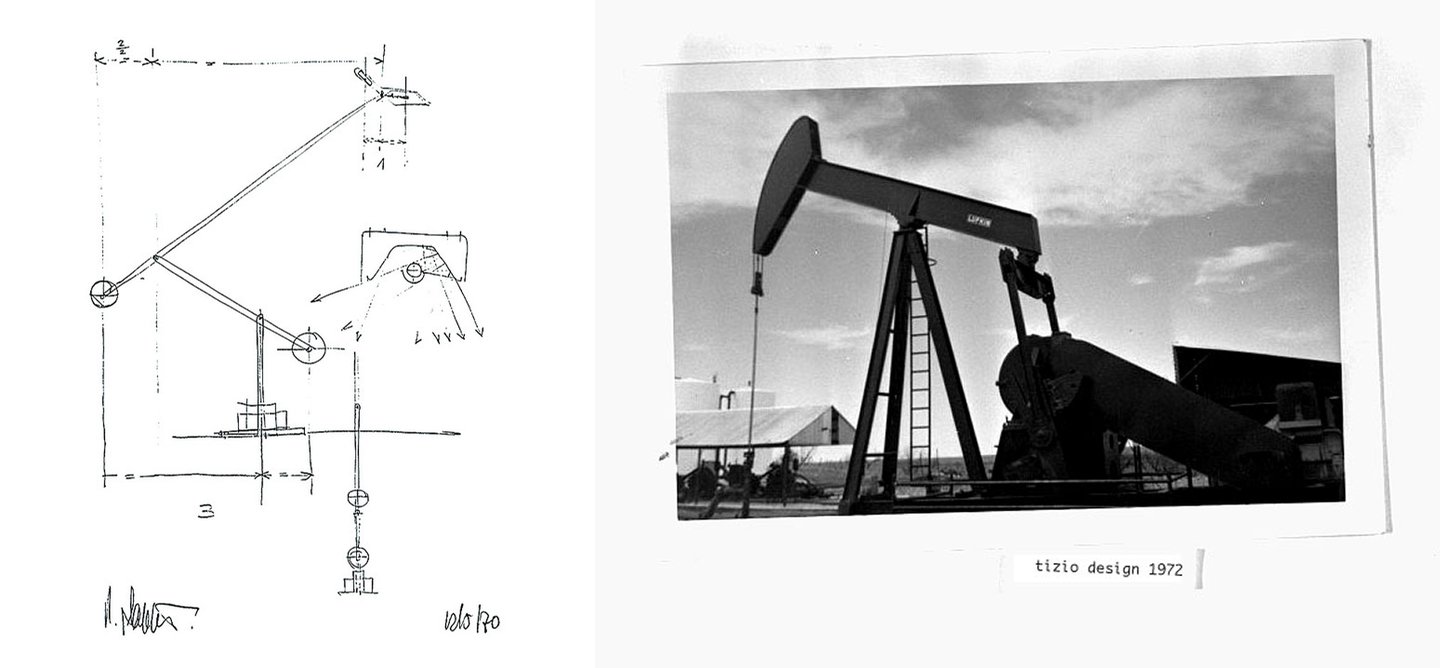
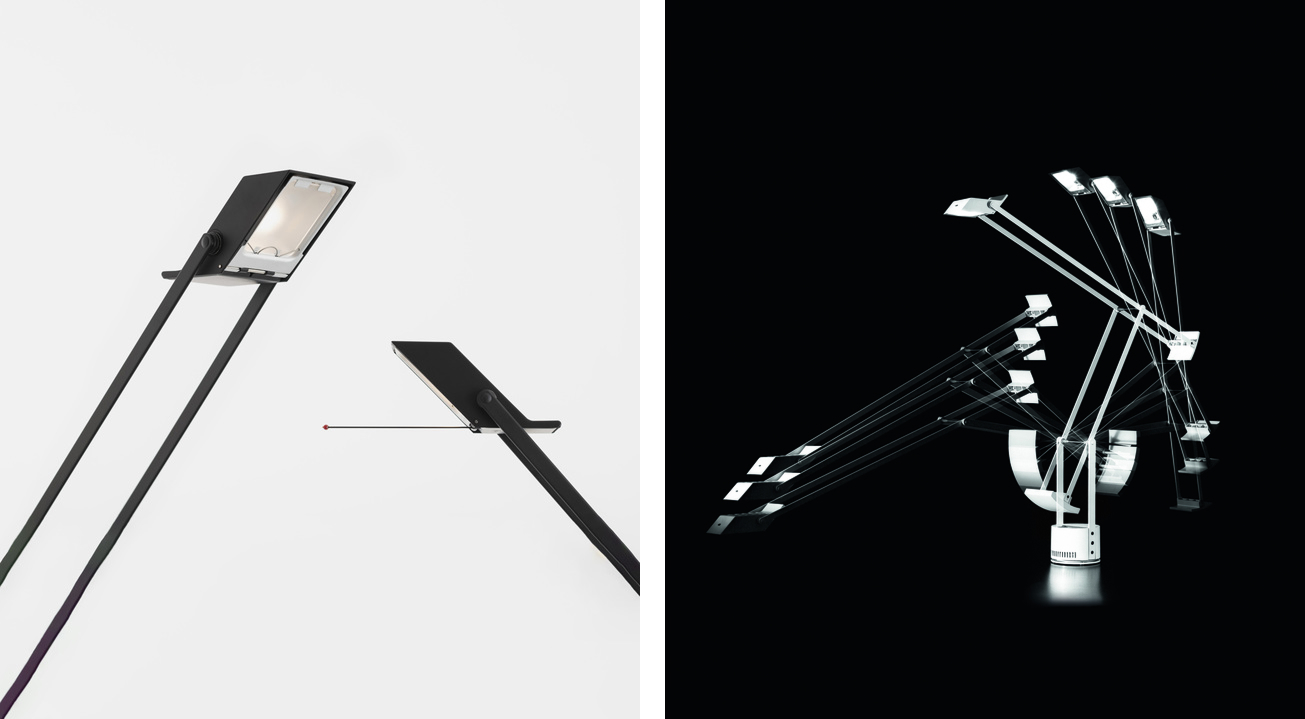
Первоначальные эскиз и источник вдохновения формы настольной лампы Tizio
Tizio stood out from the lamps of the early-to-mid 20th century because it avoided popular trends in design: Tizio lacks the typical conical shade, and it bypassed the rising trend of whimsical plastic desk lamps. The lamp resembles a measuring instrument rather than a household object, a feature that is directly derived from its construction.
A Comparative Collage of Tizio with George Carwardine’s Anglepoise Lamps (1932) and Giancarlo Mattieli’s Nesso (1967)
Using Tizio as an example, two principles for innovation in industrial design can be identified: integrating analog technologies from other industries and experimentally employing physical laws to simplify mechanisms.
Tizio’s logic has taken hold among office desk lamps. Thin articulated levers, a flat light head, and an open design. LEDs continued what halogen started: the light source shrank, and so did the housing. Even now, Tizio’s minimalist chassis appears relevant; echoes of its form can be seen in modern lamps.
CSYS (2011), Jack Dyson; Nimbus Roxxanne (2012), Rupert Copp; Luceplan Counterbalance (2012), Daniel Rybakken
I. New Engineering Solutions. Nike Air Max 1, 1987
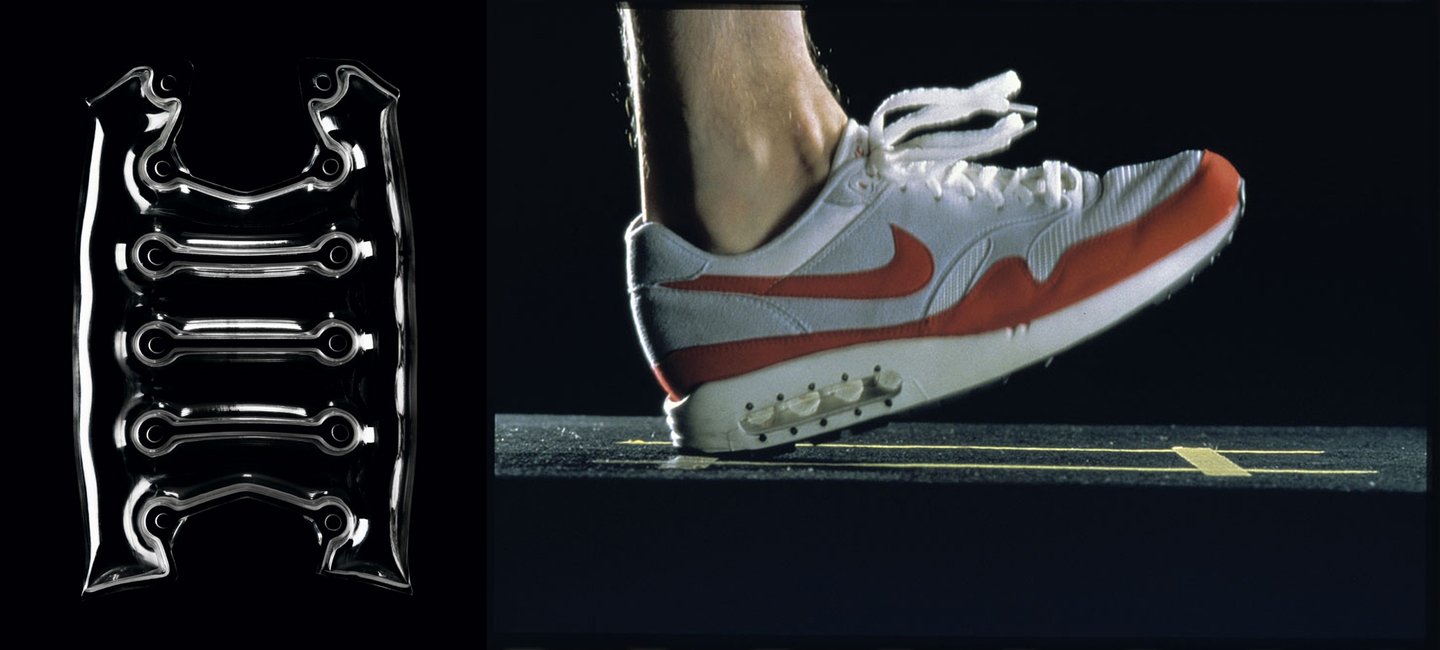
Nike released the Air Max 1 in 1987, featuring a transparent window with an air cushioning chamber in the heel. Previously, the technology was concealed within the sole, leaving the consumer to rely solely on the manufacturer’s word. Nike wanted to showcase the advantage of its cushioning system: designer Tinker Hatfield decided to make the air chamber visible, inspired by the Centre Pompidou in Paris, where engineering systems had become an integral part of the building’s aesthetic.

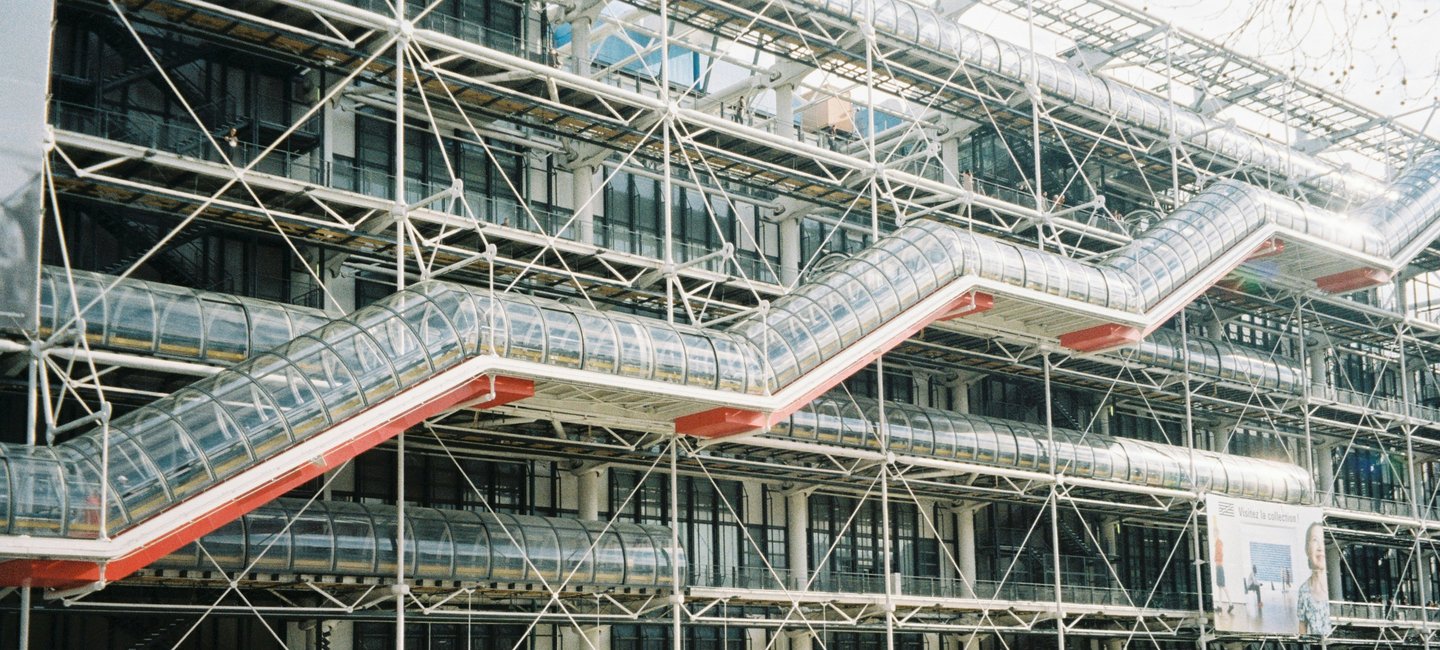
Центре Помпиду, Париж
1980s running sneakers featured a traditional multi-layered sole, yet their technology remained hidden. Manufacturers tended to convey technological sophistication through material combinations, sole shape, and athletic styling. Air Max introduced a different approach: the technology became part of the aesthetic.
Magazine clippings featuring photographs of New Balance 990 (1982); Nike Internationalist (1981); Nike Air Max (1987)
The futurism of the Air Max is achieved through three techniques: a transparent display of the internal mechanism, the use of transparent material, and creating an emphasis on the most technological element.
By the latter half of the 20th century, material transparency became a steady trend. Consumers perceive products with transparent casings as more technological and higher quality, unlike those with opaque casings (Cheng, Mugge, 2022). Furthermore, the trend of using transparent air units persists in the sneaker industry.
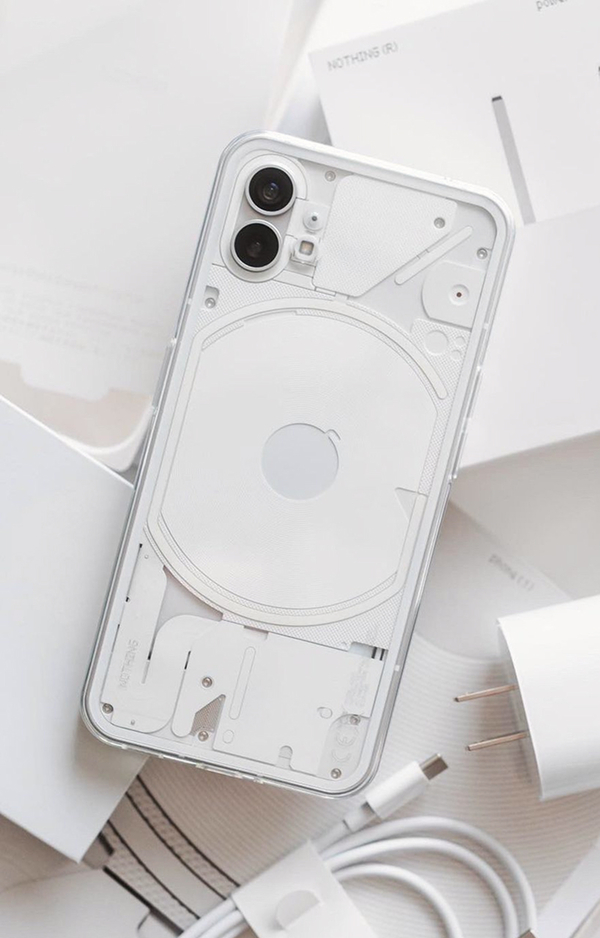

collage — demonstration of the transparent material trend, Nothing Phone 1 (2022); Balenciaga Triple S clear sole (2018)
II. Parallel to an Object from Another Field. Ball Chair, 1963
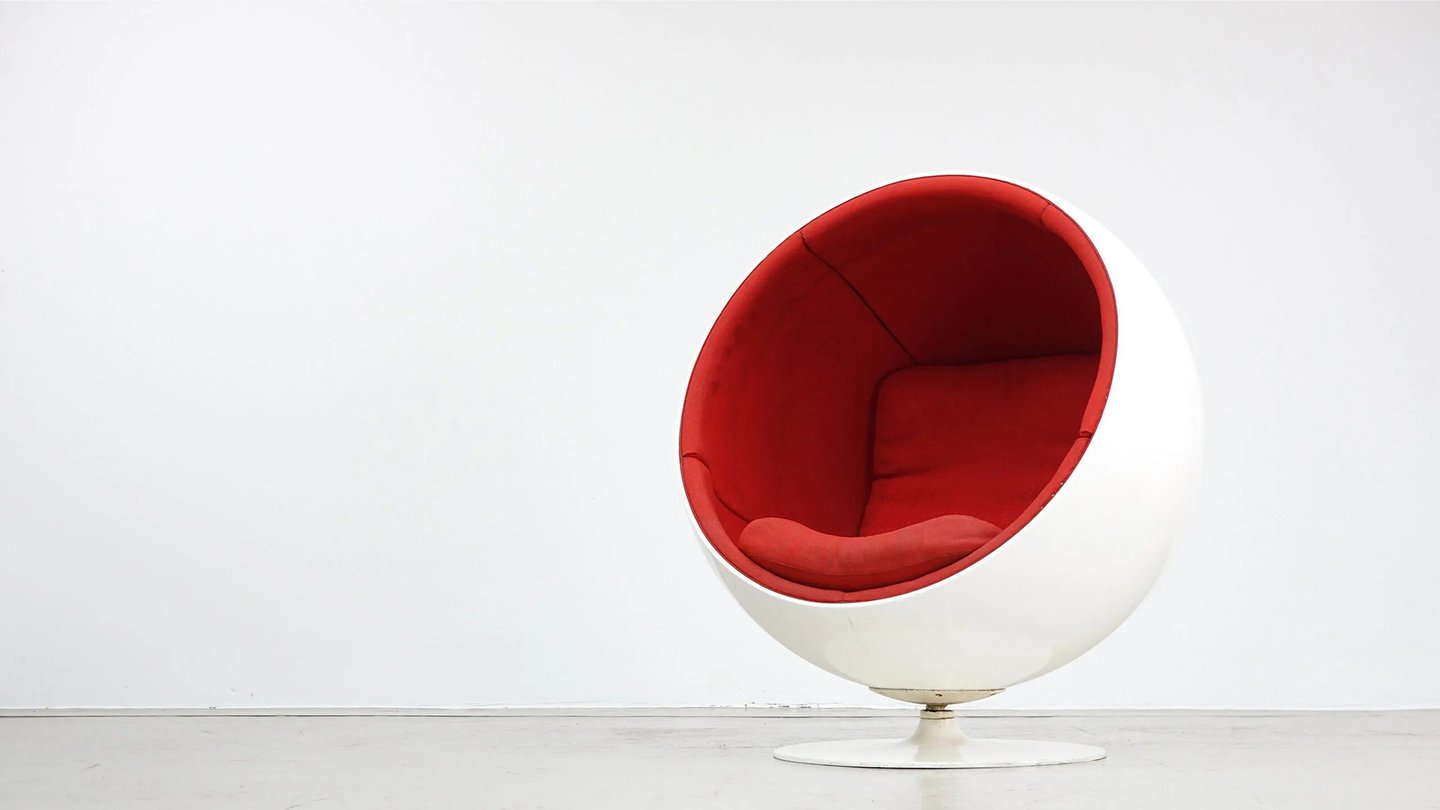
Ball Chair — a spherical chair designed by Finnish designer Eero Saarinen in 1963. The inspiration came from moving into a first home that lacked a «large armchair, ” and the new material—fiberglass—allowed the shape to be cast as a single shell. Saarinen did not design a set of separate elements (seat, backrest, armrests); rather, he sculpted a space around the human form. Structurally, it is a shell: a rigid outer casing filled with soft cushioning that separates the person from the external environment, creating a „room within a room.“
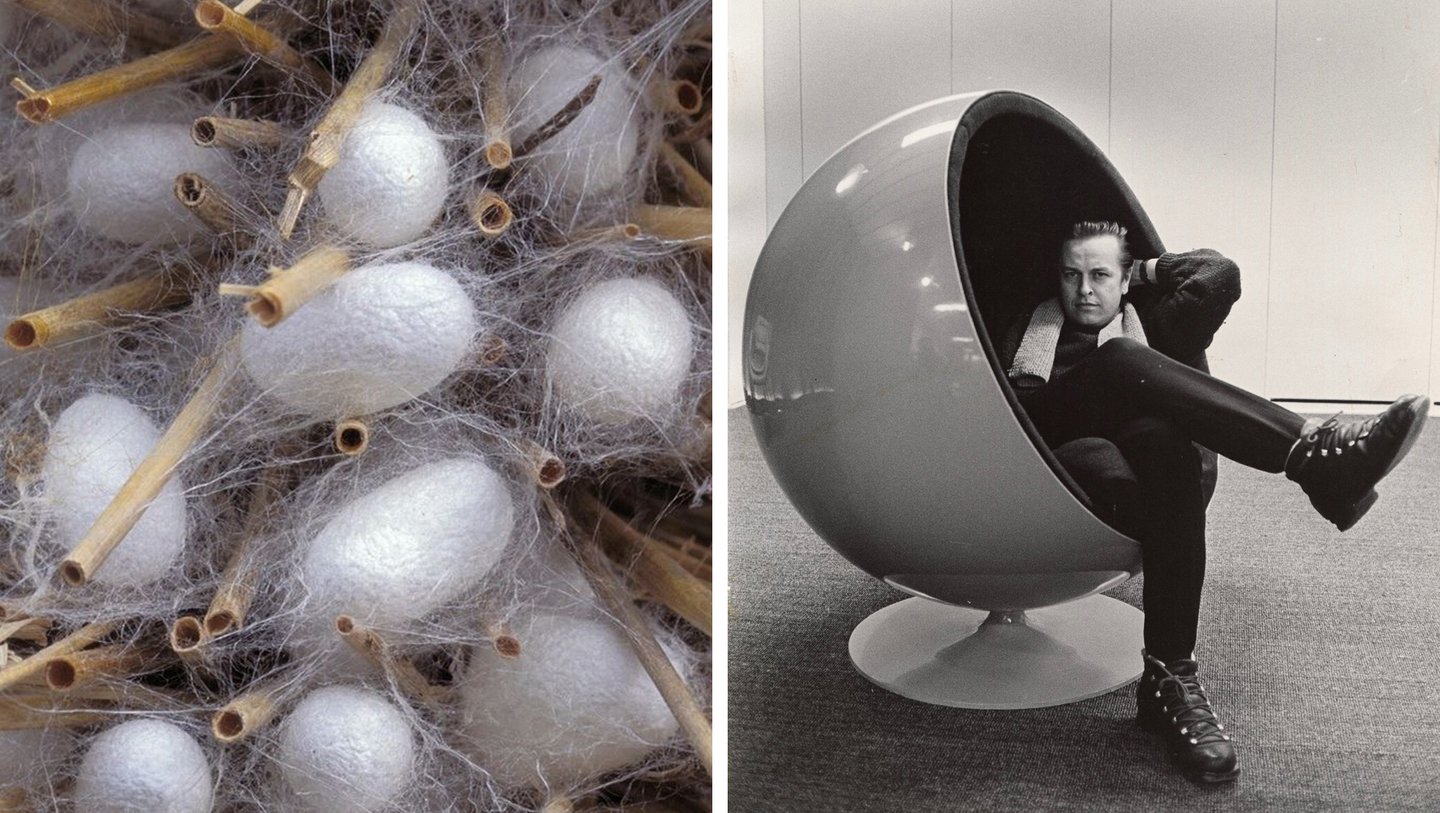
фотографии коконов тутового шелкопряда и Ээро Аарнио в своем кресле, 1966
By the early 1960s, new materials and construction techniques freed designers to experiment with furniture forms, leading to the emergence of organic silhouettes and playful shapes. However, designers were rethinking the very nature of the chair. Arneo shifted the principle of organization: the chair became a closed environment rather than merely an object for sitting. This mirrors the principle of a protective shell (or cocoon) rather than its mere visual appearance.