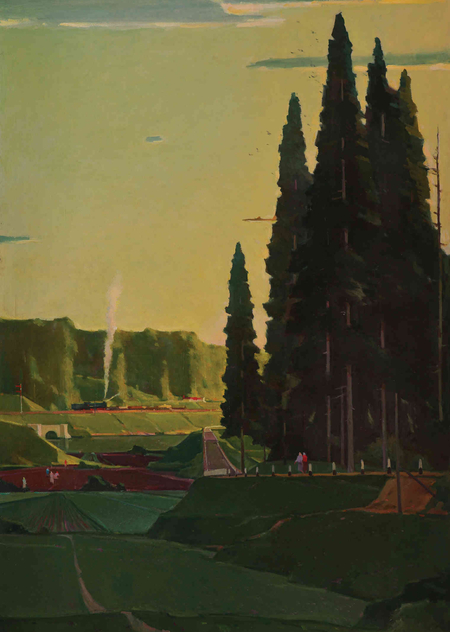
You recognize Nyssky immediately: the color palette and composition of his paintings are so expressive and distinctive that it is impossible to confuse him with anyone else
For my research, I chose the work of Soviet painter Georgy Nissky, as I was struck by the combination of expanse, movement, and tranquility in his pieces. I found the juxtaposition of nature and technology particularly compelling—trains alongside snowy fields, airplanes against open skies, ships navigating the sea. I wanted to understand what connects these themes and what vision of the world emerges from them. This topic remains relevant in the 21st century: the development of cities and transportation alters the environment, prompting us once again to consider the relationship between humanity, nature, and technology. The study will examine Nissky’s early, mature, and late paintings. The works will be organized into three thematic groups: nature, technology, and humanity. The primary selection criteria will be thematic relevance, potential for comparison, and the availability of high-quality reproductions with verified titles and dates. Comparing works from different periods will allow me to trace persistent motifs and shifts in their interpretation. Composition, color palette, and the scale of the figures will be analyzed as means of revealing the content.
First, I will examine natural motifs to define the significance of natural space and its various states within the artist’s work. I will then move to technique and the city—the environment that humans inhabit and transform. In the concluding section, I will focus on people, their presence in the landscape, including through the objects they create. This sequence will allow me to move from the surrounding environment to human activity and synthesize the connections between the main themes.
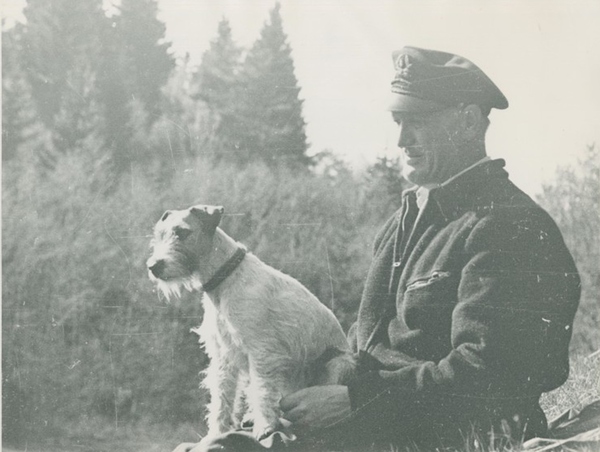
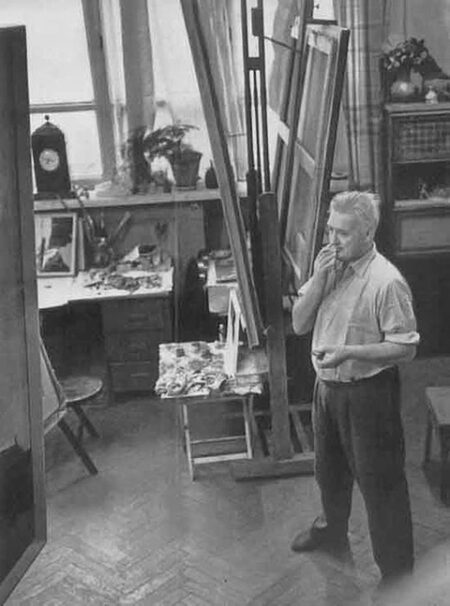
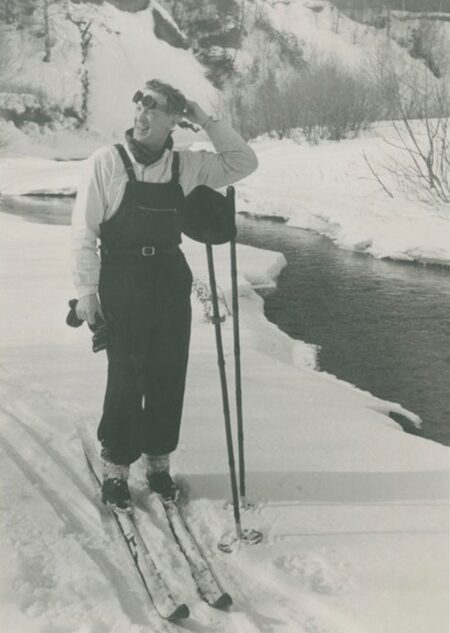
Georgy Nissky, archival photos
I base my work on critical texts concerning painting and museum publications. In the article «Reflections on Russian Landscape Painting, ” Konstantin Fokin highlights how Nissky addresses the theme of space and expresses contemporary life through the movement of transport. His essay helps us examine the connection between natural and technical motifs. Alexander Deineka emphasizes the generalized and epic character of the artist’s landscapes. Materials from the Tretyakov Gallery draw attention to the organic integration of nature and the industrial environment. I will compare these perspectives with my own analysis of the paintings. Research Question: How does Nissky reveal the relationship between humans and the surrounding world through the themes of nature, technology, and human activity? This allows us to identify the meaningful connections between different subjects. Hypothesis: The primary themes uniting the artist’s work are human presence: nature becomes an environment for experience, while technology and the city express creative activity. This connection can be evident even in paintings without human figures. The hypothesis will be tested by comparing works from four thematic groups.
Chapter 1. Nature: Space and Mood
One of the core themes in Georgy Nissky’s work is the experience of open space. Forests, snowy plains, rivers, and sea coasts allow the artist to express a sense of freedom, movement, and humanity’s connection to the surrounding world. Konstantin Fokin, in his article «Reflections on Russian Landscape Painting,» highlights the theme of free space in Nissky’s works, along with his ability to convey contemporary life through the landscape. This idea helps us view natural motifs as an essential part of his conception of the world.
«Green Evening, ” G. Nissky, 1957
In the natural landscapes of Nisko, there is an interest in familiar, everyday environments. Moscow winter, a riverbank, or the evening state of the forest become artistically significant subjects. For instance, in the painting «February. Moscow Region,» an ordinary winter day acquires the weight of an independent event—mood arises from the combination of snow, light, and ongoing daily life.
«Febral’ye. Podmoskovye,» G. Nisskiy, 1957
In «Moscow Night,» the focus shifts to the nocturnal state of nature. These works allow one to highlight the lyrical aspect of Nisky’s creativity—his ability to connect the visible landscape with human sensations and experiences.
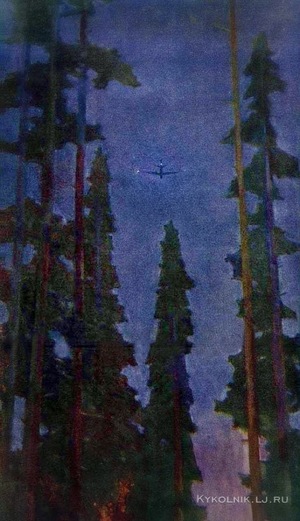
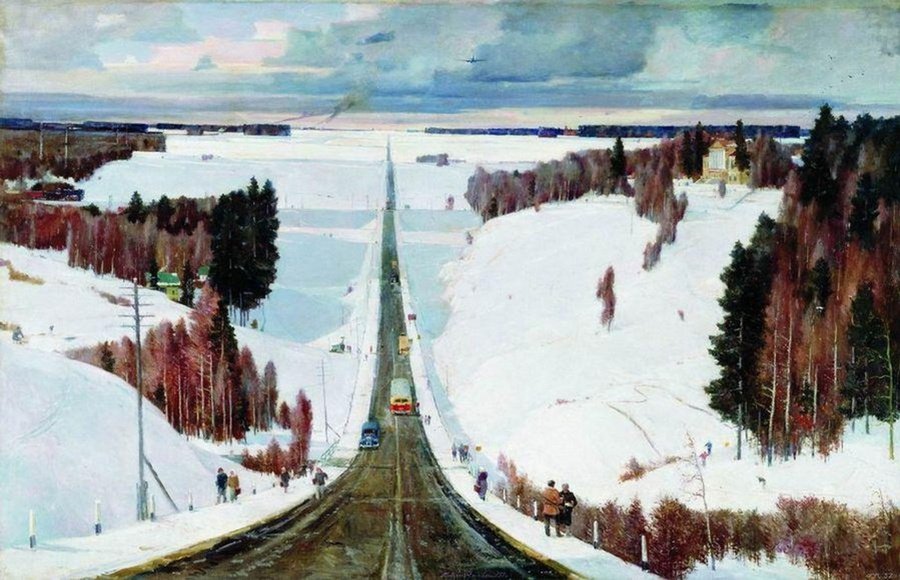
«Suburban Night, ” G. Nissky, 1961; „Suburban Landscape, ” G. Nissky, 1957.
In Nisky’s work, nature often remains a space where human presence is already established. Roads, boats, and small structures are incorporated into the environment, testifying to its inhabitation. For instance, in «Upper Volga» (1949), the river expanse is linked to navigation and riverside life. In such a landscape, one can observe a sense of proximity between humanity and nature: the river maintains its own beauty and scale while simultaneously becoming part of daily experience. This allows him to unite river and sea works under the common theme of life by the water.
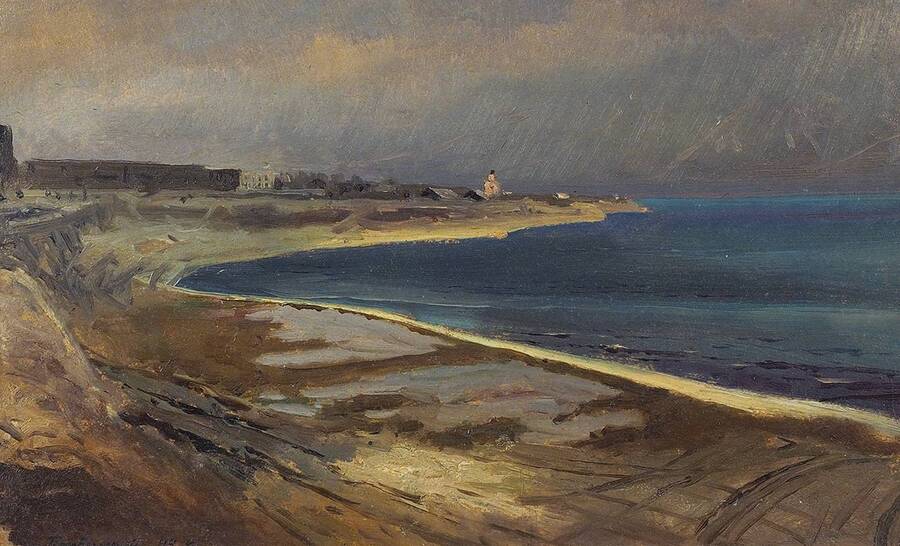
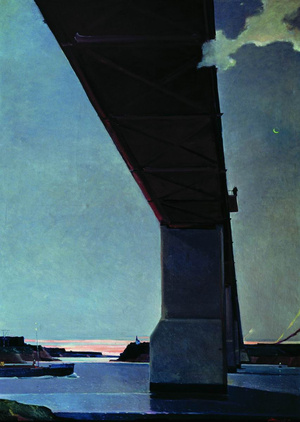
«Upper Volga, ” G. Nissky, 1949; „On the Volga, ” G. Nissky, 1954.
In maritime themes, the combination of spatial appeal and its inherent power is particularly noticeable. The sea is associated with travel, movement, and the possibility of reaching distant shores. However, the presence of ships does not signify humanity’s absolute mastery over nature.
«Sudak, ” G. Niskii, 1960
So, in «Icebergs, ” the vessel is juxtaposed against massive glaciers. This relationship allows the viewer to read the piece as a reminder of the significance of the natural world, within which human activity unfolds. A crucial clarification arises here: the appropriation of space does not eliminate its autonomy.
«Icebergs, ” G. Nissky, 1960s
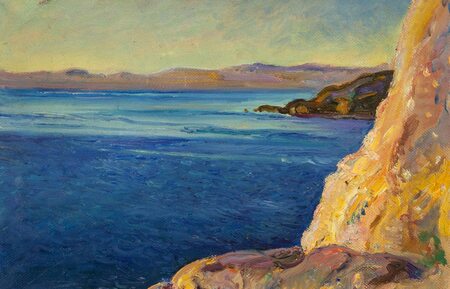
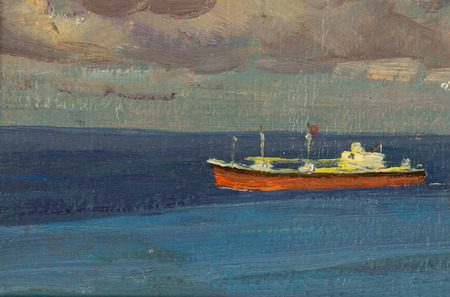
Kolsky Gulf, G.Nissky, 1940; Sevastopol, G.Nissky, 1950s–1960s
The general trend in these works is a movement from a specific place toward a broader image of nature. Alexander Deineka noted the generalization in Nissky’s landscapes, where individual forests, clearings, and villages take on an epic resonance. Therefore, the space in his paintings can be understood simultaneously as a characteristic of the depicted location and as an expression of a particular attitude toward life—an openness to the world, an interest in movement, and the capacity to feel the scale of one’s surroundings.
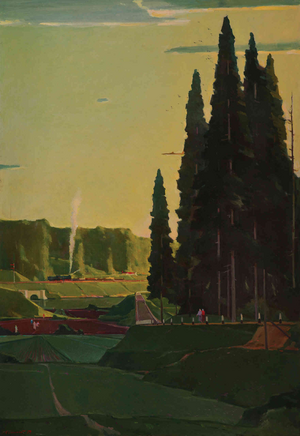
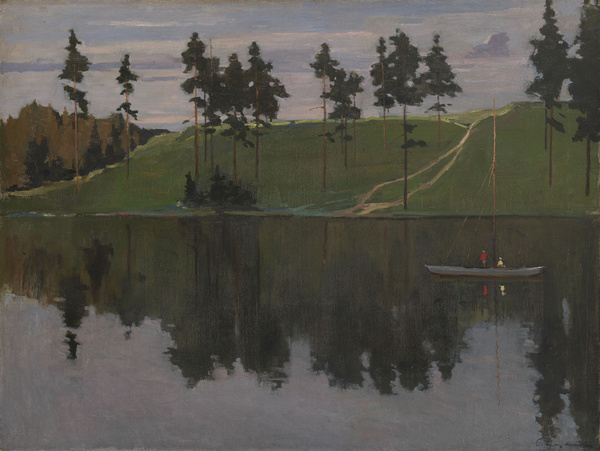
«Green Road,» G. Nissky, 1959; «On a Fishing Boat. Evening,» G. Nissky, 1964.
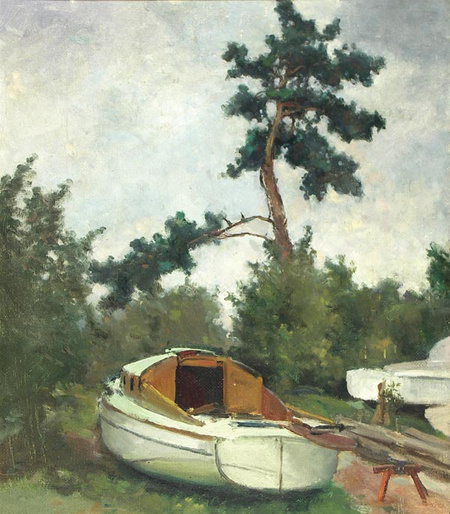
The natural theme becomes the foundation of the entire investigation. It reflects the environment that humans perceive, inhabit, and transform. At the same time, nature retains its own emotional content: tranquility, variability, and grandeur. This understanding allows for a transition to technical subjects while maintaining a focus on the relationship between humans and their surrounding world.
Chapter 2. Technique and the City: Mastering Space
The technical motifs in Nissky’s work are connected to the concept of contemporary life as perpetual motion. Railroads, airplanes, airfields, and urban spaces illustrate how distances, modes of transport, and daily habits are changing. The artist is interested in the environment in which technological advancements become part of the ordinary human experience. Consequently, the industrial landscape acquires a personal and emotional resonance in his art.
«At the Locomotive Depot,» G. Nissky, 1950.
In railway works, the theme of the path is particularly important. The road connects different places and implies the possibility of moving beyond visible space. Thus, in «Autumn. Semaphores, ” railway structures become a complete theme of the landscape. Their presence illustrates a world organized for movement.
«Autumn. Semaphores,» G. Nissky, 1932.
In the later version of «On the Road, ” the railroad connects to the experience of being at a station. This theme can be explored through waiting, departure, and temporary pause. A comparison of the works illustrates how the technical motif acquires diverse human meanings.
«In Transit, ” G. Nissky, 1964.
Aviation expands this theme to encompass the exploration of airspace. The airplane allows distance to be conceptualized as traversable, and the sky as an environment for human movement. For example, in «Above the Snows, ” the flight becomes a meaningful event within a vast winter landscape.