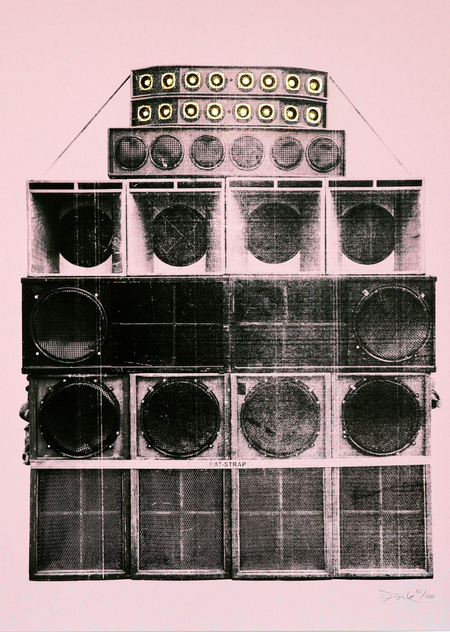
When listening to favorite music, the desire often arises to delve into its creation history and determine its genre affiliation. In subsequent research into the emergence of popular genres, one can observe their connection to a particular culture—some local genres become symbols of the cities or regions where they originated. In such cases, the music becomes tied to its place of creation and sometimes forms a distinct urban myth, linking itself to urban culture and reflecting historical and social shifts.
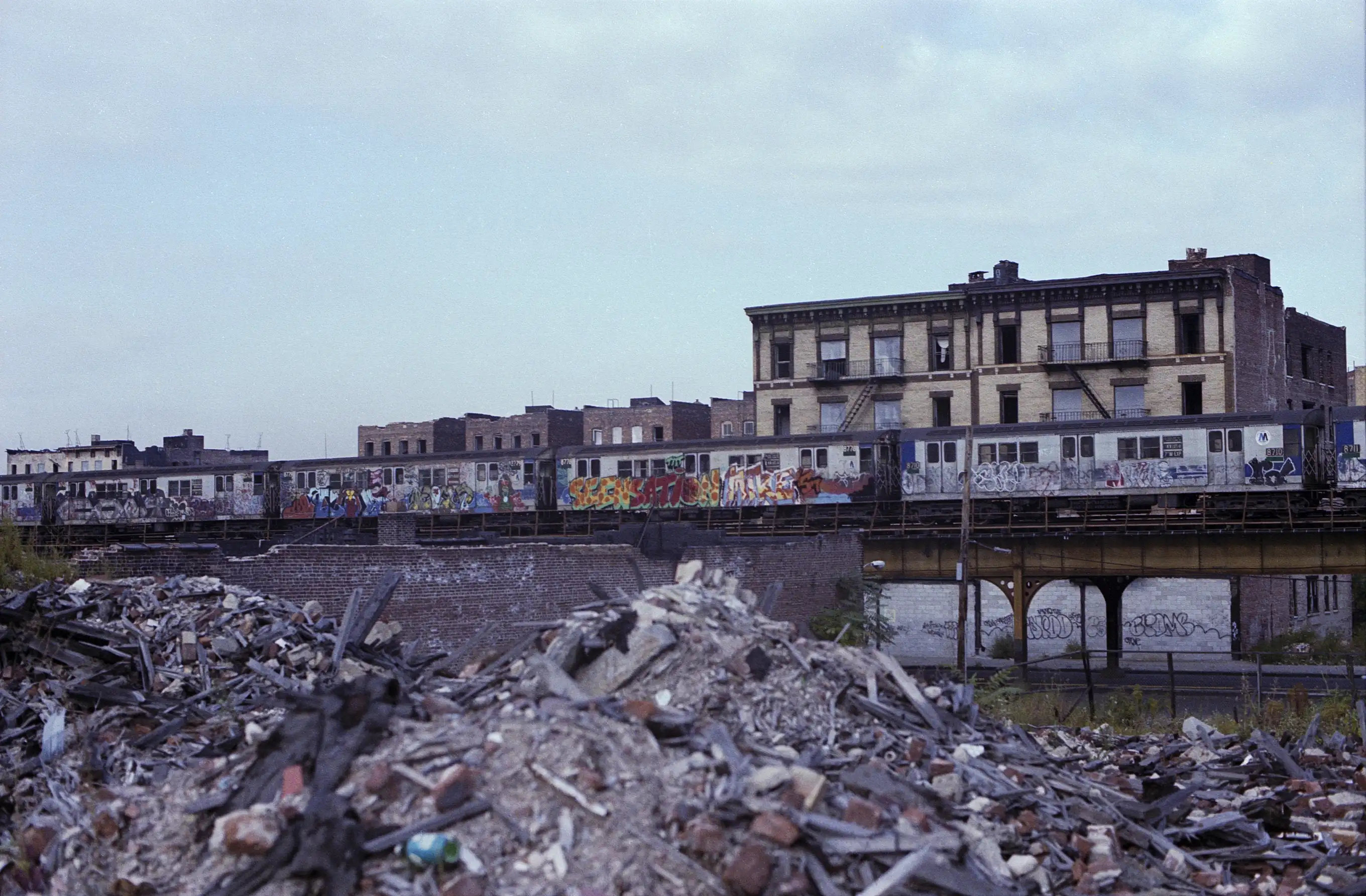
Graffiti on trains in Southern Brooklyn, New York
The main hypothesis of this research is that the «urban musical myth» is shaped not only through history, media, and cultural memory, but primarily through sound. Rhythm, timbre, texture, recording technology, and modes of listening create the sensation of the city—its speed, density, anxiety, physicality, industrial nature, confinement, or freedom. Music does not simply narrate the city—it makes it sound in a specific genre with specific voices. As artists and genres achieve global popularity, they become a metaphorical definition of the city, and over time, in the absence of new musical phenomena, they devolve into a stereotype, diminishing the city’s cultural—and particularly musical—heritage.
The study will be structured as follows: first, the concept of the urban myth within the context of music and the process of its construction will be analyzed. Next, the historical conditions of its formation will be listed. The main part of the research consists of tracing the myth in each city example and its corresponding genre. For each city, the following will be examined: the historical prerequisites for the genre’s formation, the influence of the local scene, the definition of a specific myth, the sound of the city as conveyed by the myth, the local realities, and the subsequent impact of the legend on the city itself.
The central issue is assessing the influence of a myth on a particular locale and its local music industry. The study aims to trace the emergence of the genre and analyze the process of subsequent creation of a musical myth about the city and its soundscape, based on associations.
Urban myth in the context of music
The Concept of the Urban Myth
In a musical context, the urban myth here is defined as a persistent cultural image of a city that is shaped by narratives, sounds, visual symbols, media representations, and memories, and is linked at the level of association to historical events and established national practices of listening to and constructing musical compositions. Such a myth is usually built upon a general, simplified, emotionally charged, easily memorable, and recognizable depiction of the city, which begins to be perceived as a bearer of a specific character or mood, manifested through sound.
Berghain — a legendary Berlin techno club
For example, Detroit or Berlin might be associated with techno, industrialism, and machine aesthetics; Chicago with house and club culture; Bristol with trip-hop and a melancholic urban atmosphere; and Seattle with grunge, while New Orleans is linked to jazz. In each of these cases, the city is perceived not so much as a geographical location, but within a cultural association with a specific musical genre’s sound. Subsequently, perceptions of lifestyle, mood, and memories of known social and historical changes from the period of the genre’s popularity are added to these associations.
In other words, an urban myth arises when a stable symbolic relationship is established between a place and its musicality. This connection is shaped not only by musicians but also by listeners, critics, journalists, labels, clubs, archives, the tourism industry, and academic research. Put differently, the musical urban myth is a representation of the distinctiveness of a place and sound as a product of that characteristic.
In this sense, the concept of a musical scene, proposed by researcher Will Strow, is particularly significant. He views the scene as a system of connections where musicians, the audience, spaces, media, genre categories, and methods of music distribution interact. Within such a system, the city ceases to be perceived exclusively geographically; it transforms into an active participant in the musical process. The musical genre becomes connected to specific streets, clubs, neighborhoods, social groups, and historical circumstances.
In 1999, Dan Siro published the book «Techno Rebels: Renegades of Electronic Funk, ” which helped solidify Detroit’s status as the birthplace of this musical genre.
The Process of Forming a Musical Image
Because music engages several levels of perception—physiological, emotional, and intellectual—it helps create a visceral impression of one’s connection to a particular experience within a space. Thus, under certain circumstances, music contributes to the feeling of an urban environment. Recreational infrastructure plays a significant role in this process: concerts, clubs, street performances, local venues, and archival recordings allow the listener to construct an auditory image of the locale.
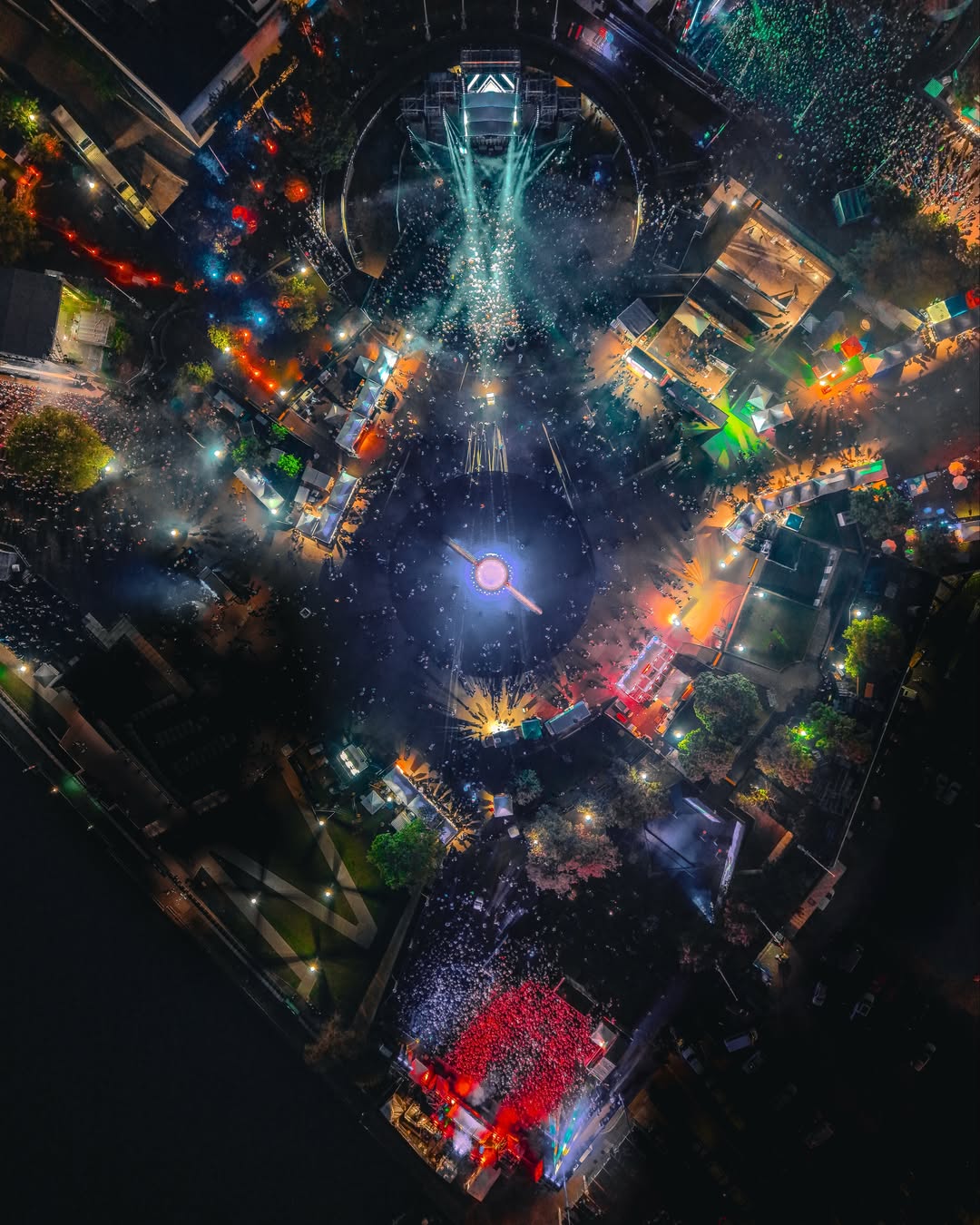
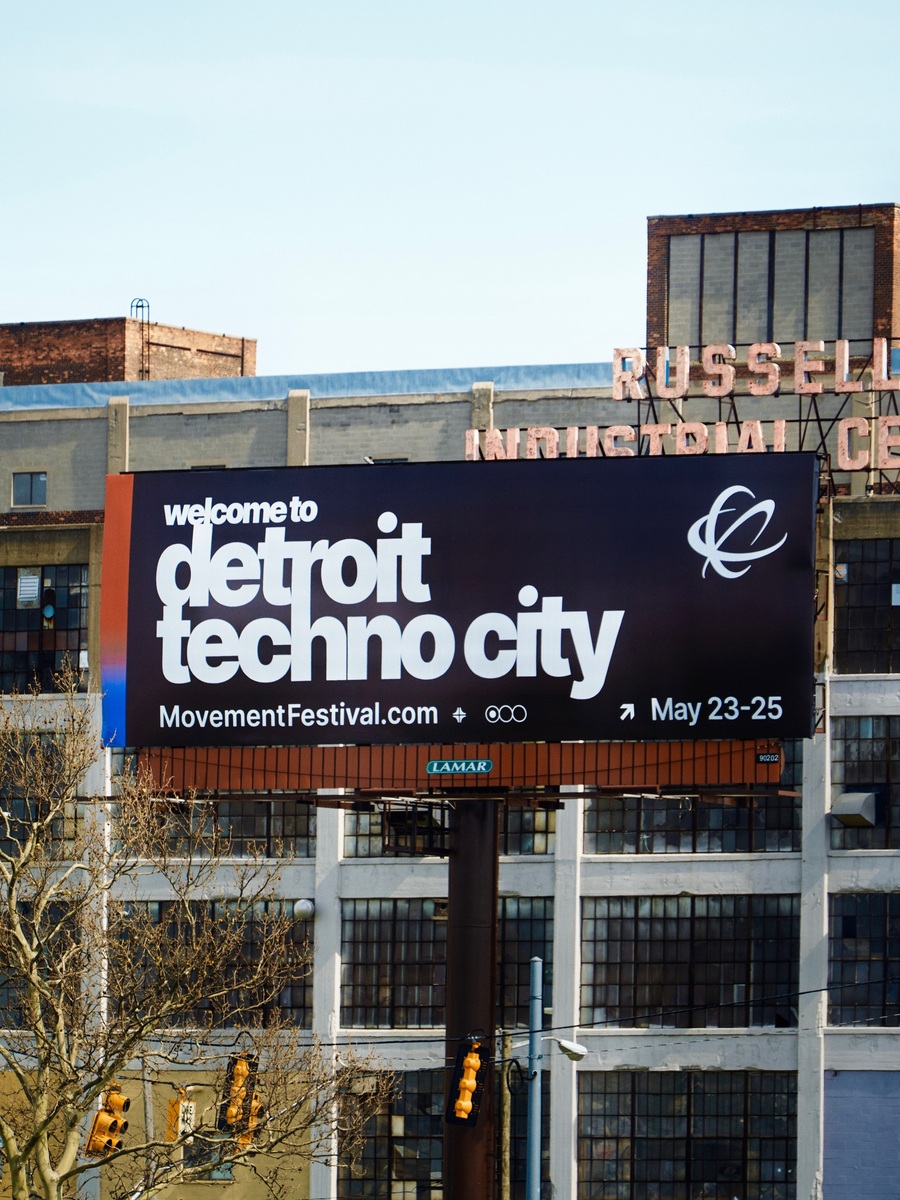
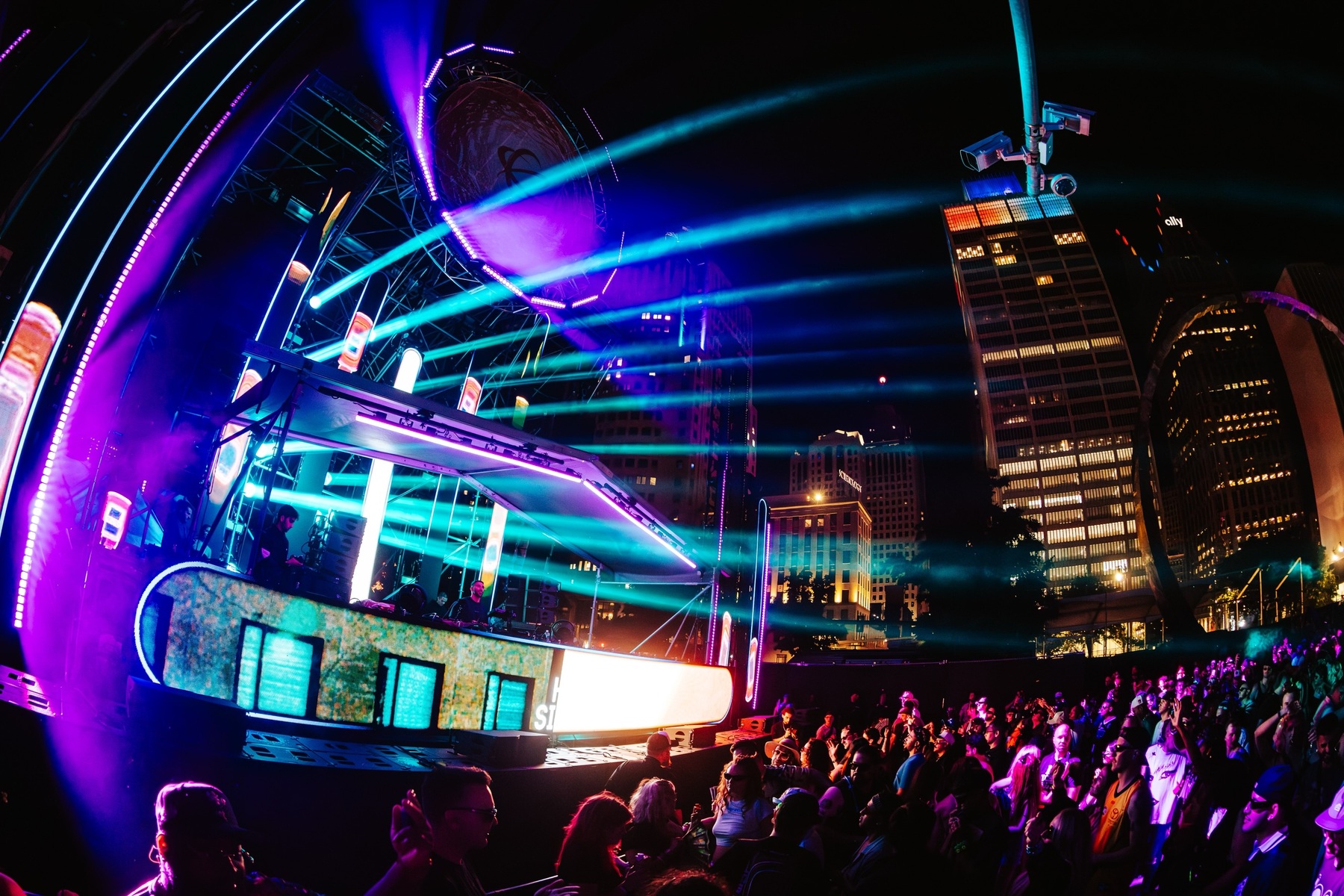
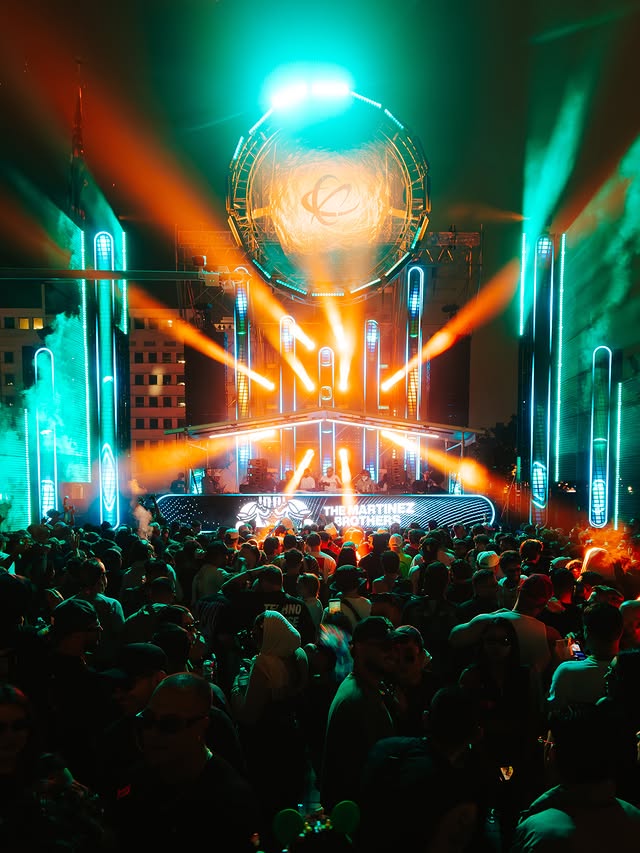
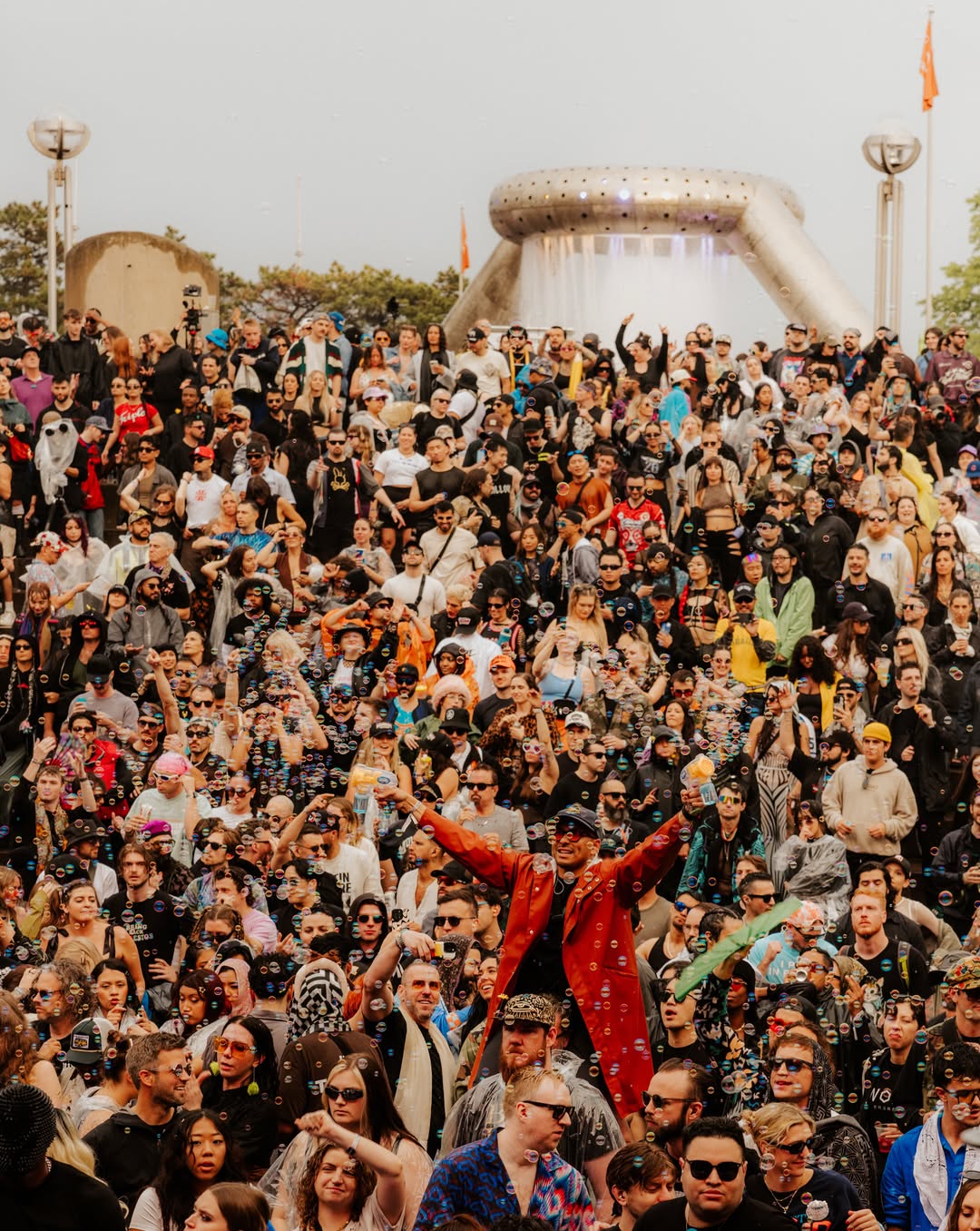
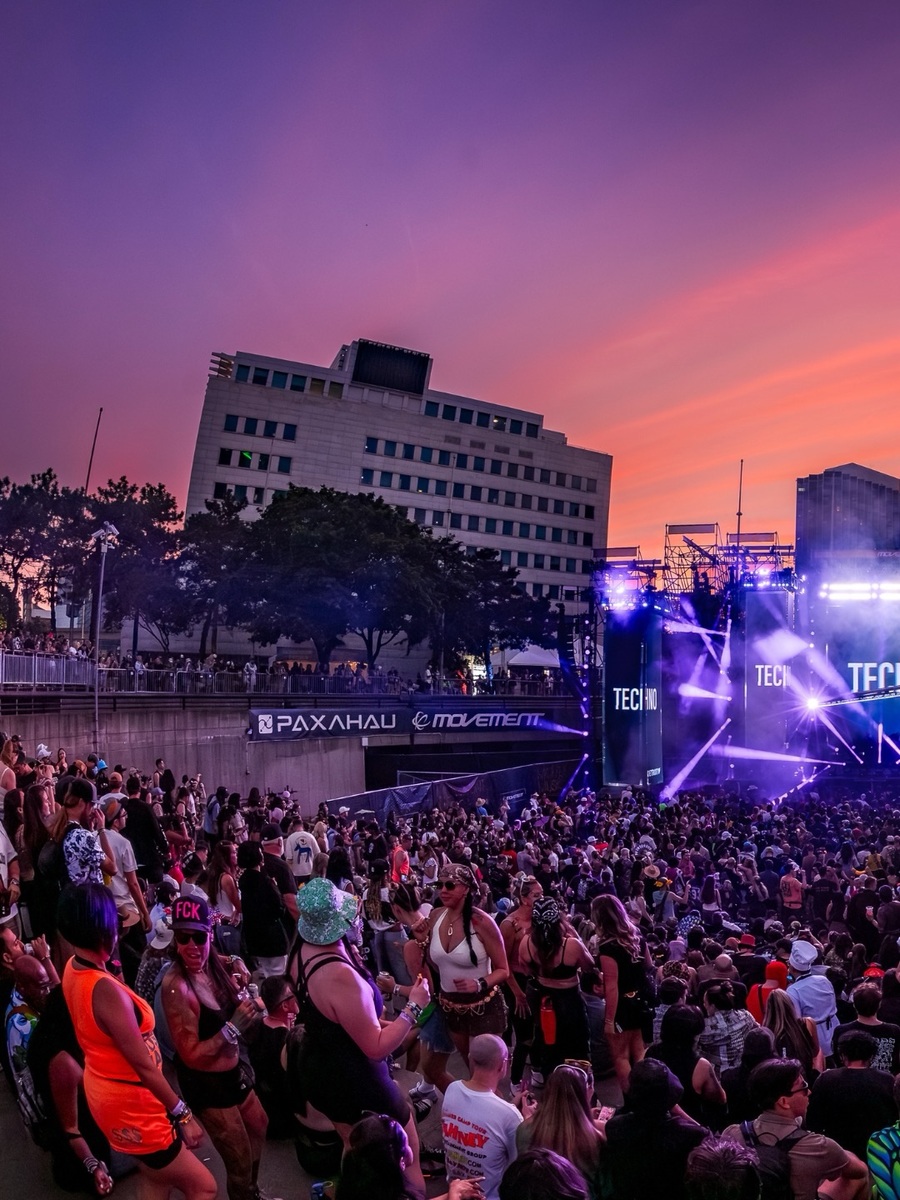
«Movement Festival,» Detroit, 2026
The formation of a city’s image occurs due to several factors. One of these is the direct referencing of locations and local events by the performer. This is particularly evident in hip-hop. In rap, place frequently becomes a central category of identity: a neighborhood, a street, or a city functions not merely as scenery, but as proof of the lyrical hero’s authenticity. The consistent mention of specific locations creates a recognizable map of the city, even for a listener who has never been there.
The atmosphere constructed by the instruments organizing the musical structure eventually begins to be perceived as a reflection of the urban environment—its pace, density, architecture, climate, social tension, or industrial history. Even if this connection is partially constructed later, it becomes part of the city’s mythos.
Collective memory is also one factor tying a genre to its place of origin. Songs, scenes, and stylistic characteristics of the sound can become a means of remembering the city: its crises, migrations, social problems, nightlife, protests, or periods of cultural flourishing. Thus, music helps cities tell their own stories while simultaneously allowing an external audience to perceive the city through a specific cultural lens.
Finally, music participates in the city’s territorial branding. When a genre becomes a recognizable symbol of a place, it can be leveraged in tourism, festivals, museum exhibits, urban marketing, and cultural policy. In this way, the local music scene can transform into the city’s official image. However, in this process, the vibrant and contradictory musical experience is often simplified: the complex history of the scene is reduced to a convenient myth.
Exhibits from the Hip-Hop Museum in the Bronx, New York
Historical Context of Myth Formation
Cultural Blending
A significant historical prerequisite for the musical myth is the social and economic context. Musical genres often emerge not in a neutral cultural environment, but amid crises, marginalization, migration, racial and class inequality, deindustrialization, or rapid urban change. These circumstances become woven into the genre’s subsequent portrayal as a phenomenon, helping to explain why a specific city became its symbolic center.
Because music is linked to the spatial organization of the city, as well as economic and social processes, a musical style can express not only an aesthetic choice but also a specific urban experience: life in impoverished neighborhoods, feelings of isolation, industrial decline, migration routes, gentrification, or the struggle to be heard.
Map of New Orleans streets, Louisiana, 1919. Retro cartography printed on aged canvas.
Many urban musical myths emerge where diverse cultural traditions intersect. The city, as a space of migration and dense social contact, creates the conditions for a blending of musical languages. New genres often arise at cultural frontiers—between the local and the global, the traditional and the technological, the marginalized and the mainstream. It is worth noting that the diversity of social groups within the city also influences how it is reflected in music. This factor can either amplify a single myth when several groups converge or generate multiple, distinct myths that illustrate, for example, contrasting aspects of life in one territory.
Thus, the historical premise for a myth’s origin often lies in the blending of cultural influences, specifically at the moment this blending is equated with a unique characteristic of a place.
Case Study Impact
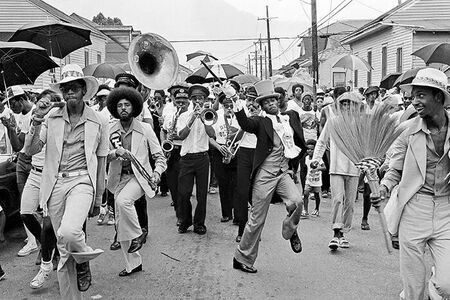
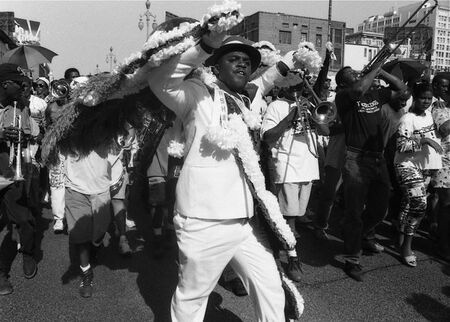
New Orleans Jazz Bands in the Sunday Parade
It is important to consider that musical myth often forms not immediately at the genre’s inception, but later. Initially, the scene may be small, local, or marginal, and its participants may conduct sonic experiments without awareness of the consequences. However, after the scene gains popularity, critics, researchers, fans, tourism institutions, and other representatives of the cultural industry begin to retrospectively construct a cohesive narrative. Key clubs or groups, significant neighborhoods, concerts, and «landmark recordings» are highlighted. As a result, a complex and contradictory creative process is transformed into a beautiful, understandable, and coherent story of the genre’s urban origin—which appears natural upon superficial acquaintance, though it is fundamentally a mythologizing process.
Authenticity as Part of the Music Myth
Any claim of authenticity is inherently constructed, conditional, and potentially deceptive [1]
The idea of authenticity also heralds the emergence of urban myth. For a genre to be considered urban, factors such as the direct or indirect affiliation of the artists with the myth’s location often prove significant. This is vividly evident in hip-hop: if an artist repeatedly references their connection to a city—for instance, by addressing the social issues of an underprivileged neighborhood or by utilizing local slang—this serves as proof of their authority. Consequently, urban geography becomes integrated into the musical form, manifesting in the lyrics, imagery, music videos, routes, and artists' biographies.
However, the concept of authenticity can be quite easily constructed simply by replicating the literary motifs, sonic style, and visual iconography of the original. Nevertheless, it is noteworthy that an urban musical myth arises only when authenticity is repeatedly demonstrated and validated by the media, transforming it into something natural.
Sound as Historical Experience
The perception of sound also plays a significant role in generating a city’s musical mythos. Specific timbres, rhythms, noises, technologies, and recording methods are often interpreted as characteristics of the city’s history. Sound becomes a way to hear the social background of a place and to create acoustic metaphors for the listener. These elements begin to signify a particular type of infrastructure, possess a character—for instance, reverb in music recalling vast, empty spaces might sound like an echo, evoking a feeling of solitude, or a question-and-answer technique in a musical excerpt might suggest a bustling intersection where everyone is communicating. Thus, the city transforms into an image and a character in a musical narrative. This approach is rooted in cultural interpretation and associations, which are not necessarily chosen by the individual listener; more often, these associations are presented by the media, shaping a common urban myth for everyone.
Nigerian Nostalgia Project