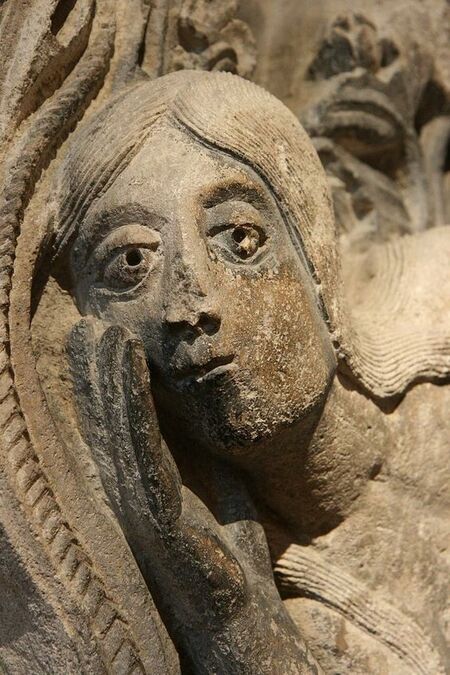
a
Introduction
This visual study examines the depiction of Eve in Western European art from the 12th to the 14th centuries. I explore how artists portrayed the first woman and what meanings they conveyed through her body, gestures, gaze, and interactions with other characters.
Eve is typically perceived primarily as the perpetrator of the Fall. However, in medieval art, her image is far more complex: she appears innocent, tempted, experiencing shame, or engaged in earthly labor. These variations in the portrayal of a single character are the subject of my research.
Concept
This research examines the figure of Eve in Western European art from the 12th to the 14th centuries. Using the examples of Romanesque and Gothic sculpture, monumental mosaics, and illuminated manuscript miniatures, it explores how artists conveyed their conceptions of female nature through the image of the first woman.
Particular attention is paid to the depiction of the body, the positioning of the hands, the direction of the gaze, the interaction with other characters, and the alteration of gestures depending on the narrative.
The study portrays Eve not merely as an immutable symbol of sin, but as a complex and multifaceted figure in which innocence, temptation, shame, and ordinary earthly life after expulsion coexist simultaneously.
My topic choice is based on the desire to demonstrate how diverse and multifaceted the image of a single woman can be in medieval art. Typically, Eve is perceived primarily as the cause of the fall, with the focus centered on the biblical narrative. However, far less attention is given to how artists depicted her body, gestures, gaze, and interaction with other characters. Yet, it is precisely these artistic elements that allow us to see how the image of the first woman expressed concepts of innocence, temptation, guilt, shame, and female nature. I am interested in exploring how the same character could acquire entirely different meanings and what these differences reveal about the artistic thought of the 12th–14th centuries.