Concept
Sound is a physical phenomenon that humans perceive primarily through hearing. Unlike an image, it does not possess an immediately observable form: sound waves propagate through space, are transmitted through various mediums, and transform while remaining invisible to the human eye. However, the development of acoustics and sound recording technologies necessitated ways to represent these processes—ways that allow us not only to hear but also to see, explain, and investigate sound. Of particular interest in this regard is instructional film, which utilized the capabilities of moving images to demonstrate phenomena inaccessible to direct observation.
The choice of this topic stems from a desire to explore how cinematic techniques helped make invisible sound processes visually accessible and understandable to the viewer. In instructional film, sound could be represented through images of vibrating objects, graphic models, animated schematics, demonstrations of technical equipment, and the visualization of the audio track on film. Furthermore, the methods used to depict the physical properties of sound and to explain the technologies of its recording and reproduction differ significantly. If the former case requires presenting the movement and propagation of sound waves, the latter requires showing the sequence of technical transformations through which sound acquires a material form and can be reproduced. Examining these differences allows us to view the visual elements of instructional film as an independent mode of explaining scientific and technical phenomena.
As research material, three American educational films were selected: Sound Waves and Their Sources (1933), How Motion Pictures Move and Talk (1940), and Sound Recording and Reproduction (Sound on Film) (1943). The selection principle is based on the thematic connection of these films to the research problem and the ability to compare different methods of visually representing sound. The first film is dedicated to the physical properties of sound phenomena and utilizes a combination of graphic models and visual demonstrations. The second examines the interaction between image and sound in cinematography. The third addresses the processes of recording and reproducing sound on film. An additional justification for including the first film in the research corpus comes from the work of Chareen Snelson and Ross A. Perkins, which treats Sound Waves and Their Sources as an example of educational sound cinema that combines animation with demonstrations of physical phenomena (Snelson, Perkins, 2009, p. 7). Thus, the selected films allow for an examination of the various stages and methods of visually explaining sound within a single historical period.
This structure is driven not only by the subject matter of the films but also by the need to track how the nature of visual explanation changes when moving from physical phenomena to technical processes. The chronological sequence of the films is not presented as conclusive proof of a progressive complication of visual means. Instead, the comparison of the materials should allow us to determine which techniques are preserved, which acquire new functions, and how different modes of representation integrate within the educational film.
Textual sources are selected based on their relevance to specific aspects of the research problem. The work is grounded in four scholarly publications that examine the visualization of sound phenomena, the history of educational film, methods of graphic sound recording, and the technical apparatus of optical phonography. In the article «Leendert van der Miesen,» the role of images, diagrams, and visual analogies in explaining acoustic phenomena is explored. The author demonstrates that graphic models functioned as an independent tool for conceptualizing and representing invisible processes (van der Miesen, 2025, pp. 74–75). This study is utilized to address the problem of sound visualization, although its historical material dates from the seventeenth–eighteenth centuries and is not directly transferred to the period under investigation.
The research structure is built upon a progression from visualizing the physical properties of sound to explaining the technical processes of its transmission, recording, and reproduction. The first chapter is dedicated to depicting sound as invisible motion. Using the material from the film Sound Waves and Their Sources (1933), the study examines methods for visualizing the source of sound vibrations, their propagation, and physical characteristics through live-action filming, graphic models, and animation. The second chapter analyzes the technical mediation between sound and cinematic imagery. The film How Motion Pictures Move and Talk (1940) allows for an examination of how live-action footage of technical equipment and graphic schematics are used to explain the transmission and transformation of the sound signal, as well as the interaction of sound with film production processes. The third chapter addresses the recording and reproduction of sound on motion picture film. Using the material from Sound Recording and Reproduction (Sound on Film) (1943), the study explores visual methods for representing the optical sound track, the differences between recording principles, the sequence of signal reading, and its conversion into sound. The conclusion synthesizes the analytical findings and allows for a comparison of the visual means used in the three films—identifying their common principles, differences, and the evolution of their explanatory functions.
The work of Chareen Snelson and Ross A. Perkins allows for an examination of the historical context of educational cinema and the specific uses of moving imagery in the learning process (Snelson, Perkins, 2009). Thomas Patteson’s monograph investigates the relationship between sound, technical apparatus, and methods of its visual capture. Of particular importance to this research is the chapter «Sonic Handwriting: Media Instruments and Musical Inscription,» which discusses the optical recording of sound and the conversion of sonic information into a graphic form on film stock (Patteson, 2016, p. 93). The technical specifics of recording and reproducing optical phonograms are clarified through the article by Jonathan Taquet and co-authors, which is dedicated to the study and processing of optical sound tracks (Taquet et al., 2008, pp. 1–2).
These publications are utilized to refine the historical and technical context, terminology, and specific principles of the visual representation of sound. Their arguments do not predetermine the research outcomes; rather, they serve as a reference point while working with primary visual material. The core methodology involves the independent visual analysis of three instructional films. Focus is placed on frame composition, image scale, movement character, the use of graphics and animation, the demonstration of technical devices, and the relationship between real objects and conventional visual models. Particular attention is given to the analysis of image sequencing, which reveals how the film guides the viewer from observing a specific object to understanding an invisible physical or technical process.
Research Question: How did American instructional films of the 1930s–1940s visually represent sound, and how did these representations evolve as they shifted from illustrating the physical properties of sound to explaining the technologies of its recording and reproduction?
Research Problem: Sound cannot be directly seen, so conveying it through cinema requires the creation of specific visual imagery and methods of explanation. However, the physical properties of sound and its recording technologies demand different modes of visual representation. The core problem lies in how cinematic tools help make invisible sound processes visible and understandable, and how these methods shift when moving from explaining the nature of sound to demonstrating sound recording technologies.
Hypothesis: It is posited that the visual representation of sound in American educational films evolved from primarily graphical demonstrations of physical phenomena to a more complex combination of animation, diagrams, live-action footage, and technical demonstrations. This shift was driven by the need to explain not only the nature of sound but also the sequential stages of its recording, transmission, and playback.
1. Invisible Motion
Sound Waves and Their Sources (1933).
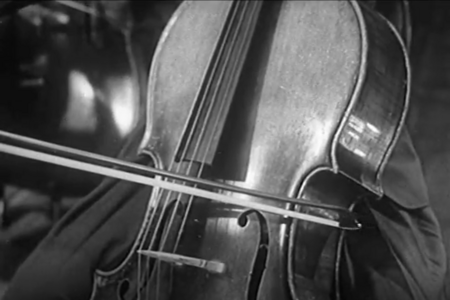
At the beginning of the film, sound is presented through musical performance: the viewer sees the orchestra, musicians, and musical instruments. This introduction connects the auditory phenomenon with the familiar situation of its occurrence. Sound is shown as the result of the actions of specific physical sources, each producing its own vibrations.
Sound Waves and Their Sources (1933). General plan of musical performance.
Sound Waves and Their Sources (1933). General plan of musical performance.
Sound Waves and Their Sources (1933). General blueprint of musical performance.
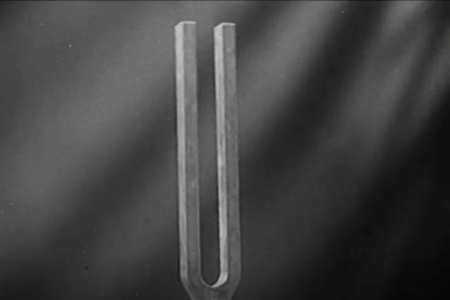
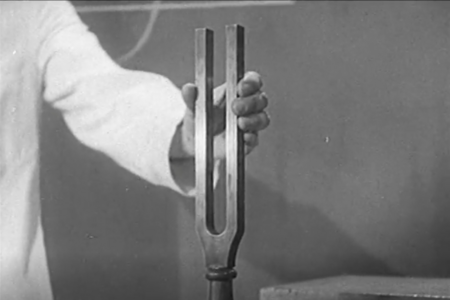
The film then moves from a wide shot of the orchestra to a single object—a tuning fork. The shift in scale is fundamental: instead of the multitude of instruments sounding simultaneously, the focus narrows to one source. This allows for the exclusion of musical complexity, enabling the sound to be viewed as a physical process. The transition from the orchestra to the tuning fork signifies a change in explanatory approach—from demonstrating sound in a daily context to investigating the mechanism of its emergence.
Sound Waves and Their Sources (1933). Animation of sound wave propagation.
Concentric circles emerge around the source. They illustrate the propagation of sound waves through space, transforming an invisible phenomenon into a geometric model. The choice of this form is deliberate: circles allow the source to be positioned at the center, demonstrating the wave’s successive expansion in all directions. The spatial organization of the image thus becomes a method of explaining a physical process. The viewer perceives sound not merely as an attribute of an individual object, but as movement spreading beyond it. This principle of visualization existed long before the advent of educational film. Leendert van der Miesen describes the use of concentric circles and analogies with water waves in acoustic depictions of the early modern period (van der Miesen, 2025, p. 81). In the 1933 film, this principle finds a new expression through motion imagery.
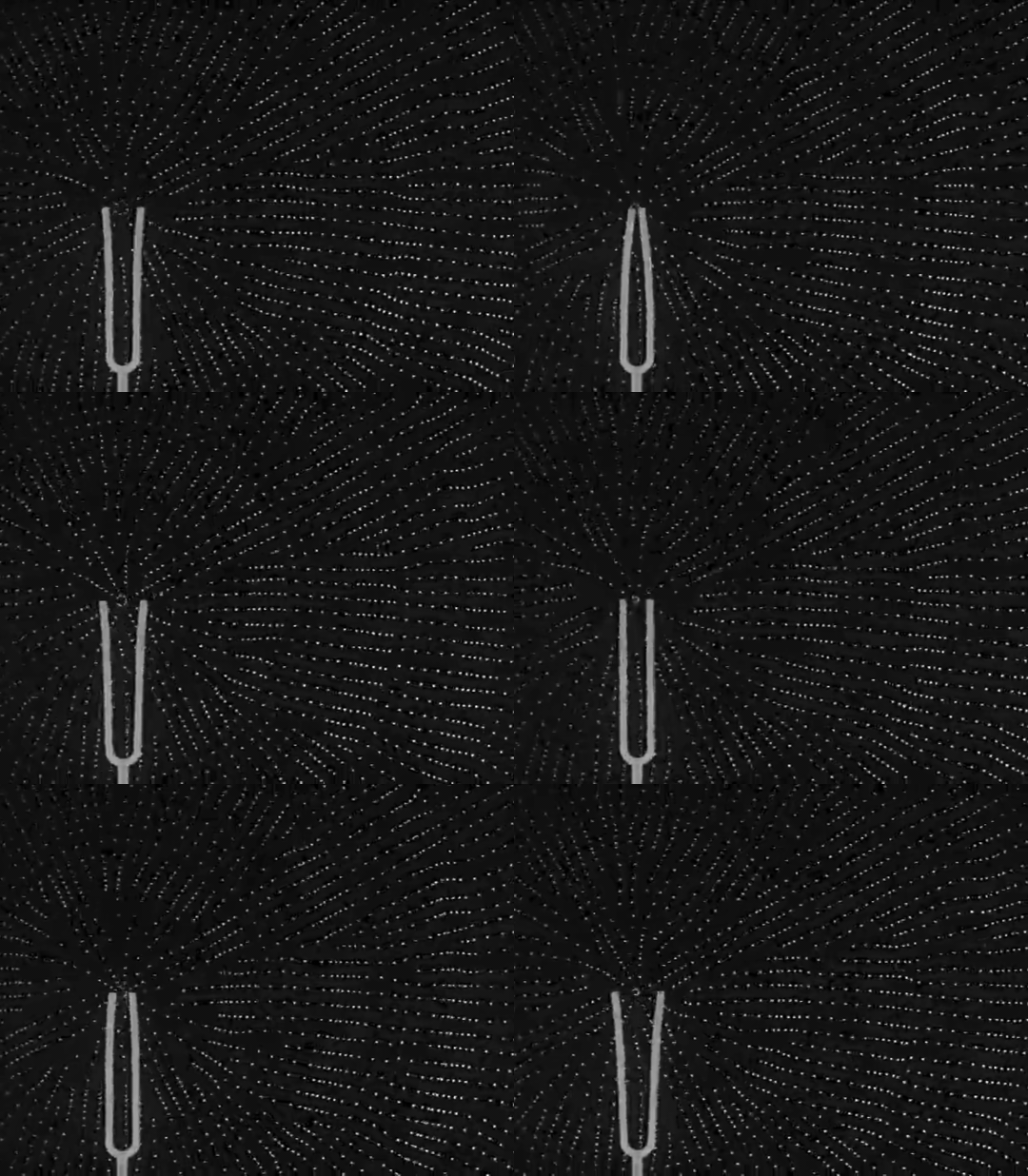
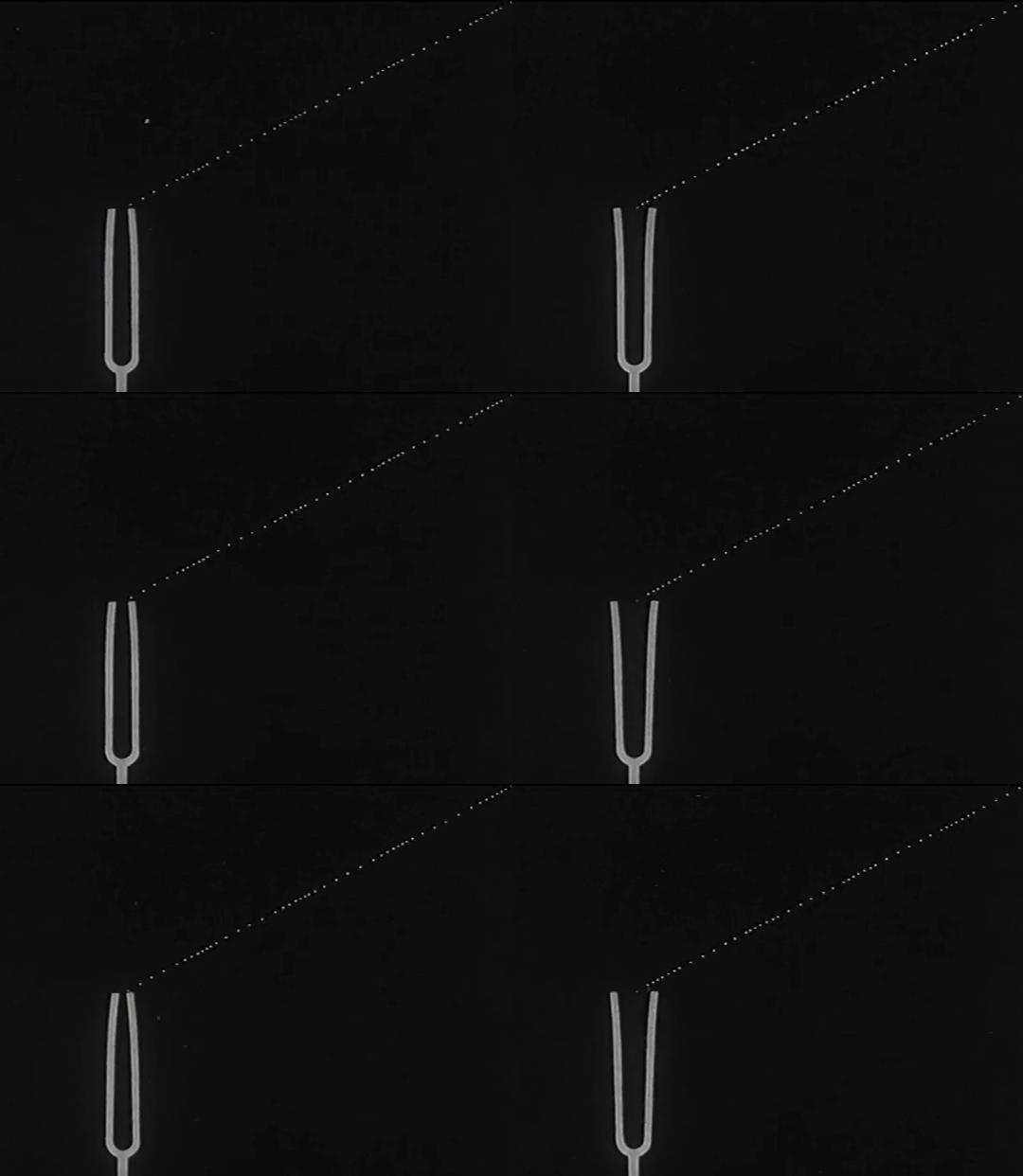
Sound Waves and Their Sources (1933). Movement from the Source.
Next, the graphic model is supplemented with the sequential movement of points from the sound source. If concentric circles initially denoted the spatial structure of wave propagation, the animation allows one to trace the process over time.
This is where the distinctiveness of the cinematic explanatory method becomes apparent. The moving image is not limited to illustrating a finished diagram—it demonstrates the change in its elements and dictates the sequence in which the viewer perceives the physical process.
Furthermore, the animation does not replace the live footage of the tuning fork; rather, it extends it. The real object shows the source of vibration, while the graphic model explains the sound’s propagation. These visualization methods work together, enabling a transition from a concrete physical object to an abstract process.
In Sound Waves and Their Sources (1933), the visualization of sound is constructed through a combination of live-action footage, close-ups, and animation. The film systematically shifts the viewer’s focus from the musical performance to an individual sound source, and then to the graphic representation of the sound wave’s propagation.
Thus, the physical properties of sound are not presented through a single universal method, but rather through several mutually complementary visual techniques. This is a crucial observation for testing the overarching hypothesis: the further evolution of sound visualization should be understood not as a simple substitution of technical images for graphics, but as a shift in the combination and function of various visualization mediums.
2. Technical Mediation: How Sound Becomes Part of Cinema
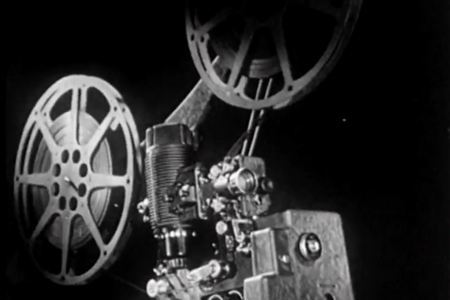
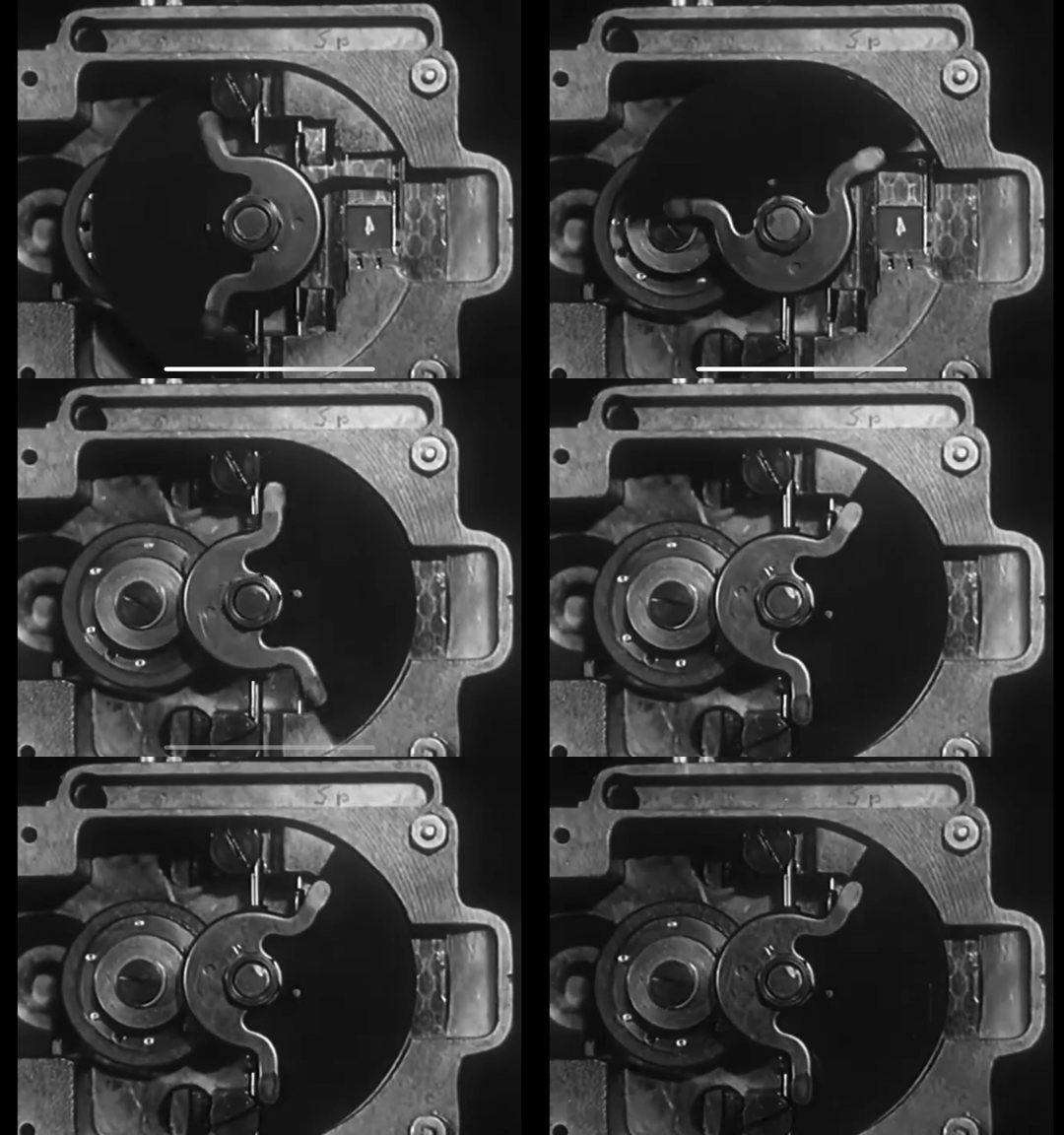
How Motion Pictures Move and Talk (1940). The movie projector and the mechanism of frame-by-frame film movement.
In the film How Motion Pictures Move and Talk (1940), the method of presenting sound notably differs from that used in Sound Waves and Their Sources (1933). While the primary subject of visual explanation in the first film was the physical vibrations and propagation of the sound wave, here the focus shifts to the technical devices that enable sound operation.
How Motion Pictures Move and Talk (1940). The Mechanism of Frame-by-Frame Motion in Film Stock.
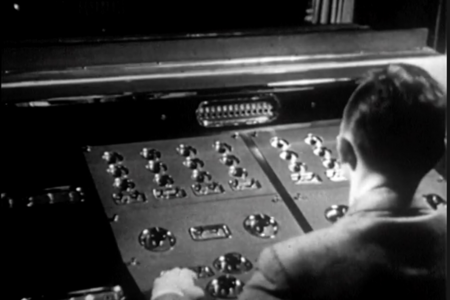
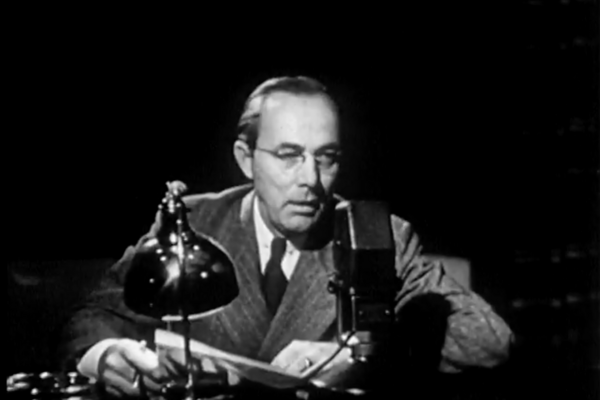
The images of the amplifier, radio studio, and microphone are particularly illustrative. Visually, sound becomes associated not only with the object that produces it but also with the equipment through which it travels. A technical mediation appears between the source and the listener.
This changes the very logic of the image. In the 1933 film, the graphic model allowed for the depiction of an invisible physical phenomenon. In the 1940 film, the natural shooting of the equipment makes visible the technical elements of the process—elements that are not perceivable by the ear on their own. Sound begins to be represented as the result of the interaction between the person, the apparatus, and the signal.
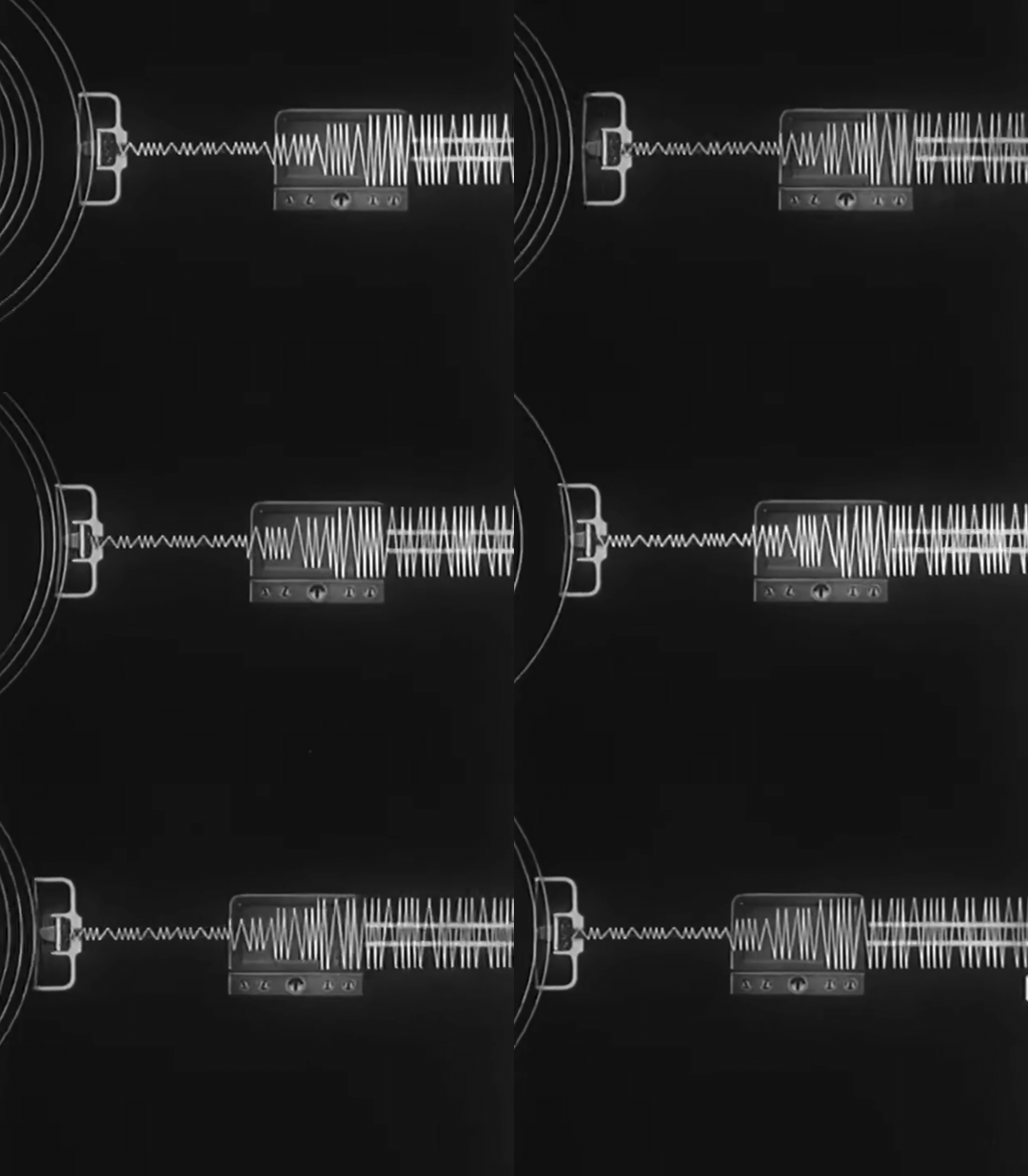
How Motion Pictures Move and Talk (1940). An animated demonstration of the transmission of sound waves.
In the episode featuring sound wave animation, the waves are depicted moving from a source to a receiver. At first glance, this representation resembles graphical elements from a 1933 film. However, its function changes somewhat in the new context. Now, the wave is integrated into a schematic for sound transmission between two points. What becomes important is not only the propagation of vibrations in space but also the relationship between the source and the receiving end. The animation organizes the image as a sequence of interactions, allowing for the representation of the signal transmission process. Comparing the two films reveals both continuity and a shift in visual language. The concentric circles and moving dots in the 1933 film helped explain the physical properties of sound. In the 1940 film, the animation is used within the context of technical communication. The same visual principle serves a different explanatory purpose.
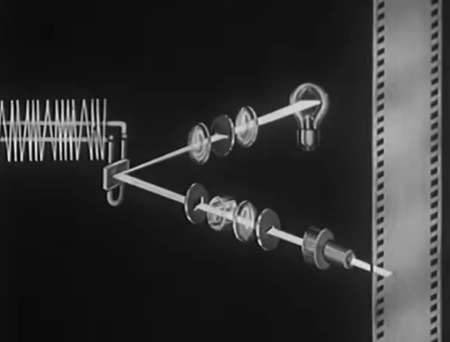
After the animation of sound waves, the film displays a light beam passing through the film strip. Thus, the visual explanation transitions from the realm of acoustic phenomena to the realm of optical processes.The light beam becomes the central element of the scheme that connects the sound recording to the physical medium. The invisible sound signal gains the ability to be represented through changes in light exposure, which can then be captured on the film.This introduces a fundamental difference from the previous film. If in 1933 the graphic line served as a model of sound vibration, now the image explains the transition from the sound signal to the method of its technical fixation. The visual model does not merely denote a physical phenomenon, but reveals the principle of converting one type of signal into another.
How Motion Pictures Move and Talk (1940). Animated representation of sound wave transmission.