Paleolithic Venus Figures as Visual Testaments to Individual Perception.
Rationale for Topic Selection
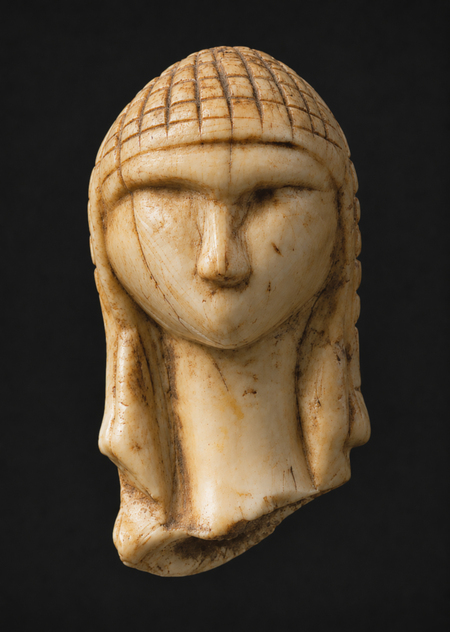
Paleolithic female figurines are often grouped under the term «Venus.» Several well-known artifacts do indeed share common features: relatively large breasts and abdomens, small heads, and tapering legs. However, this similarity conceals significant differences. The figure from Hohle Fels has a loop replacing the head, the Willendorf Venus is covered in ornamentation, and the Lady of Brassempouy features distinct facial details. I am interested in how these differences relate to the hypothesis that the artisans depicted their own bodies.
Research Subject
Female anthropomorphic sculpture of Upper Paleolithic Europe. The core material comprises eight objects from six groups: a figurine from Hohle Fels, the Venus of Willendorf, three Avdēev statuettes, the Venus of Lespugue, the Venus of Savignano, and the Lady of Brassempuis.
Subject of Study
The ratio of proportions and detail in figures.
The key research question
To what extent do the features of the chosen figures align with the hypothesis of self-body observation, and what characteristics require further explanation? Self-representation here refers to the use of information about one’s own body.
Research Hypothesis
I hypothesize that the relative size of a body part and the degree of its detailing are not necessarily directly related. Therefore, when testing the self-portrait hypothesis, the analysis of proportions should be supplemented with a comparison of details. Furthermore, the mere presence of ornamentation or a loop does not disprove the optical hypothesis; these features pertain to the object’s construction and may have independent causes.
Research Objectives
- Correlate Lloyd McDerriott’s hypothesis with Elena Vorontsova’s experiment and Gillian Morris-Kay’s interpretation.
- Compare the heads, hands, lower limbs, and posterior surfaces of the selected figurines.
- Analyze relative scale, detail, and anatomical recognizability.
- Investigate how perspective, material, damage, and restoration influence the description.
- Formulate conclusions that account for both the similarities and the differences between the objects.
Material Selection Principle
The selection includes works that allow for a comparison of different approaches to rendering the human body in image-making. This selection does not represent the entirety of Paleolithic figuration, but it allows for a detailed examination of several frequently discussed examples.
Rubrication Principle
The material is organized in three stages. First, the hypotheses and limitations of photographic comparison are examined. This is followed by six groups of artifacts: Höle-Fels, Villendorf, Avdievo, Lespieg, Savignano, and Brassempii. In the final section, the images are compared again based on common features: head structure, hand details, lower terminations, rear surfaces, and material condition. This sequence allows for an initial description of specific objects, followed by a verification of recurring observations.
Textual Sources and Research Methodology
Dating, materials, dimensions, and conservation status are verified using museum storage records and scholarly publications. The authors’ works are used to present hypotheses. McDermott and McCoy examine female self-representation; McDermott and Johnson’s collaborative work refines the role of multiple perspectives and tactile engagement. Vorontsova investigates perspective shifts when observing another person. Morris-Kay proposes a somatosensory reading of Hole-Fels, thereby linking form with bodily sensations. The primary methodology is comparative visual analysis. First, the visible attribute is described, and then it is compared with information about the object and research interpretations.
Visual Concept
Photographs are included in the argumentation alongside the text. The overall view helps establish the scale relationship of the parts; the profile shows protruding volumes; and the close-up allows for inspection of carvings and damages. Comparative montages do not replicate the actual scale of the objects unless explicitly stated otherwise. In the series, the ancient original, the mold, the archival reproduction, and the contemporary experimental installation are distinguished. The captions maintain these distinctions and indicate the source. The main takeaway from the comparison is that relative size and detailing must be described separately. This clarifies the boundaries of optical explanation but does not establish authorship, the general method of manufacture, or the unified function of the figures.
Distinctions between familiar silhouettes
Close examination reveals variations that are lost in the unified image of the «Paleolithic Venus.» One figurine features a loop replacing the head, another is covered in rows of repeating elements, and a third displays distinct facial features. Proportions also vary—slender forms are found alongside broad ones. Therefore, the comparison begins by describing each piece individually. The combination of relative size and level of detail is particularly significant: a small area might contain many discernible elements, while a large area might possess a smooth surface.
Sample Composition
Sources:
https://blogs.univ-tlse2.fr/palethnologie/wp-content/files/2013/fr-FR/version-longue/articles/AMO3-10_Morriss-Kay.pdf
https://www.nhm.at/presse-medien/presse-oeffentlichkeitsarbeit/pressemitteilungen/der_stein_aus_dem_die_venus_von_willendorf_ist__das_raetsel_um_die_herkunft_der_29500_jahre_alten_figur_koennte_geloest_sein_
http://bulletin.antropos.msu.ru/files/1_2019%20antr_p%20093_103.pdf
https://www.prehistoire.org/offres/doc_inline_src/515/0-BSPF_2022_3_article_PAILLET.pdf
https://www.museodellecivilta.it/oggetti/paleolitico-e-mesolitico/figurina-antropomorfa-cosiddetta-venere-di-savignano/
https://musee-archeologienationale.fr/collection/objet/la-dame-la-capuche
Avdeevo is represented by three statuettes: 573/99, 573/100, and 570/50. Vorontsova correlates these with the results of her experiment. Selecting these specific pieces allows her to discuss her conclusions using the same visual material. The other figurines are identified by museum catalog numbers. The sample includes various materials and objects of differing levels of preservation. They are united by a single research question.
Three Explanations of Form Characteristics
Distance and Gaze Direction