
How have sand simulation technologies evolved, and how do they differ?
Navigation Menu
— Introduction
— Visual Effects Specialists
— The Mummy (1999)
— Spider-Man 3 (2007)
— Prince of Persia: The Sands of Time (2010)
— Conclusion
Visual Effects Specialists
«The Mummy» (The Mummy, 1999)
— John Andrew Berton Jr. — Visual Effects Supervisor. He coordinated the creation of digital elements for the film. — Scott Farrar — Visual Effects Supervisor at Industrial Light & Magic (ILM). He led the studio’s work on digital effects. — Daniel Jeannette — ILM Computer Animation Director. He worked on animating digital characters and creatures. — Alex Laurant — Visual Effects Art Director at ILM. — Tom Kennedy — ILM Visual Effects Producer. — Chris Corbould — Special Effects Supervisor. He was responsible for practical effects created directly on the set. — Nick Dudman — Creature Effects Supervisor. He participated in creating the physical elements of fantastic creature designs.
«Prince of Persia: The Sands of Time» (2010)
— Tom Wood — Chief Visual Effects Supervisor on the film. He coordinated work across multiple studios on digital set design, sand simulations, and magical effects. — Stephane Ceretti — Visual Effects Supervisor at MPC. He led the work on digital cities and large-scale sequences. — Mike Ellis — Visual Effects Supervisor at Double Negative. He worked on time-reversal effects and the scattering of characters into sand particles. — Ben Morris — Visual Effects Supervisor at Framestore. He participated in the creation of the scene featuring the collapse of a sandy interior. — Pablo Grillo — Animation Supervisor at Framestore. — Laurent Hugueniot — CG Supervisor at Framestore. He managed the technical aspects of creating computer graphics, including digital environmental elements and complex scenes involving collapsing structures.
«Spider-Man 3» (2007)
— Scott Stokdyk — Visual Effects Supervisor, Sony Pictures Imageworks. — Kee-Suk Ken Hahn — Digital Effects Supervisor. — Peter Nofz — Digital Effects Supervisor. — Spencer Cook — Animation Supervisor. — Douglas Bloom — Sand Effects Supervisor. — Jonathan M. Cohen — FX R&D Lead (Visual Effects Tools R&D Lead). — Chris Allen — FX Software Lead (Effects Software Development Lead). — Robert «Bob» Winter — CG Supervisor (Computer Graphics Supervisor). — Ryan Laney — FX Animation Lead. — Laurence Treweek — Sand Shader Look Development Lead. — Sheena Duggal — VFX Plate Supervisor (Visual Effects Plate Supervisor). — Josh R. Jaggars — Visual Effects Producer. — Christian Hejnal — Digital Effects Producer. — Carey A. Smith — Digital Effects Producer.
«Dune» (Dune, 2021)
— Paul Lambert — Visual Effects Supervisor for the film. Coordinated the creation of computer graphics and their integration with live-action footage. — Tristan Myles — DNEG Visual Effects Supervisor. — Brian Connor — DNEG Visual Effects Supervisor. — Robyn Luckham — Animation Supervisor. — Francesco Dell’Anna — Compositing Supervisor. — Stephen James — Digital Effects Supervisor. — Gerd Nefzer — Special Effects Supervisor, responsible for practical effects on set.
The Mummy (1999)
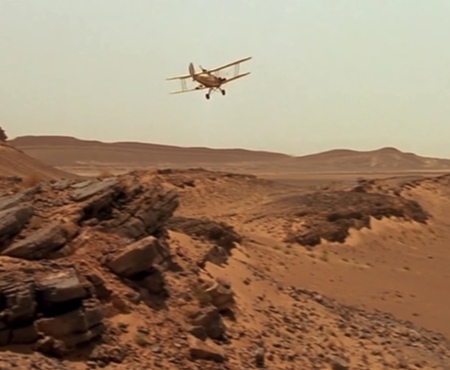
When the main antagonist summons a giant «sandstorm» on screen, the viewer sees a dense mass of flying grains: all shots featuring terrifying vortices were created using digital procedural animation. Commentary from VFX sources specifies that ILM studio built these scenes using the same principles as the tornado visualization in the film Twister (1996)—procedural graphics were used to model the vortices. Instead of shooting actual sand, code was applied to automatically generate the movement of millions of particles in 3D. (9)
For such shots, the VFX team combined layers: the real background was softened with a brown haze (special «sand screens» were placed on the blue screen for compositing), and CG particles colored to match the sand were added. Filming in the desert utilized real fine sand and dust (near the camera), while distant shots were enhanced with digital dust clouds and shifted mountain backdrops. (9)
In this scene, the difference between real and computer sand texture is particularly evident. The digital sand is slightly coarser and cascades far more synchronously.
Alex Loran — Concept Art
When considering the sandstorm within which Imhotep’s face appeared, the main technical challenge was managing the movement of a vast number of particles while simultaneously preserving the recognizable shape of the face. According to Visual Effects Supervisor John Berton Jr., developing the solution took several months. The team utilized Dynamation—a particle system that was new at the time and written by Jim Hourihan. Raul Essig developed a method to control the system’s parameters, which allowed them to achieve the desired movement of the sandstorm. The specialists adjusted the particle size, their quantity in each frame, and the number of compositing layers required to form the final image. (9)
To create the face, they utilized a pre-scanned digital model of the actor Arnold Vosloo. It was animated and used as a particle emitter to guide the formation of particles according to the face’s geometry. This allowed the sand flow to acquire the recognizable features of Imhotep while maintaining the movement and structure of the storm. John Burton Jr. specifically noted Mike Bauer’s contribution to the shot where the face rises out of the sand at the beginning of the film. This visual technique is later repeated in the scene featuring the giant face pursuing the airplane over the Moroccan desert. (9)
The simulation was created through a method of sequential experimental parameter selection: even a slight adjustment to the particle settings could affect the entire subsequent behavior of the system. Therefore, the artists had to not only achieve technically correct movement but also control its artistic expression. The particle layers were then combined using compositing to form a cohesive image of a storm and a face. According to Burton, it was a brute-force approach—intensive experimentation and tuning a system whose behavior was difficult to predict. (9)
Spider-Man 3 (2007)
(a) animation original (b) erosion simulation © low-poly sand simulation (d) final render