Navigation
- Research Concept
- Part I. Typical Characteristics of Cursed Recordings
- Part II. The Animated Still Frame
- Part III. Screen Boundary Violation
- Part IV. Propagation of the Cursed Recording
- Part V. The Film Viewer as Participant in the Curse
- Conclusion
- Bibliography and Sources
Research Concept
Material Selection Principle
For the visual study, the most significant and characteristic examples of the use of cursed video tapes as an active threat force in films were chosen. To illustrate the various visual methods of creating the image of a cursed video, well-known horror genre films were selected: American Horror Stories: Drive In, 2021 (directed by Eduardo Sanchez), Antrum: The Deadliest Film Ever Made, 2018 (directed by David Amito and Michael Laichini), Cigarette Burns, 2005 (directed by John Carpenter), Ghostwatch, 1992 (directed by Leslie Manning), Incantation, 2022 (directed by Kevin Ko), Kairo, 2001 (directed by Kiyoshi Kurosawa), Ringu, 1998 (directed by Hideo Nakata), The Ring, 2002 (directed by Gore Verbinski), Sinister, 2012 (directed by Scott Derrickson), and Videodrome, 1983 (directed by David Cronenberg).Principle of Research Structuring
The research comprises five sections that sequentially explore the core mechanisms of transforming a video recording into a cursed one. Each section investigates the primary visual techniques—how they manifest and what effect they create for the viewer.
Principle for Selecting Textual Sources and Imagery
When conducting the research, monographs and journal publications by Russian and international art critics and specialists in the horror genre of cinematography were studied, in addition to publications on websites dedicated to the phenomenon of the cursed recording. All sections of the visual research include scenes or sequences of consecutive still frames from the films analyzed, which vividly illustrate the described visual techniques.
Section I. Typical Characteristics of Cursed Entries
In horror films, a variety of visual devices are typically used to create the effect of strange, otherworldly, cursed recordings. Among these visual techniques are image degradation, anomalous editing, distorted footage, a lack of logic, the uncertain origin of the shots, picture-in-picture, and impossible angles.
As physical media for dangerous recordings, VHS tapes and film reels are typically used, and they are viewed on a VCR or film projector. Boxes, reels, projectors, and film are not neutral props—they are independent visual elements of horror. In the film Sinister, the inscription «Home Movies» promises family memories. The titles of individual films—“BBQ ’79, ” «Pool Party ’66, ” „Lawn Work ’86, ” „Sleepy Time ’98”—also allude to harmless, everyday events. However, the imagery transforms these titles into cruel irony. An additional visual effect arises because the film is presented as a material object: it can be held, cut, pasted, and destroyed. Yet, the destruction does not eliminate the supernatural threat. Thus, the material vulnerability of the medium is juxtaposed against the indestructibility of the evil contained within it.
«Home Movies» film reel box from the movie Sinister.
The protagonist of the film Ringu holds video cassettes with cursed recordings.
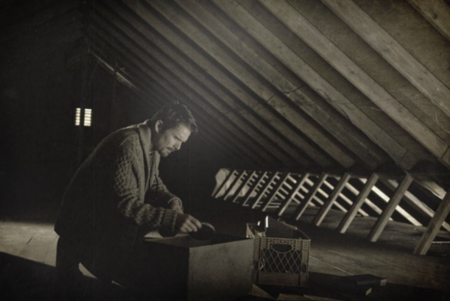
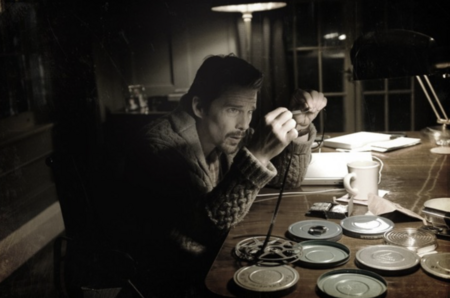
The hero of the movie Sinister finds film reels with cursed recordings
The protagonist of the film Sinister reviews the cursed recordings on a film projector.
Image degradation evokes a sense of unease and hidden presence. To achieve this, increased graininess and VHS aesthetics are utilized, incorporating various types of interference, glitches, and low resolution. It is important to note, however, that not all «cursed» recordings need to look damaged or frightening. The degradation effect itself can foster a feeling of anxiety, but the recording only becomes menacing when the film portrays its ability to actively influence events.
«Ringu» (Directed by Hideo Nakata, 1998)
Artifacting and low image resolution in the film The Ring (2002)
In the film Sinister (2012), directed by Scott Derrickson, the protagonist finds a box of very poor-quality film footage shot on a Super 8 camera. The film’s production crew actually used Super 8 cameras to create these found footage clips. The primary visual elements used in the discovered cursed recordings include: — Super 8 film grain, uneven exposure, and visual defects; — Muted greenish-blue tones; — Low detail on faces and objects; — Static wide shots reminiscent of amateur filming; — Absence of the typical cinematic camera shifts found in narrative features.
The low recording quality hinders the viewer’s ability to discern what is happening. These analog artifacts render the footage simultaneously more authentic and more mysterious. The viewer is forced to scrutinize the details and seek explanations, effectively placing them in the protagonist’s shoes.
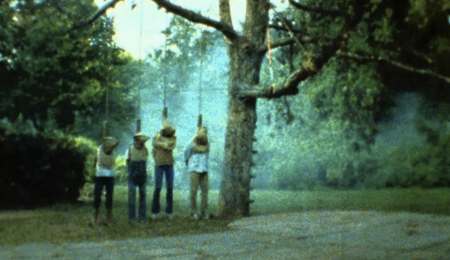
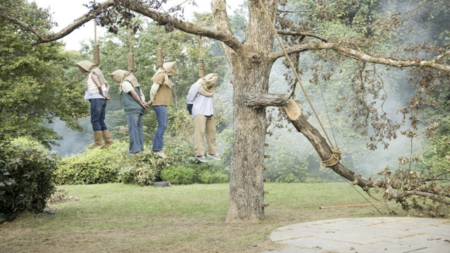
The textural difference between the cursed archival footage and the main footage in the film Sinister (2012)
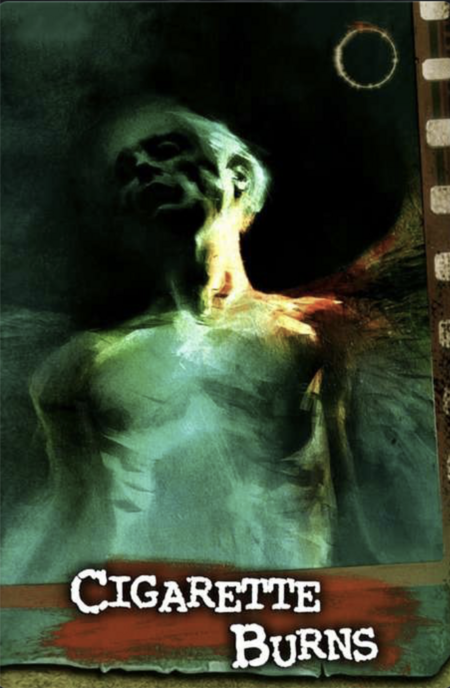
«Cigarette Burns» (Dir. John Carpenter, 2005)
A cursed film featuring round montage marks (cue marks) appearing in the image. The medium impinges upon the psyche, and the technical qualities of the film stock become signs of the supernatural.When transitioning from VHS and film stock to digital media, the visual manifestation of threat changes. In the digital format, anxiety is created by low resolution, empty interfaces, video calls, fragmented imagery, and network propagation. However, this is not a rigid rule. Digital films can imitate analog image degradation, and analog media can convey threat much like a computer virus.
Disruption of Normal Viewing Logic, Anomalous Editing
Cursed films are characterized by disconnected imagery, unsubstantiated repetitions, and sudden insertions. This creates the impression that the image is governed by an external, incomprehensible logic.
«The Ring» (directed by Gor Verbinsky, 2002)
Abnormal Montage
To demonstrate the technique of the montage break, the episode from the cursed film «Lawn Work '86» in the movie Sinister is particularly illustrative. Initially, the camera pans over dimly lit grass. The viewer sees a monotonous surface for a prolonged period, unaware of where the movement is headed. Then, a human figure suddenly appears in the frame. The effect of dread is based on the combination of three elements: the monotony of the image and a restricted field of view; the prolonged anticipation without clear information about danger; the sudden revelation of previously concealed frame content. Here, the contrast between the two successive images is most crucial: the empty dark grass and the unexpectedly discovered figure.a scene from the cursed film «Lawn Work ’86» in the movie Sinister
Screen Within a Screen
The concept of screen within a screen emphasizes the boundary between the viewer and the image, creating a natural protective barrier.
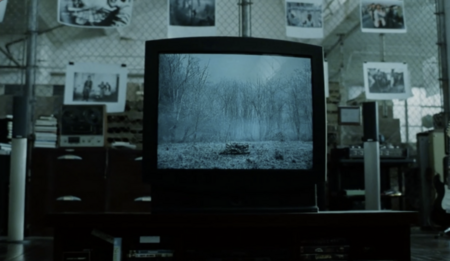
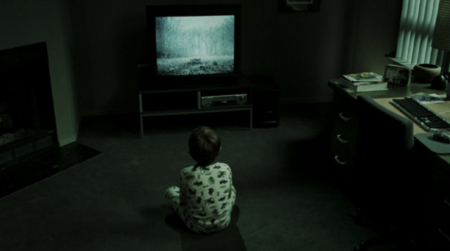
Demonstration of the cursed recording on the TV screen in the film The Ring (2002)
Impossible Viewing Angle
In cursed recordings, this visual trick creates the sensation that the image was not created by a human. This technique is achieved by disrupting perspective, using unnatural shadows, and omitting reflections of objects.The film presents an image that could not have been captured through conventional filming methods. Here, the very possibility of providing a technical explanation for the recording is questioned. This is a method of eroding trust in the film—the image defies explanation as a record of reality.In the film «The Call,» in the scene with the mirror, the reflection of the camera filming is absent, and it is unclear how one reflection sees another.
«The Ring» (Dir. Gor Verbinsky, 2002)
Section II. The Living Still Frame