Introduction
Federico da Montefeltro’s studios in Urbino and Gubbio represent some of the most richly detailed interiors of the Italian Renaissance. These intimate cabinets integrate architecture, wood inlays, books, instruments, emblems, and painting. Their ensembles allow us to trace how the ideal representation of a worthy ruler was expressed through a person’s constant surroundings. Scholarship, military valor, and moral character are rendered here in interconnected forms.
The Urbino cabinet was completed around 1476. The Gubbio ensemble at the Metropolitan Museum of Art dates to approximately 1478–1482. Both commissions belonged to the same court, so the differences between them reveal varying approaches to constructing a comprehensive courtly program. In Urbino, twenty-eight portraits of «Notable Men» were placed above the inlays. In the surviving Gubbio collection, the objects, inscriptions, and ownership markers are particularly significant. This comparison allows us to connect the theme of power with the questions of education and dynastic succession.
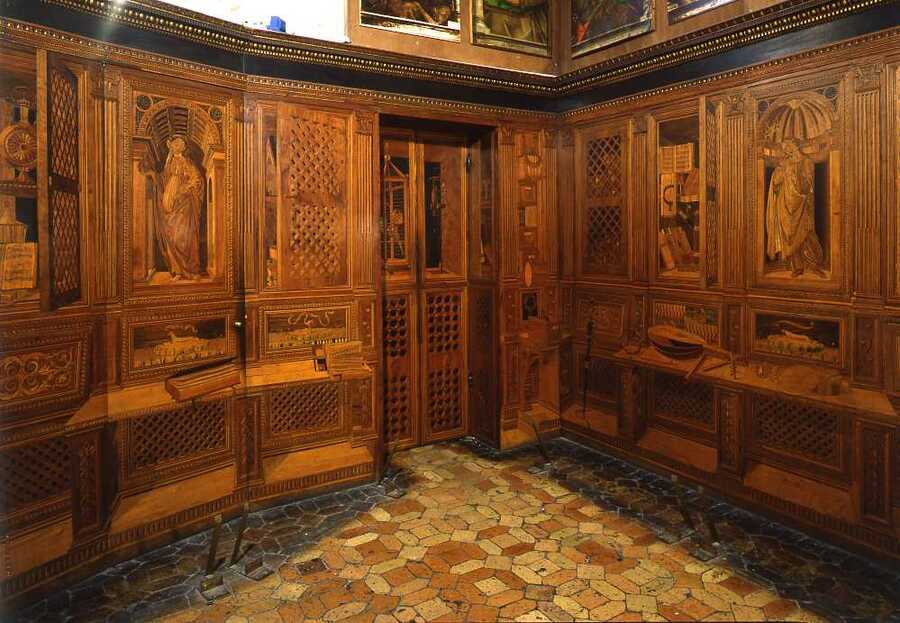
Ghibbio. Original inlays at the Metropolitan Museum. c. 1478–1482.
This study sequentially reveals five aspects of this connection. First, the content of the Renaissance ideal of the ruler is defined; then, the structure of the study room is examined, followed by historical examples from Urbino, Gubbio’s subject program, and its engagement with Guidobaldo. The images corroborate specific points made in the text. In the contemporary exhibition in Urbino, some portraits are presented as reproductions of Louvre panels, while Gubbio’s original inlays are housed at the Metropolitan Museum.
Hypothesis
The studios of Urbino and Gubbio expressed the Renaissance ideal of the ruler as a synthesis of valor, scholarship, and moral dignity. In Urbino, this ideal was solidified through historical examples and linked to the figure of Federico. In Gubbio, the subjects taught, the text of the «Aeneid,» and the references to Guidobaldo reveal the program’s focus on internalizing the dynastic role of the heir. The spatial arrangement of recognizable imagery may have supported this internalization through memory. The main hypothesis unfolds through the sequential connection between the content of the courtly ideal, the organization of the interior, the selection of exemplars, and the address to the heir. The application of historical memory art is considered a substantiated interpretation of the cabinet’s structure.
Rubricator:
01 — The Ideal Ruler at the Court of Montefeltro
02 — The Studio as a Space of Knowledge
03 — Urbino and Historic Models
04 — Gubbio and the Education of a Cultivated Ruler
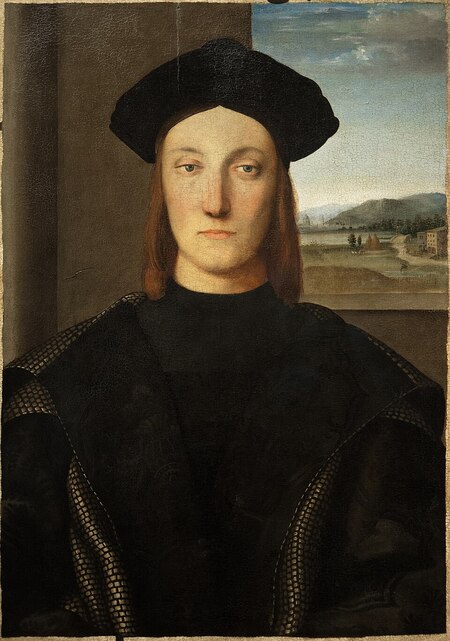
05 — Guidobaldo and the Transmission of the Ideal
The Ideal Ruler at Court
Montefeltro
Federico da Montefeltro’s authority was rooted in his military exploits, political standing, and lineage. Courtly culture linked these foundations to refinement and the capacity for sound judgment. The ruler needed to be presented as a person whose actions reflected both knowledge and moral virtue. Consequently, scholarship became integral to the owner’s political persona and dictated the content of the commissioned artworks. The Renaissance ideal was constructed from the qualities that the court elevated to public significance.
In this depiction, military and intellectual pursuits form an interconnected system. Valor lends weight to the ruler’s word, while referencing history and literature allows one to assess actions through recognized examples. Placing an image of a book next to military equipment expresses precisely this connection. Reading becomes the activity of a person who acts and makes decisions. It lends a cultural justification to their authority and integrates their personal biography into the broader history of worthy deeds.
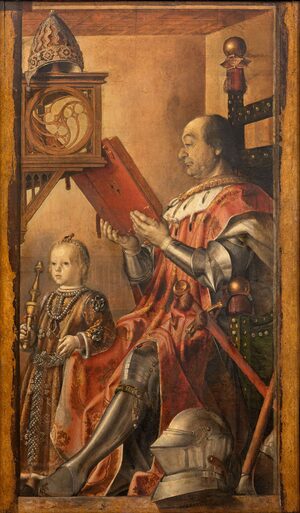
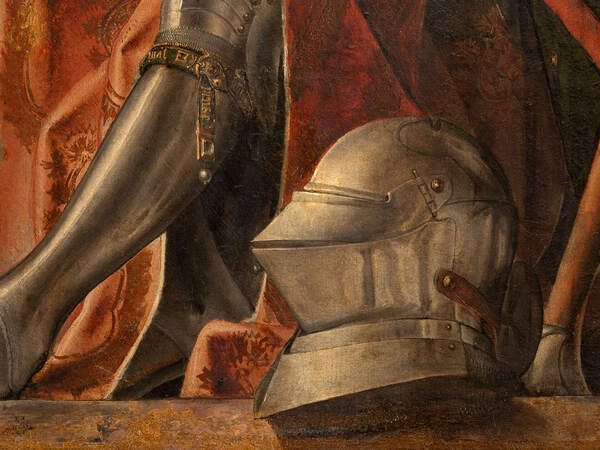
Federico with Guidobaldo. Dynastic Portrait. c. 1476–1477

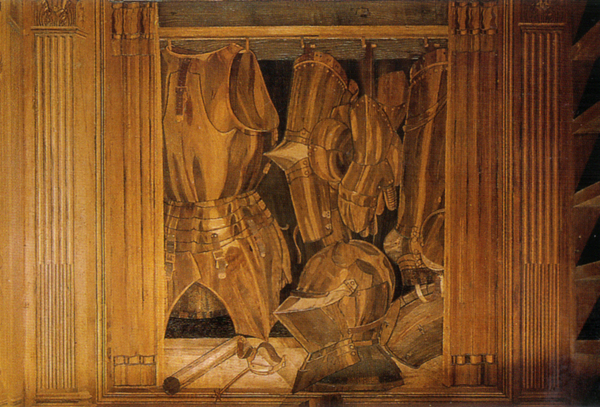
Left: Château de Volterra. Urb. lat. 491, Fol. IVv. Right: Urbino. Armor in an illusory niche. 1473–1476.
In Federico’s portrait, an open book is juxtaposed with armor. Military endeavors and reading are presented as qualities of a single owner.
The book held a special place in this program. A manuscript could attest to the patron’s wealth, yet its content tied the owner to a specific circle of knowledge. The library collected texts through which models of speech, historical events, moral judgments, and descriptions of the world were preserved. The prestige of the gathering depended both on the material quality of the books and the significance of the authors represented. Therefore, the library culture provided the court with a language to connect possession, education, and reputation.
In the «Camaldolese Conversations,» Landino discussed active and contemplative life. The dedicatory copy of this work links Federico to the theme of the relationship between action and reflection. The geographical manuscript and the Bible broaden the scope of knowledge available at court. Together, they show that the ruler’s erudition encompassed a concept of earthly space, historical memory, and the Christian worldview. These domains later acquire subject and figurative counterparts in the studio.
The connection between active and contemplative life is crucial for understanding the very purpose of the cabinet. The ruler’s actions took place outside of it but received cultural interpretation within its confines. History and literature preserved examples of conduct, philosophy offered foundations for judgment, and religious texts linked action to moral order. Within this system, reading became a prerequisite for dignified behavior. Consulting authoritative texts allowed one to envision power as the activity of a person capable of considering past experience and assessing the consequences of their own decisions.
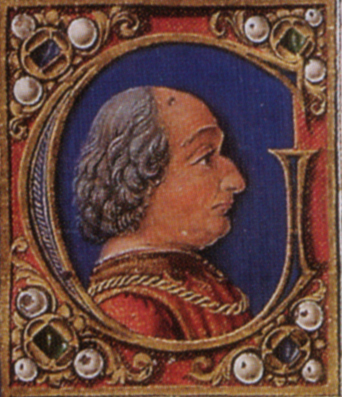
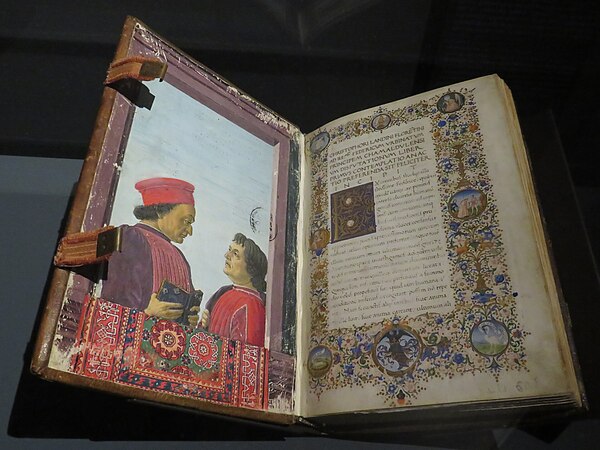
Left: Federico in a geographical manuscript. Urb. lat. 273. c. 1482. Right: Landino. Disputationes Camaldulenses. 1472–1473.
Federico’s Bible. Urban Latin. Folio 1, lines 1v. 1476–1478.
Dynastic representation projected the ideal onto the family as a whole. In Piero della Francesca’s diptych featuring Federico and Battista Sforza, they are presented as a harmonious couple. The reverse sides of the portraits depict triumphal chariots accompanied by allegorical figures and inscriptions that celebrate the virtues of the spouses. Virtue, in this context, belongs to the public image of the family—it links personal qualities with the legacy the court strives to preserve and transmit.
The courtly commission served to fix a desired memory of the owner. It selected the qualities that should define his historical image and synthesized them into a coherent system. Therefore, the ideal cannot be derived solely from the accuracy of portrait likeness. The represented activities, symbols of status, and moral characteristics are also crucial. Various works reiterate these foundations, making them enduring. Later, the studio compiles disparate modes of representation into a single environment where the owner’s image is revealed through constant relationships between the person, the text, and the object.
Piero della Francesca. Federico and Battista. c. 1473–1475

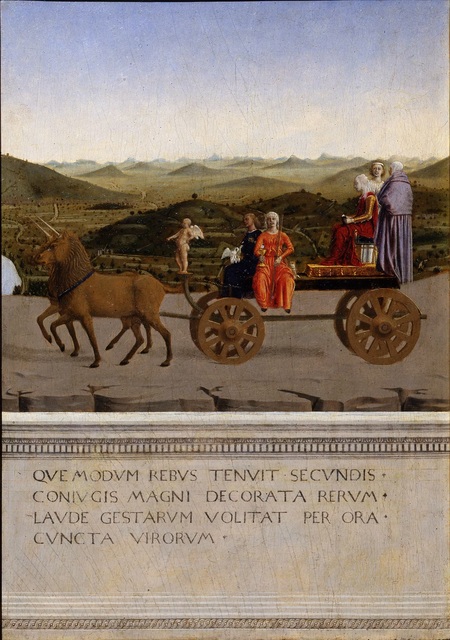
Left: Reverse of the diptych. Triumph of Federico. c. 1473–1475. Right: Reverse of the diptych. Triumph of Battista. c. 1473–1475.
Family emblems serve a similar function, but on a different scale. A recognizable sign transfers an idea of the owner onto objects and architecture. By appearing in various materials, it unifies the courtly environment and allows one to recognize the lineage even without a portrait. The meaning of the emblem depends on the inherited tradition. Therefore, its presence assumes the viewer is familiar with the court’s symbols and can connect a small motif with the owner’s reputation.
Urbino. Sable and motto in intarsia. 1473–1476.
At the outset of the studio work, three interconnected pillars of the ideal were established. Military valor validated the right to act; scholarship defined the scope of knowledge and historical examples; and moral integrity determined the desired character of the actions. The dynastic theme connected these qualities with the continuation of the lineage. The cabinet gathered them into a single spatial program, which the owner and invited viewer could revisit repeatedly.
The Studio as a Space of Knowledge
The palace asserted power through a hierarchy of spaces. The facades, courtyards, and grand reception rooms defined the scale of the residence and indicated the status of its owner. Within this large complex, the studio stood out due to its intimacy and proximity to private pursuits. Here, the cultural program could be perceived sequentially and in detail. The small size of the room highlighted the elements that would otherwise have dissolved into the general impression of the grand space.
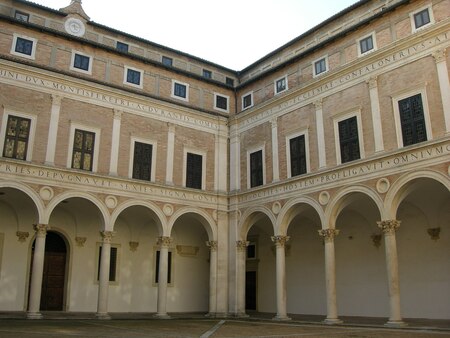

Left: Urbino. Arches of the inner courtyard. 1466–1472 Right: Gubbio. Palace in an urban setting. 1474–1482
The chamber established a permanent space for reading and reflection. This imbued erudition with the structure of a stable way of life. Books and tools were incorporated into the environment, allowing the individual to return to familiar themes. For the courtly ideal, such a connection between qualities and everyday surroundings was essential. Scholarship was presented as an integral part of the owner’s proper lifestyle, and the interior made this connection continuously accessible to perception.
Intarsia allowed this environment to be organized through depicted architecture. Panels were divided into niches, cabinets, shelves, and frames. This division unites numerous motifs while allowing each to maintain its distinct place. The content varies, yet the architectural order remains recognizable. Because of this, the decoration is perceived both as a whole and as a sequence of individual sections, between which semantic transitions are possible.
The stability of this connection was ensured by the nature of the decoration itself. The images were fixed to the walls and maintained their relative arrangement. Unlike a separate, portable painting or an opening book, the ensemble dictated a permanent order of encounters with the content. A person could stop at one section and then relate it again to the adjacent ones. This structure allowed the courtly program to be perceived as a cohesive environment. The ruler’s qualities were distributed throughout the room and simultaneously unified by its architecture.
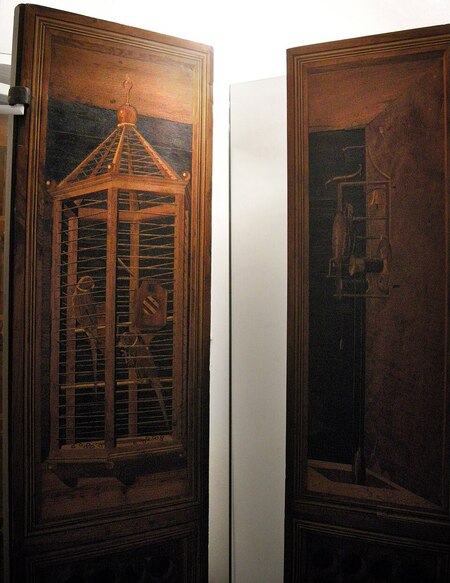
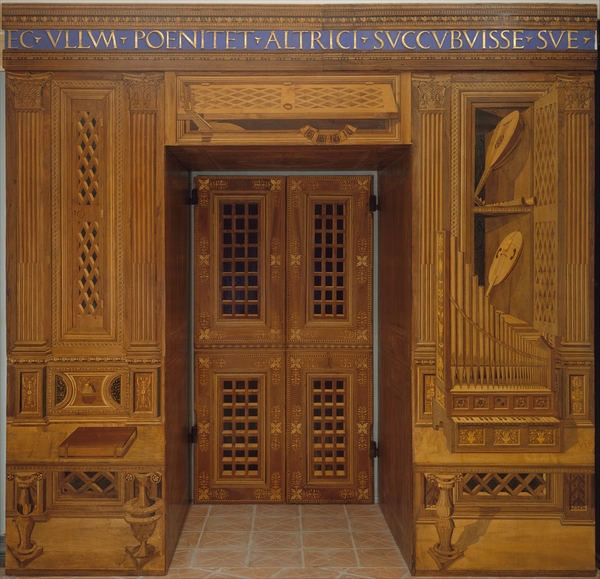
Left: Urbino. Inlay on a door panel. 1473–1476 Right: Gubbio. A genuine passage of inlays. c. 1478–1482
Perspective strengthens the connection between the room’s design and the viewer’s actions. A slightly ajar door suggests an invitation to look inside, while the depicted passage encourages continued movement and the lectern prompts a pause to read. These motifs place the objects within a potential sphere of use. The viewer relates these elements to their own position and mentally completes what is concealed. Perception becomes active and requires maintaining a connection between the fragments noticed in sequence.