Concept
The concept of the cinematic eye is designed to control the viewer’s attention and has existed since the advent of cinema. Dziga Vertov first formulated it in «Man with a Movie Camera Manifesto.» The cinematic eye aims to create a comfortable viewing experience, to translate life onto the screen in the best possible way—a way that the human eye cannot achieve on its own: «I, the machine, show you the world as I can only see it.» [1] However, as cinema evolved, the cinematic eye also developed and acquired new and new functions. Filming began to be used to convey a character’s inner feelings, to build a narrative, and to embody the film’s ideas. Gradually, the camera ceased to be merely a recorder of reality and transformed into a full creative partner in the storytelling process, capable of directing the viewer’s perception in the desired direction.
»…I force the spectator to see a given visual phenomenon in the way that is most advantageous to me. The eye submits to the will of the camera and is directed by it to those sequential moments of action that lead the cinematic phrase to its peak or nadir by the shortest or most striking route» [1]
It is interesting that at some point, the cinematic gaze—intended to show and tell the viewer a story—began to be used to conceal facts and deceive expectations. This technique has been most prevalent in horror and detective films. I became interested in studying the function of the cinematic gaze specifically in detective movies—a genre fundamentally based on deceiving the viewer’s expectations. I want to focus the majority of my analysis on how the cinematic gaze not only directs the audience’s attention but actively affects it, leaving the ordinary observer in its wake.
For my object of study, I chose several films by Ryan Johnson. This seemed like a good opportunity not only to analyze how the cinematic gaze deceives viewers in detectives but also to do so within a selection of works by a single director. Moreover, this will indirectly allow me to touch upon the evolution of the auteur, as even his debut film is shot in the neo-noir genre and is interesting for my analysis. As research material, I selected the detective films Brick (2005), The Brothers Bloom (2008), and Knives Out (2019) to illustrate the director’s early work, his intermediate phase, and one of his most successful features. This selection allows me to trace how the techniques of the cinematic gaze change from one film to the next while maintaining the central objective—managing the viewer’s attention and expectations.
During the analysis, I will primarily rely on Dziga Vertov’s concepts and statements regarding the cinematic gaze, as well as Alexey Gusev’s article on the subjective camera, to support my own interpretations of what is seen in the films. Relying on theoretical texts will demonstrate that my observations align with existing approaches in film studies.
«Brick»
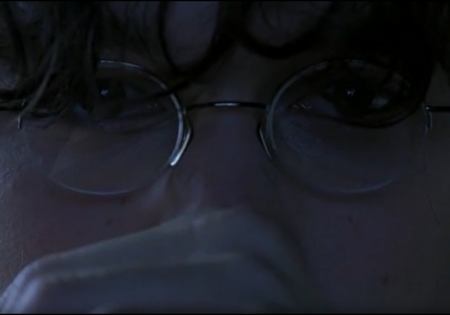
Unlike Dziga Vertov, who aimed to depict life as it is, the cinematic gaze in Ryan Johnson’s debut film, Brick (2005), is less concerned with deceiving the viewer than with showing nothing superfluous—delivering the minimum amount of information and eliminating unnecessary visual noise. Consequently, the film features numerous extreme close-ups or, conversely, deliberately empty wide shots.
2, 3, 4, 5, 6, 7 «Brick», 2005, directed by Ryan Johnson
From the opening scenes, the cinematic gaze withholds information from the viewer, fracturing the whole image of the deceased body into fragments. For much of the narrative, the protagonist possesses knowledge hidden from the audience beyond the frame. As film critic Alexey Viktorovich Gusev stated: «The angle, the close-up shot, and partly the camera movement distort the veracity of the captured reality; the extent to which they restrict the viewer’s freedom—or more accurately, their curiosity—and force perception to follow the author’s strictly defined plan”[2]. The author controls the cinematic gaze, fixing extreme close-ups, thereby compelling the viewer to focus solely on one, narratively important object and preventing them from perceiving anything else in the surroundings.
8, 9, 10, 11, 12, 13, 14, 15, 16 Brick, 2005, Dir. Ryan Johnson
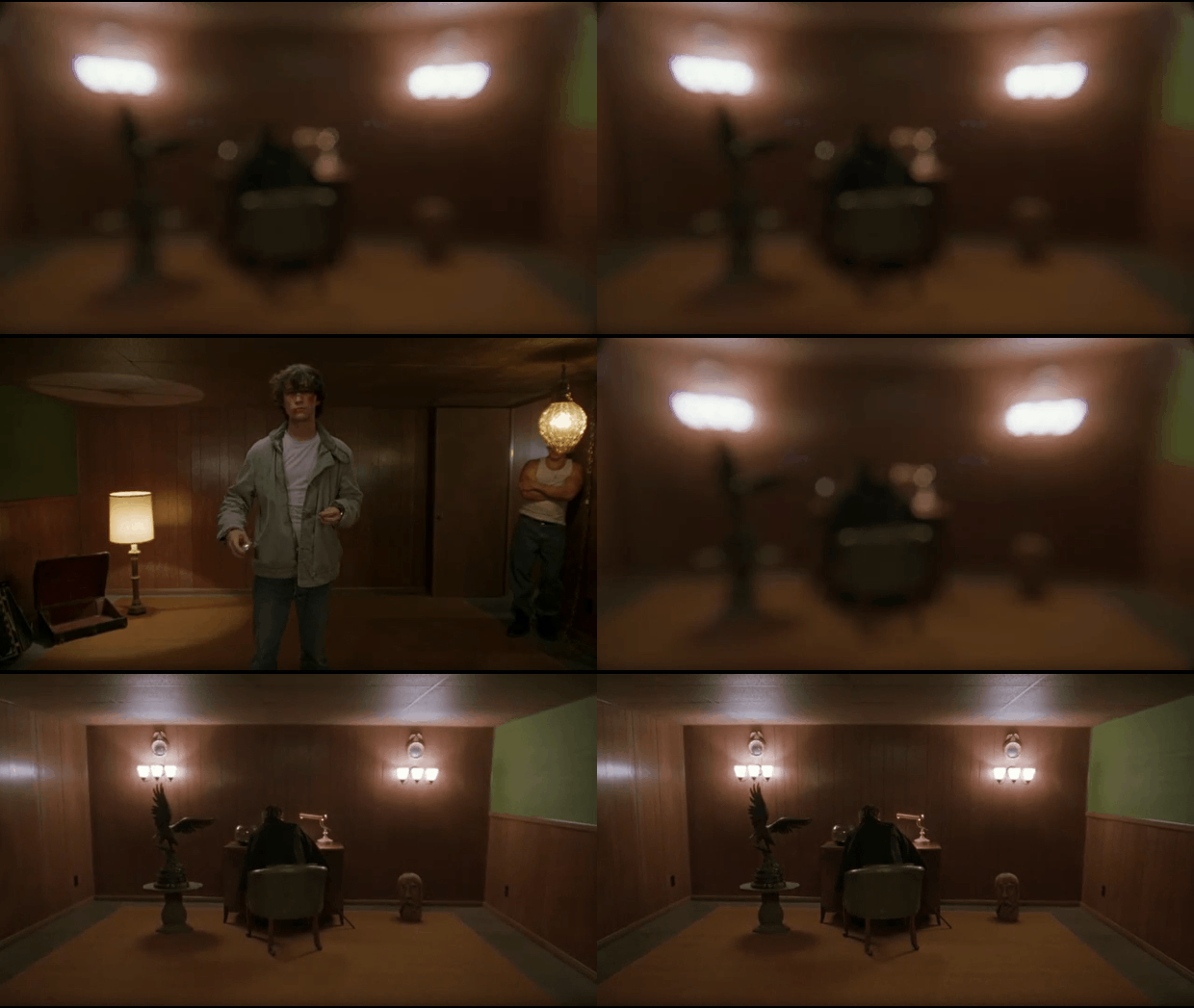
Long establishing shots also influence the viewer’s perception in an interesting way. They are virtually devoid of life; the city appears small and artificial. The viewer is not given many details, nor are Chekhov’s guns—plot elements that must certainly fire—scattered throughout the narrative; nevertheless, the shot remains in the viewer’s mind, engaging not with their attention, but with their emotions. The alternation between long establishing shots conveys a sustained feeling of teenage disorientation and loneliness.
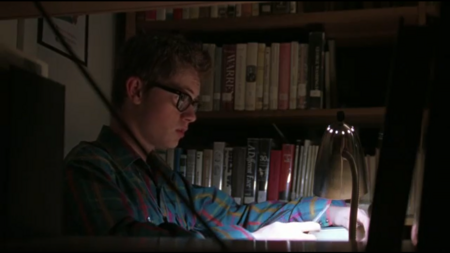
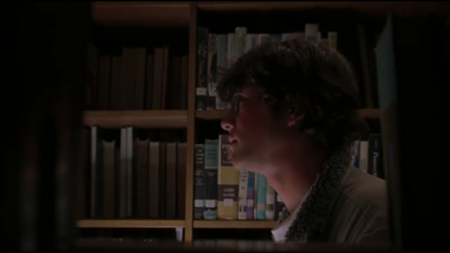
17, 18 «Brick, ” 2005, directed by Ryan Johnson
19 «Brick», 2005, dir. Ryan Johnson
The library scene deliberately positions the camera’s gaze as voyeuristic—tracking the protagonist. The cinematic eye seems to haunt the main character, remaining unnoticed, allowing the viewer to inherit this sense of mystery—that we have witnessed something that was never meant for our eyes.
Whereas Vertov wrote in «We. Manifesto Variant»: «I am the cinematic eye; I create a human more perfect than the Adam created…» [1], believing the cinematic eye should be an honest observer, fixing reality, Johnson systematically places the camera in conditions where it cannot see clearly.
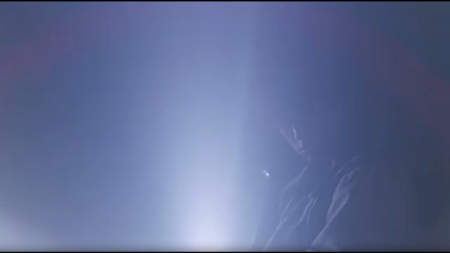
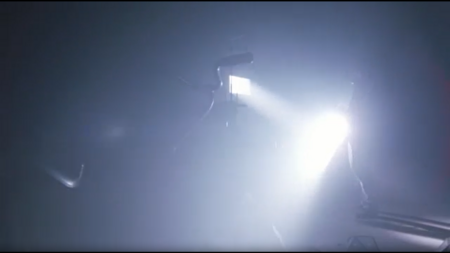
20, 21 «Brick, ” 2005, directed by Ryan Johnson
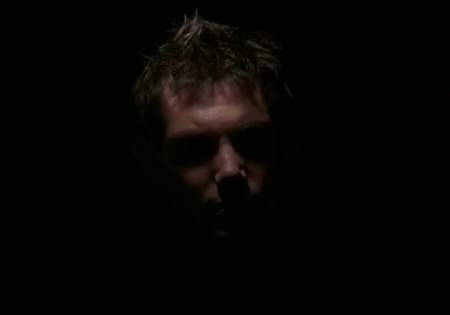
A shot often intends to obscure visual information from the viewer by being heavily underexposed or by featuring sunlight beaming directly into the camera lens. Even when the framing is not centered on a specific character, it can be said that to create the intense atmosphere of a thriller, Ryan Johnson employs the technique of deliberately blinding the cinematic eye to further heighten the audience’s curiosity about what remains hidden.

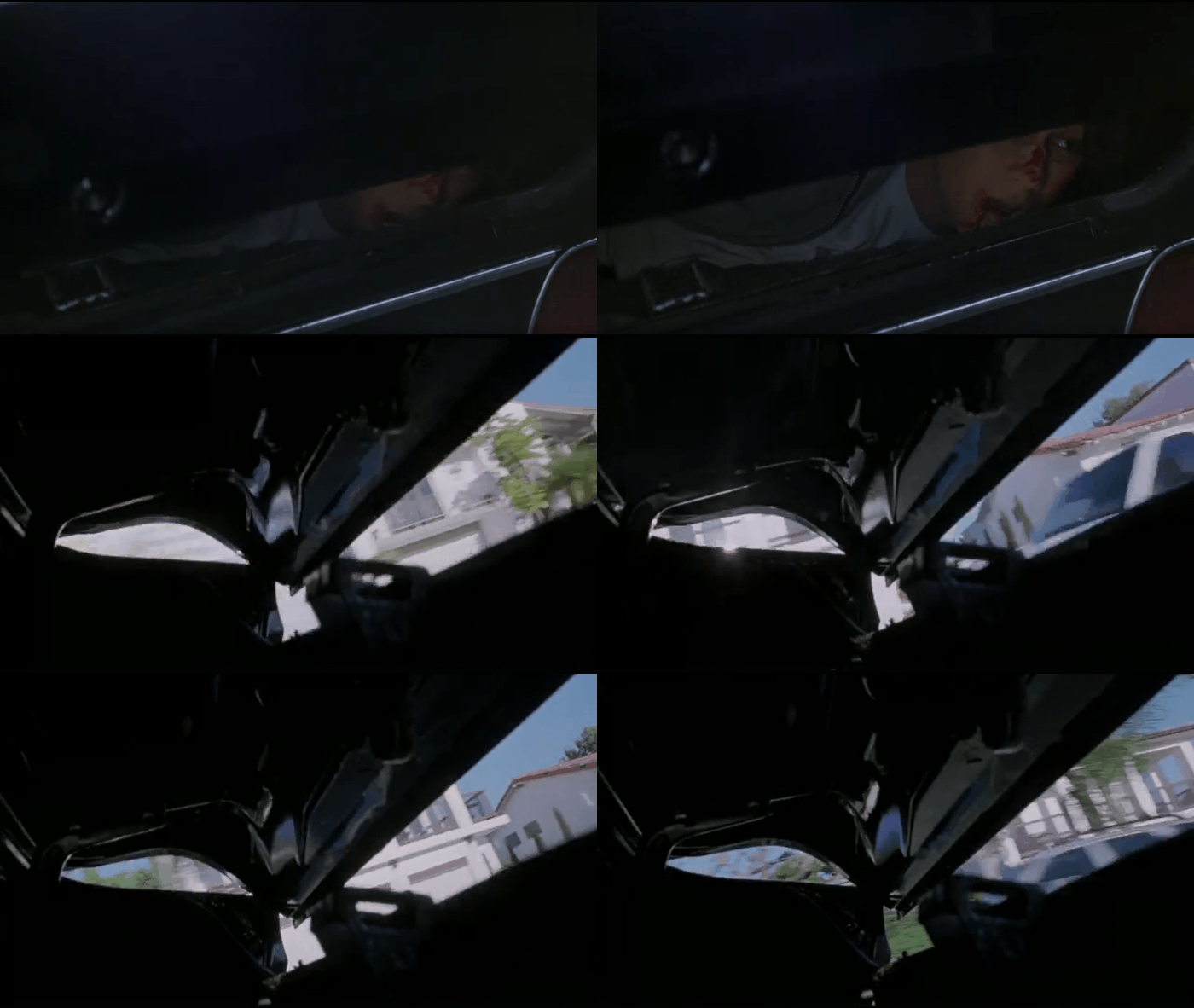
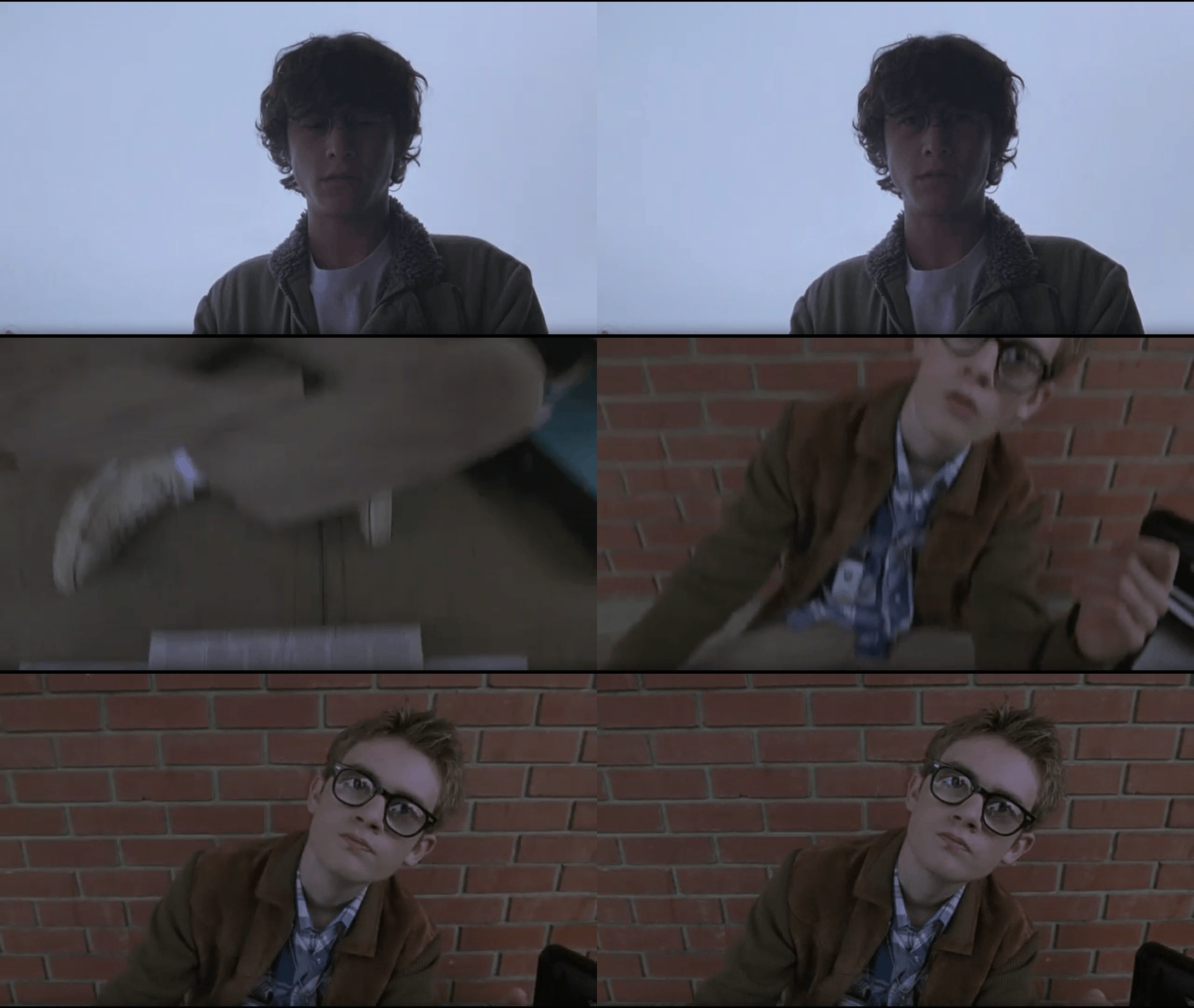
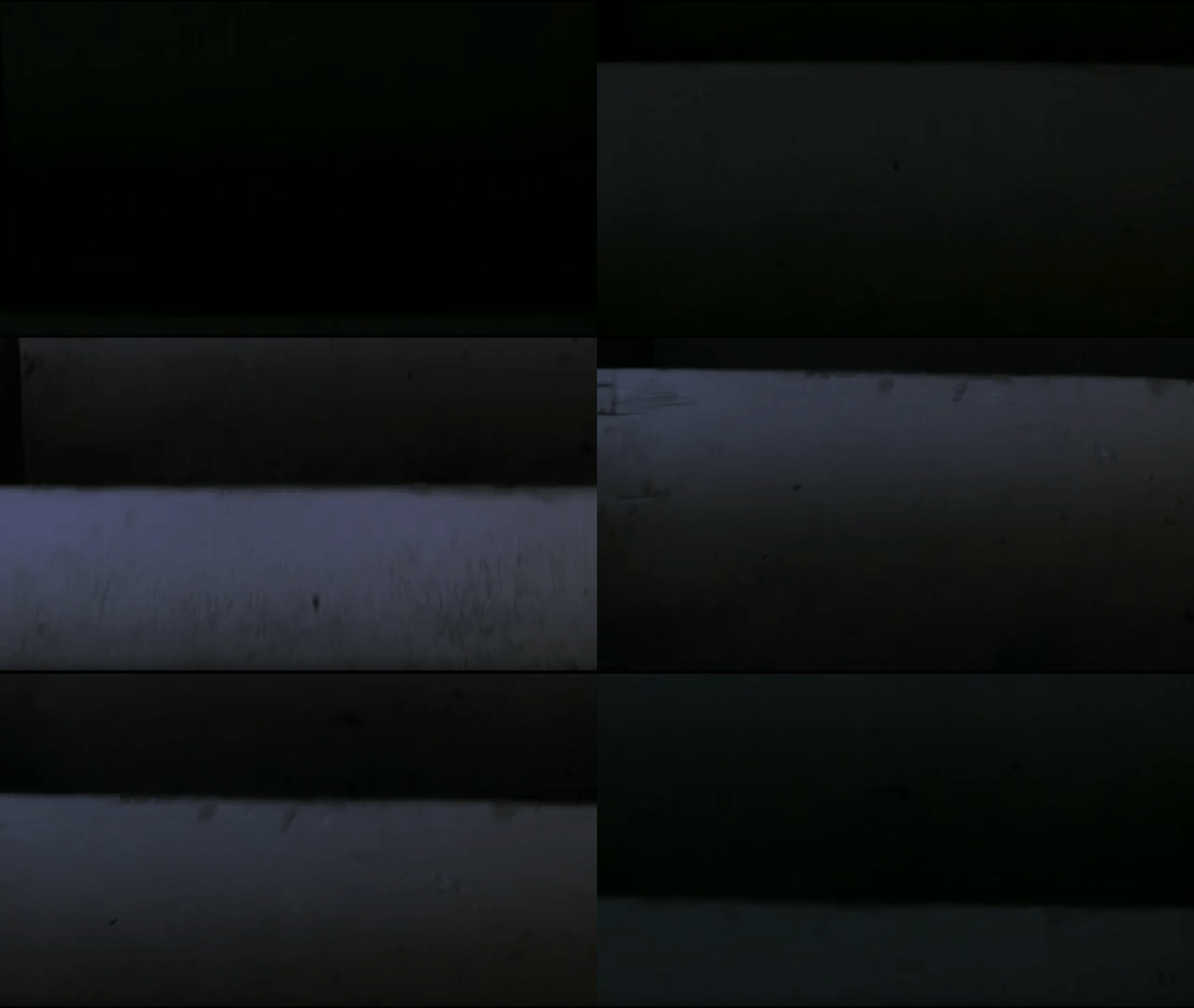
23, 24, 25, 26, 27 «Brick», 2005, directed by Ryan Johnson
Another technique favored by the director is the subjective camera. It offers «the possibility of presenting the viewer with the character’s point of view, determined by their psychological or mental state: it shows how their character sees the world» [2]. In both detective and thriller genres, the view from the protagonist’s perspective helps play with tension, mystery, and deceit.
I would note that in «The Brick, ” the subjective camera appears during moments of the hero’s greatest vulnerability—when he is in a dangerous situation. The shift from the objective camera is abrupt, often lasting only a couple of seconds, but it is intended to place the viewer in the hero’s shoes—not simply to see the blow, but to practically feel it in their own face. With the subjective camera technique, the cinematic eye lifts the veil of mystery surrounding the enigmatic figure of the protagonist, allowing the viewer to see the world through his eyes.
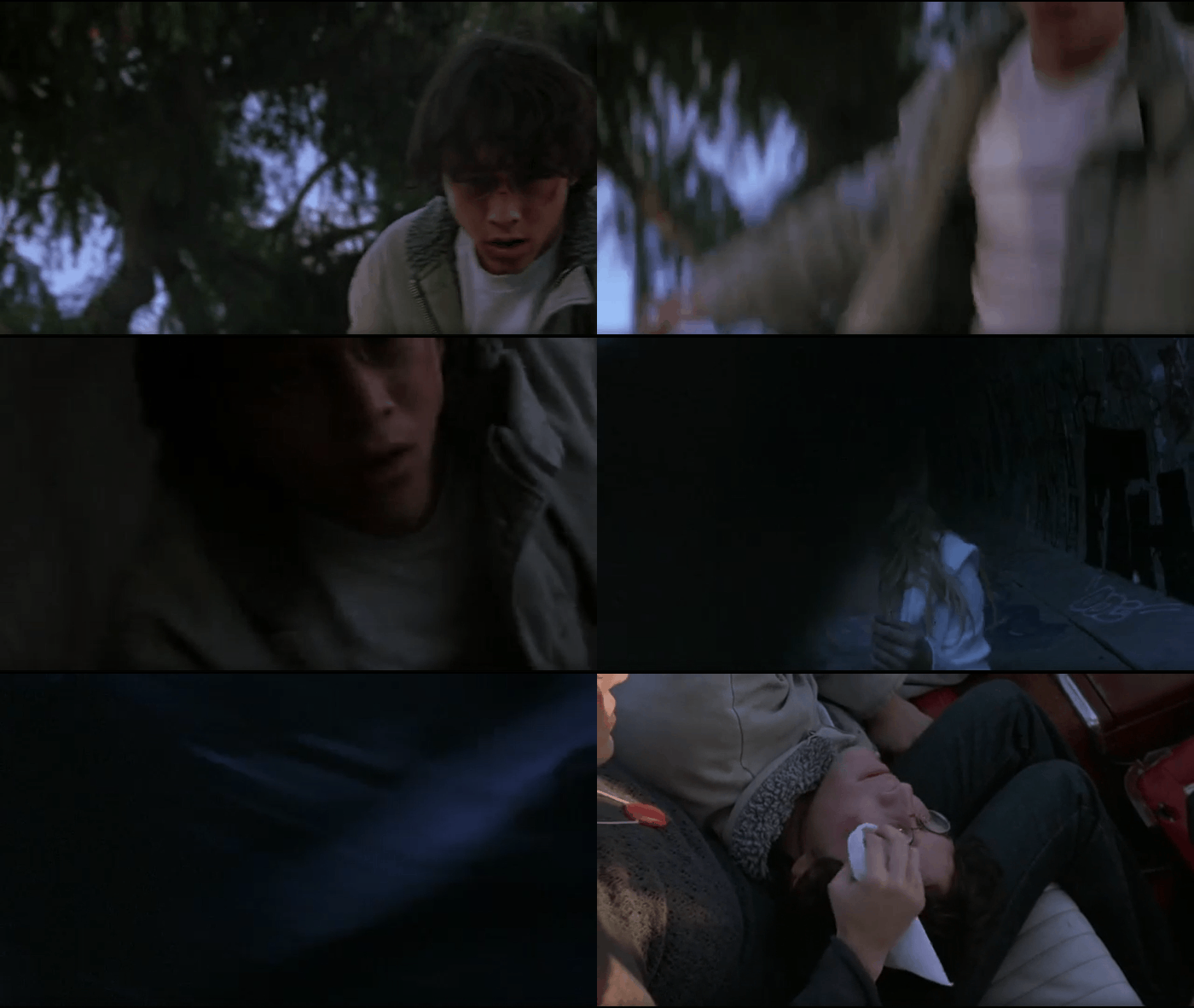
28, 29 «Brick,» 2005, directed by Ryan Johnson
30 «Brick,» 2005, directed by Ryan Johnson
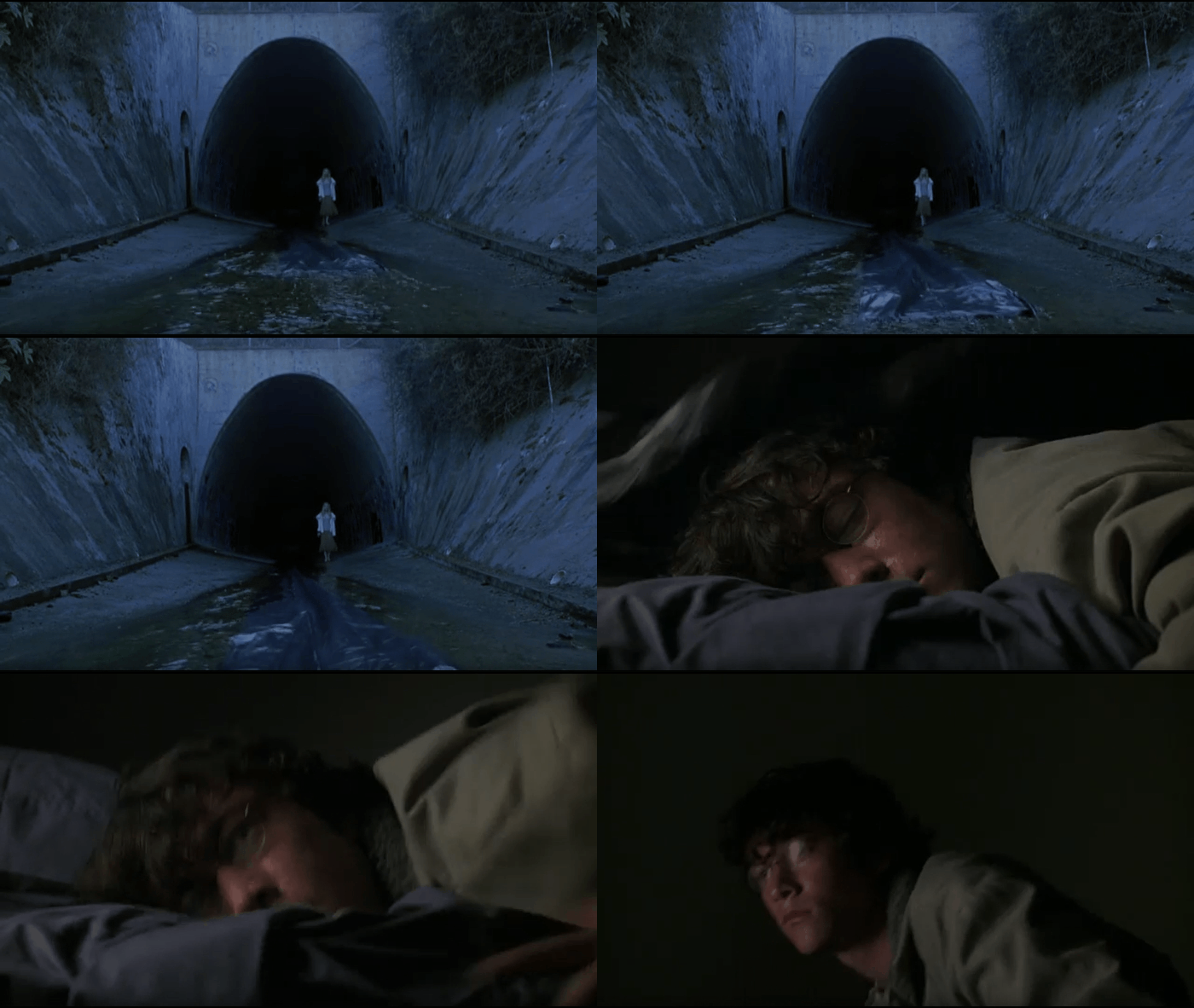
The same cinematic gaze is used not only in moments depicting the real world through the protagonist’s eyes but also in ordinary scenes showing how the protagonist perceives the world, even when that perception isn’t real. For instance, the motif of a dream appears in the work, accompanied by the emergence of a mysterious substance. It is unclear whether the protagonist perceives this in their subconscious or if it is something only the viewer witnesses.
Furthermore, the scene where the cinematic gaze first captures the ordinary state of reality, and then the Kulëshov Effect provides us with a subjective view of the same object, is interesting. This principle of applying subjective filming was originally one of the first in cinema—as [2] «a way of showing a distorted view of the world, as it appears to the protagonist-psychopath’s clouded consciousness.»
31 «Brick,» 2005, directed by Ryan Johnson
«The Bloom Brothers»
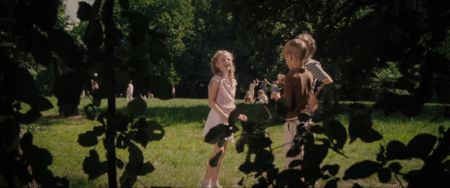
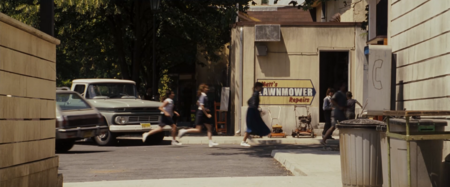
32, 33 «The Brothers Bloom,» 2008, directed by Ryan Johnson
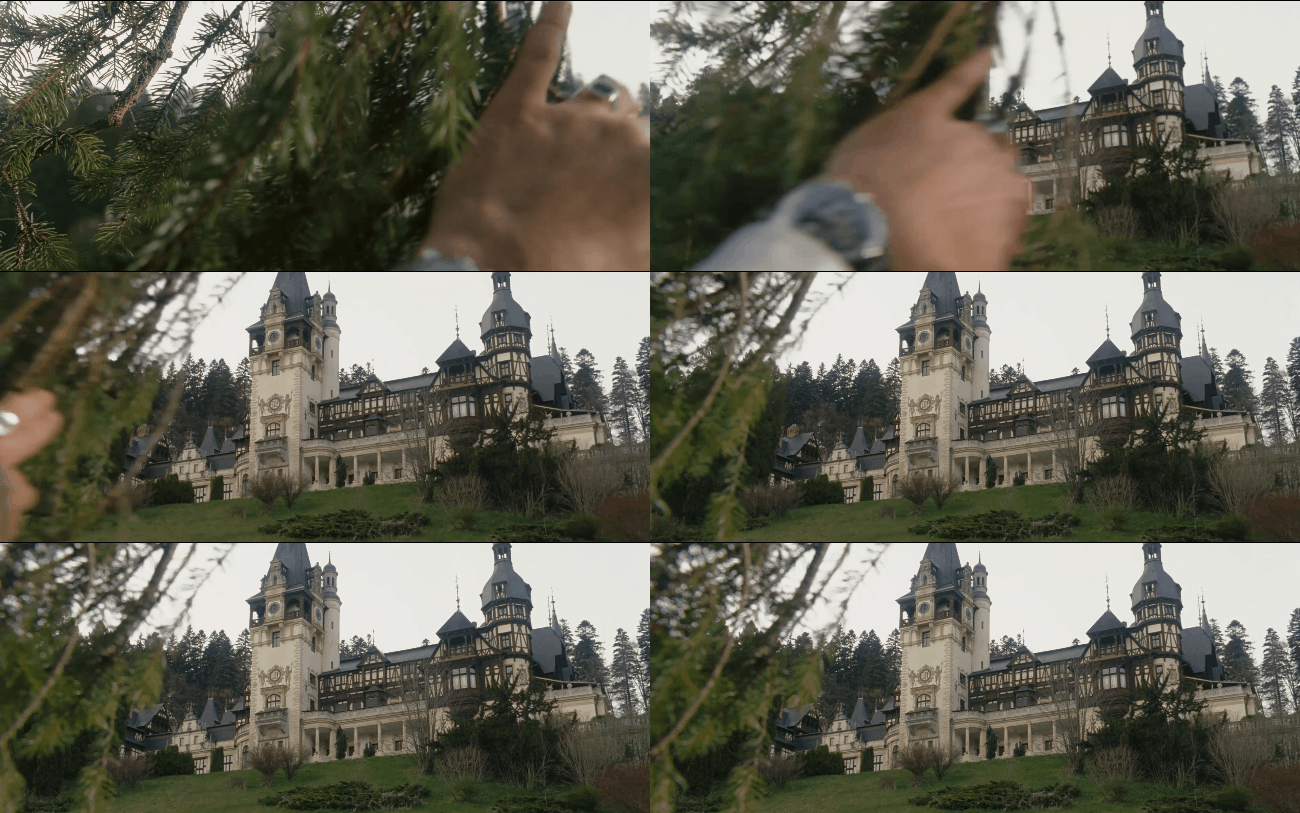
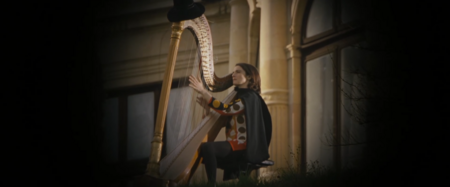
34, 35 «The Brothers Bloom, ” 2008, Dir. Ryan Johnson
Moving on to the next film, it is worth noting that in Blum Brothers (2008), Ryan Johnson continues and develops his visual language. The subjective camera appears less frequently here than in Brick. This technique is intended, at first, to give the viewer an understanding of which of the two brothers the narrative follows—since most of the active action is performed by Stephen, the point of view is given from the younger brother, Blum. The entire story is built around him, while Stephen’s views, motives, and actions remain largely concealed from the viewer.
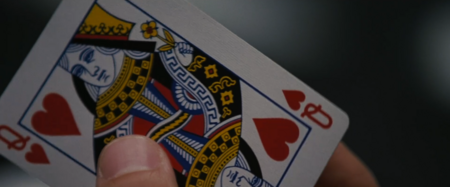
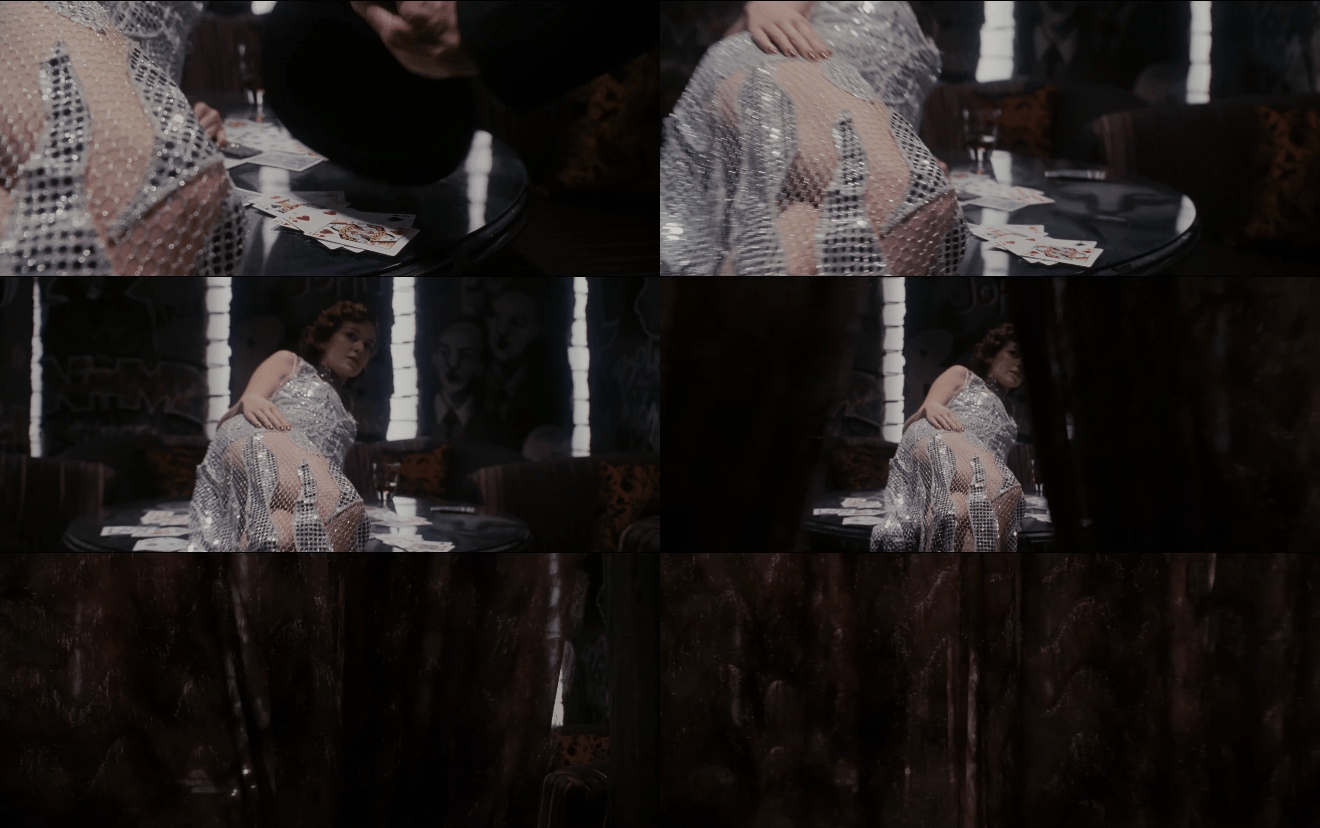
36, 37 «Brothers Bloom,» 2008, directed by Ryan Johnson
In these scenes, I wanted, first, to highlight the cinematic eye as a means of foreshadowing information—after a close-up of a lady in a room, a young woman enters, and after a similar close-up, the king speaks about the main characters' mentor. Second, I wanted to explore how the main character dissolves so as not to obstruct the camera’s view: logically, he should have blocked the lens, but instead, the feeling is that the character has dissolved into the air.
38, 39, 40 «The Brothers Bloom, ” 2008, directed by Ryan Johnson
We should also draw attention to how the viewer initially perceives a character’s emotions—perhaps assuming bewilderment or fear—but after the camera shows a close-up of a pencil clenched in a fist, the viewer’s perception of the character’s emotions shifts. The Kuleshov effect transforms the protagonist’s expression from one of loss to one of restrained anger upon seeing the mentor. By withholding information about the elder, the cinematic gaze gradually unveils the secret of the relationship between the characters through a succession of close-up shots.
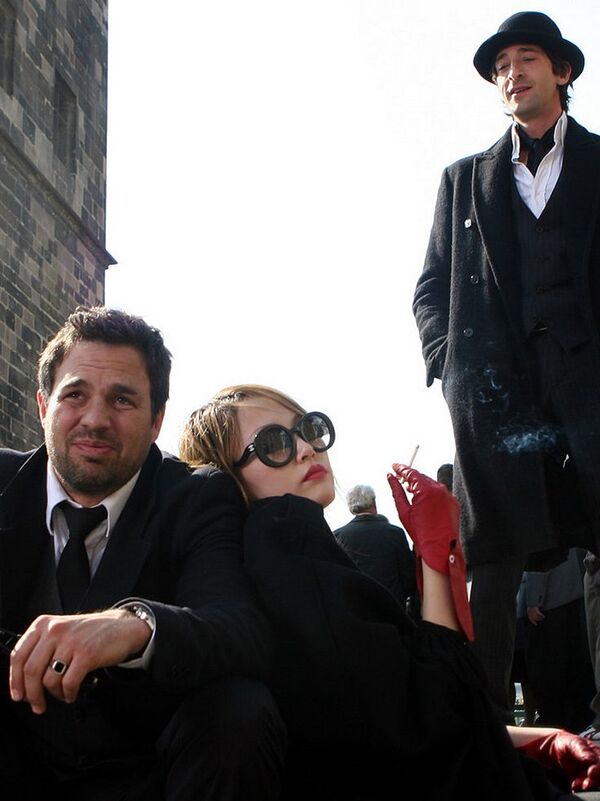
41 «The Brothers Bloom, ” 2008, directed by Ryan Johnson