Categories
- Concept
- Initial Appearance (2012–2016)
- Business Expansion (2016–2020)
- Bubble Boom or Unexpected Popularity (2021–2023)
- Present Day (2023–2026)
- Conclusion
Concept
Many of us have likely seen vibrant, colorful advertisements featuring a glass filled with layered, multicolored beverage, complete with small pearls at the bottom. Perhaps some of you have tried it, while others have only noticed such images in cafe windows, promotional posters, or on social media. We are talking about bubble tea—a drink that has become a noticeable part of the Russian food service market and youth culture in recent years.
Bubble tea is a beverage made from tea, milk, fruit syrups, and other additives, with its defining feature being tapioca pearls or other edible inclusions. According to one common theory, this drink originated in Taiwan during the 1980s, subsequently spreading beyond Asia to become a part of international gastronomic culture. In Russia, interest in bubble tea began to form around the early 2010s.
In this study, I aim to trace the evolution of bubble tea advertising in Russia—from the emergence of the first establishments to the present day—and to determine which visual and marketing techniques helped the beverage attract a broad audience. I will pay particular attention to the imagery, color palettes, and visual motifs used by brands to distinguish their products and cultivate specific associations. I will also employ Roland Barthes' methodology for analyzing the advertising materials. The research will cover several stages of market development: the appearance of the first shops in the early 2010s, the expansion of chains and franchises, the surge in bubble tea popularity between 2021 and 2023, and contemporary advertising trends from 2024 to 2026. This approach will allow me to chart how promotional methods and customer engagement have changed over time.
First appearance

Tea Funny was one of the first bubble tea brands in Russia—its first location opened in April 2012 near a Moscow water park. In the same year, the brand began developing franchising and establishing its corporate identity; a red and white-themed outlet appeared in December. Looking at the early promotion of bubble tea from an advertising perspective, it becomes apparent that the brand needed to simultaneously accomplish two tasks: draw attention to the unfamiliar beverage and cultivate an emotional connection to it. For my analysis, I selected Tea Funny’s promotional videos, which cover different themes and time periods: «How to Make Tea Funny, ” „Hi. I’m Tea Funny. I Give You Spring! , ” and „Level Up Your Tea!“
Excerpt from the Tea Funny promotional video, «How to Make Tea Funny.» 2013.
First, we will look at the video «How to Make Tea Funny.» It was released around 2013, when the company was just starting to develop and making its first attempts to capture attention. The video shows viewers cups of colorful drinks, the first Tea Funny logo, toppings and spheres, as well as the process of preparation and packaging.
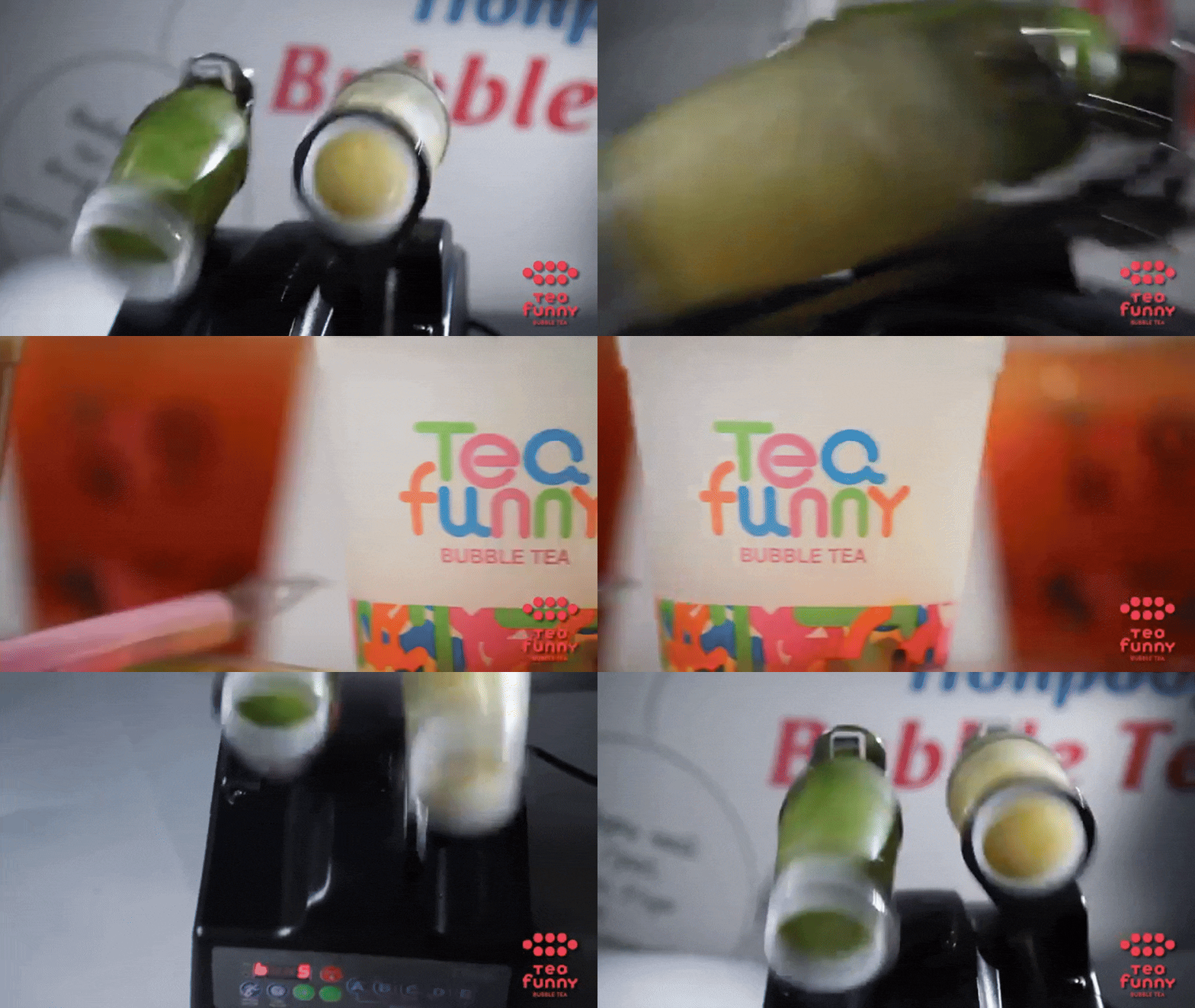
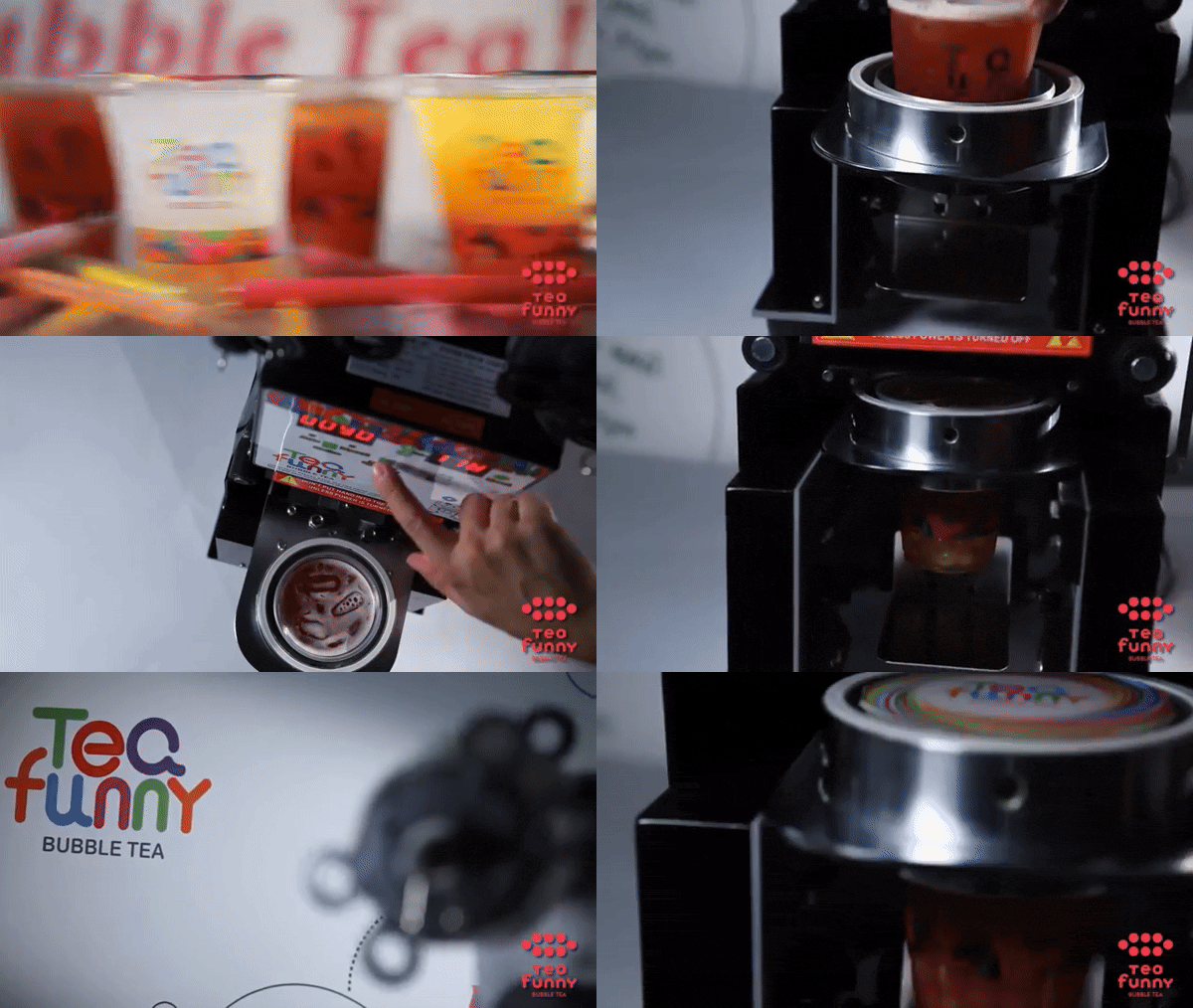
Clips from the Tea Funny commercial, «How to Make Tea Funny.» 2013.
On a denotative level, the advertisement showcases the product itself, its components, and the variety of flavors. However, at the level of connotations, bright colors are associated with novelty, energy, and freedom of choice. Close-ups of the ingredients allow viewers to see the drink’s unusual texture, and the display of equipment conveys an impression of modern and organized production. From Barthes’s perspective, this forms a myth of a new, extraordinary tea experience. A familiar beverage is transformed by vibrant ingredients and the ability to select different combinations. Thus, the advertisement invites the viewer to perceive bubble tea as something more than ordinary tea—specifically, as a novel consumer experience.
The second video—"Upgrade Your Tea!"—utilizes vibrant 3D animation to craft a fantastical world. This video was also created and published in 2015. Viewers see an unusual contraption adorned with brand flags and a rainbow, featuring multi-colored balloons, red characters, and an imaginative mechanism for brewing beverages. The finale showcases finished cups in various colors alongside the signature packaging.
Excerpt from the Tea Funny video advertisement, «Upgrade Your Tea!» 2015.
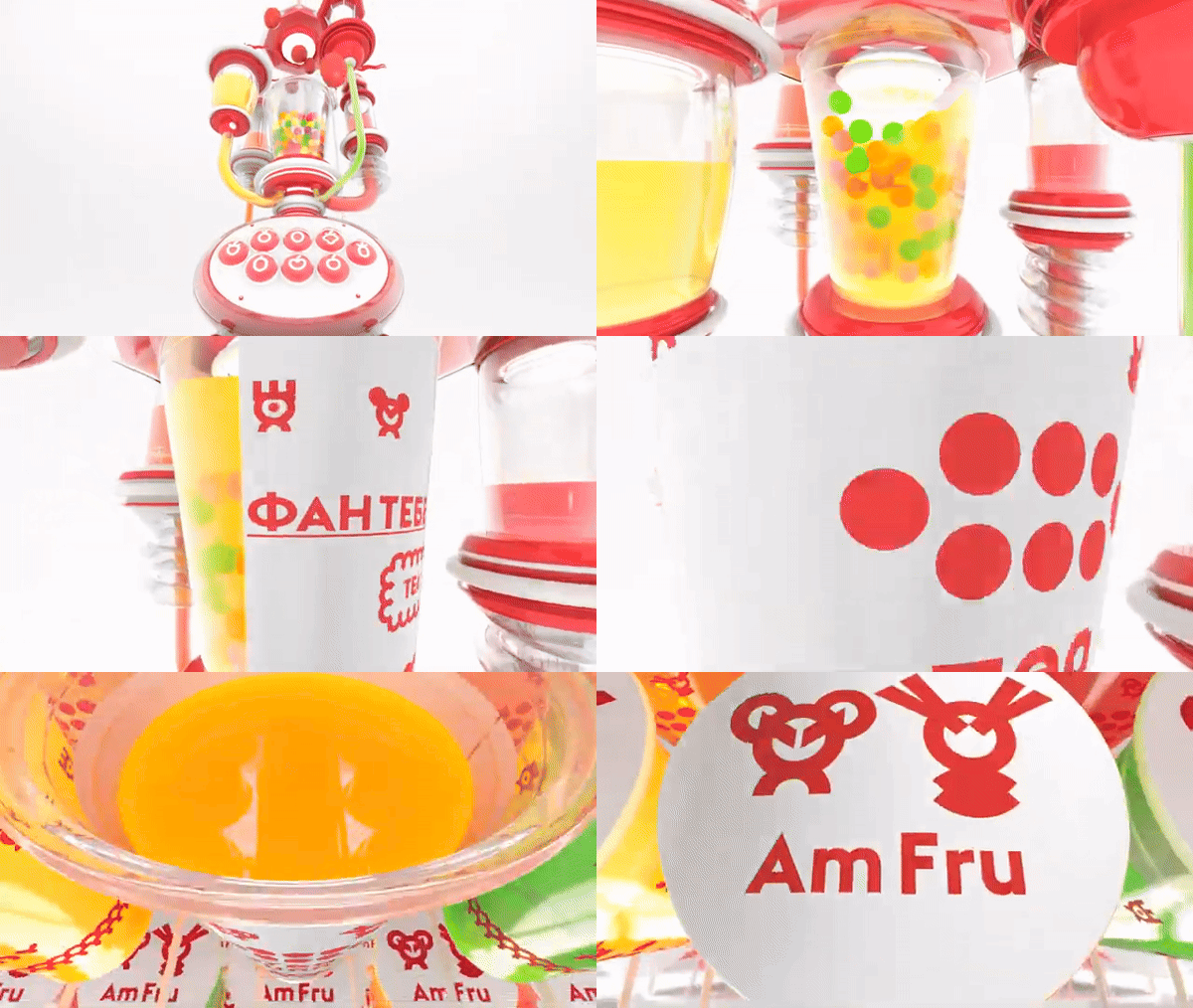
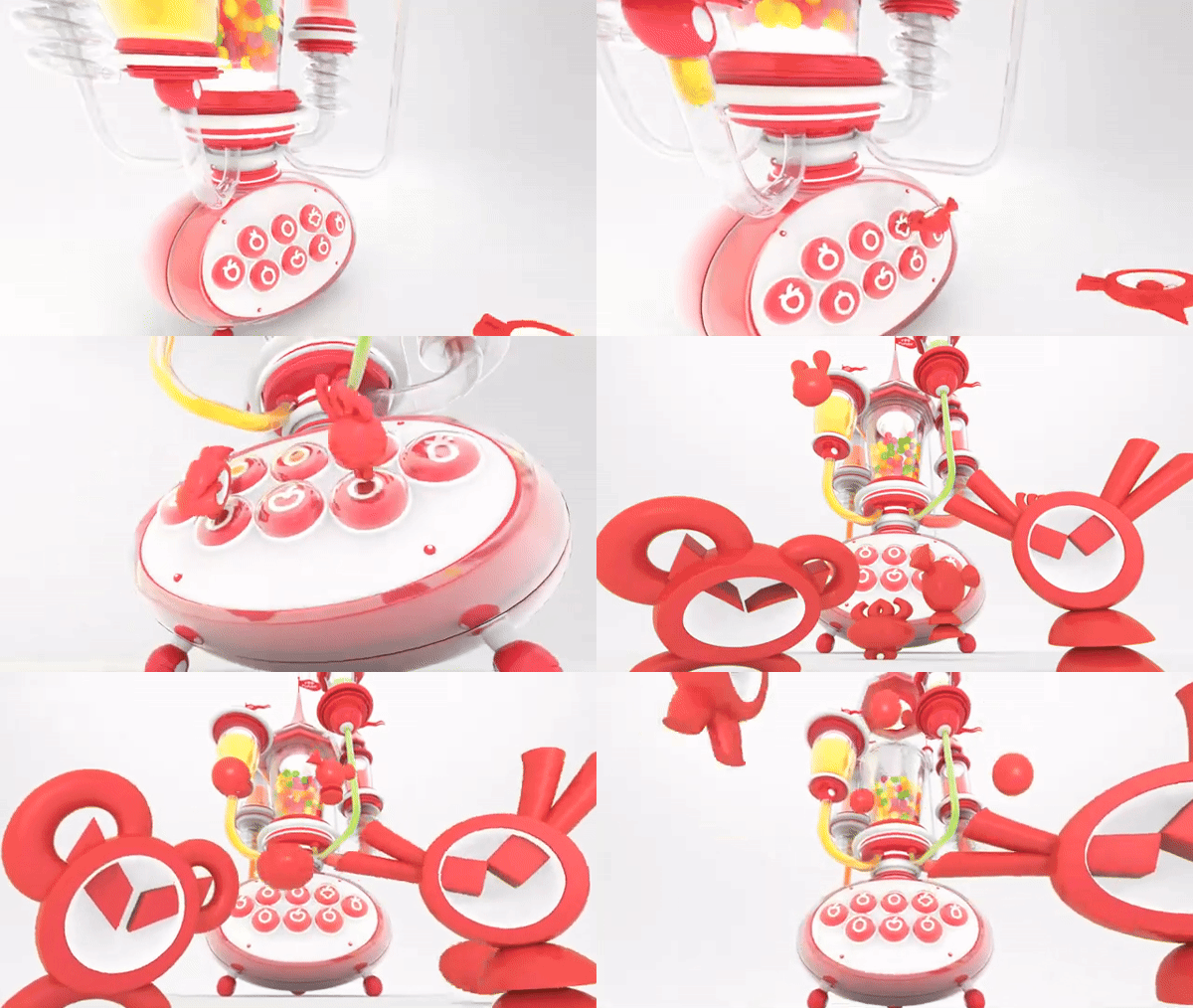
Clips from the Tea Funny video advertisement «Level Up Your Tea!» 2015.
On a denotative level, the video showcases the ingredients, the preparation process, and the finished product. However, on the connotative level, the rainbow, bright colors, and fantastical characters evoke associations with play, imagination, and variety. The unique mechanism transforms the beverage preparation into an engaging spectacle, as if the bubble tea is being made in a genuine magical factory. From Barthes' perspective, this establishes a myth that the conventional consumption of tea can be transformed into an extraordinary entertainment experience. The slogan, «Level up your tea!» reinforces this idea, urging viewers to move beyond the expected image of a beverage and try something new. It is also noteworthy that mascot characters appear in various forms—characters from the graphics become 3D assistants in the tea preparation. Thus, Tea Funny markets not only bubble tea but also the possibility of diversifying daily life and gaining new experiences.
The final video—titled «Hello. I’m Tiffy Funnie. I’m giving you spring!”—employs a different visual approach. This advertisement was released in 2016 and showcases the brand’s evolution over the preceding three years. It begins with the logo on a vibrant crimson background, accompanied by the text „New Spring Menu.“ Next, the viewer sees a glass of a drink against a backdrop of green grass and a spring landscape. Next to it are small signs listing the fruit flavors: pomegranate, pineapple, melon, passion fruit, kumquat, and strawberry. The video concludes by displaying several glasses of different colors with the text „New Spring Flavors.“
Excerpt from the Tea Funny commercial, «Hello. I’m Tee Funny. I bring you spring!» 2016.


Excerpts from the Tea Funny commercial, «Hi. I am Tea Funny. I give you spring!» 2016.
On a denotative level, this is advertising a seasonal menu. However, the green grass, natural background, and bright colors of the drinks evoke associations with freshness, the awakening of nature, and a good mood on a connotative level. The phrase, «Hello. I am Tea Fanny. I give you spring!» holds particular significance, employing personification—the brand virtually becomes a character addressing the consumer directly. The text helps to solidify the image’s meaning by linking the drink to a spring atmosphere. Consequently, a myth is formed around bubble tea as a source of positive emotions and pleasant experiences.
If one compares the three videos, it can be observed that Tea Funny employs different methods for creating an appealing product image. In the first case, the focus is on the drink’s appearance, its ingredients, and the preparation process. In the second, the bubble tea is linked to the spring mood, freshness, and renewal. In the third, the product becomes part of a magical story, enhanced by game elements and new graphics.
Thus, in all three commercials, bubble tea is presented not merely as a beverage, but as a source of new experiences promoted by the advertisers. The color, the shape of the cup, the flavor names, and the surrounding environment help establish supplementary meanings that extend beyond the direct description of the product. From the perspective of Roland Barthes' methodology, the Tea Funny advertisement creates its own system of visual signs, linking the drink to modernity, emotional pleasure, and entertainment. This suggests that brand promotion is not based solely on displaying the product itself, but also on cultivating a specific lifestyle with which the potential consumer can associate themselves.
Business Expansion
By the 2016–2017 period, boba tea had become familiar to Russian consumers, and the first establishments began spreading beyond Moscow and Saint Petersburg. This period was more of a stage for developing existing projects and finding new formats than for the mass appearance of new chains. If earlier advertising introduced customers to an unusual beverage, its task now became distinguishing the brand among competitors.

First, we will examine the Bubble Tea Cafe «Tapioca,» which opened in 2014. I will be focusing specifically on the venue’s advertising posts from «VKontakte» when the business was at its peak.The post from June 21, 2018, employs a different visual approach. On a denotative level, it depicts a glass of bubble tea placed inside a stylized car driving down a multicolored road. A colorful inscription is situated at the top, and the text beneath the image clarifies that the drinks can be ordered for any celebration or event.


Screenshot and advertisement image from the VK community of Bubble Tea Cafe «Tapioca.» 2018.
On a connotative level, the saturated yellow, pink, green, and blue colors evoke a sense of joy and movement. The unconventional composition, where the glass becomes part of the car, plays on the idea of delivery—the drink seems to go directly to the customer. The multicolored road, stylized wheels, and bold, vibrant typography enhance the playful and festive mood. Unlike the first post, the focus here is not on a single flavor but on the ability to integrate the drink into a larger event. On a mythological level, boba tea is presented as an attribute of modern leisure—something that can enhance a celebration or a gathering with friends. The indication of 50 cups emphasizes the communal nature of consumption, and the delivery service expands the traditional boundaries of a café: the customer no longer has to visit the establishment, as the drinks can become part of any chosen event.