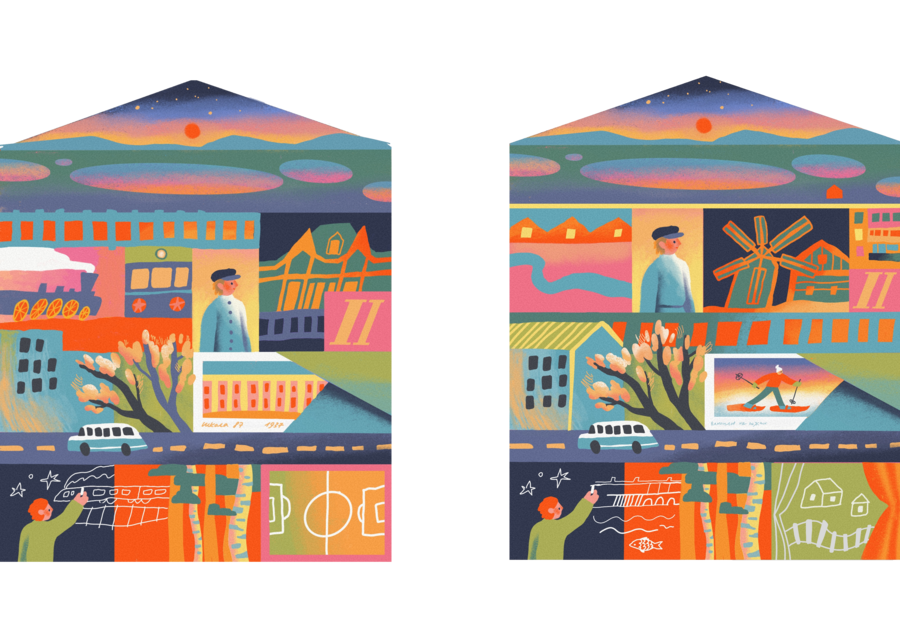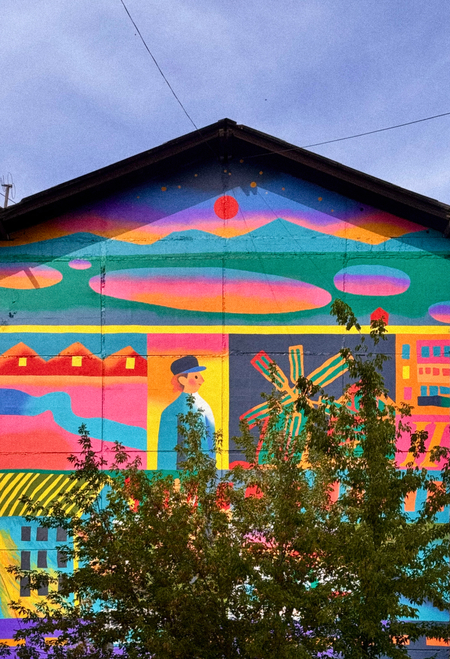
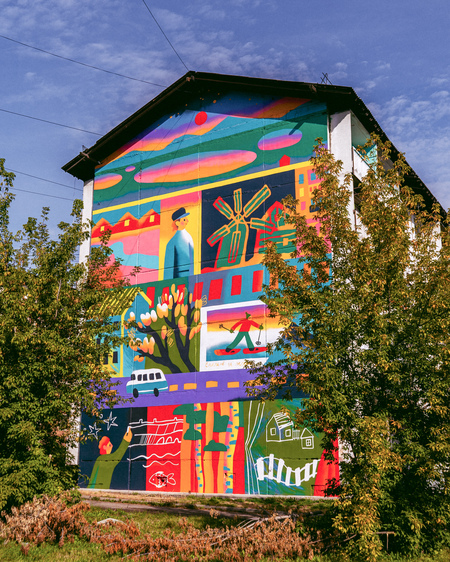
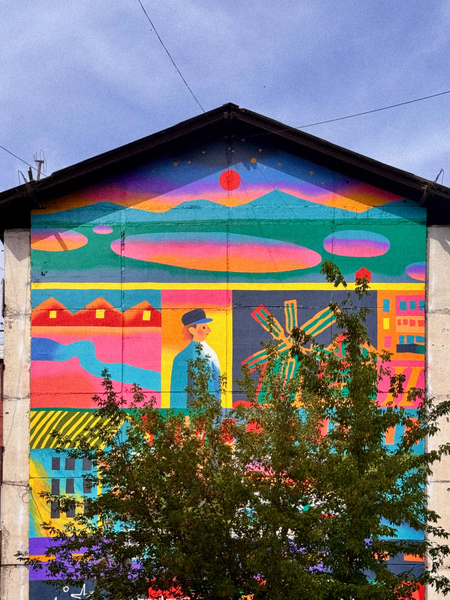
I have always been deeply fascinated by urban context—not its sweeping global history, but the intimate details concentrated in one specific place. The work, «Row Housing Development, ” specifically explores the process of forming a local identity tied to the history of the Pervomaisky District. It emerged on a marshy wasteland near the village of Melnikovo and gradually accrued its own collective memory. The modern history of Pervomaisky began with intensive row housing construction—buildings arose one after another, creating new layers of history. The very character of the construction became the primary metaphor for representing the district’s history; it was divided into layers that built upon each other, forming a unified landscape. Each layer resonates with the previous ones, incorporating not only historical facts but also the memories of residents from different years, along with its builders, workers, and visitors.
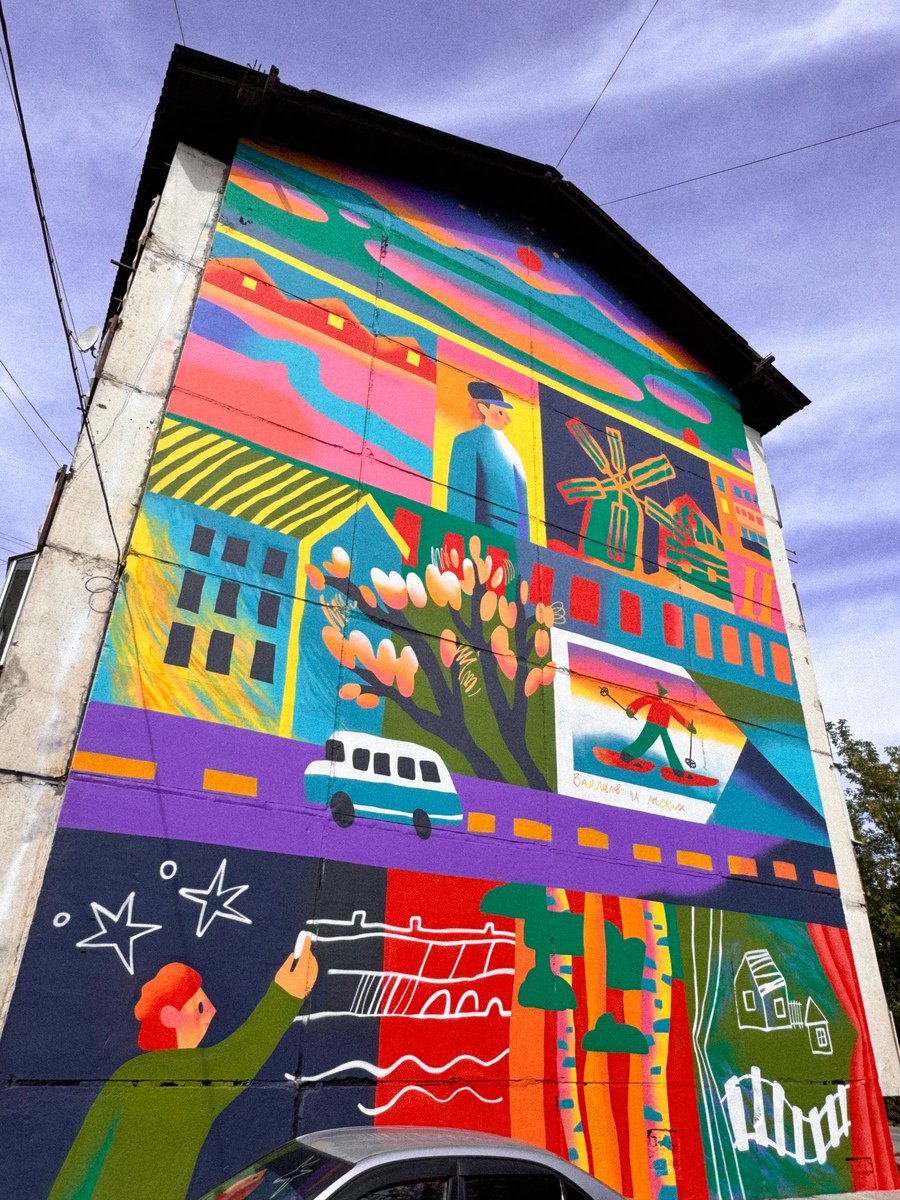

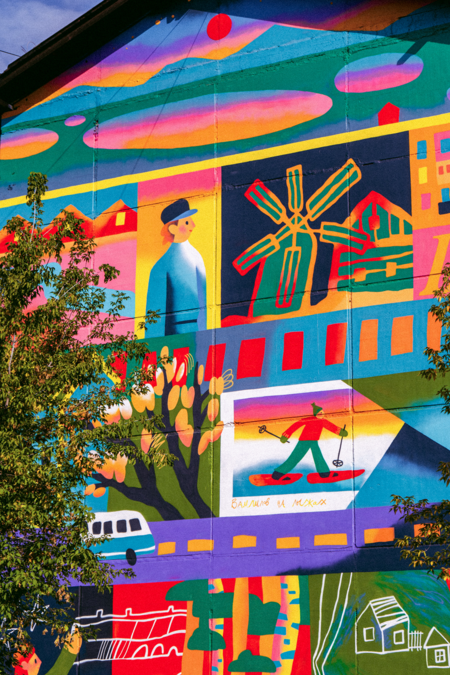
It’s interesting that the work was originally intended for a different district and was adapted for Pervomaisky at some point. Not only has the context of the public art changed, but I believe it has become deeper—the work is localized to the history of the district while simultaneously exploring global processes of urban development, the emergence and settlement of new neighborhoods, and the collective memory of place.